The AI Task Assistant That Knows When to Back Off: A Cure for Activation Struggles

One Small Step uses a decisive, retreat-aware agent to help people start tasks instead of nagging.
The article introduces developer Yonifer Triana's app One Small Step: targeting task paralysis, it was refactored from a generic chatbot into an agent with 10 tools that assesses state and persists memory each turn, served via Telegram and committing to one tiny step at a time. Its core design backs off after repeated non-responses, asking whether to keep reminding, stay quiet, or let go, returning control to the user. It also built an MCP server for cross-platform reach, migrated persistence from SQLite to Firestore due to cloud storage conflicts, and set a 75-point threshold where only 9 of 13 real tasks passed with 69 points, openly acknowledged as falling short.
The AI Task Assistant That Knows When to Back Off: A Cure for Activation Struggles
When Reminders Become a Burden: An Overlooked Gap
Have you ever experienced this: your to-do list keeps growing, every reminder feels like a reprimand for your procrastination, and eventually you just turn off notifications and sink into deeper anxiety? This is precisely the core contradiction that developer Yonifer Triana points out when demonstrating her app One Small Step — existing tools only "remember tasks" but never help users "start tasks."
In her YouTube demo, she explains that task paralysis is a common pattern in HCI (human-computer interaction) and executive function research, and as a PhD student she suffers from it herself. To fill this gap, she built One Small Step: an AI assistant that doesn't just remind you a task exists, but gives you a push at the right moment and actively backs off when necessary.
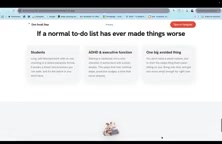
Task paralysis refers to a state in which an individual cannot initiate action on a task due to cognitive overload, perfectionism, or fear of failure, and it is especially prevalent among people with attention deficit hyperactivity disorder (ADHD) and executive function impairments. Executive function is a set of cognitive processes by which the brain manages planning, initiation, inhibition, and working memory, and "task initiation" is the most energy-consuming part. Related HCI research focuses on using external cues, micro-step decomposition, and environmental design to lower the initiation threshold, rather than simply increasing reminder frequency. This background explains why frequent reminders can worsen anxiety: reminders activate the guilt of "unfinished" without reducing the behavioral cost of starting.
From "Generic Chatbot" to "Decisive Agent"
The initial version was just a simple chatbot, but during the demo Triana found it "very generic, feeling like it didn't need an agent at all." The real value lies in those seemingly minor behaviors that require continuous decision-making: how often to check in, when to deliberately stay silent, and how to remember task states across sessions.
So she refactored the app into an agent architecture based on 10 tools, where each conversation turn assesses state and persists memory. This version is actually deployed on GCP Cloud Run and served through a Telegram interface — asking only one necessary question at a time, then committing to just one tiny, concrete step.
Guilt-Free Check-Ins and Tactful Retreat
The most distinctive design of One Small Step is how it responds to user "absence." In the demo, Triana deliberately ignored a reminder, and the app neither sent follow-ups nor expressed any emotion. But after several consecutive non-responses, it proactively took a step back and asked the user: keep reminding, stay quiet, or let go of this task entirely?
This act of returning control to the user is the concrete embodiment of "knows when to back off" in the title. The app also provides a dashboard that centrally displays unfinished tasks, streak records, and upcoming deadlines. Users can add goals and tasks themselves, or remove completed or unwanted items. If a task feels overwhelming, it can be archived, or the user can simply ask the Telegram bot to go silent.

Beyond Telegram: MCP Server and Cross-Platform Reach
According to the demo, in addition to the Telegram interface, Triana also built an MCP (Model Context Protocol) server so that the same set of tasks can be accessed from the cloud, desktop, or code. Although the server is not officially deployed yet, it is already runnable. This echoes a broader trend: AI assistants are no longer confined to a single chat interface but are integrated into users' existing workflows through protocols.
MCP (Model Context Protocol) is an open protocol for AI applications to expose data and tool capabilities to models in a standardized way. Its typical structure is a client-server model: an MCP server encapsulates a set of resources (files, databases, task lists) and tools into a unified interface description, and any compatible client (desktop app, IDE, cloud agent) can discover and invoke them. Its value lies in transforming "integration" from each app writing its own adapter to implementing once and reusing everywhere, allowing assistants to embed in users' existing workflows rather than starting an isolated chat window. The protocol itself does not specify a model or vendor, so it also facilitates migration across platforms.
Real Data and Self-Criticism: 69 Points Against a 75-Point Passing Line
Triana did not define "effective" as "ran successfully." She set a quality threshold of 75 and tested on 13 real tasks; only 9 passed, scoring 69 — below her own standard, and she chose not to round up.
During testing, she discovered a real production risk: a conflict between SQLite writes and cloud storage. Patching was insufficient, so she migrated the entire persistence layer to Firestore, which is now live. The app's only real user (also her tester) liked the dashboard but asked a pointed question: "Why doesn't it know my name?" Triana sees this as an honest lesson: you must clearly tell users what the bot is doing and what it knows.

SQLite is an embedded relational database that stores data as a single file on local disk, suitable for lightweight deployment and rapid prototyping; but its write model assumes the local file system has reliable locking and consistency semantics. When the app runs in a stateless container like Cloud Run and places the database file on a cloud storage mounted volume, concurrent writes from multiple instances and the latency of network file systems can cause lock failures, data corruption, or lost writes — exactly the production risk mentioned above. Firestore is a managed document database that provides transactions, concurrency control, and horizontal scaling, naturally suited to stateless containers and multi-instance deployments; the cost is rewriting the data access layer and accepting differences in the document model and query approach.
A Tool for Everyone May End Up Used by No One
At the end of the demo, Triana shared advice from her mentor: "A tool built for everyone will likely end up used by no one, including the builder." So she narrowed the scope and focused on the specific pain point of task paralysis.
This convergence from "generic" to "specific" may be a stage many AI application developers need to go through. The value of One Small Step lies not in what cutting-edge model it uses, but in encoding the subtle social judgment of "when to push and when to retreat" into the agent's decision loop. The app is still being iterated, and Triana openly invites others who also struggle with task initiation to talk with her.
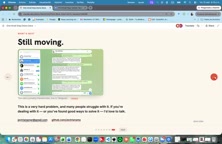
For readers following AI application deployment, the lesson from this project may be: the real value of an agent often lies in those "non-action" decisions. Knowing when to stay silent requires more refined design than constantly reminding.
Background Supplement
The key difference between an agent architecture and an ordinary chatbot is that it does not just generate responses to single-turn input; it maintains state, invokes tools, and makes multi-step decisions based on goals. A common implementation gives the model a set of callable tools (functions), and the model decides which to call and with what parameters each turn, writing results back to persistent memory to maintain consistency across sessions. Persistent memory usually refers to storing task states, user preferences, and interaction history in a database so the agent can restore context on the next launch. The number of tools (e.g., 10 in this article) is not the more the better; too many increase decision ambiguity and error probability, so they should be designed around clear behavioral boundaries.
One-line Summary
One Small Step uses a decisive agent that knows when to back off to help people start tasks, rather than nagging with reminders.
Paragraph Summary
The article introduces developer Yonifer Triana's app One Small Step: targeting task paralysis, it was refactored from a generic chatbot into an agent based on 10 tools, assessing state and persisting memory each turn, served via Telegram, and committing to only one tiny step at a time. Its core design is to proactively back off after repeated non-responses, asking whether to keep reminding, stay quiet, or let go — returning control to the user. The project also built an MCP server for cross-platform reach, and the persistence layer was migrated from SQLite to Firestore due to cloud storage conflicts. The author set a 75-point threshold; only 9 of 13 real tasks passed, scoring 69, and she openly acknowledged falling short, ultimately narrowing the scope to focus on a specific pain point.
Related articles

Why Does the Tesla Roadster Need to Fly? A Deep Dive into Musk's Wild Demo
Tesla's Roadster launch showed wall-climbing, upside-down driving, and flying stunts—but The Vergecast notes the demo car may lack a battery, the Rocket version is invite-only and not street-legal, and the website terms don't guarantee delivery. After nine years of delays, why does this car still need to exist?

AI Is Not a Replacement: Human-AI Collaboration Through the Lens of Factory Root Cause Analysis
Starting from factory root cause analysis, this article explains how AI accelerates evidence chain construction rather than replacing human experts, exploring the pragmatic implementation logic and business value of 'AI supporting people rather than replacing them.'

AI Agent Decision Auditing: Building an Evidence Chain in Regulated Workflows
Starting from a Reddit discussion, this article analyzes three core issues in AI agent decision auditing within regulated workflows: what fields audit records should contain, how to handle feedback latency for erroneous decisions, and how to continuously calibrate LLM judge consistency with human judgment.