The AI Usage Gap: Some Fly Cessnas, Others Pilot Starships
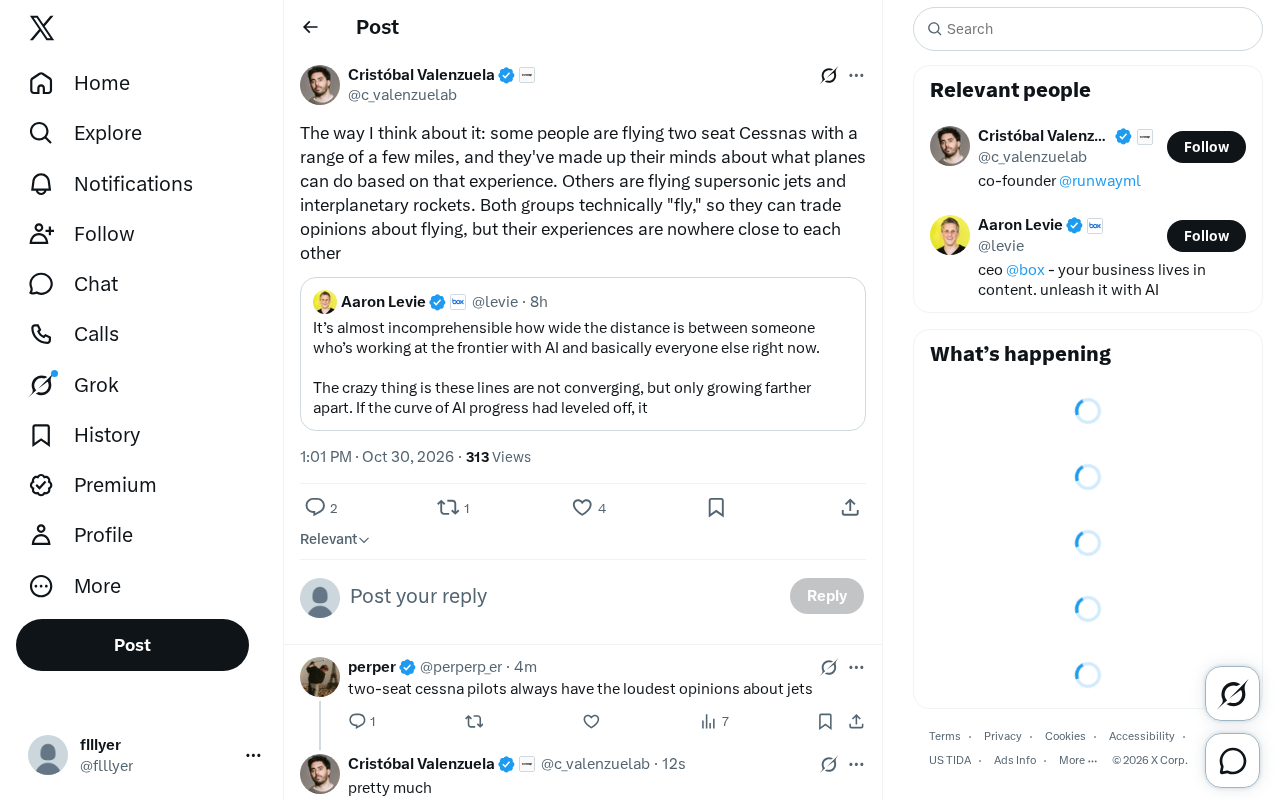
Same AI, but shallow experience vs. deep practice differs like a Cessna vs. an interstellar rocket.
Using the metaphor of "Cessnas vs. interstellar rockets," the article reveals differences in AI usage depth: some treat AI as a smart search box, while others embed it into workflows for code generation, data analysis, and automated decision-making. Experience shapes perception—shallow users misjudge AI's ceiling, while deep users may overestimate the general level. On social media, basic experiences often dominate public perception, while deep practice spreads poorly due to its high barrier. Moving from shallow to deep requires systematic understanding of toolchains, context management, task decomposition, and result verification. Acknowledging the gap is the first step to crossing it.
In an era where AI tools are becoming widespread, one easily overlooked fact is that among people who all claim to be "using AI," the experience gap between users can be bigger than the difference between an airplane and a rocket. A metaphor circulating on Twitter has struck a chord with many: some people are flying two-seat Cessnas with a range of a few miles, while others are piloting supersonic jets and interstellar rockets. Technically, both are "flying," but the experiences are on completely different orders of magnitude.
Cessnas and Starships: A Metaphor for AI Usage Depth
The brilliance of this metaphor lies in the fact that it doesn't deny anyone's "flight credentials." Cessna pilots are indeed flying—they understand the basics of takeoff, cruising, and landing. Starship pilots are also flying, but they're dealing with orbital mechanics, atmospheric reentry, and deep-space communications.
Mapped onto AI tool usage, this divide is equally real. Some people treat AI as a slightly smarter search box: they ask common-sense questions, get answers, and close the tab. Others embed AI into their workflows, using it for code generation, data analysis, multi-round iteration, and automated decision-making. Both can say "I use AI," but their understanding of what AI is capable of is entirely shaped by their own hands-on experience.
Cessna is a well-known American manufacturer of light aircraft. Its two- or four-seat small planes are widely used for flight training, private flying, and short-haul transport. These aircraft typically cruise at around 200 km/h with a range of several hundred kilometers, and their relatively simple operation makes them an entry-level choice for many aviation enthusiasts. "Interstellar rockets," by contrast, refer to super-heavy launch vehicles like SpaceX's Starship, designed for full reusability and missions to Earth orbit and even Mars. The gulf between the two in technical complexity, operational barriers, and mission scope is enormous—which is precisely what makes this metaphor so apt for capturing differences in AI usage depth.
Experience Shapes Perception: Why "Having Used It" Doesn't Mean "Knowing It"
The original post points out that both groups are "technically flying," so they can exchange opinions about flight—but their experiences are "worlds apart." This reveals a subtle cognitive trap: when you've only flown a Cessna, you might assume all aircraft can only fly a few miles, and judge the future of aviation accordingly.
In the AI world, this cognitive limitation manifests in several common misconceptions. One is treating a single output from a large model as its capability ceiling—trying a few times, getting poor results, and concluding "AI isn't all that." Another is generalizing the experience of one narrow scenario to all tasks—for instance, inferring AI's potential in scientific research or engineering from how a chatbot performs. Conversely, deep users may overestimate the general level, mistakenly assuming everyone is already using multi-agent collaboration or complex prompt chains.
The capability boundaries of large language models (LLMs) are not fixed—they depend heavily on prompt design, context length, temperature parameters, and whether external tools are integrated (such as retrieval-augmented generation, or RAG, and code executors). For example, a simple single-turn question may only scratch the surface of a model's parametric knowledge, whereas through Chain-of-Thought prompting, multi-round self-correction, or tool invocation, a model can solve complex reasoning tasks. Therefore, declaring "AI isn't all that" based on a few simple interactions is like dismissing the possibility of supersonic flight just because you've only flown a Cessna. Understanding these technical variables helps us assess AI's true potential more objectively.
The Distorted Marketplace of Ideas: Who Defines AI's Capability Boundaries?
When two groups with vastly different experience discuss AI in the same space, the marketplace of ideas becomes distorted. The voice of the Cessna pilot and the voice of the Starship pilot appear to carry equal weight on the surface, because both are labeled "firsthand experience." But for outsiders unfamiliar with the details, it's hard to tell which experience is closer to AI's true capability boundaries.
This is especially pronounced on social media. Short, punchy expressions naturally favor simple conclusions, while complex, context-dependent deep-usage experience is hard to compress into a single tweet. The result: public discussion about what AI "can do" is often dominated by the most basic usage experiences, while the practices that actually reach the frontier of capability—because of their high barrier to entry and difficulty of recounting—struggle to spread.
Bridging the Gap: What It Takes to Go from Cessna to Rocket
The value of this metaphor isn't to create a hierarchy but to suggest an upgrade path. For a Cessna pilot to become a rocket pilot, what's needed isn't just a different aircraft but relearning an entire body of knowledge—not only aerodynamics but also orbital mechanics, propulsion systems, and mission planning.
Applied to AI usage, this means shifting from the single-turn "ask a question, get an answer" mode to a systematic understanding of toolchains, context management, task decomposition, and result verification. Specifically, deep users tend to do several things: connect AI to real data and systems rather than just having conversations; replace one-shot questions with multi-round iteration; maintain a habit of verifying outputs rather than accepting them wholesale; and adjust strategies for specific tasks rather than expecting a universal prompt to solve everything.
The original post offers no solution at the end—it simply states a fact: both groups are flying, but their experiences are incommensurable. That fact itself deserves to be seen by more people—because acknowledging the gap is the first step to crossing it.
Multi-agent collaboration refers to multiple AI agents working together through division of labor, communication, and coordination to accomplish complex tasks. Each agent can have a specific role (such as planner, executor, or verifier) and collaborate using tool invocation and memory mechanisms. This pattern transcends the limitations of single conversations and can handle tasks requiring multi-step reasoning and cross-domain knowledge integration—for example, automatically conducting market research and generating a report. Complex prompt chaining, meanwhile, connects multiple prompts in sequence, with each step's output serving as the next step's input, thereby achieving task decomposition and iterative optimization. These practices are precisely one of the key differences between deep users and shallow users, and they are the core skills needed to upgrade from a "Cessna" to a "rocket."
One-line Summary
Same AI, but the gap between shallow experience and deep practice is like that between a Cessna and an interstellar rocket.
Related articles

Surface RTX Spark Dev Box Runs 120B Model Fully Offline: An Intelligent Terminal Hands-On
Microsoft Surface RTX Spark Dev Box demo: running a 120B local model offline via open-source Intelligent Terminal, building a bootable Hyper-V VM with one sentence, showcasing Project Zemuth local AI.

After Affirmative Action Ends: Sharp Drop in Black Enrollment and the Rise of HBCUs
After the Supreme Court ended race-conscious admissions, Black freshman enrollment at the top 50 most selective universities fell 27%, with Harvard dropping from 18% to 11.5% and Yale from 9.5% to 8%, as more Black students turn to HBCUs.

Claude Rolls Out Watermarking Across the Board: Paid Users Can't Opt Out, But Only a Select Few Can Detect It
Anthropic extends Claude's invisible text watermark to Mythos 5, Opus 4.7 and more, globally and with no paid opt-out. Even proofreading and translation get marked, yet detection is limited to regulators and enterprises.