The Badminton Training Robot Worth a Ten-Year Wait: How Technology Is Reshaping Sports Training
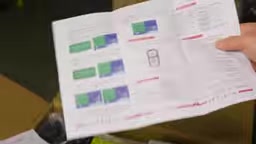
A tech blogger tests a dual-launcher programmable badminton shuttle feeder after a ten-year wait.
After a decade of anticipation and nearly a year of waiting for delivery, a tech blogger finally put the Siboasi automatic badminton shuttle feeder through its paces. The machine features dual launchers, a coordinate-based programmable drill system, 360-shuttle capacity, and a Honor tablet control interface. Accuracy in testing exceeded expectations — landing on the lines almost every time — though new shuttles caused some jams and certain drill timings needed manual fine-tuning. The article concludes that while this kind of device frees high-quality, repeatable training from dependence on a human coach, the dual costs of the machine itself and the shuttles it consumes represent a significant barrier to entry.
A Machine Ten Years in the Making
Some products stick in your head for years. For one tech blogger, an automatic badminton shuttle feeder was exactly that — a dream piece of kit he'd been eyeing for a decade. He finally pulled the trigger on his birthday last year, only to wait nearly a year for delivery, because the manufacturer operates on a build-to-order rather than stock basis.
This isn't a toy — it's a training tool. It perfectly combines the blogger's two great passions: technology and badminton. Traditional badminton training relies on a human coach to feed shuttles, which requires someone both affordable and consistently available, with the skill to do it well. An automated shuttle feeder, in theory, solves all of those problems.
The machine comes from a brand called Siboasi (phonetically rendered in the video as "Sibu Asi / Next is the best"), which the blogger hadn't heard of before. The reason he was willing to spend serious money on something he'd never tried? A former England mixed doubles pair who had visited and collaborated gave it glowing praise, mentioning that the German national team was also a fan.
The Unique Engineering Challenge of Badminton Shuttle Feeders
Unlike tennis or baseball, which use uniform spherical balls, badminton uses a shuttlecock — an irregular, extremely fragile object made from cork, thread, and duck or goose feathers. Launching it at high speed during intensive training while minimising wear (shuttles are expensive) presents a unique set of mechanical design challenges.
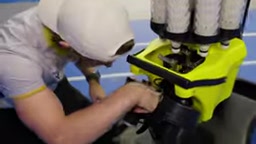
The machine's core mechanism resembles a baseball pitching machine with a rotating motor at the base, but the gripping surface uses a material somewhere between leather and rubber — softer than typical, to protect the delicate shuttlecock. The feeding mechanism appears to be chain-driven, and the overall build quality shows clear attention to durability, with notably tidy wiring.
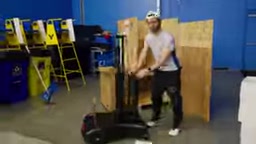
The machine holds 360 shuttlecocks at a time, meaning up to 360 stroke repetitions before a reload is needed. The loading process itself is fairly tedious, and the most frustrating parts of any training session — picking up and sorting shuttles — remain stubbornly un-automated. Some things machines still can't replace.
The shuttlecock's construction makes it unique among all sports equipment. A standard match shuttlecock consists of a cork base, 16 natural duck or goose feathers, fine thread, and a thin leather wrap — weighing just 4.7 to 5.5 grams in total. The feathers deform or break easily; at high-speed impact, micro-fractures form along the feather shafts and cause flight path deviation. This is the fundamental reason shuttles are consumed so rapidly in professional training. By contrast, the rubber and felt construction of a tennis or baseball can withstand almost any gripping force. Shuttle feeders therefore require finely calibrated contact materials and clamping pressure: too much force snaps the feathers, too little means unstable directional control and spin. This explains why the machine uses a flexible, leather-rubber hybrid material rather than standard hard rubber wheels.
Dual Launchers and Programmable Drills
This model ships with two hoppers, corresponding to two launchers — a detail that matters beyond just faster feeding. More importantly, it enables more complex multi-point drill sequences. A single launcher can only deliver balls at fixed angles and rhythms, whereas dual launchers make programmatic multi-zone training genuinely possible.
The machine is controlled via an included tablet (a standard Honor tablet) with a touchscreen app, plus a key fob remote for starting and stopping drills. The software interface features a court diagram with a coordinate grid marking every possible landing zone — numbered left-to-right and bottom-to-top. Users can adjust frequency, speed, height, and other parameters, and preview an entire drill sequence before running it.
In sports training equipment, "programmable landing zones" have become the defining evolution of modern automatic feeders. Early machines could only deliver at a fixed rate and single angle — more like a metronome than a genuine match simulator. Modern designs with multiple launchers and coordinate-based control systems allow users to pre-set continuous action sequences: a deep right baseline clear, followed by a front-left net shot, followed by a mid-court drive, for example — simulating real multi-shot rally patterns. In sports science, this training method is known as "contextual interference training." Research shows that randomised or sequenced landing variation is significantly more effective than single-repetition drills at improving neuromuscular adaptability and in-match decision-making. The coordinate system also lets coaches design drills like tactical playbooks, and precisely replicate the same training programme across different sessions.
Real-World Performance: Accuracy Beyond Expectations
Once on the court, the machine's accuracy surprised both the blogger and coach Jayden Sang watching from the sideline. Running a square-court drill, shuttles landed on the lines almost every time — some landing so tight to the corners they looked out. This is precisely the consistency a human feeder struggles to maintain unless they're a very high-level coach.
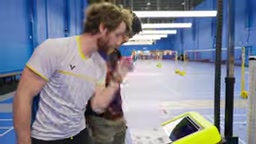
Testing also revealed some issues. The default drill's timing between the high clear and the net shot felt off, creating an uneven rhythm — though each launcher's speed can be adjusted independently. There were also some jams and misfires during the session, attributed to using brand-new shuttles; the blogger suspects fresh feathers are more prone to catching, since training sessions typically use older, broken-in shuttles rather than new ones.
After adjustments, the machine was used for defensive training: sustained attacks to one side, or alternating high-low to force the player to repeatedly practise their weaker cross-court defence. For anyone who wants to rack up high-volume repetitions efficiently, 360 shuttles means nearly an hour of continuous drilling before a reload.
Where Technology and Sports Training Converge
The real value of this machine lies in decoupling high-quality, repeatable, quantifiable training from dependence on a human coach. Precise landing zones, programmable drill sequences, and high-capacity loading give even recreational players access to targeted, near-professional-level practice.
The cost, of course, is significant. Beyond the substantial price of the machine itself, consumable costs are eye-watering — roughly $40 per tube for just 12 shuttles, meaning a full load can easily run into the hundreds of dollars. In the short term, the machine is the expensive part; in the long term, the shuttles are.
Zooming out, this badminton robot is a microcosm of the broader "sports tech" trend: automated equipment is steadily penetrating more and more niche training contexts. Siboasi actually manufactures feeders for a range of sports, and badminton — given its equipment characteristics — represents one of the most engineering-intensive categories in their lineup. For anyone who sits at the intersection of technological curiosity and sporting passion, products like this are exactly where those two worlds meet.
Related articles

OpenAI Partners with Shield: How the Astra Agent Revolutionizes IT Troubleshooting
OpenAI and Shield launch the Astra agent, which autonomously logs into computers and legacy systems to fix IT issues in real time, 35-40% faster than traditional models, with humans involved only when judgment is needed.

iPhone Duo Battery Life Tested: One Charge a Day Is Unavoidable, and the Large Screen Is the Culprit
iPhone Duo battery test: heavy use needs at least one charge a day, and about 30% remains after 6.5 hours of screen-on time. How often the large screen is unfolded is key; a MagSafe battery pack helps, and long-term degradation is also worth watching.

Kimi K3.1 Pro Open-Sourced: 2.8 Trillion Parameters Close In on Opus
Moonshot releases the open-source MoE model Kimi K3.1 Pro, with 2.8T total parameters and 104B activated, trailing Opus 5.5 by under 1 point on Terminal Bench 4.0.