The Battle for State Legislative Trifectas: The Political Game Behind Wisconsin's Blue Wave

Francesca Hong's Wisconsin story reveals why state legislative trifectas may matter more than Congress.
Drawing on Vox's interview with Wisconsin assemblywoman Francesca Hong, this piece examines the overlooked battle for state legislative control. With Republicans holding trifectas in 23 states, Hong argues Democratic gains in Wisconsin — made possible by court-ordered redistricting — could unlock sweeping policy change. Her campaign against data center expansion framed community control as a universal democratic issue. Having lost the gubernatorial primary by under 4,000 votes, she challenges electability rhetoric that sidelines progressive voices, and pushes back against the assumption that rural voters default to centrism.
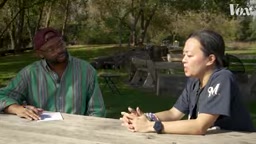
Amid the noise of midterm elections, all eyes fixate on congressional seat counts. But an equally consequential contest often goes unnoticed — control of state legislatures. When it comes to healthcare, abortion rights, and even the certification of the 2028 presidential election, state legislatures carry as much weight as Congress — perhaps more. Vox's America, Actually traveled to Wisconsin to examine the deeper logic of this local political battle through the lens of state assemblywoman and former gubernatorial candidate Francesca Hong.
Why a State Legislative "Trifecta" Matters So Much
Currently, Republicans hold a "trifecta" — simultaneous control of the governorship, state house, and state senate — in 23 states. Democrats hold a comparable advantage in only 16. That means most Americans live in states under full Republican control.
But the midterms could reshape this landscape. If Democrats flip a few key state legislatures, a majority of Americans would — for the first time — live under full Democratic control. Hong said plainly in the interview that this would open up real policy space: "Raising the minimum wage, legalizing marijuana, enshrining abortion rights into law — these are policies with broad public support, but they can only truly be put on the table when Democrats have a trifecta."
This structural difference explains why Hong sees local elections as the central battleground. State legislatures don't just set day-to-day policy — they control deeper levers of power, including redistricting and election certification.
The significance of a "trifecta" runs especially deep within America's federal system. The U.S. Constitution reserves vast governing authority to the states, including education, Medicaid expansion and contraction, labor regulations, election law, and legislative protections for reproductive rights. When one party simultaneously controls the governor's office (executive power), the state house, and the state senate (legislative power), it can advance a complete agenda without any institutional veto — the governor need not fear overrides, and the legislature need not worry about executive interference. This closely mirrors the federal dynamic of House, Senate, and president, but at the state level a trifecta often operates with even greater directness, since most states lack procedural obstacles like the filibuster that exist in the U.S. Senate. Legislation moves faster and policy lands quicker. This is precisely why Republicans, since the 2010 Tea Party wave, have systematically poured organizational resources into state legislative races and used the 2011 redistricting cycle to consolidate their advantage — a strategy known as the REDMAP plan, whose far-reaching effects remain clearly visible in state political landscapes today.
Wisconsin: A Case Study in Political Imbalance in a "50-50 State"
Wisconsin is an ideal case study for understanding why local elections matter. It is a famously even-split swing state, yet ever since Republican Governor Scott Walker won in 2011 and Republicans redrew the district maps, it became nearly impossible for Democrats to win a meaningful majority in the state legislature.
The result was Wisconsin locked in a state of one-party control. In 2018, Democrat Tony Evers recaptured the governorship but failed to flip the legislature, meaning he spent most of his term vetoing Republican bills rather than advancing his own agenda.
The turning point came when the newly constituted state Supreme Court redrew the maps — giving Wisconsin Democrats a real chance to flip the chamber. As state assemblywoman Tara Johnson described, during the past two years her chamber was "steamrolled by Republicans — we introduced 500 pieces of legislation, and only about 19 made it to committee." Those numbers vividly illustrate the governing struggles of a minority party without a trifecta.
Redistricting is the core mechanism for understanding Wisconsin's political imbalance. Every ten years, following the census, states redraw their legislative district boundaries — and in most states, that power rests with the state legislature itself. When one party controls the legislature, it can engage in "gerrymandering," concentrating opponents' votes into a handful of districts while spreading its own votes evenly across more districts, thereby winning a disproportionate number of seats on similar overall vote totals. Wisconsin's 2011 redistricting plan — one product of the REDMAP strategy — did exactly this. Despite the state maintaining a near-even split in presidential elections, the state legislature tilted sharply Republican for years. After the Wisconsin Supreme Court flipped its majority in 2023, it struck down those maps in 2024 and ordered new ones drawn — one of the rare recent cases where gerrymandering's effects were reversed through the courts, and a structural opening for Democrats to flip the state legislature.
Data Centers: From a Rural Issue to a Democratic Issue
Hong became known for her opposition to data center expansion on the campaign trail. But she insists this isn't just a rural issue: "The data center question is an issue for everyone — it's a democratic issue. People want to feel that someone cares about the fate of their community, that they have real say over what happens in their own backyard."
An interesting fault line emerged here. Primary winner David Crowley did not, like Hong, promise a "moratorium on data center construction" — instead, he argued for community control and 100% clean energy supply. Hong's response was strategically crafted: she both defended Crowley and used the moment to emphasize exactly why Democrats need to control the state legislature. "David's current position doesn't necessarily become law, so what matters even more is that we have a Democratic majority in the legislature to ensure there's dialogue and accountability between the executive and legislative branches."
Local supporters confirmed the issue's resonance. One Chippewa County resident said: "People want to see things that actually improve their lives. Democrats are sometimes too centrist — they just tinker at the margins without delivering real change."
The Fracture Between Party Establishment and Progressives
Hong lost the gubernatorial primary by fewer than 4,000 votes. She was candid about her disappointment at Governor Evers endorsing her opponent, saying many undecided voters saw it as "putting a thumb on the scale."

Even sharper was her critique of electability rhetoric: "The person most likely to win is simply whoever ends up getting the most votes. This time, that was Crowley. But when the most powerful Democrat in the state chooses to ignore voters who are energized and engaging in politics for the first time, that's harmful."
She argued that using the fear of a "democratic socialist" label to define electability is short-sighted: "When your party has been fighting elitism all along, but then capitulates to the establishment narrative… people care about solutions, not labels."
The show's host also highlighted a telling double standard worth noting: in Michigan, after Haley Stevens lost her primary, there was extensive commentary about whether her opponent El-Sayed needed to work to win over her supporters. But in Wisconsin, few asked whether Crowley should put in the same effort to earn Hong's backers. A true "big tent party" shouldn't only ask progressives to make way for moderates.
"Electability" discourse is a double-edged sword in American party primaries. Its core logic is that voters choosing a primary candidate must consider not only their own preferences, but also which candidate has the best shot in the general election — creating a meta-level of strategic voting. Critics point out that this discourse carries systematic bias: research shows voters tend to associate "electability" with traits they assume other voters (not themselves) will accept, effectively letting imagined third-party prejudices constrain their own choices. More importantly, electability calculations routinely exclude marginal groups, first-time participants, and newly activated voters — precisely the core mobilization targets of progressive candidates. Hong's critique cuts to this exact logic: when party insiders use "electability" to back moderate candidates, they're presupposing that progressive enthusiasm and mobilization effects aren't worth factoring into the winning equation. That's a political judgment, not neutral strategic analysis.
Do Rural Voters Really Prefer the Center Lane?
The program's most convention-breaking insight: Washington habitually equates rural voters — especially Midwestern ones — with the political center. But the voices on the ground told a different story.

These rural supporters wanted a moratorium on data centers, wanted marijuana legalization, and above all wanted a party willing to put forward bold ideas and capable of delivering on them. One interviewee said: "People want to see rapid, fundamental change. When they see someone hemming and hawing, unable to articulate a political vision for the future, they think that person isn't serious — and they stop caring."
This reframes electability entirely — it's not just about where you sit on the ideological spectrum, but about your willingness to deliver on campaign promises and bring tangible change to people's lives. Hong's argument extends to the national level: Wisconsin is a critical swing state, and if Democrats can demonstrate "durable governing capacity" through priority policies and turn out more voters, that benefits the entire Democratic brand — including presidential elections.
Conclusion: The National Significance of Local Politics
Francesca Hong's story is a political narrative about a progressive who — without full party support — continues to fight for down-ballot success. Wisconsin's trifecta battle looks like a fight over state-level policy on the surface, but it reflects the Democratic Party's deeper tensions over direction, brand identity, and rural strategy.
For observers of American politics, this case offers a reminder: real political power often accumulates locally. Whether a party can deliver on its promises — and acknowledge where its most popular ideas actually come from — may matter far more to its long-term fate than any electability calculation.
Related articles

The Touchscreen MacBook and Apple's Delightful Mess: A Deliberate Gamble
The Vergecast unpacks the touchscreen MacBook Pro's launch logic, the ProLed naming controversy, the iPad squeezed between iPhone and Mac, and how Apple stays competitive with premium hardware in the AI era.

Fifty Years Studying Power: Robert Caro's Writing and Insights on Power
Robert Caro reflects on 50 years studying power: Lyndon Johnson's persuasion and leverage, Robert Moses's transformation from idealist to ruthless builder, the dilemmas of large-scale construction, and his methods of compressing themes and solitary focus in biography writing.

Can a $20,000 Robot Do Your Chores? The Test Results Are Surprising
A YouTube test video shows how a $20,000 robot responds to commands like washing dishes, turning off lights, taking out trash, and feeding the dog. This article analyzes its real capability boundaries, the state of voice interaction technology, and how far household robots are from mainstream adoption.