The Complete Guide to Custom Software Development: AI Large Model Applications & Full-Stack Development, All in One Place

A 15-year full-stack team delivers custom software and AI applications with no subcontracting and full end-to-end accountability.
This guide explores why traditional software outsourcing fails — due to multi-layer subcontracting and accountability gaps — and how a 15-year full-stack engineering team solves these problems through direct, one-on-one project ownership. It also covers the growing demand for AI applications like RAG knowledge bases and AI agents, and how to evaluate a reliable development partner.
The Trust Problem in Software Outsourcing: Why Most Companies Have Been Burned
When businesses look for software development partners, their biggest concern is rarely the technology itself — it's trust. You spend the money, but no one truly owns the project. Responsibility gets passed around endlessly, and the final product either never materializes or falls far short of expectations. This isn't paranoia; it's a chronic pain point baked into the traditional software outsourcing industry.
The trust crisis in software outsourcing has deep structural roots. Traditional outsourcing typically involves multiple layers of subcontracting: the client → the outsourcing firm → secondary subcontractors → the actual development team. At every layer, requirements get distorted, margins get skimmed, and accountability becomes murky. Economically, this creates a classic principal-agent dilemma: intermediaries on major outsourcing platforms typically mark up actual development costs by 30–60%, then redistribute projects to lower-cost execution teams. The people actually writing the code have no direct contractual relationship with the client, and quality standards get reinterpreted and compressed at every handoff. Industry research suggests that over 60% of software projects experience some degree of delay or requirement drift — a significant portion attributable to communication loss across multiple subcontracting layers. Project-based outsourcing also creates a built-in "deliver and disappear" incentive problem: once a project is signed off, developers have little motivation to maintain it, leaving clients to deal with the accumulated technical debt on their own.
What sets this team of engineers — with 15 years of full-stack development experience — apart from traditional outsourcing is simple: no intermediaries, no subcontracting, no handoffs. Every project is handled directly by the engineers themselves, from requirements analysis and product design through development, testing, launch, and ongoing maintenance. One-on-one communication throughout — addressing the root cause of unclear ownership once and for all.
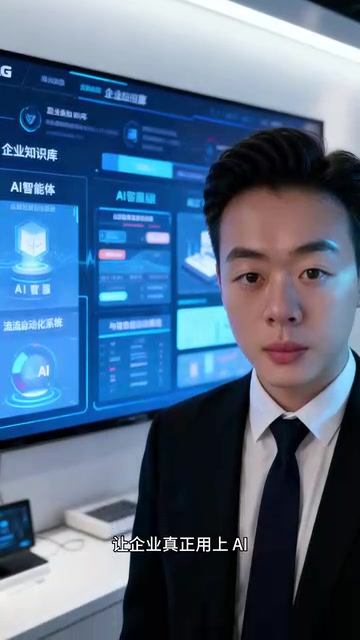
Full-Stack Custom Development: From Mini Programs and Apps to Enterprise Management Systems
The core value of custom software development lies in flexibility. Unlike standardized SaaS products, custom development is tailored precisely to a company's specific business processes. This team's services span mini programs, mobile apps, websites, and enterprise management software.

Why Businesses Need Custom Development Instead of Off-the-Shelf Products
For small and medium-sized businesses with relatively unique workflows, generic software on the market often fails to fit real-world needs — whether it's feature bloat or critical gaps, either way it slows down operations. SaaS (Software as a Service) products trade standardization for economies of scale. They work well when business processes are highly generic. But for companies with meaningfully differentiated business logic, SaaS's rigid structure often becomes a constraint: either the business is forced to conform to the software's logic, or efficiency is lost through excessive custom configuration — and typically, 20–30% of core requirements still go unmet. The economics of custom development need to be evaluated over time: the upfront investment is higher, but over a 3–5 year horizon, you avoid ongoing SaaS subscription fees, data migration costs, and the hidden losses from process compromises. The system is also entirely under your control — you're never at the mercy of a vendor's price hike or service discontinuation.
Full-Stack Development means a single engineer or team can independently handle the entire stack: frontend interfaces, backend services, database design, and server operations. The frontend manages the user interaction layer; the backend handles business logic and data APIs; the database manages structured storage; and DevOps keeps the system running reliably. The value of full-stack capability is that it eliminates the friction between frontend and backend teams, fundamentally reducing blame-shifting. Fifteen years of full-stack experience also means the team has lived through multiple technology waves — mobile internet, cloud computing, microservices — and has developed strong judgment in technology selection, with a genuine ability to understand business problems and solve them in practice.
Embracing the AI Era: Large Model Application Development as the New Business Imperative
As large language model technology matures, more and more businesses are exploring how to bring AI capabilities into their own operations. This team has made large model application development a priority, covering several high-demand use cases:
- RAG Enterprise Knowledge Base: Using Retrieval-Augmented Generation (RAG) technology to turn internal company documents and materials into a knowledge source that AI can query, enabling precise question-and-answer responses
- AI Agents: Intelligent work assistants capable of autonomously completing multi-step tasks
- AI Customer Service Systems: 24/7 customer inquiry handling, effectively reducing staffing costs
- Workflow Automation Systems: Delegating repetitive business processes to AI, freeing up human resources
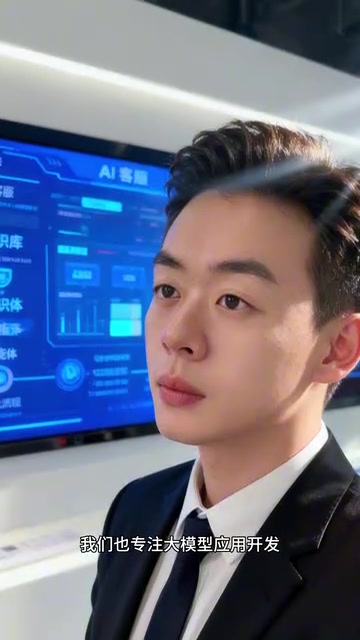
RAG Knowledge Bases: The Most Practical Entry Point for Enterprise AI
Among the many forms of AI application, RAG enterprise knowledge bases have become especially popular because they directly address two of large language models' most significant weaknesses: hallucinations and knowledge staleness. The core mechanism of RAG (Retrieval-Augmented Generation) works in two stages: first, company documents (PDFs, Word files, database records, etc.) are converted into vector embeddings and stored in a dedicated vector database; second, when a user asks a question, the system retrieves the most relevant document segments from the vector database and feeds them as context to the large language model, guiding the model to answer based on actual source material.
It's worth understanding the central role that vector databases play here. Unlike traditional relational databases that match by keyword, vector databases convert text into high-dimensional numerical vectors (embeddings) and measure semantic similarity by calculating cosine similarity between vectors. This means that even if a user's question is phrased completely differently from the language in a document, the system can still retrieve accurately — as long as the meaning is close. Common vector databases include Pinecone, Weaviate, Milvus, and the open-source ChromaDB. For private enterprise deployments, locally controlled solutions are typically chosen to protect data security. This mechanism effectively addresses two inherent limitations of large language models: hallucination — where the model fabricates plausible-sounding answers when uncertain — and the knowledge cutoff problem, where the base model has no awareness of events after its training data ends. By connecting proprietary company knowledge — product manuals, internal standards, customer case studies — to a retrieval system, AI can answer based on real, up-to-date company information rather than generating from thin air, truly evolving from a "general-purpose chat tool" into a "dedicated enterprise intelligence assistant."
AI Agents represent the advanced form of large model applications, with their core capability being an autonomous "plan–act–reflect" loop. Unlike simple question-and-answer systems, an Agent can break down a complex goal into multiple sub-tasks, invoke external tools (such as search engines, database queries, API interfaces, code executors, etc.) to execute them step by step, and adjust subsequent strategies based on intermediate results. This architecture is technically known as the ReAct (Reasoning + Acting) framework — the model alternates between reasoning and action, with the result of each action fed back as input for the next round of reasoning. In an enterprise context, a sales Agent could autonomously complete an entire workflow: retrieving a customer's order history, analyzing purchase preferences, generating personalized recommendations, and logging follow-up records — all without any human intervention, genuinely freeing up human resources.
End-to-End, One-on-One: From Idea to Launch, Full Accountability Throughout
The success or failure of a software project largely depends on the continuity of communication and execution. This team's signature "end-to-end, one-on-one communication" model covers every critical stage: requirements analysis, product design, and development and testing.
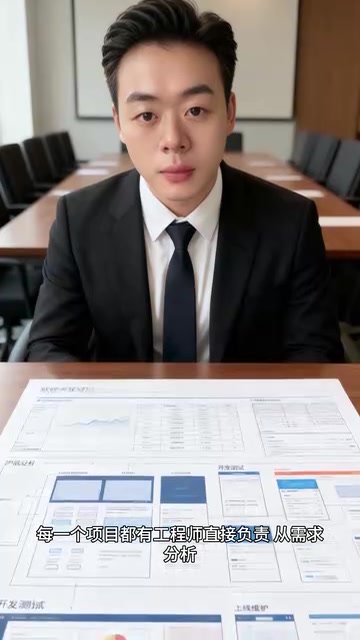
The value of this collaboration model is straightforward: requirements don't get distorted through layers of handoffs, problems get identified and corrected in real time, and the final delivered product is much closer to what the business originally envisioned. For companies that want to turn a business idea into a real working product, finding a team that takes full responsibility and has solid technical chops is the prerequisite for project success.
How to Choose a Reliable Custom Software Development Team
With AI technology advancing rapidly, custom software development is undergoing an industry-wide upgrade. Demand for traditional website, mini program, and management system development remains strong, while large model application development — RAG knowledge bases, AI agents, AI customer service, and more — is emerging as the new growth frontier.
For businesses with development needs, here are three key dimensions to evaluate when choosing a partner:
- Is accountability clear? Is there subcontracting involved? Who is ultimately responsible when something goes wrong?
- Is the technical foundation solid? What is the team's actual years of experience, and what is the quality of their case portfolio?
- Is the communication process smooth? Can they follow through end-to-end and respond in a timely manner?
All three matter. Only when all three are in place can you truly turn an idea into a product that works in the real world and creates genuine value.
Related articles

Disaster and Glory of the Apollo Program: The History We Must Revisit Before Returning to the Moon
From the fatal Apollo 1 fire to Apollo 8's daring lunar orbit to Apollo 11's successful landing—revisiting the disasters, fears, and compromises of the Apollo program and their lessons for today's return to the Moon.
Netflix Trust Exercise Turns Into Firing Trap: Where Are the Boundaries of Corporate Trust?
A Netflix employee was fired after sharing private info in a trust exercise. We analyze the risks of corporate trust exercises and how employees can protect themselves.

AMD CDNA5 Architecture Deep Dive: Technical Evolution and the AI Computing Competition Landscape
Deep analysis of AMD's CDNA5 architecture covering Chiplet packaging upgrades, HBM memory evolution, and low-precision compute optimization, examining how AMD challenges NVIDIA's AI chip dominance.