The End of Unlimited Free Access to Google AI Studio: Impact of the API Transition and How to Adapt

Google AI Studio is transitioning from a free unlimited platform to a metered API-based platform.
Due to the logical contradiction of paying customers being more restricted than free users, Google announced a full transition of AI Studio to an API-based platform. Official clarification confirmed the transition doesn't mean everything becomes paid—a free tier will remain, and Gemini 2.5 Pro may return to free access through mechanisms like lifetime limits. AI Studio's positioning returns to a developer tool, with the daily assistant role belonging to Gemini App, while inclusion in paid subscription plans is also being considered.
Background: When Paying Customers Get Less Than Free Users
Google AI Studio has long been a treasure trove for developers and AI enthusiasts—offering free, unlimited access to top-tier models including Gemini 2.5 Pro. But this generous strategy recently exposed an embarrassing problem: paying customers were actually more restricted than free users.
The issue surfaced when a user publicly questioned Logan, the Gemini team's social media lead: why do users on Google AI's paid plans have request limits for Gemini, while AI Studio users can use it for free without any cap? For any company, this is a fatal logical contradiction—unlimited supply on the free tier, but limits on the paid tier. Naturally, paying customers found this unacceptable.
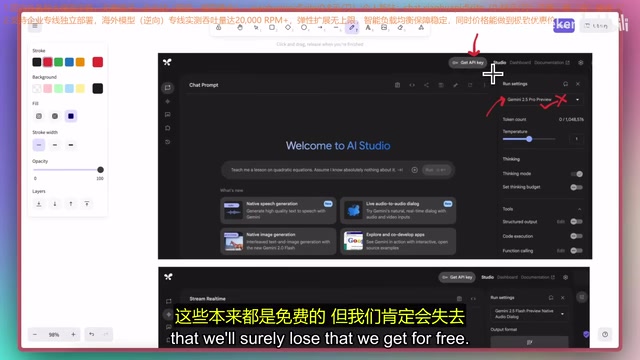
Logan subsequently responded that Google is fully transitioning AI Studio into an API-based platform. The news sent shockwaves through the community—this meant the familiar free, unrestricted AI Studio was about to become history.
Official Clarification: Logan's Detailed Response
Facing the community's strong reaction, Logan posted a detailed clarification on Reddit, addressing the team's plans point by point. Here are the key takeaways:
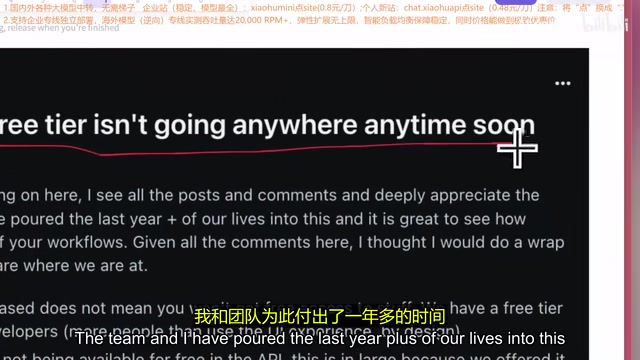
Switching to API Doesn't Mean Everything Becomes Paid
Logan first emphasized: switching to API key mode does not mean free access disappears. Google's API currently has a free tier used by millions of developers—a user base far larger than AI Studio's web interface users. In other words, free usage will still exist; only the interaction method will change.
It's worth explaining what this transition means at a technical level. An API (Application Programming Interface) is a standardized way for software systems to communicate. When Google says it's transitioning AI Studio into an "API-based platform," it means users will no longer interact with models through a polished web chat interface. Instead, they'll need to send requests programmatically using an API key (a unique authentication string). This pattern is extremely common in developer tools—Anthropic's Console and OpenAI's Playground both use similar architectures. The core advantage of the API model is precise metering of token consumption per call, enabling fine-grained cost control and quota management. This is also the technical foundation that allows Google to continue offering a free tier after the transition.
Gemini 2.5 Pro May Return to the Free Tier
Regarding the community's top concern—free access to Gemini 2.5 Pro—Logan candidly explained the background: previously, both AI Studio's web interface and the API offered free 2.5 Pro access, meaning Google was bearing double the free compute costs, while market demand was extremely high. This was commercially unsustainable.
To understand why Google couldn't maintain this "double free compute" generosity, you need to understand the inference cost structure of large language models. Every user conversation with Gemini 2.5 Pro requires invoking massive GPU/TPU resources in Google's data centers for real-time inference. Based on publicly available industry data, inference costs for GPT-4-class models are approximately $0.01–$0.06 per call (depending on input/output token count), and Gemini 2.5 Pro supports up to 1 million tokens of ultra-long context, potentially making single-inference compute costs even higher. When millions of users simultaneously use the service for free without limits, inference costs alone could reach millions of dollars per day. This explains why even a giant like Google cannot sustain the cost pressure of keeping both the web interface and API free simultaneously for an extended period.
The good news is that the team is actively exploring ways to bring 2.5 Pro back to the free tier. Possible measures include:
- Lifetime limits
- Differentiated incentive mechanisms
- Dynamically adjusting policies based on model operating costs
"Lifetime limits" is a relatively novel API quota management strategy, fundamentally different from the industry-standard "requests per minute" (RPM) or "daily token caps." Traditional rate limits reset periodically—for example, 100 requests per day, resetting to zero the next day. Lifetime limits mean each free account receives a fixed total usage allowance from the moment of registration—once it's used up, it's gone and won't reset. This mechanism is designed to prevent the free tier from being abused as a long-term production environment while ensuring every new developer has enough quota to evaluate model capabilities, complete prototype development, and then naturally transition to the paid tier. Similar strategies already have precedents in cloud computing, such as AWS and Google Cloud's new-user free credits.
AI Studio Was Never Meant to Be a Daily Assistant
Logan clearly pointed out a fact many users may have overlooked: AI Studio was designed from the start as a developer platform, not a daily AI chat assistant.
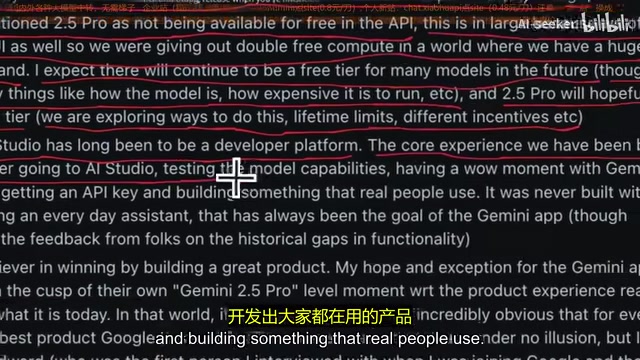
Its core use case is: developers enter AI Studio → test model capabilities → experience Gemini's performance → obtain an API key → build real applications. The daily AI assistant role has always belonged to the Gemini App.
Google's current AI product matrix has a clear layered design: Gemini App (formerly Google Bard) targets general consumers, offering a ChatGPT-like daily conversation experience integrated into the Google ecosystem with AI features for Gmail, Google Docs, and other services; AI Studio is positioned as a developer tool, providing professional features like prompt engineering, model parameter tuning, and system instruction configuration. This product layering strategy mirrors Microsoft's approach—Copilot for consumers, Azure OpenAI Service for developers, each serving its purpose.
Logan expressed his strong belief that the Gemini App team is at the tipping point of achieving a "10x leap" in product experience. This "10x leap" likely refers to the series of Gemini App upgrade directions showcased at Google I/O 2025, including Project Astra (multimodal AI assistant), Project Mariner (browser automation agent), and other cutting-edge projects. Going forward, Gemini App will become Google's core product in the everyday AI space.
Potential Inclusion in Google AI Paid Subscription Plans
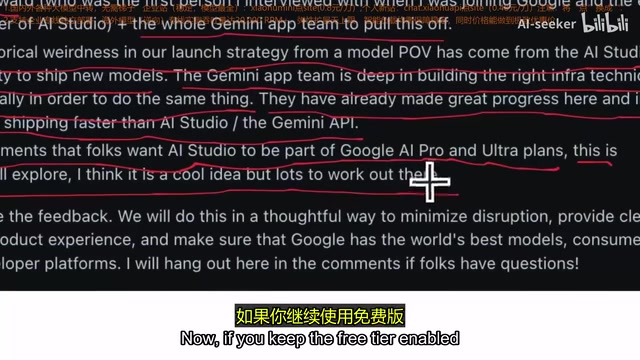
Logan also revealed that the team has noticed strong demand from users wanting AI Studio to be included in Google AI Pro and Ultra subscription plans. He believes this direction is worth exploring, and the team will seriously consider it, but specific details still need time to finalize.
Real Impact: What Users Stand to Lose
Despite the official clarification attempting to calm community sentiment, this transition represents a substantive experience downgrade for existing users.
Features That Will Be Affected
The following benefits currently enjoyed by AI Studio users will be impacted to varying degrees:
- Unlimited access to Gemini 2.5 Pro/Flash: This is the biggest loss—future usage will be subject to request limits
- Rich model experiences: Including Google's voice models, ImageGen image generation models, etc.
- Gemini Live real-time conversation: A premium feature currently offered for free in AI Studio
- Intuitive web interface: Will gradually transform into an API debugging tool similar to Anthropic Console or OpenAI Playground
In simple terms, it's going from an "unlimited buffet" to a "rationed meal plan."
Horizontal Comparison: Google's Free API Tier Remains Competitive
From another perspective, Google's approach is still relatively generous by industry standards:
| Platform | Free API Tier | Usage Restrictions |
|---|---|---|
| Google Gemini API | ✅ Yes | Limited quota; free-tier data may be used for training |
| OpenAI API | ❌ No | Paid access required |
| Anthropic API | ❌ No | Paid access required |
Neither OpenAI nor Anthropic offers a free API access tier. Google at least maintains a free entry point, though the trade-off is that conversation data may be used for model training.
It's worth elaborating that the data usage terms attached to Google's free API tier represent a non-negligible hidden cost. When developers use the free API, their input prompts and model outputs may be reviewed and annotated by Google's data team and incorporated into training datasets for subsequent model fine-tuning. This is a major concern for enterprises handling sensitive business data, and it's one of the core value propositions of the paid API tier—paid users typically enjoy data privacy guarantees, with Google committing not to use their data for training. Therefore, the difference between free and paid isn't just about request quotas; it also involves deeper issues of data sovereignty and privacy compliance, which is especially important for European developers subject to regulations like GDPR.
For developers who want to evaluate model capabilities before committing financially, the free tier remains a valuable option.
How Users Should Respond to This Transition
Facing this change, different stages call for different strategies:
Short-term (act now): While AI Studio hasn't fully switched over, take full advantage of the current free unlimited access to complete any testing and development work you have in progress.
Mid-term (stay informed): Closely monitor developments around Google's free API tier expansion, especially the timeline for Gemini 2.5 Pro returning to the free tier. Also evaluate whether Gemini App can meet your daily usage needs.
Long-term (plan ahead): If you're a power user, consider subscribing to Google AI Pro/Ultra plans, or wait until AI Studio is incorporated into the paid subscription system before making a decision.
Final Thoughts
The essence of this change is Google correcting a contradiction in business logic: free users shouldn't enjoy better treatment than paying customers. From a business operations perspective, this is a reasonable adjustment; but from a user experience perspective, it's undeniably disappointing.
AI Studio as that "free unlimited AI playground" is coming to an end, but it's not disappearing entirely—it's continuing to exist in a more sustainable, commercially logical form. The key question going forward is whether Google can find a balance between free-tier generosity and commercial sustainability that satisfies the majority of developers.
Related articles
 Tech Frontiers
A Rare Quiet Day in AI: Recursive Self-Improvement Stirs Beneath the Surface
A rare quiet day in AI sees multiple sources go silent simultaneously. Behind the calm, Recursive Self-Improvement (RSI) research continues. What this means for the industry.
 Tech Frontiers
Reve 2 vs. Ideogram 4: A Deep Dive into Layout Control in AI Image Generation
A deep comparison of Reve 2 and Ideogram 4's layout control capabilities, covering technical approaches, real-world use cases, and industry trends for designers and creators.
 Tech Frontiers
In the Weights: Check Your Influence Score in the AI World
In the Weights is an AI influence search engine that quantifies your presence in the AI world with a score. Explore how it evaluates practitioners and what it means for digital identity.