The HBCU Revival: Why Historically Black Colleges Are Thriving as Black Enrollment Drops at Elite Universities

HBCU freshman enrollment hits record highs while Black enrollment at elite universities falls 27%, reflecting a higher-ed reversal after affirmative action's end.
Drawing on a Vox video analysis with creator Khalil Green, the article reveals a quiet reversal in American higher education: HBCUs are seeing record enrollment while Black freshman enrollment at the 50 most selective institutions has dropped 27%. It traces the history from the 19th-century rejection by a New Haven town meeting, through Brown and affirmative action driving Black students to white institutions, to the "modern revival" after affirmative action's 2023 repeal. Data shows HBCUs are just 3% of colleges but produce 80% of Black judges and 50% of Black doctors and lawyers, with graduates earning $900,000 more over a lifetime. But the revival is uneven, with many HBCUs constrained by funding and facilities.
Introduction: A Quiet Reversal
As the share of Black freshmen at America's most elite universities quietly declines, a different kind of school is seeing record-breaking enrollment waves. According to a video analysis jointly produced by Vox and content creator Khalil Green (known online as Gen Z Historian), many Historically Black Colleges and Universities (HBCUs) have recorded historic freshman class sizes—meanwhile, at the 50 most selective institutions in the United States, Black freshman enrollment has fallen by 27%. This widening gap is no accident; it points to deep shifts in race, identity, and belonging in American higher education.
What Is an HBCU? A History That Began With Rejection
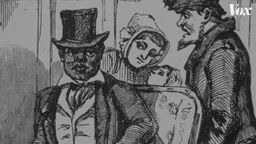
HBCUs—Historically Black Colleges and Universities—number 107 across the United States today. Their history stretches back to the early 19th century. According to the video, the idea for the first Black university was proposed as early as New Haven, Connecticut, but an emergency town meeting in 1830 rejected the plan by a vote of 700 to 4. The reasons cited included that it would signal to the world that New Haven was overrun with an "undesirable population" and that it would pose a threat to Yale. Ultimately, the first HBCU—Cheyney University in Pennsylvania—was not founded until seven years later by Quaker philanthropist Richard Humphreys. After that, especially following the Civil War, missionary organizations headed south to raise funds and establish schools for African Americans who had been denied access to education.
The Legal Definition and Accreditation Scope of HBCUs
HBCU is not merely a colloquial term based on historical reputation—it has a clear federal legal definition. The Higher Education Act of 1965 defines an HBCU as an institution established before the Civil Rights Act of 1964, whose principal mission was the education of Black students, and which remains accredited today. This definition excludes schools founded later that predominantly serve Black students but are not historic institutions. Of the 107 HBCUs nationwide, some are public and some private, ranging from two-year community colleges to research universities. They receive federal funding (such as through Title III programs) but must therefore comply with a range of accountability requirements. Understanding this legal status helps clarify the special position of HBCUs in contemporary higher education policy—they are both carriers of historical legacy and an important channel for federal equity-based education funding.
From Glory to Turning Point: HBCUs' Historical Contributions and the Impact of Brown v. Board
HBCUs have played an irreplaceable role in American history. Data cited in the video notes that historically HBCUs provided undergraduate education for 75% of Black Americans with doctorates, 75% of Black military officers, and 80% of Black federal judges. Before desegregation, virtually every African American with a college education attended an HBCU.
But the Supreme Court's 1954 ruling in Brown v. Board of Education changed everything. The decision declared racial segregation in public schools unconstitutional, reshaping many Black students' aspirations toward elite institutions. The subsequent passage of the Civil Rights Act of 1964 and the implementation of affirmative action policies further propelled Black students into traditionally white institutions. According to the video, Black college enrollment doubled in the first decade of affirmative action. In 1964, Yale University even admitted a record number of Black students—and that "record" was just 14.
The Enforcement Struggle of Brown and "Massive Resistance"
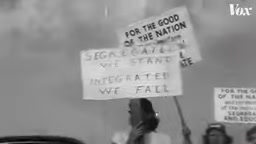
Although Brown v. Board of Education declared racial segregation in public schools unconstitutional in 1954, the ruling offered only a vague timetable of "all deliberate speed," and many Southern states immediately launched "Massive Resistance," circumventing the decision by closing public schools and establishing segregated private "academies." It was not until the Civil Rights Act of 1964 authorized the federal government to enforce desegregation by cutting off funding that substantive integration gradually advanced. This decade-long enforcement vacuum explains why HBCUs remained the only viable option for the vast majority of Black students after Brown—and why Yale's admission of 14 Black students in 1964 was called a "record," precisely reflecting the extreme scarcity of Black presence at elite institutions at the time.
The Struggles of Elite Schools and the HBCU Revival
Entering traditionally white elite institutions did not mean an equal experience. Research has long shown that Black students at these schools must contend with the stereotype of being "less capable." Students carved out their own spaces through Black student unions and Black studies programs, but these efforts were only a drop in the bucket.
In 2023, race-based affirmative action was struck down, and the impact was immediate: Black freshman enrollment declined at many of the most selective American universities. And precisely during this same period, HBCUs experienced what has been called a "modern revival." More and more Black students are seeking a college experience where their Black identity is institutionally celebrated.

One person interviewed in the video mentioned that when she was applying to college, her mother believed a white school would offer a better education; but the rise of social media is changing that stereotype. "You won't fail just because you went to an HBCU—instead, you'll thrive in the workplace because of practices embedded in tradition and history." One mother proudly said in the video that her children will become the fourth generation of HBCU graduates in her family.
"Stereotype Threat" and Research on Campus Belonging
The article mentions that Black students at elite institutions must contend with the stereotype of being "less capable"—a phenomenon known in social psychology as "stereotype threat": when individuals worry that their performance will confirm a negative stereotype about their group, cognitive resources are consumed by anxiety and actual performance may decline. Related experiments have shown that merely reminding students of their racial identity before a test is enough to create score gaps. This mechanism helps explain why, even controlling for academic background, Black students at elite schools may still have lower retention rates and a weaker sense of belonging. The institutional environment of HBCUs is believed to reduce this kind of threat—when Black identity is the norm rather than the exception, students don't have to expend extra psychological energy proving "I belong here," allowing them to focus more on their studies and development.
The Data Speaks: HBCUs' "Outsized Output"
HBCUs account for only about 3% of all American colleges and universities, yet they have produced 80% of Black judges, 50% of Black doctors, and 50% of Black lawyers. According to the United Negro College Fund, Black graduates of HBCUs earn $900,000 more over their lifetimes than Black graduates of traditionally white institutions or Black workers without a college degree. This "punching above their weight" output efficiency is the most solid argument behind the HBCU revival.
Not All HBCUs Are Growing: Resource Bottlenecks and Divergence
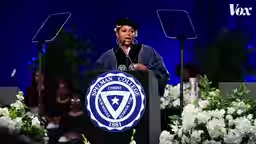
It's important to recognize clearly that the revival is not evenly distributed. Well-known institutions such as Howard University, Spelman College, and Morehouse College are indeed leading enrollment growth, but not all HBCUs are experiencing this. At the same time, HBCUs have long faced structural underfunding. When applications surge, some schools lack sufficient facilities and resources to ensure educational quality. One expert in the video called out: "Let's invest more in these schools." Some institutions are working with state legislatures to build campus infrastructure and actively fundraising from donors, but much work remains.
Conclusion: Returning to Their Original Role
The HBCU revival is not a simple substitute for elite institutions; rather, at a particular moment—when data shows that selective universities are admitting fewer Black students—HBCUs are once again taking on the role they have always been given: providing Black students with an educational home that had them in mind from the very beginning of institutional design. As the video concludes: "What students are investing in is an institution built for them."
In the current year of 2026, this trend continues, and the discussions behind it about equity, belonging, and institutional legacy are far from over.
Related articles

Hermes Agent Beginner's Guide: A Self-Evolving AI Assistant
Hermes Agent beginner's tutorial: how to install and use the 41.7K-star self-evolving AI Agent. We break down its learning loop, three-tier memory, and Skill self-improvement, compare it with Claude Code and OpenClaw, and include WSL installation steps.

RAG Interview Essentials: Breaking Down the Full Offline Indexing and Online Retrieval Pipeline
A complete breakdown of the RAG retrieval-augmented generation workflow: offline document loading, chunking, vectorization, and indexing; online query rewriting, vector retrieval, reranking, and generation, plus core interview points and system optimization directions.

AI Large Models for Absolute Beginners: Principles and API Calling in Practice
From AI's evolution to large model training principles and core concepts like Token, Temperature, and Top-P, this article explains system prompts, Function Call, RAG, and memory with hands-on examples and four API call scenarios—ideal for beginners.