The Hegseth Controversy: How Christian Nationalism Entered the Pentagon

The Hegseth controversy reveals Christian nationalism's reach into defense management and credibility issues.
The Hegseth controversy extends far beyond personal conduct. His book frames DEI as a "cultural Marxist revolution" eroding the Pentagon. Last Week Tonight found that the tattoo actually raising security concerns was "Deus Vult," not the innocuous Jerusalem cross he cited. The episode links his views to Christian nationalism and exposes credibility problems in the civil-military transition.
Title
Hegseth Controversy: How Christian Nationalism Entered the Pentagon
Meta Description
Last Week Tonight examines the Hegseth book and tattoo controversy, revealing how Christian nationalism influences Pentagon personnel and policy narratives, and analyzes its credibility issues and civil-military institutional tensions.
Article Content
The controversy surrounding U.S. Secretary of Defense nominee Pete Hegseth goes far beyond his personal conduct. According to a breakdown by the YouTube program Last Week Tonight, his 2024 book The War on Wokeness systematically frames DEI (Diversity, Equity, and Inclusion) as a "cultural Marxist revolution" eroding the Pentagon, and claims this has already affected recruitment—the book states in its own words that "the sons and daughters of white America are leaving the military." The episode directly links Hegseth's views to the ideological label of "Christian nationalism," offering a window into the changing relationship between the U.S. military and civilian leadership.
A Narrative Loophole Revealed by a Tattoo
The most concrete case in the episode is Hegseth's claim that he was removed from a National Guard assignment protecting Biden's inauguration because of an "innocuous Christian tattoo." On a podcast, he showed a tattoo on his chest, calling it "a cross, a Christian symbol, nothing more," and suggested he was therefore subjected to internal personnel "scouring social media and labeling him a white supremacist." However, the episode points out that what actually raised security concerns was not this Jerusalem cross, but the "Deus Vult" ("God wills it") tattoo on his inner left arm—the battle cry of the First Crusade, later widely appropriated by white supremacist groups.
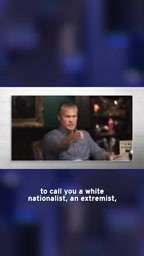
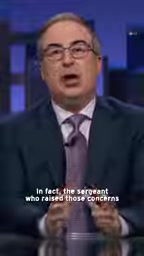
The sergeant who raised the concern also explicitly clarified: "This had nothing to do with the Jerusalem cross tattoo on his chest—it was entirely about the Deus Vult tattoo on his inner bicep." The episode thereby raises a key question: Hegseth deliberately swapped which tattoo was at issue in his telling, and this evasion itself is more worth interrogating than the meaning of the tattoo. As the host's analogy goes—Ariana Grande once thought her Japanese tattoo said "seven rings" when it actually said "barbecue grill," and that was ignorance; but for someone who has long spoken on conservative military-political issues to have Deus Vult tattooed on his body while claiming not to understand its context is far less credible.
Jerusalem cross, also known as the "Crusader cross," is an equal-armed cross with four smaller crosses in each corner. It originated during the Crusades and later became one of the Christian symbols, especially common in Anglicanism and Lutheranism. Unlike "Deus Vult," the Jerusalem cross has not been widely appropriated by white supremacist groups in contemporary times, so Hegseth's description of it as "innocuous" has some basis. But the episode points out that it was precisely this relatively benign symbol that was used to divert attention from another, more controversial tattoo.
Deus Vult is Latin for "God wills it," originating from Pope Urban II's call to arms during the First Crusade (1096–1099). In contemporary times, this slogan has been widely adopted by the far right, white supremacists, and the alt-right, often tied to anti-Islamic, anti-immigrant, and "defending Western civilization" narratives. After 2016, it became one of the important cultural symbols of the online right. As a result, the U.S. military and security vetting agencies are highly sensitive to this tattoo, believing it may suggest extremist tendencies.
The Policy Implications of Christian Nationalism
Putting the personal narrative back into policy context, Hegseth's book provides a more complete framework: he packages diversity training in the military, transgender service policies, critical race theory, and similar content as "woke" threats, arguing that the military should return to some singular "warrior culture." This discourse is effective in mobilizing conservative voters, but at the level of defense management, the problem is that it binds military personnel composition to ideological purity rather than focusing on readiness and discipline. The episode characterizes this tendency as one manifestation of Christian nationalism—not referring to personal piety, but to presupposing a particular religious culture as the core of national identity.
Christian nationalism is a political ideology that advocates establishing a particular Christian culture, values, and symbols as the core of national identity, and holds that national policy should reflect this religious tradition. It differs from personal piety or religious practice; it is a normative claim about national belonging and public order. In the United States, Christian nationalists often view the separation of church and state as an erosion of a "Christian nation" and tend to see diversity policies as threats to the traditional order. Hegseth's description of DEI and military diversity training as a "cultural Marxist revolution" is a typical expression of this ideology.
The Institutional Tensions Behind the Controversy
The public value of this episode lies not in defining a particular tattoo, but in exposing the credibility problems in the civil-military transition. When a nominee for high office shapes an image of himself as "persecuted for his faith" through an incomplete narrative, Senate hearings and media fact-checking become necessary checks and balances. The sergeant's testimony in the episode directly confronts the podcast's self-account, and this kind of multi-source cross-verification is exactly how public discussion should work. For readers concerned with AI and technology issues, this is also a reminder: no matter how technology evolves, institutional decisions remain highly dependent on whether the statements of the individuals involved can withstand factual scrutiny.
The Hegseth case illustrates that the boundary between ideological narrative and defense management is becoming blurred. The core of the controversy is not whether he can possess religious symbols, but whether, when such symbols overlap with extremist contexts, public officials have an obligation to offer a candid explanation—rather than replacing the one actually questioned with a more innocuous symbol.
One-line Summary
The Hegseth controversy reveals the penetration of Christian nationalism into defense management and the credibility problems of public officials' statements.
Paragraph Summary
The controversy surrounding U.S. Secretary of Defense nominee Pete Hegseth goes far beyond his personal conduct. His 2024 book The War on Wokeness frames DEI as a "cultural Marxist revolution" eroding the Pentagon and claims it affects recruitment. A breakdown by the YouTube program Last Week Tonight found that Hegseth claimed he was removed from a National Guard assignment protecting Biden's inauguration because of an "innocuous Christian tattoo," but what actually raised security concerns was the "Deus Vult" tattoo on his inner left arm—the First Crusade battle cry later appropriated by white supremacist groups. The sergeant involved explicitly clarified that the controversy had nothing to do with the Jerusalem cross on his chest, directly confronting Hegseth's podcast narrative. The episode links Hegseth's views to Christian nationalism, pointing out that its policy implication lies in presupposing a particular religious culture as the core of national identity and binding military personnel composition to ideological purity. The case exposes credibility problems in the civil-military transition and emphasizes the key role of multi-source cross-verification in institutional checks and balances.
Related articles

AI Voice Agent Answers Business Calls for 7 Days: Real Data and Lessons Learned
A business owner let an AI voice agent answer calls for 7 days: 43 calls, 24 real people, 7 bookings, $9.26 total. Breakdown of setup, the Day 4 calendar failure, usage-based billing risks, and why workflows matter more than prompts.

Why Your Browser Deserves Serious Attention: Reflections and Choices After Arc's Demise
Starting from Arc's demise, why browsers deserve serious attention: how tab management, profiles, and sync affect efficiency—and why most browsers are just poor Arc clones.

Using Taleb's Barbell Strategy to Build a Career Plan That's AI-Proof
AI layoffs and slow hiring make stable jobs fragile. This article explains Taleb's barbell strategy: 85% on transferable skills, external networks, and cash; 10-15% on small bets, with claims adjuster Jake's real transition path and four steps you can take this month.