The Kevin O'Leary Data Center Investigation: The Journalism Behind Five Months of Reporting

The Verge spent five months investigating O'Leary's Utah AI data center, revealing both the project's controversies and journalism's verification playbook.
The Verge conducted a five-month investigation into investor Kevin O'Leary's Stratos ("Wonder Valley") data center project in Utah, revealing how it advanced through rapid state approvals and military agency support while leaving local residents uninformed — sparking a fierce backlash. O'Leary labeled opponents "Chinese agents," triggering defamation suits and a forced public apology, with the project ultimately scaled back. The report also offered a rare look at investigative journalism's verification process: the pre-publication "no-surprises email" listing all factual claims, plus dual layers of fact-checking and legal review. O'Leary's team shifted from pledging full transparency to issuing legal threats — a reversal The Verge incorporated directly into the story, highlighting the deepening clash between capital's pace and public accountability in the AI infrastructure boom.
Tech media outlet The Verge has published an in-depth investigation into a Utah data center project backed by investor Kevin O'Leary — the famously blunt "Mr. Wonderful" from Shark Tank — drawing a fierce response from those involved. The report not only reveals how a major AI infrastructure project advanced rapidly amid controversy, but also offers a rare look at the verification processes behind serious investigative journalism.
The Story Behind a "Wonder Valley" Project
The project is officially named Stratos, though O'Leary himself prefers to call it "Wonder Valley." The Verge reporter Josh Reza spent a full five months investigating it.
According to the report, the project moved at breakneck speed, securing a string of state-level approvals with the involvement and support of a military-affiliated agency — all while local residents remained almost entirely in the dark until the project was already taking shape. That information asymmetry sparked a fierce backlash.

Faced with protests from local residents, O'Leary's response was itself controversial: he accused opponents of being "Chinese agents." The allegation quickly escalated into defamation suits and threats, ultimately forcing O'Leary into a public apology. According to The Verge, the project has since been scaled back significantly — but the disputes surrounding it are far from over.
The episode reflects a broader tension running through the current AI data center construction boom: the conflict between the speed sought by capital and government, and communities' rights to information and environmental impact assessments.
The AI data center building boom is one of the most defining trends in tech investment in recent years. As demand for compute from large language models (LLMs) has exploded, Microsoft, Google, Amazon, and a wave of private capital have announced hundreds of billions of dollars in data center investment plans. These facilities typically require massive amounts of electricity and water for cooling, which tends to push them toward inland regions with lower energy costs and abundant land — Utah being a prime example. At the same time, many state governments, eager to attract investment and create jobs, offer expedited permitting and tax incentives for such projects. This "race to the bottom" logic in economic development often compresses environmental review and community notification processes, sparking strong pushback from local residents. O'Leary's involvement as an investor in this type of project is itself a reflection of how AI infrastructure investment has spread from the tech world into traditional finance.
What Is a "No-Surprises Email"?
The Verge used the occasion to shed light on the verification mechanisms behind serious investigative reporting, central to which is the so-called "no-surprises email."

Before a major story is published, a media outlet will typically send a key subject an email laying out every factual claim in the piece, every statement made about that person, and an invitation to respond. The goal is to ensure fairness — giving the subject an opportunity to present their own perspective.
This process reflects a core principle of responsible journalism: no ambush-style exposés. The subject gets a chance to clarify facts or offer a rebuttal before the story goes live. It's both a form of respect for the people being reported on and an important safeguard for the outlet itself.
The "no-surprises email" isn't any one outlet's invention — it's a specific form of the pre-publication notification practice widely used by serious news organizations in the US and UK. The legal backdrop: under defamation law, if a media outlet can demonstrate that it gave a subject adequate opportunity to respond before publication, that helps establish good faith and due diligence in any potential lawsuit. These emails typically include the specific allegations in the story, the evidentiary basis for them (without revealing confidential sources), and a clear deadline for response. The subject's reply — whether a clarification, rebuttal, or "no comment" — is usually quoted or presented directly in the piece. The mechanism therefore serves two purposes simultaneously: journalistic fairness, and legal self-protection.
From "Open Kimono" to Legal Threats
The most dramatic turn in this story lies in how the subject's attitude changed over time.

When the investigation began, the CEO of O'Leary Enterprises told reporter Josh that he would be "open kimono" — fully transparent, nothing held back. Five months later, when The Verge sent its no-surprises email, the project's circumstances had changed dramatically.
By that point, the O'Leary team was no longer willing to engage with the press. Instead, they had lawyers respond — with language to the effect that while they hoped the coverage would be fair, they would be forced to "hold this account" if it contained any inaccuracies.
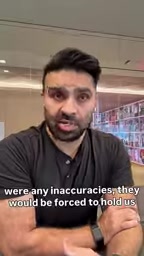
The Verge's handling of this is telling: they included the lawyer's response verbatim in the story, treating it as the relevant reply from the O'Leary team. The shift in attitude itself communicates volumes to readers.
How a Media Outlet Holds Its Ground Against Billionaire Threats
The Verge emphasized that major reports like this go through two layers of review: fact-checking and legal review. The editorial team expressed full confidence in the story.
This reflects the standard playbook for serious media outlets when facing legal threats from powerful figures: arm yourself with rigorous fact-checking and airtight legal processes. When the subject is a billionaire with resources to spare, that kind of procedural discipline is especially critical — it serves both as a shield against defamation suits and as the foundation of the reporting's credibility.
As AI infrastructure investment continues its breakneck expansion, projects like Wonder Valley will only multiply. The tension between the speed of capital and public accountability is destined to play out again and again. Whether independent media can withstand the pressure to complete this kind of investigation directly determines whether the public ever learns the true nature of these projects.
The predicament facing independent media under legal pressure from the powerful is especially acute in today's media landscape. Strategic Lawsuits Against Public Participation (SLAPP) are a common tool of intimidation: even when a lawsuit has little chance of succeeding, the high cost of litigation can be enough to force smaller outlets into self-censorship or retraction. Some US states have enacted anti-SLAPP laws that allow defendants to seek early dismissal of such suits and require plaintiffs to cover legal fees. The Verge, backed by Vox Media's legal resources, has the capacity to withstand this kind of pressure. But this also exposes a structural problem: as resource-strapped local media continues to wither, the number of outlets capable of sustaining long investigations into well-funded projects — and holding firm under legal threat — is shrinking fast.
Related articles

OpenAI Partners with Shield: How the Astra Agent Revolutionizes IT Troubleshooting
OpenAI and Shield launch the Astra agent, which autonomously logs into computers and legacy systems to fix IT issues in real time, 35-40% faster than traditional models, with humans involved only when judgment is needed.

iPhone Duo Battery Life Tested: One Charge a Day Is Unavoidable, and the Large Screen Is the Culprit
iPhone Duo battery test: heavy use needs at least one charge a day, and about 30% remains after 6.5 hours of screen-on time. How often the large screen is unfolded is key; a MagSafe battery pack helps, and long-term degradation is also worth watching.

Kimi K3.1 Pro Open-Sourced: 2.8 Trillion Parameters Close In on Opus
Moonshot releases the open-source MoE model Kimi K3.1 Pro, with 2.8T total parameters and 104B activated, trailing Opus 5.5 by under 1 point on Terminal Bench 4.0.