The Legal Loophole Behind the Cornell Seven Case: New York's Voluntary Intoxication Controversy
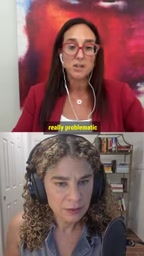
The Cornell Seven case reveals how New York's voluntary intoxication loophole makes sexual assault prosecution nearly impossible.
A YouTube interview analyzing the Cornell Seven case exposes a structural flaw in New York State's sexual consent law: when a victim voluntarily consumed alcohol or ketamine and did not lose full consciousness, current law makes effective prosecution nearly impossible. The interviewee unpacks the DA's legal reasoning — while the reasonable person standard points morally toward perpetrator culpability, evidentiary thresholds and legal definitions make conviction extremely difficult. The discussion calls on the public to recognize the fundamental difference between "voluntary intoxication" and "voluntary consent," and urges systemic legislative reform to close this long-standing gap.
A Legal Puzzle Behind the Case
This YouTube interview centers on the widely discussed "Cornell Seven case," in which the interviewee — who openly acknowledges she is not a lawyer — attempts to unpack the core message conveyed by the District Attorney (DA) in their public statement: that drugs and alcohol are the pivotal elements of this case.
According to the interview, the young woman involved admitted she had been drinking and had used ketamine at the time. This fact makes the case extraordinarily complex from a legal standpoint. Under New York State law, whether a person who voluntarily ingested alcohol or drugs can still be considered capable of giving sexual consent has become the central controversy of the entire case.
The "Cornell Seven case" refers to a 2024 sexual assault allegation at Cornell University involving multiple male students. The case drew widespread attention due to the number of individuals implicated and the university's handling of the matter, quickly becoming a landmark case in discussions about campus sexual violence in the United States. After the case came to light, the District Attorney's public statement became a focal point — particularly remarks suggesting prosecution was difficult due to legal constraints. Supporters viewed this as an honest assessment of legal reality; critics worried such statements send the wrong message to victims that reporting is futile. The presence of ketamine also brought drug-facilitated sexual assault (DFSA) into the public spotlight — a category of cases that faces notoriously high dismissal rates and conviction difficulties worldwide, due to victims' impaired post-incident memory and the challenge of preserving physical evidence.
New York's "Voluntary Intoxication Loophole"
The interviewee states plainly that New York State law is "very problematic" in cases like this, and calls it an area "in urgent need of legislative reform." She notes that advocates have been calling for years to close what is commonly referred to as the "voluntary intoxication loophole," yet relevant legal reform has never materialized.
The core issue is this: under current New York State law, when a victim voluntarily consumed an intoxicating substance and was not completely unconscious, prosecuting the perpetrator becomes exceedingly difficult. In other words, the law draws a line between "voluntarily intoxicated but still conscious" and "completely incapacitated" — and it is precisely this line that creates a massive barrier for the prosecution.
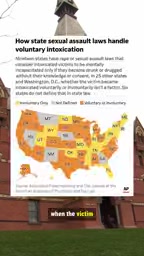
From a comparative law perspective, different jurisdictions handle "capacity to consent while intoxicated" in strikingly different ways. UK law (Sexual Offences Act 2003) explicitly states that if a person is severely impaired due to alcohol or drugs, their consent is invalid regardless of whether that state was self-induced. The Supreme Court of Canada has also established through multiple rulings that consent must be "contemporaneous, sober, and ongoing," meaning voluntary intoxication cannot serve as a foundation for valid consent. By contrast, New York State's current law (Penal Law §130 series) largely limits "incapacity" to situations of complete unconsciousness or deception, with no clear protective provisions for the gray area of "severely impaired but still conscious." This legislative gap is not unique to New York, but its long-standing failure to be revised has been repeatedly cited in U.S. discussions on sexual consent law reform.
The "Reasonable Person Standard" and the Burden of Proof
The interviewee further points out that, based on what is known, the victim's condition at the time was such that "a reasonable person should have recognized her state." This touches on another legal standard — whether the perpetrator "knew or should have known" that the other party was incapable of giving meaningful consent.
Yet even when the circumstances appear obvious from a common-sense perspective, proving this in legal practice remains deeply challenging. The interviewee agrees with the DA's assessment: "At this point, this is a very, very difficult case to prove." She also identifies herself as "a big prosecutor," but acknowledges that hard cases are hard precisely because of the evidentiary threshold and the constraints of legal definitions.

The "reasonable person standard" is a cornerstone tool in common law systems for assessing subjective knowledge: courts do not read the defendant's mind directly, but instead ask whether "a reasonable person in the same circumstances should have known the other party was unable to give valid consent." Applying this standard in sexual assault cases is particularly complex — the defense typically argues the defendant held an "honest belief" that the victim was consenting, while the prosecution must prove that belief was objectively unreasonable. Ketamine, as a dissociative anesthetic, causes distorted time perception, impaired physical coordination, and severely compromised judgment — but its outward signs are sometimes less obvious than those of alcohol intoxication, creating additional difficulty in proving that bystanders (including the defendant) "should have noticed." Jurors' varying levels of awareness about drug effects also make outcomes in such cases harder to predict.
The Urgent Need for Legislative Reform
The interview ultimately lands on the urgency of legal reform. The interviewee argues that while such cases are difficult to prosecute under current law, "we know that reforming the law is critically important." She hopes this case can serve as an example to help the public better understand the evidentiary challenges involved and the inadequacy of current law in protecting victims.
This discussion reflects a broader issue: when the law's definition of "capacity to consent" diverges from society's moral intuitions, legislative updates become all the more necessary. "Voluntary intoxication" is not the same as "voluntary consent" — yet under the literal framework of current New York State law, the line between the two can become an escape hatch from legal accountability.

Summary
The Cornell Seven case has attracted attention not only for the incident itself, but for what it exposes: a long-standing structural gap in New York State's sexual consent legislation. The interviewee's analysis makes one thing clear — the problem is not prosecutorial inaction, but the limitations of the legal tools available. To truly close the "voluntary intoxication loophole," individual cases alone are not enough to drive change. Systemic legislative reform is the only real solution.
(Note: This article is based solely on a single YouTube interview. The interviewee explicitly stated she is not a practicing attorney; the legal analysis presented should be taken as reference only.)
Related articles

NVIDIA's 30,000 Developers Use Cursor, Code Commit Volume Triples
Cursor engineer Chris Diaz breaks down five organizational gaps blocking enterprise AI coding scale—strategy, risk tiering, governance, metrics, and operating model. NVIDIA's 30,000 developers use Cursor daily, tripling code commits while defect rates stay flat. The key: rewrite the SDLC, not add tools.

Ponytail: Giving AI Coding Agents a Senior Engineer's Mindset
Ponytail is a free GitHub tool that injects a senior engineer's mindset into AI coding agents, making them ask whether code is even necessary first. According to TamilDeck, it can compress 200 lines of AI-generated code to 30, cutting token costs, with support for Cursor rules and Claude Code skill integration—though security review still requires human oversight.

Complete Guide to Connecting Cursor AI to the GitHub MCP Server
A step-by-step guide to connecting Cursor AI to the GitHub MCP server: create a personal access token, configure mcp.json, store the token in the ENV block, and verify with a PR query.