The Machine Learning Paper Flood: Is the CS Academic System Approaching a Breaking Point?
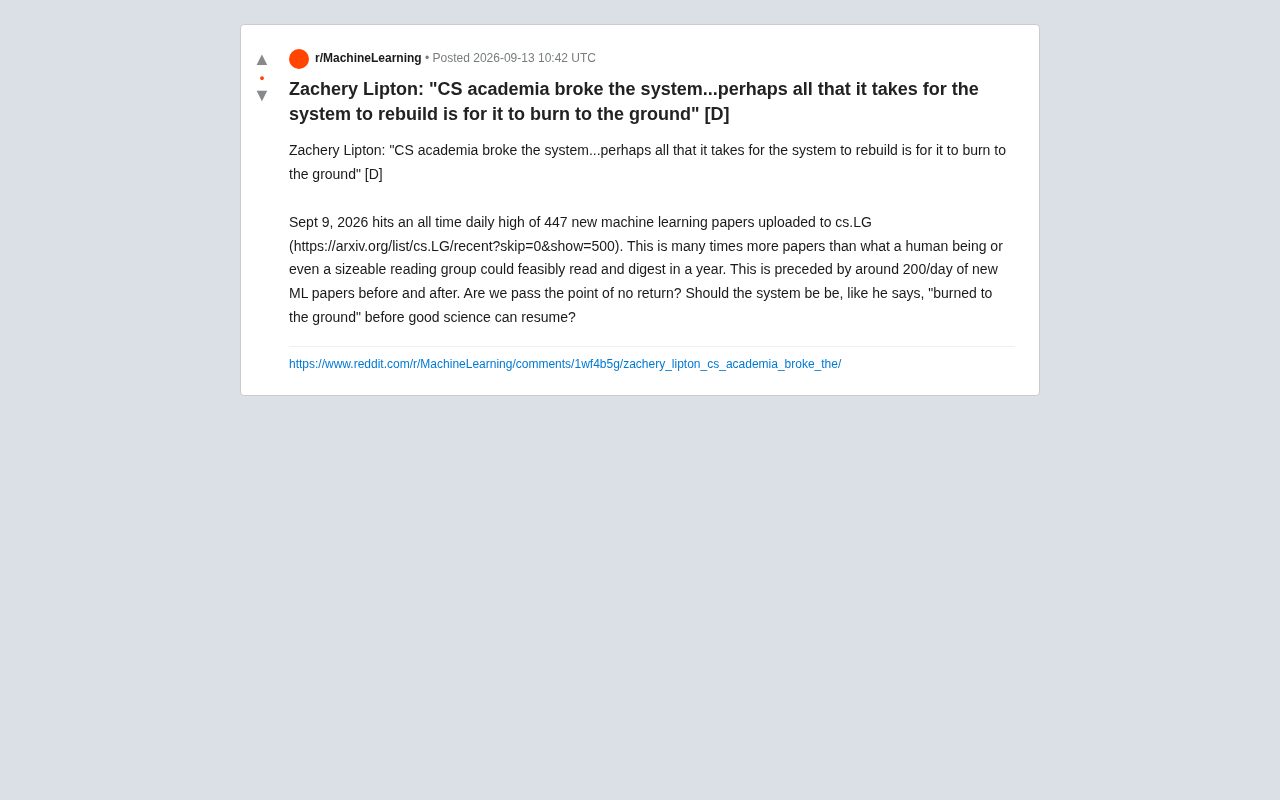
ML papers hit 447 in one day — CMU scholar Zachery Lipton says the academic system needs to burn and rebuild.
In September 2026, arXiv's machine learning subcategory hit a single-day peak of 447 new papers, with a daily average already around 200 — tens of thousands per year, far beyond anyone's ability to absorb. CMU researcher Zachery Lipton's incendiary "let it burn" argument targets the structural root cause: when publishing is the hard currency of academic careers, incentives decouple from real scientific progress, triggering peer review collapse, incremental research proliferation, and a reproducibility crisis. AI tools may accelerate both the problem and potential fixes, while proposed reforms include shifting from paper counts to impact metrics, rewarding reproducibility, and exploring registered reports and open peer review.
447 Papers in a Single Day: The Alarm Behind the Numbers
On September 9, 2026, arXiv's cs.LG (machine learning) category set a new single-day record: 447 new paper submissions. The number isn't alarming because of its sheer size — it's alarming because of the absurdity it reveals. No individual, or even a reasonably large reading group, could absorb that volume of output in an entire year. And this peak is no anomaly: in the period surrounding it, cs.LG had already settled into a daily average of roughly 200 new papers.
Scaled to a yearly figure, this means a single subfield now generates tens of thousands of papers annually. When research output outpaces any researcher's ability to read, verify, and synthesize it, a natural question emerges: can this system still function?
Lipton's Radical Verdict: Burn It Down to Build It Back
Carnegie Mellon University machine learning researcher Zachery Lipton put forward a provocative claim: "CS academia has broken this system… maybe what it takes to rebuild it is letting it burn to the ground."
The statement ignited debate in Reddit's machine learning community. Lipton's core indictment isn't about paper volume per se — it targets the structural pathology driving that volume. When publishing becomes the hard currency of career advancement, grant applications, and student graduation, the incentive structure of academia gradually decouples from genuine scientific progress. Researchers are pushed toward publishing more and faster, rather than digging deeper and slower.
"Burn to the ground" is extreme rhetoric, but it expresses despair at incremental fixes. When a system's incentive structure fundamentally rewards the wrong behaviors, patching it may be futile — only tearing it down and starting over can restore a healthy scientific ecosystem.
How the Quantity Explosion Erodes Scientific Quality
The runaway growth in paper counts isn't an isolated phenomenon — it triggers a cascade of downstream problems.
The Collapse of Peer Review
The supply of reviewers can never keep pace with the growth in submissions. When each reviewer is assigned papers that exceed their available time or area of expertise, review quality inevitably declines. Rushed, perfunctory, or student-outsourced reviews hollow out what should be the field's primary quality-control mechanism.
The Proliferation of Incremental Research
Under the pressure of "publish or perish," researchers are incentivized to slice a single idea into multiple "minimum publishable units," or to claim novelty through minor tweaks to existing methods. Genuinely original work — the kind that requires long-term commitment and risks failure — gets deprioritized because it doesn't fit a rapid-output rhythm.
The Reproducibility Crisis
Of the flood of papers being published, how many have undergone rigorous replication? When no one has time to verify results, errors, exaggerations, and irreproducible findings can quietly enter the literature and corrupt the foundations of subsequent research.
Have We Already Passed the Point of No Return?
One sharp question circulating in Reddit discussions: have we already crossed a threshold we can't come back from?
There's no easy answer. On one hand, machine learning is a rapidly evolving field, and high output partly reflects genuine technological vitality and growing global participation — more countries, more institutions, and more researchers joining the conversation is, in principle, a good thing. On the other hand, as the signal-to-noise ratio of published work keeps deteriorating, the cost of identifying quality research rises, and the community's collective attention may be diluted to the point where it can no longer form meaningful consensus.
It's worth noting that AI tools are simultaneously accelerating both the problem and potential solutions. Large language models could be used to mass-generate or repackage papers, inflating volume further. But AI-assisted literature filtering, automated review, and research quality assessment tools could also become instruments for restoring order amid the information flood.
Rebuild — Not Just Burn
"Burn to the ground" makes for a punchy slogan, but rebuilding a scientific system is far more complex than destroying one. Several potential reform directions have emerged from community discussions:
Shifting evaluation frameworks from counting papers to measuring impact, reducing mechanical dependence on publication volume. Building stronger incentives for reproducibility, so that verification work earns genuine academic credit. Exploring new publication and review models — such as registered reports, open peer review, and community scoring — to relieve the overload on traditional peer review.
Lipton's verdict may be extreme, but it strikes at an unavoidable reality: when a field's output velocity has completely outpaced human capacity to absorb it, we must rethink what good science looks like — and how the institutions that support it should be designed. The number 447 is less an endpoint than a fire alarm.
Conclusion
The machine learning paper explosion is not a purely technical phenomenon — it is the product of academic incentives, career pressures, and technological tools acting in concert. Lipton's "burn and rebuild" thesis is an emotionally charged extreme, but the anxiety behind it is real and widely shared. Whether through gradual reform or radical restructuring, the field must confront a core contradiction: an ever-widening gap is opening between explosive growth in output and the sustainable quality of science.
Related articles
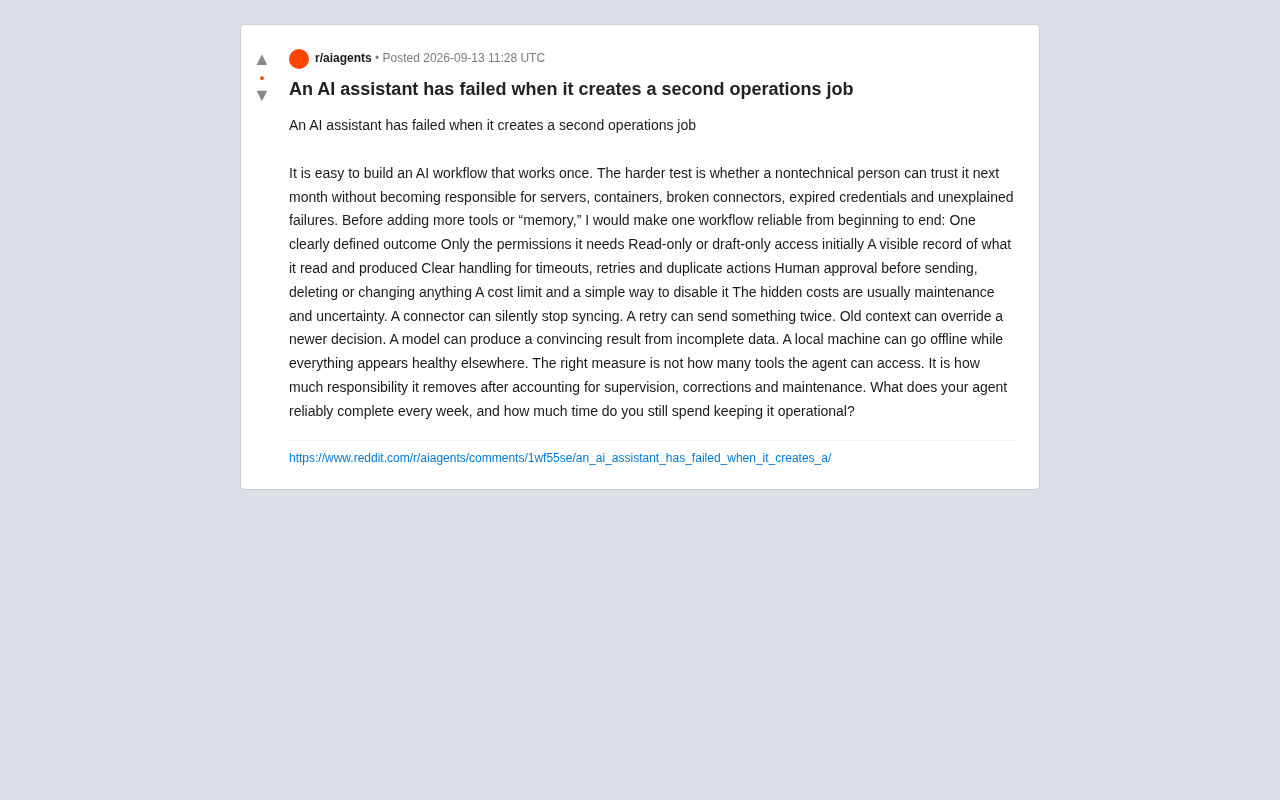
The True Failure of an AI Assistant: When It Creates a Second Operations Job
A Reddit user reframes how to judge AI assistants: they fail when they create a second ops job. Learn how to build end-to-end reliable workflows and measure Agent value by net benefit, not tool count.
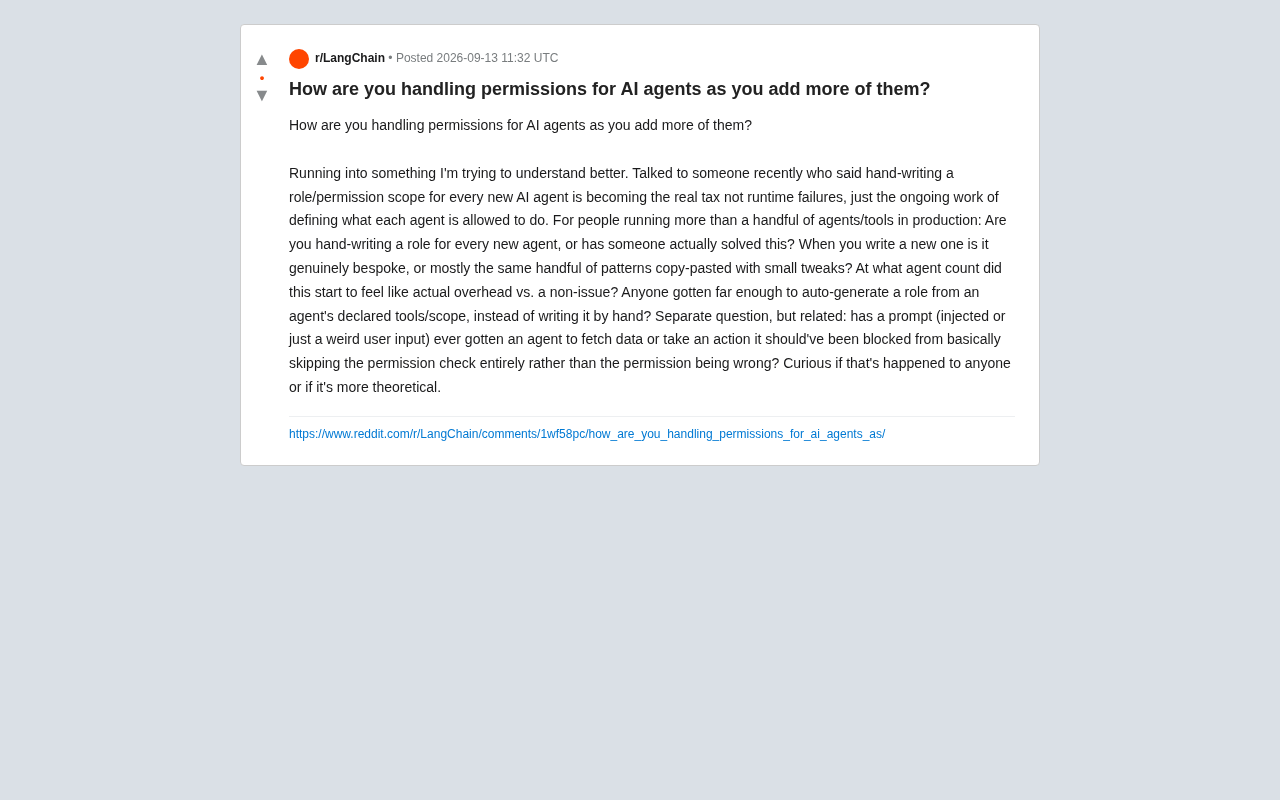
AI Agent Permission Management: Is Writing Roles Manually the New Hidden Tax?
As AI Agent counts grow, manually defining permission roles is becoming a hidden operational burden. This article explores scalability challenges, auto-generated roles, and the security risk of prompt injection bypassing permission checks.
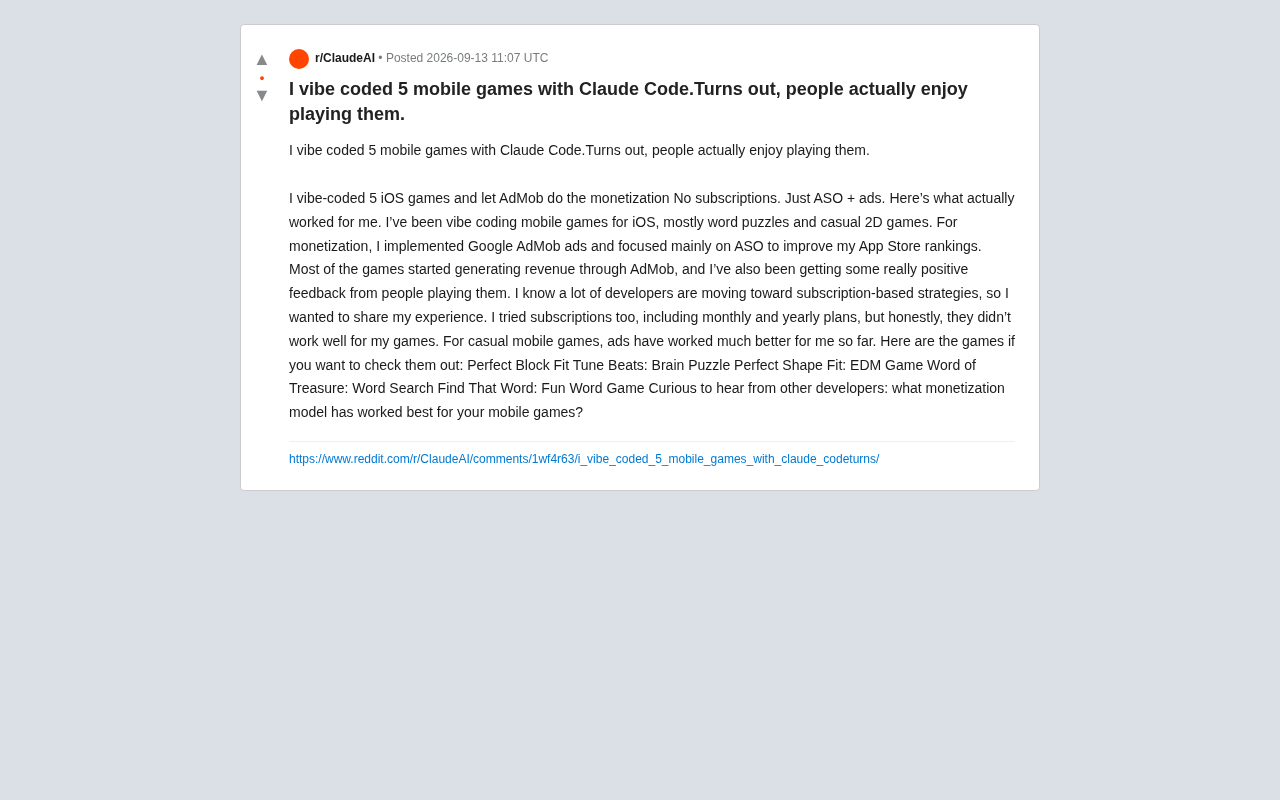
Vibe Coding 5 Mobile Games with Claude Code: Ad Monetization Beats Subscriptions
An indie dev built 5 iOS casual games with Claude Code vibe coding. His verdict: AdMob ads plus ASO optimization outperform subscriptions for casual games.