The Postmenopausal Ovary Doesn't Retire: New Findings Challenge Conventional Wisdom
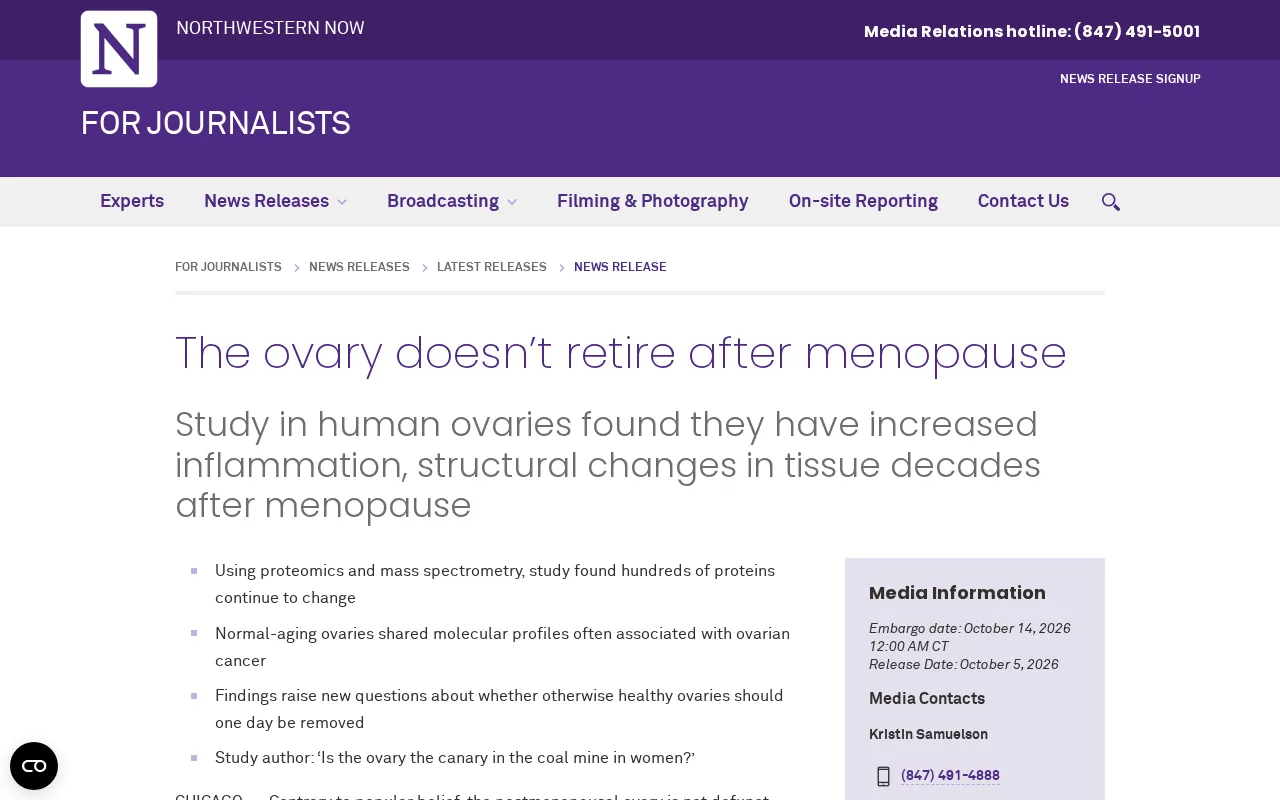
New perspective suggests the postmenopausal ovary isn't fully retired and retains low-level activity, challenging traditional views.
The article explores the new perspective that the postmenopausal ovary may not completely stop working. Traditionally, it was believed that after menopause follicles are depleted and ovaries atrophy, but recent research has detected local steroid hormone synthesis and regulatory factor secretion in postmenopausal ovarian tissue, suggesting a low-level active state. This finding has potential implications for hormone replacement therapy, ovarian cyst screening, and surgical decisions, and helps explain hormone-related symptom fluctuations in some postmenopausal women. However, evidence is limited, with small samples and no long-term follow-up, so it cannot directly guide clinical practice. Future larger studies are needed to verify the functional significance of residual ovarian activity and to precisely map cellular atlases using technologies such as single-cell sequencing.
For a long time, the medical community has widely believed that after menopause, ovarian function declines and the ovaries enter a state of "retirement." However, a recent discussion posted on Hacker News has attracted widespread attention—research suggests that the postmenopausal ovary does not completely stop working; it may still participate in endocrine regulation or produce other physiological effects in some way. This view challenges the descriptions in traditional textbooks and opens a new window for women's health research.
Traditional Understanding vs. New Perspective
Traditional wisdom holds that after menopause, ovarian follicles are depleted, estrogen levels plummet, and the ovaries subsequently atrophy and lose function. But in recent years, research has begun to focus on the sustained activity of ovarian stromal cells and immune cells. According to research abstracts cited by the Hacker News community, local synthesis of steroid hormones can still be detected in postmenopausal ovarian tissue, and certain regulatory factors may even be secreted. This means that the notion of "ovarian retirement" is overly simplistic—the postmenopausal ovary may enter a low-level but active state.
This finding echoes multiple previous observations: some postmenopausal women still have detectable trace levels of androgens and estrogens, and the health effects of oophorectomy differ from those of natural menopause. Although the mechanisms remain unclear, this at least suggests that the biological lifespan of the ovary is longer than we imagined.
Ovarian stromal cells are the supportive cell population in the ovary other than follicles, mainly including theca cells, fibroblasts, and smooth muscle cells. After menopause, follicles are depleted, but stromal cells can still survive and maintain a certain level of activity; they can locally synthesize androgens (such as androstenedione), which can be converted to estrogens in peripheral tissues. Local synthesis of steroid hormones refers to the process by which ovarian tissue itself uses cholesterol to synthesize hormones, independent of follicular structures. In recent years, studies using tissue culture and mass spectrometry have detected intermediates such as pregnenolone, progesterone, and androgens in postmenopausal ovarian tissue, suggesting that stromal cells may maintain low-level steroidogenesis. In addition, immune cells (such as macrophages) infiltrating the ovarian stroma may participate in local regulation by secreting cytokines. These findings explain why some postmenopausal women still have trace hormone levels, but the specific regulatory mechanisms and clinical significance remain to be clarified.
Implications for Women's Health Management
If the postmenopausal ovary still has function, some assumptions in clinical practice need to be reexamined. For example, decisions about hormone replacement therapy (HRT) after menopause may no longer be simply about supplementing missing hormones, but may also need to consider the ovary's own residual activity. At the same time, screening strategies for ovarian cysts and tumors may also need adjustment, because active tissue means different risk profiles.
Some experts pointed out in the discussion that this finding helps explain why some women still experience hormone-related symptom fluctuations after menopause, rather than a simple linear decline. Future research directions may include: identifying the specific substances secreted by the postmenopausal ovary, assessing their long-term effects on cardiovascular and bone health, and exploring whether surgical decisions to preserve the ovaries should be made more cautiously.
Hormone replacement therapy (HRT) is a medical treatment in which postmenopausal women receive exogenous estrogens and/or progestogens to relieve menopausal symptoms and prevent osteoporosis. Traditional HRT decisions are based on the assumption of "complete loss of ovarian function," but if the ovary still has residual activity, HRT dosage and regimens may need to be individualized. For example, androgens locally synthesized by the ovary may be converted to estrogens in peripheral tissues, affecting the body's hormone balance; therefore, simply supplementing estrogens may not fully mimic the physiological state. In addition, the health effects after oophorectomy (prophylactic removal) differ from those of natural menopause, possibly suggesting that the ovary still contributes certain protective factors after menopause. When formulating HRT plans, clinicians should comprehensively consider residual ovarian activity, symptom severity, and individual risk, rather than mechanically following a uniform standard. Future research needs to define quantitative indicators of residual activity to guide precision treatment.
Research Limitations and Controversies
Although the new perspective is compelling, the available evidence remains limited. The discussion on Hacker News also mentioned that the relevant studies have small sample sizes and lack long-term follow-up data. The degree of "activity" of the postmenopausal ovary varies greatly among individuals, and some women may have almost undetectable activity. Therefore, this cannot be used to deny traditional understanding, let alone directly guide clinical medication.
In addition, research on postmenopausal ovarian function is mostly concentrated at the histological level, and functional evidence is still insufficient. Larger prospective studies are needed to validate these findings and clarify the causal relationship between residual ovarian activity and disease risk.
Single-cell sequencing and spatial transcriptomics are cutting-edge methods for analyzing cellular heterogeneity and spatial distribution within tissues. Single-cell sequencing can identify the gene expression profiles of different cell types in the postmenopausal ovary, revealing the functional states of stromal cells, immune cells, and others; spatial transcriptomics can locate these cells within the tissue and reveal their interactions. These technologies are expected to address the limitations of existing research, such as small sample sizes and lack of functional evidence—for example, by comparing the cellular atlases of postmenopausal and young ovaries to identify residual active cell populations and their regulatory pathways. However, these technologies are costly, involve complex data analysis, and require fresh tissue samples, so they have not yet been widely applied in postmenopausal ovary research. In the future, combining organoid models and long-term follow-up could enable a more comprehensive assessment of the physiological significance of residual ovarian activity.
Future Outlook
The idea that the postmenopausal ovary does not retire is essentially a reconceptualization of the complexity of female physiological aging. It reminds us that the functional decline of human organs is not a simple "on-off" pattern, but a gradual process that may include compensatory mechanisms. With the development of single-cell sequencing and spatial transcriptomics, it will be possible in the future to more precisely map the cellular atlas of the postmenopausal ovary, thereby providing a basis for personalized health management.
For general readers, the significance of this topic lies in the fact that menopause is not the end of health, and the biological story of the ovary may last longer than we think. Staying informed about scientific progress and communicating fully with doctors is the key to managing health during and after menopause.
One-line Summary
A new perspective suggests that the postmenopausal ovary does not fully retire and retains low-level activity, challenging conventional wisdom.
Paragraph Summary
The article explores the new perspective that the postmenopausal ovary may not completely stop working. Traditionally, it was believed that after menopause, follicles are depleted and the ovaries atrophy. However, recent studies have detected local synthesis of steroid hormones and secretion of regulatory factors in postmenopausal ovarian tissue, suggesting that the ovary enters a low-level active state. This finding has potential implications for hormone replacement therapy, ovarian cyst screening, and surgical decisions, and helps explain fluctuations in hormone-related symptoms in some postmenopausal women. However, the available evidence is limited, with small sample sizes and lack of long-term follow-up, and cannot directly guide clinical practice. Future larger-scale studies are needed to verify the functional significance of residual ovarian activity and to precisely map cellular atlases using technologies such as single-cell sequencing.
Related articles

Mysterious Synchronized Disturbances Hit Global Power Grids — German Team Finds the Culprit
Mysterious synchronized power drops hit grids worldwide. A German team found the culprit. This article explains the coordinated disturbances, the research breakthrough, and what it means for grid monitoring and operations.
NVIDIA Board Investigates Espionage Ca…
NVIDIA Board Investigates Espionage Case: CEO's Admission of Extramarital Affair Sparks Internal Turmoil
NVIDIA's board has launched an espionage investigation following the CEO's admission of an extramarital affair. This article analyzes the background, corporate governance logic, and potential impact on NVIDIA, noting that current information is limited and should be viewed rationally.
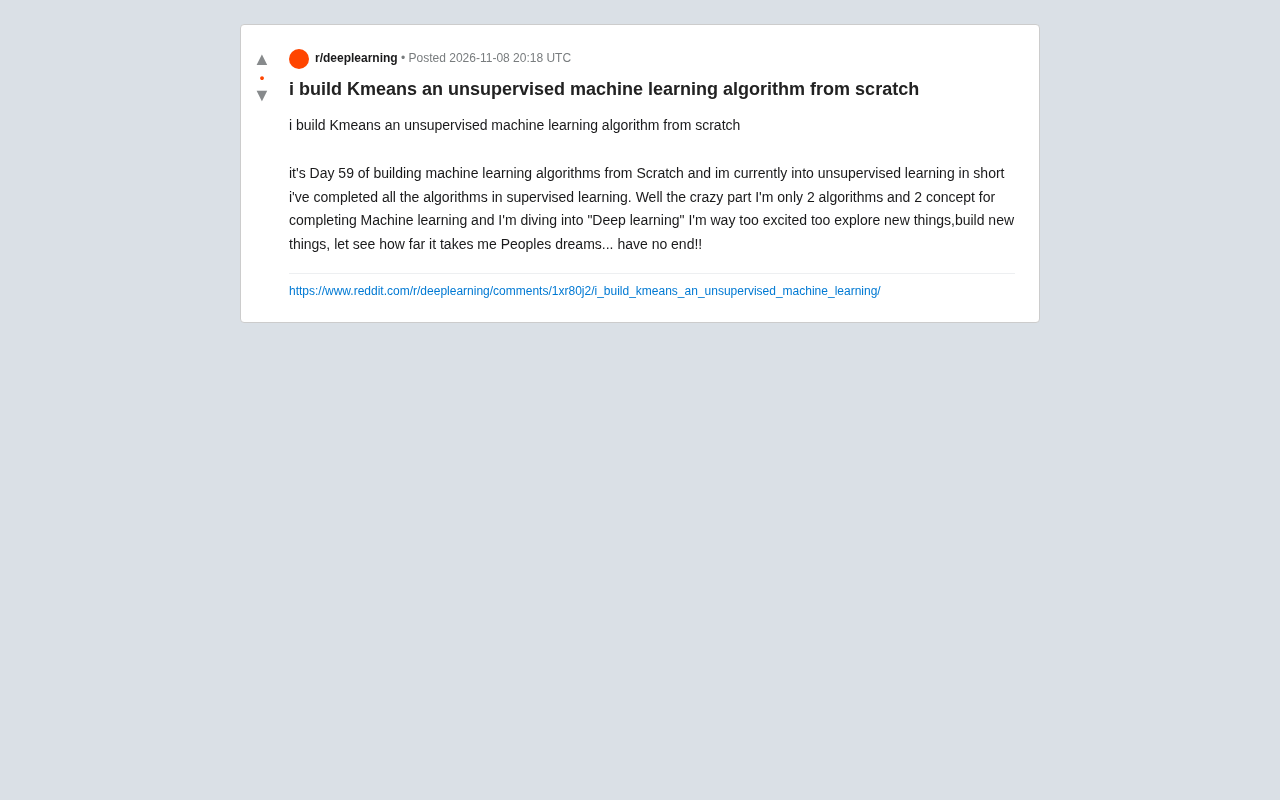
Writing K-Means from Scratch: One Developer's Journey into Machine Learning
A developer shares day 59 of writing K-Means from scratch: finishing all supervised learning algorithms and entering unsupervised learning, covering K-Means++ initialization, vectorized distances, convergence and empty clusters.