The Privacy Dilemma of Smart Glasses: Who's Being Watched?

Smart glasses' biggest hurdle isn't tech—it's rebuilding the social trust broken by covert recording.
The greatest barrier to smart glasses adoption is not display tech or battery life, but a privacy trust crisis. From Google Glass's failure and the "Glasshole" stigma to Meta's ever-more-inconspicuous new products, this article analyzes how wearable cameras break social trust boundaries and why manufacturers must rebuild the social contract between people.
How Hollywood Shaped—and Distorted—Our Imagination of Smart Glasses
For a long time, Hollywood's portrayal of wearable devices like smart glasses has contained an inherent contradiction: it paints an alluring picture of the future while subtly distorting the public's real expectations of the technology. From the 007 series to various sci-fi blockbusters, hidden cameras and glasses with built-in displays have always been bound up with concepts like "espionage" and "superpowers," making smart glasses appear both cool and dangerous.
This on-screen representation constitutes a special mechanism of cultural expectation management, which academics call the "Sci-Fi Premium"—that is, because the public has long absorbed technological fantasies from film and television, they develop unrealistic performance expectations of actual products. This phenomenon has deep roots in cognitive science: the "Availability Heuristic" theory in psychology, proposed by Nobel laureate Daniel Kahneman, refers to people's tendency to assess the likelihood and value of something based on the examples that most easily come to mind.
It's worth noting that the historical roots of the "Sci-Fi Premium" phenomenon can be traced back to the golden age of science fiction in the mid-20th century. The technological imaginations constructed by writers such as Arthur C. Clarke and Isaac Asimov, through Hollywood's visual re-creation, gradually crystallized into a "technological benchmark" at the level of the collective unconscious. This process has a corresponding mechanism at the neuroscientific level: repeated exposure to specific images strengthens the synaptic connections of related neural circuits in the brain, forming what is known as an "engram," which gives these fictional scenarios priority over real technological information during memory retrieval.
The "Sci-Fi Premium" phenomenon overlaps with multiple heuristic mechanisms in cognitive science, forming a special ecology of technological cognitive bias. In addition to the "Availability Heuristic," the "Anchoring Effect" also plays a key role: when consumers, before encountering the actual product, have already been "anchored" by the super versions in Hollywood imagery, any real function falling short of that anchor is perceived as a defect rather than a reasonable technological boundary. This mechanism works in concert with the "Peak-End Rule" in behavioral economics—people's memory of an experience often depends on its peak and end, rather than its overall average; Hollywood provides precisely the "peak experience" of technological imagination, making the "ordinary moments" of real products seem especially bland.
The formation of the "Sci-Fi Premium" also involves the "Prototype Effect" in cognitive science—the human brain tends to use the most typical sample as the benchmark for evaluating new things, and Hollywood imagery has constructed precisely the "cultural prototype" of smart glasses. This effect is particularly pronounced among Gen Z consumers: a 2022 Nielsen survey showed that 67% of those aged 18-25 listed sci-fi film and television as their primary channel for learning about emerging technology, higher than the 43% who relied on professional media coverage. This means that the "first impression" of technology products is increasingly shaped by entertainment content rather than technical documentation, systematically raising manufacturers' product education costs.
When consumers' "first impression" of smart glasses comes from decades of accumulated Hollywood imagery—the holographic projection glasses in Mission: Impossible, J.A.R.V.I.S.'s AR interface in Iron Man, the implantable memory-replay devices in Black Mirror—these vivid superpower images become the default reference frame for evaluating real products, resulting in a systematic gap between expectation and reality. On-screen smart glasses are almost invariably endowed with supernatural information-processing capabilities and nearly infinite battery life, reinforcing two extreme impressions: either an omnipotent super tool or a privacy-invading surveillance weapon. When real products hit the market, they can neither meet the functional fantasy of the former nor escape the moral stigma of the latter, forming a dual market barrier. Research from the MIT Media Lab shows that consumers deeply steeped in sci-fi film and television generally report lower satisfaction with actual smart glasses products than groups with less media exposure.
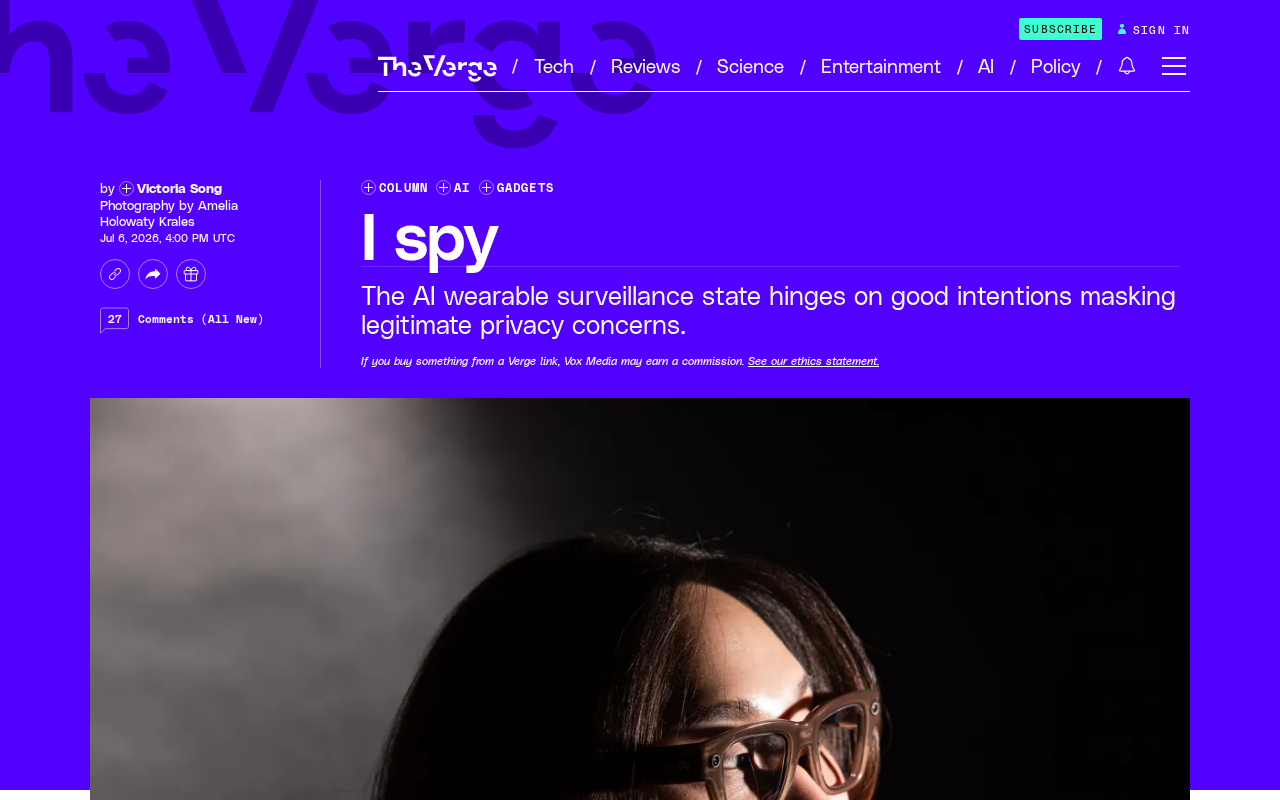
However, when technology truly enters reality, the high expectations set by Hollywood often create a gap with the products' actual capabilities. Those repeatedly reinforced "surveillance" narratives also saddle smart glasses with a negative label that's hard to shake off. This is precisely the core cultural dilemma facing smart glasses today.
An Industry Pain Point Accidentally Revealed by a TV Series
After watching two seasons of the Netflix series A Man on the Inside, it's not hard to conclude that this is perhaps the first time Hollywood has—albeit possibly unintentionally—authentically portrayed the biggest cultural challenge facing today's smart glasses.
In the show, the character played by Ted Danson works as an "insider" who needs to use covert recording devices to complete his tasks. This plot setup precisely captures the awkward position of wearable camera devices: when someone wearing a device capable of shooting and recording at any moment appears in a public or private setting, the people around them have no way of knowing whether they are being recorded.
From "I'm Watching" to "I'm Being Watched"
One of the core functions of smart glasses is point-of-view (POV) shooting. This technology has undergone a critical evolution from action cameras to smart glasses, representing a continuous decline in the "social visibility" of recording devices.
The miniaturization journey of POV recording technology is itself a history of micro-engineering. In the 1990s, head-mounted cameras weighed several kilograms and were mainly used in professional sports broadcasting; the emergence of the GoPro in 2004 shrank the size to that of a fist, but still required prominent mounting brackets; in 2013, Google Glass first integrated a recording module into an eyeglass frame, although its protruding prism-shaped display module remained conspicuous. The real turning point came with the synergistic breakthrough of CMOS sensors and on-chip neural network processors—Qualcomm's Snapdragon AR Gen series chips integrated image signal processing (ISP), neural network acceleration (NPU), and baseband communication into a single package, reducing the total volume of the camera module to one-tenth of what it was before.
Behind the miniaturization of CMOS image sensors lies the exponential evolution of semiconductor manufacturing processes. The commercialization history of CMOS image sensors is key background for understanding this evolution: in 1993, former Intel engineer Eric Fossum invented the active pixel sensor (APS) at NASA's Jet Propulsion Laboratory, laying the technical foundation for modern CMOS cameras. Compared with the previously mainstream CCD sensors, the CMOS approach has systematic advantages in power consumption, integration, and manufacturing cost—the three metrics that happen to be the core constraints of wearable device design. From the micron-level processes of the 1990s to today's TSMC 3-nanometer process node, transistor density per unit area has increased about a millionfold following Moore's Law. The core challenge of smart glasses camera modules is not simply size reduction, but maintaining a balance between sufficient photosensitive area (to ensure image quality in low light) and computational throughput within an extremely small package. Sony's Exmor RS series and OmniVision's backside-illuminated (BSI) CMOS solutions reduced readout noise by about 40% without expanding the photosensitive area by vertically stacking the pixel layer and circuit layer—this architectural innovation is a key technical prerequisite for the commercialization of eyewear-grade camera modules. The social significance of this hardware evolution trajectory lies in this: the direction of technological progress and the demand for privacy protection have formed a structural tension—the more advanced the device, the lower its social visibility.
Because of their obvious size and helmet-mounting method, action cameras like the GoPro usually make people around them aware that recording is taking place. Smart glasses, however, integrate the camera module into the frame, compressing the camera aperture to the millimeter scale, combined with CMOS sensor miniaturization and on-chip AI processing capabilities, achieving "zero-perception" recording—the camera aperture of new-generation products like the Meta Ray-Ban smart glasses is only about 2 millimeters in diameter, extremely difficult to distinguish from the decorative screws on ordinary sunglasses. For the wearer, this means freeing up their hands and being able to record life at any moment; but for those around them, it means a potential, hard-to-detect form of surveillance.
From an information theory perspective, there is a serious information asymmetry between the recorder and the recorded: the wearer clearly knows whether the device is working, while bystanders have no way of judging. This asymmetry is called "surveillance power imbalance" in sociology—the party holding the recording capability is naturally in a position of informational advantage, which further intensifies this power imbalance. This is precisely the deep reason why smart glasses are difficult for society to widely accept.
Unlike taking photos with a phone, the act of pulling out a phone and aiming it at someone is clear and visible; the person being photographed can perceive it and respond. Smart glasses, by hiding the camera in an everyday accessory, thoroughly blur the boundary between "recording" and "not recording," quietly stripping those present of their right to know and right to choose.
Privacy Anxiety: A Social Proposition Beyond Technology
The challenge facing smart glasses has essentially transcended the technical level of hardware performance or battery life, rising to a social and cultural proposition. The failure of Google Glass back in the day is one of the most typical cases of social acceptance in the history of technology.
Google Glass opened for developer testing in 2013 at a high price of $1,500, went on public sale in 2014, but announced the discontinuation of the consumer version in 2015. From a technical standpoint, its Texas Instruments OMAP 4430 processor and 682mAh battery were already aggressive attempts for the time, but the hard constraints of computing power and battery life limited functional depth; from a commercial standpoint, the high price limited early users to a technical elite, forming a user profile of "innovators" rather than the "early majority," lacking a design capable of crossing the "Chasm" in Geoffrey Moore's theory.
Google Glass's market failure sparked ongoing discussion in the field of innovation management, with the core controversy being: was this a case of "premature market probing" or a "fundamental product definition error"? The argument for the former is that Google Glass's enterprise version (Glass Enterprise Edition) continues to survive today in B2B scenarios such as industrial inspection and surgical assistance, showing that the technology itself has market value; the argument for the latter points to the product design's failure to solve the fundamental problem of "social acceptability"—no matter when it was launched, publicly recording glasses that fail to address privacy concerns would face similar resistance. This divergence itself reveals the deep dilemma of commercializing wearable technology: technological maturity and social acceptance are two relatively independent curves, and their intersection is the true commercialization window for a product.
This involves the deeper logic of Everett Rogers's "Diffusion of Innovations" theory: the theory divides consumers into five groups—innovators (2.5%), early adopters (13.5%), early majority (34%), late majority (34%), and laggards (16%). The market dilemma of smart glasses is that the reasons early adopters (tech enthusiasts) accept the device—novel functionality, a display of technological taste—fundamentally diverge from the core needs of the early majority (practicality, inconspicuousness, social acceptance). Google Glass's Explorer version strategy actually reinforced rather than bridged this chasm, cementing its brand image as a "geeks-only" label before reaching the mainstream market.
The most underestimated factor in Google Glass's failure is perhaps the user stratification behind the pricing strategy: the early users filtered out by the $1,500 Explorer version had a strong motivation for technological display, and their use in public settings itself became a catalyst for negative PR events, forming a rare "negative pioneer effect" in Diffusion of Innovations theory—the behavior of early adopters not only failed to drive mainstream consumers but systematically raised the psychological resistance threshold of the latter. A 2014 Pew Research Center survey showed that 72% of respondents found Google Glass "uncomfortable," a figure far exceeding the negative rating of smartphone camera functions during the same period (31%), revealing the unique social resistance to wearable recording devices.
The derogatory term "Glasshole" was born accordingly, specifically used to mock those who wore Google Glass in public and made those around them uncomfortable. Some bars, restaurants, and even casinos explicitly banned wearing them inside. This failure left a profound warning for the entire industry: no matter how advanced the hardware technology, if it cannot win social trust, it cannot escape the fate of being eliminated by the market.
Today, the new generation of smart glasses launched by companies like Meta more closely resemble ordinary glasses in appearance, making them even more inconspicuous. From a privacy protection perspective, however, this design progress may actually intensify public unease—the harder it is to tell whether a device is working, the more guarded people become.
Can Indicator Lights Solve the Privacy Problem?
To alleviate privacy anxiety, mainstream smart glasses are usually equipped with a shooting indicator light, attempting to inform those around them through a visible signal that "the device is working." This design can be traced back to regulatory requirements in the surveillance camera field—both the EU's General Data Protection Regulation (GDPR) and various U.S. state privacy laws require recording devices to provide clear notice when collecting personal data.
It's worth noting that the GDPR primarily targets data controllers (enterprises) rather than individual users, leaving consumer-grade wearable recording devices in a long-standing regulatory gray area. Although the 2023 EU AI Act classifies biometric identification systems as high-risk, it has no clear constraints on non-real-time, non-identifying everyday video recording; the absence of unified legislation at the U.S. federal level leaves smart glasses privacy norms fragmented, with the initiative for setting industry standards effectively falling into the hands of manufacturers.
When the notification principle is transplanted to wearable devices, its actual effect is greatly diminished. The white LED indicator light on Meta Ray-Ban glasses has a brightness of about 5 lumens, nearly invisible in direct sunlight; more importantly, the light can be disabled through firmware modification or physical obstruction—in 2023, researchers publicly released relevant hacking tutorials on GitHub. U.S. Senator Ed Markey once wrote to Meta on this issue, demanding stronger tamper-proof design for the indicator light, but there is still no unified industry standard for this topic.
The more fundamental problem is that it shifts the responsibility of "protecting privacy" onto bystanders—requiring others to proactively identify the signal, which is inherently unreasonable. From a human-computer interaction (HCI) research perspective, a truly effective privacy prompt should be proactive and multimodal, rather than relying on passive identification by bystanders.
The Future of Smart Glasses: Rebuilding Social Trust
The reflection prompted by A Man on the Inside shows that for smart glasses to truly become widespread, what needs to be solved is not just display technology, AI capabilities, or battery life, but more critically, the rebuilding of social trust between people.
What technology manufacturers really need to consider is: how to reach a new social contract between wearers and non-wearers. This concept originates from Rousseau and Locke in the Enlightenment era, with the core proposition being that individuals cede part of their freedom in exchange for collective security and order. However, the "Contextual Integrity" theory proposed by legal philosopher Helen Nissenbaum provides a more precise analytical framework—she argues that the essence of privacy violation lies not in whether information is collected, but in whether the flow of information conforms to the normative expectations of a specific social context.
This theory, published in 2004, was initially used to critique internet data collection practices, but its analytical framework has strong operational guidance value for smart glasses product design. Nissenbaum's core insight is that privacy norms are not absolute but context-dependent—the legitimacy of the same piece of information flowing in different social contexts is entirely different. Apple explicitly cited this theory when designing the AirDrop feature, linking file transfer permissions to social context (strangers, contacts, everyone); the Intelligent Tracking Prevention (ITP) feature in the Safari browser likewise reflects the idea of context-dependent data flow control. Applying this framework to smart glasses means that "shooting permission" should not be a global switch, but a context-adaptive permission system. Technical implementation paths could include: scene classification based on GPS and semantic maps (home, medical, public square, etc.), combined with machine learning models to identify social context sensitivity in real time, dynamically adjusting recording behavior and proactively notifying those present. However, this places extremely high demands on edge AI inference capabilities, which partly explains why truly context-aware privacy protection features have yet to be implemented in consumer-grade products. Sony conducted focus group research during the development of SmartEyeglass and found that consumer acceptance of "clear notification of usage scenarios" was far higher than "technical notification" (such as indicator lights), providing the industry with a reference for product design direction.
The use of smart glasses in high-privacy-expectation scenarios such as restaurants, hospitals, and bedrooms naturally violates the existing norms of these contexts, which explains why people still feel uncomfortable with the device even when there is no actual data breach. In the digital age, the social contract framework is being extended to discussions of the boundaries of technology use—the proliferation of wearable camera devices essentially introduces new variables into the original social contract, and the boundary between an individual's freedom to record and others' privacy rights needs to be renegotiated.
Scholar Shoshana Zuboff, in her book The Age of Surveillance Capitalism, points out that when recording behavior evolves from an active operation into a passive environmental feature, society's psychological threshold for "being observed" will systematically decline—this judgment is being verified in the market acceptance data of smart glasses. Harvard scholar Bruce Schneier described such devices as the physical embodiment of "ambient surveillance," and the social-psychological impact of this shift is exactly what Michel Foucault's "Panopticon" model reveals: when people cannot judge whether they are being observed, they tend to engage in continuous self-censorship, leading to a systematic contraction of spontaneous expression and social behavior in public spaces.
Foucault's analytical framework gains a new realistic dimension in the context of smart glasses. Foucault's analysis of Bentham's "Panopticon" in Discipline and Punish (1975) originally targeted the disciplinary mechanisms of modern state power, with the core insight being: truly effective power does not need to be continuously exercised, but only needs to make the surveilled "believe they may be seen at any moment" to achieve self-discipline. While the power center of the traditional Panopticon is clear (the prison guard, the state apparatus), smart glasses create a "distributed Panopticon"—any wearer may become a potential observer, and the disappearance of the power center makes the psychological mechanism of self-censorship harder to identify and resist. It's worth noting that Foucault's theory itself also faces criticism: some scholars believe it overemphasizes individual passivity, ignoring the space for resistance and negotiation—this criticism, in the context of smart glasses, corresponds to the rise of user autonomous coping strategies such as "privacy-enhancing technologies" (PETs) and "anti-surveillance fashion," reminding us that the interaction between technology and society is not a one-way domestication, but a dynamic process of continuous negotiation. Sociologist David Lyon describes this phenomenon as the routinization of "Surveillance Culture": when surveillance technology is embedded in everyday accessories, the anxiety of "being seen" spreads from special occasions to all domains of public life.
A 2023 field experiment at Stanford University documented this effect: in a café environment where visible smart glasses users were introduced, other customers' average dwell time was shortened by 23%, and the frequency of public phone calls and face-to-face conversations dropped by 17%, providing empirical evidence for the applicability of Foucault's theory in the contemporary technological context. Addressing this challenge may involve more transparent recording notification mechanisms, stricter privacy regulations, and a social consensus-building process around wearable device usage etiquette.
With a "undercover" story, Hollywood inadvertently captured the core contradiction of wearable camera devices—when technology grants individuals unprecedented recording capabilities, every one of us may become an object of observation without our knowledge. In this game between privacy and convenience, winning public trust is the true key to smart glasses going mainstream.
Key Takeaways
Related articles
EU Rules AI-Generated Content Is Not Protected by Copyright: What This Means for Creators
The EU has clarified that AI-generated content is not copyright-protected, requiring works to reflect human intellectual creation. Analysis of legal basis, US comparison, and industry impact.

The Double Standard of Data Scraping: Aaron Swartz Was Prosecuted While Meta Walks Free
Aaron Swartz faced 35 years for downloading academic papers while Meta scrapes copyrighted content for AI training with impunity. An analysis of data scraping's judicial double standard.

Scrolling Short Videos Shuts Down the Brain's Cognitive Control Network: A Neuroscience Study Explained
Neuroscience research finds that watching TikTok and other short videos significantly suppresses the brain's cognitive control network, causing users to lose self-control. This article explains the findings, community discussion, and coping strategies.