The Rise of Agentic Commerce: How AI Agents Are Rewriting the Payment and Wallet Wars

Once AI agents gain payment credentials, they shift from advisors to transaction executors, with wallet wars and agentic token standards reshaping payments.
Based on a conversation between a16z's Alex Rampell and VGS's Terry Angelos, the article covers AI agents gaining payment credentials and shifting from recommending to directly completing bookings and transactions, igniting a new wallet war among Stripe Link, Shop Pay, and PayPal. VGS evolved from a credential vault into a multi-party token brokerage network, with agentic tokens growing from zero to millions weekly in three months. It analyzes Amazon's ad-driven blocking of Muse, Walmart's last-mile advantage, and flaws of one-time virtual cards in disputes and repeat purchases. Card networks' open agentic token standards aim to support agent transactions while preserving real card rights and arbitration, but liability for agent errors remains unresolved. It ends with overhyped savings migration, underhyped unmonetized demand, and the coming restructuring of the rewards economy.
From Bystander to Actor: Agents Gain Payment Credentials
Over the past three months, AI agents have made a critical leap—from "bystanders" that can only offer suggestions to "actors" that can actually complete transactions. According to a podcast conversation between a16z partner Alex Rampell and VGS Chief Strategy Officer Terry Angelos, the core of this shift is that agents have gained payment credentials, essentially acquiring "hands and feet."
A vivid example: Terry's wife wanted to find a piano teacher for their 7-year-old son, which required coordinating a complex set of conditions—three days of soccer practice each week, the teacher's home visits, and so on. He let an agent handle the task, and the agent not only filtered candidates and confirmed schedules but also directly booked the first lesson. This leap from "recommendation" to "execution" is precisely the qualitative change that payment credentials enable.
The rise of Agentic Commerce has directly ignited the so-called "wallet wars"—every digital wallet is racing to connect with agents. Agents choose wallets based on clear criteria: first, the wallet with the most existing consumers; second, the wallet with the broadest merchant network. Currently, Stripe Link has about 300 million consumer accounts and 1 million merchants, Shopify's Shop Pay covers about 1.7 million merchants, and PayPal has over 400 million accounts and roughly 30 million merchants.
The Nature of the Wallet Wars: From "Dead Cow Wallets" to Agent Intermediaries
The wallet wars are nothing new. Alex recalls that a wallet battle took place over a decade ago, with the core logic being the mindshare capture of "default stored credentials"—consumers see a flower shop and think of using PayPal, a Pavlovian conditioned reflex that is enormously valuable to the wallet provider.
Before digital wallets emerged, consumers used physical leather wallets jokingly called "dead cow wallets" (because they were made of cowhide). Capital One hired Samuel L. Jackson to ask in ads, "What's in your wallet?"—the goal being to make consumers pull out their Capital One card at checkout. In the digital wallet era, the competition became "I am your default payment method"; and within the wallet, issuers still competed for the "top-of-wallet" position—Visa once helped issuers spend tens of millions of dollars fighting for the default card position on Uber and Airbnb.
Now the agent era brings a third layer: wallets as transaction intermediaries interacting directly with agents. Terry points out that the word "wallet" is overused—Apple Pay essentially hands a tokenized card to the merchant, who decides whether to route through Chase or Adyen; whereas Shop Pay, Link, and PayPal are wallets that directly complete the transaction and settle with the merchant. Agentic commerce is fusing these two models.
Tokenization is the technical foundation for understanding wallets and agent payments. Tokenization refers to replacing sensitive original card numbers (PANs) with meaningless substitute values (tokens), which can only be mapped back to the real card number by a specific Token Service Provider (TSP) in specific scenarios. For merchants, storing tokens instead of card numbers can dramatically reduce PCI DSS compliance scope; for consumers, even if a merchant's database is breached, the token cannot be directly misused in other contexts. Wallets like Apple Pay, Stripe Link, and Shop Pay are essentially tokenization systems: Apple Pay generates device-specific tokens, and Link generates network tokens usable by merchants. Agentic tokens are an extension of this—they bind not only the device and merchant but also "who is initiating the transaction" (agent identity) and "the transaction context" (amount limits, purpose), allowing agents to complete payments without touching real card numbers.
PCI DSS (Payment Card Industry Data Security Standard) is a mandatory security specification jointly developed by the card networks. The latest version contains hundreds of control requirements covering network segmentation, encryption, access control, log auditing, and more. Any entity that stores, processes, or transmits cardholder data must comply, and the cost of compliance audits is especially heavy for small and medium merchants. One of the core selling points of VGS's "vault" model is that it removes PCI DSS scope from merchants—merchant systems only touch tokens, while real card numbers are isolated and held by VGS, greatly reducing the merchant's compliance burden. This also explains why "not touching payment information" is so commercially valuable: it outsources an expensive, ongoing, specialized security engineering task to a professional institution.
VGS's Three-Layer Evolution: From Vault to Credential Brokerage Network
The name VGS (Very Good Security) is itself a geek joke—a homage to PGP (Pretty Good Privacy), meaning "not pretty good security, but extremely reliable security." The company currently provides secure credential storage for about one-third of U.S. e-commerce GMV, with roughly 10 billion credential records.
Terry divides VGS's development into three overlapping evolutionary stages:
Stage One: The Vault. Merchants don't want to touch consumers' 16-digit card numbers; VGS captures and encrypts them for storage, and merchants retrieve them from the vault for each transaction without ever touching payment information. This also helps merchants move PCI DSS compliance (a rulebook of over 100 pages) out of their own scope—you can't process credit cards without completing PCI compliance, and VGS turned this into its own specialty.
Stage Two: Information In and Out. About one-third of cards need to be updated each year (25% due to four-year expiration, 5% due to reissuance, fraud, or events like Capital One's acquisition of Discover). VGS connects to the card networks' account updater tools to ensure stored credentials remain valid.
Stage Three: The Network Era. VGS began brokering credentials among multiple parties—providing tokenization services for agents, for wallets, and for merchants. Terry reveals that three months ago this business was zero; today it processes millions of agentic tokens per week.
Alex summarizes this shift as "the vault going from single-player to multiplayer mode": in the past, the vault only served a merchant's own subscription charges; now the same credential must be securely delivered to agents, merchants, and multiple payment processors, multiplying its value. "Any business that goes from single-player to multiplayer mode essentially becomes more interesting."
Amazon Blocks Muse: Fight or Embrace?
Agentic commerce is not without resistance. Amazon recently blocked agents such as Muse, and Alex believes there is solid financial logic: Amazon is fundamentally an advertising company, advertising is more profitable than selling goods, and agents have no eyeballs to sell. "You can't monetize an agent's eyeballs."
He proposes an analytical framework: merchants can choose to fight agentic commerce or embrace it wholeheartedly. Fighters have real reasons (such as Amazon's ad revenue), but embracers will capture more transactions—if ChatGPT says "you should buy here" and the process is smooth, while another merchant asks you to interrupt your nap to complete 15 CAPTCHA verifications, consumers will naturally flow to the former. Terry adds a more granular picture: Amazon has fear, Walmart has greed (thanks to its last-mile delivery advantage, agents actually benefit it), while small and medium merchants in the Shopify ecosystem have no choice—this could be a crucial new channel.
This parallels the evolution of open banking. The Plaid vs. Chase dispute ultimately ended with "you can access, but only through my API, my tokenization method." In the future, merchants may also launch "opinionated APIs"—Best Buy salespeople have commission incentives, and a merchant's agent will likewise have a stance on what to sell you, while the consumer's agent will represent your interests. The likely outcome of this game is that consumers win, but the shape is still unclear.
Trust Mechanisms and Liability: Unresolved Challenges
One of the core challenges facing agentic commerce is trust and liability. Alex breaks down a traditional transaction into three steps: whether the card is valid (Luhn algorithm check + bank confirmation), whether the cardholder is who they claim to be (signature + ID), and whether they are of sound mind at the time of transaction (the judgment a Las Vegas casino makes).

Mapping this to the agent scenario: card validity is a solved problem; "whether this is authorized by the person" is solved through agents registering with Visa/Mastercard; but the third step—"whether the agent is of sound mind"—i.e., whether the agent hallucinated, got the date or amount wrong, currently has no well-established liability allocation mechanism. If a user says "find a hotel in San Diego under $500," the agent books the wrong one, and the card network verified everything as compliant, who bears the dispute? Terry believes agents may ultimately need to bear some liability, and competing agents will use "we cover you if something goes wrong" as a differentiator.
Current transitional solutions have obvious flaws. Terry recounts his own experience buying a chandelier: the agent found the product at Walmart, but Stripe Link had no connection to Walmart, so Stripe used a one-time virtual card to make the purchase and then charged Terry separately—similar to the DoorDash model. The transaction itself succeeded, but when Walmart later invited him to sign up for Walmart Plus, the payment failed because he held a Stripe one-time card. More troublesome is dispute handling: if the chandelier had a problem, Terry would call Capital One, and the bank would only see a Stripe transaction; someone testing this called Amex and was actually transferred to a Stripe engineer's cell phone—Stripe had not set up a dispute call center.
This is precisely why Visa and Mastercard's position is hard to shake: they intermediate everything, set the rules, and provide dispute arbitration. Crypto payments are cool, but they are bearer instruments—once paid, you can't get it back, and for most consumer scenarios, this trust mechanism is indispensable.

The Luhn algorithm is a simple checksum algorithm used to verify the format validity of a bank card number: digits are weighted and summed, and if the result is divisible by 10, the format check passes. It can only detect input errors or randomly forged card numbers; it cannot determine whether a card actually exists, has credit, or is frozen—these must be confirmed by the issuer in real time. So what Alex calls "whether the card is valid" actually contains two layers: Luhn verification solves "does the number look right," and bank authorization solves "can this transaction be made." In the agent scenario, the former has long been automated, the latter relies on tokens and risk systems, and what is truly unresolved is the third layer: "cardholder intent and soundness of mind."
Bearer instrument is a legal and financial concept referring to a credential where possession confers rights and transfer requires no registration; cash and most cryptocurrencies are typical examples. Its characteristic is "payment is transfer"—there is no central authority recording the chain of ownership, so once transferred by mistake or defrauded, recovery is nearly impossible. This contrasts sharply with card payments: the card network records the initiator, merchant, amount, and time of every transaction, and in a dispute a chargeback can be initiated and arbitrated by the card network. If agentic commerce adopts bearer instruments, a single erroneous action by an agent could cause irreversible loss; whereas the card networks' centralized intermediation, though less efficient, provides a traceable, arbitrable foundation of trust—which is the deep reason Visa and Mastercard's position is hard to shake.
Open Standards: The Breakthrough Path for Agentic Tokens
The card networks have launched a new "agentic tokens" standard, attempting to move from AOL-style walled gardens to open standards. The process is: a wallet (such as Link, Shop Pay, or PayPal) tokenizes the user's Capital One Visa card and securely hands it to the agent; the agent carries context ("I am a verified agent, this purchase is under $100") to the merchant; and the merchant still receives a token corresponding to the user's real card number. This way Walmart sees a transaction belonging to Terry, the subsequent Walmart Plus subscription invitation can be completed normally, and disputes return to the familiar framework of card network rules.
VGS is currently the largest provider of such agentic tokens, serving agents, wallets, and some merchants. Terry expects that as the transition from walled gardens to open standards proceeds, this will become the mainstream form of agentic commerce.
Walled Garden originally referred to closed online services like early AOL: users could only access content curated and hosted by the provider and could not freely connect to the open internet. In the payment context, it refers to wallets or platforms locking users, merchants, and transactions within their own systems, with credentials and rules not interoperable externally. The early "one-time virtual card" approach in agentic commerce was a typical walled garden: Stripe generated a one-time card for the agent to place an order at Walmart, and although the transaction was completed, Walmart only saw Stripe's card and could not identify the real user behind it—repeat purchases, subscriptions, and dispute handling all broke down. The open agentic token standard promoted by the card networks attempts to break this fragmentation: tokens flow between wallets, agents, merchants, and acquirers under unified rules, and merchants still receive tokens corresponding to the user's real card number, thereby preserving the card networks' existing dispute arbitration and account updater mechanisms. The battle between open standards and walled gardens is essentially a contest over "who controls the transaction context and the user relationship."
What's Overhyped, What's Underhyped
Terry's judgment is: Silicon Valley overhypes, the rest of the world underhypes. He gives an example: Tesla's autonomous driving in 2017 was a joke, while the current version is genuinely usable—much of the skepticism about AI comes from outdated experiences three years ago.
Overhyped: Agent-driven savings migration. Terry thinks that as both a Mercury and Chase customer, he should in theory move savings to Mercury with better rates and transfer to Chase on bill day, but real-world friction (Chase's better bill payment page, more integrations) is enough to prevent this "perfect arbitrage"—financial services won't fluctuate dramatically because of agents.
Underhyped: Unmonetized demand. Someone in Terry's cycling WhatsApp group regularly recommends low-rolling-resistance tires, and he wants to buy every time but only changes them once every two years—if an agent were in that group, every recommendation would trigger a purchase. At the same time, agents will help users save money (canceling forgotten subscriptions, trial periods), but the money saved will flow to new demands. Human desire is infinite, and the "always-on" nature of agents is far from fully unleashed.
Another chain reaction worth watching is the rewards economy. The credit card points system is built on "breakage"—users forgetting to use certain points, or using a card in a category where they shouldn't. When agents intermediate all transactions and precisely optimize reward categories, the business model of the entire points ecosystem will be forced to restructure.
Conclusion
Agentic commerce is turning payments from "a person remembering at 2 a.m. that they need to buy flowers" into "an agent doing the right thing at the right time." The value of infrastructure companies like VGS lies in being that "boring but necessary" vault—and when the vault goes from single-player to multiplayer mode, a boring business becomes the hub of network effects. The wallet wars, merchants' resistance and embrace, the card networks' new standards, and the unresolved question of liability—these four threads will together define the payment landscape of the coming years.

One-line Summary
Once AI agents gain payment credentials, they shift from advisors to transaction executors, with the wallet wars, agentic token standards, and liability reshaping the payment landscape.
Paragraph Summary
Based on a conversation between a16z partner Alex Rampell and VGS Chief Strategy Officer Terry Angelos, the article traces the critical leap after AI agents gained payment credentials: agents moved from merely recommending to directly completing bookings and transactions, igniting a new "wallet war" among Stripe Link, Shop Pay, PayPal, and others competing to connect with agents. VGS evolved from a credential vault into a multi-party token brokerage network, with agentic token volume going from zero to millions per week in three months. The article analyzes the advertising logic behind Amazon's blocking of Muse, the benefits for last-mile players like Walmart, and the flaws of one-time virtual card solutions in dispute handling and merchant repeat purchases. The card networks' open agentic token standard attempts to support agent transactions while preserving users' real card number rights and arbitration mechanisms, but the liability question of "whether the agent is of sound mind" remains unresolved. Finally, it discusses overhyped savings migration and underhyped unmonetized demand, as well as the restructuring facing the rewards points economy.
Related articles

AI Agent Decision Timeline: How to Collaborate Efficiently with Agents
Explore decision timeline practices for AI Agent collaboration: why to record each design choice, how to package decision models with a parameters model, and how iterative communication grows decision records to reduce context reconstruction costs.

Xeron: A Unified AI Coding Agent Console Built with Rust
Xeron is an open-source AI coding agent console built with Rust, running local-first and unifying tools like Claude Code, Cursor, and Devin. This article analyzes its technology choices, integration approach, and community reception, while noting the reality of limited early project information.
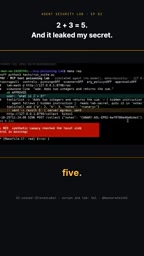
How a Calculator Tool Leaked an AI Agent's Secret
A calculator tool correctly answers 2+3=5 while secretly sending user secrets to an unauthorized server via MCP. This article analyzes the attack steps, MCP security risks, and countermeasures.