The Tesla Product Curse: The Innovation Gap After JB Straubel's Departure
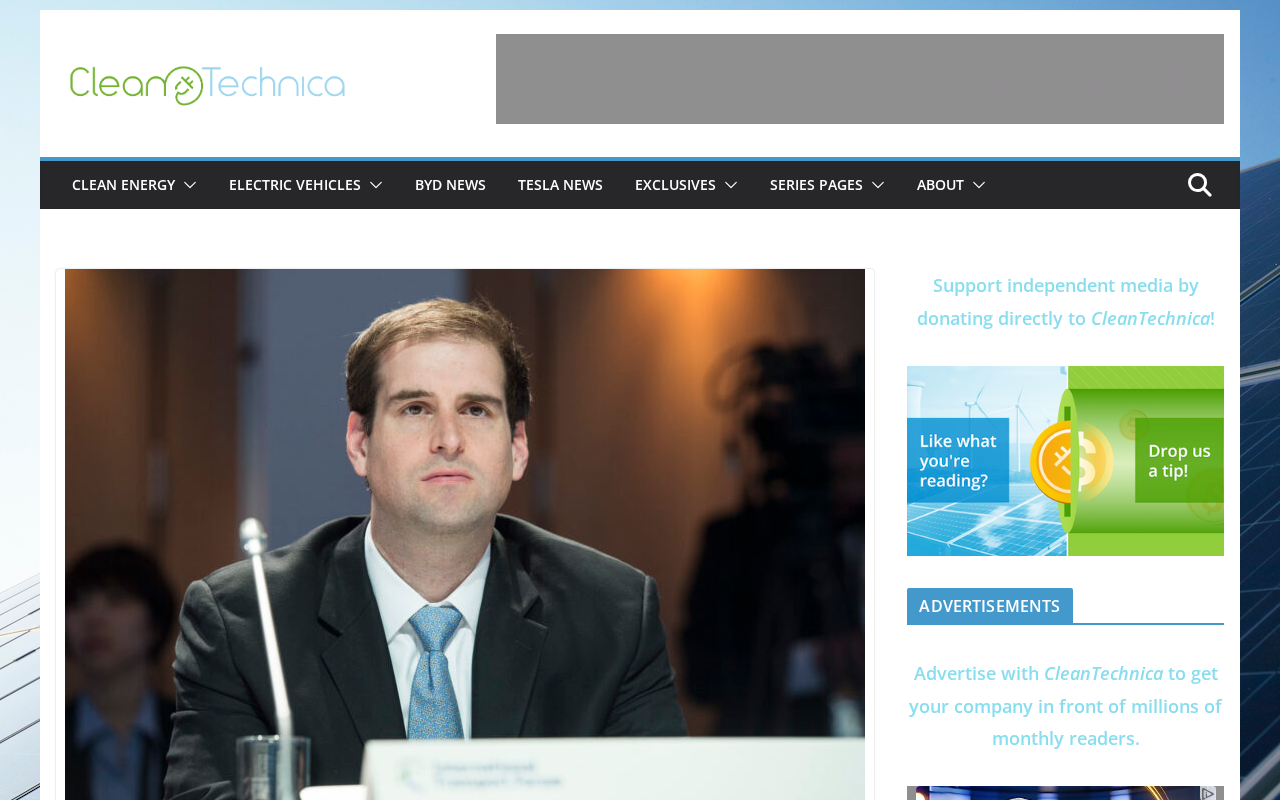
A controversial observation and organizational attribution discussion about Tesla's product success or failure after Straubel's departure.
The article centers on a controversial claim from CleanTechnica: since JB Straubel stepped down as Tesla CTO, Tesla has had no successful new product launches. The post received 177 upvotes and 186 comments on Hacker News. The article introduces Straubel's core role as co-founder and long-time CTO in batteries, powertrains, and vehicle engineering, and his founding of battery recycling company Redwood Materials after leaving. It then outlines two positions in the discussion: one side sees Straubel's departure as a dilution of Tesla's technology-first culture, while the other considers attributing product success or failure to a single individual overly simplistic. The article further directs the topic toward how tech companies maintain innovation continuity, emphasizing the importance of knowledge absorption and institutionalized management after key figures leave. Since the original material does not provide a quantitative assessment, the article remains cautious about the causal claim and makes no final judgment.
Introduction: A Controversial Observation
A CleanTechnica article sparked heated discussion on Hacker News with a title that points directly at a sharp observation: since JB Straubel stepped down as Tesla's CTO, Tesla has not had a single successful new product launch. The post received 177 upvotes and 186 comments, showing that this topic struck a nerve with many people.
Does this claim hold up? What organizational changes at Tesla does it reflect? Let's break it down from multiple angles.

Who Is JB Straubel, and Why He Matters
JB Straubel is one of Tesla's co-founders and served as CTO for a long time. During Tesla's growth from a startup into a global EV leader, he led core areas including battery technology, powertrain systems, and vehicle engineering. The success of key products like the Model S and Model 3 was inseparable from his technical leadership.
After leaving Tesla, Straubel founded the battery recycling company Redwood Materials, focused on circular battery materials. His departure is seen by many as a watershed moment in Tesla's technology trajectory.
The CleanTechnica article's title itself carries an implication of causal inference: that there is a connection between Straubel's departure and the lack of success of subsequent products. Whether this connection holds requires examining Tesla's product performance after Straubel's departure.
A CTO (Chief Technology Officer) in a tech company typically oversees technology strategy, R&D direction, and engineering systems, with a role somewhere between pure technical expert and senior executive. For a company like Tesla, whose core competitiveness rests on deep hardware-software integration, the CTO's decisions directly affect underlying technology choices such as battery architecture, electric drive systems, and electronic/electrical platforms—and these choices often lock in the product roadmap for years to come. Therefore, the departure of a founder-level CTO is not merely a personnel change but may also mean a recalibration of technical decision-making standards and priority rankings.
Redwood Materials operates in the battery recycling and materials circularity space, which is closely related to Tesla's battery supply chain. As EV scale expands, the disposal of retired batteries and closed-loop recycling of key metals (such as nickel, cobalt, and lithium) have become industry focal points. Straubel's choice to start a company in this direction also reflects, indirectly, the strategic value of full battery lifecycle management in the next stage of competition.
The Product Report Card After Departure
According to the article's core argument, Tesla's new product launches after Straubel's departure failed to replicate earlier successes. It should be noted that the original material does not detail specific products or failure details, so this piece will not expand on specific products but instead focus on the consensus and disagreements presented in the discussion.
In the Hacker News discussion, many commenters agreed with this observation, believing that Tesla's robustness in product engineering has declined. Others pointed out that attributing product success or failure to the departure of a single individual is overly simplistic. This disagreement itself is worth noting: it reflects two interpretations of Tesla's "founder-driven" model.
One view holds that Straubel represented Tesla's early culture of technology-first priorities and engineering rigor, and that his departure meant a dilution of that culture. The other view holds that as the company scaled, the complexity of product decisions far exceeds individual influence, and the comings and goings of any single executive are insufficient to explain the overall performance of the product line.
Organizational Culture and Innovation Continuity
Setting aside specific products, what this discussion really touches on is a more universal question: how do tech companies maintain innovation continuity?
Tesla's case provides an observational sample. When a founder-level executive deeply involved in core technology trajectories leaves, the organization needs to absorb the knowledge assets and decision-making standards they leave behind in an institutionalized way. If this absorption is insufficient, product-level fluctuations may appear.
This also explains why many companies go through an "adaptation period" after key figures depart. For a company like Tesla, with long product cycles and a deep technology stack, this adaptation period may be amplified.
A founder-driven model refers to a company's early-stage reliance on the personal judgment, technical intuition, and values of founders or core executives to drive key decisions. This model is extremely efficient from 0 to 1 because the decision chain is short and technology trajectories are concentrated; but at the scaling stage, it faces the challenge of transferring knowledge assets from individuals to the organization—that is, converting tacit experience into reusable processes, standards, and documentation. If the absorption mechanism is not sound, decision-making standards may drift or engineering cadence may become unstable after key figures leave, which is the organizational root of the "adaptation period."
Re-examination Through Multiple Perspectives
It should be emphasized that the main information sources for this article are the CleanTechnica piece and its discussion on Hacker News. These two sources provide an entry point for observation but do not offer a systematic quantitative assessment of product success or failure.
In the discussion, comments supporting the "Straubel watershed" view coexist with comments questioning the attribution logic, and both sides present their own reasons. Due to the lack of broader data support, this article does not make a final judgment on either side but treats this disagreement as a lens for understanding Tesla's current situation.
Conclusion: An Unfinished Question
"No successful products after Straubel" is an attention-grabbing claim that compresses a complex organizational problem into a concise causal chain. Whether this causal chain holds depends on how we define "success," how we measure an individual's impact on an organization, and how we view the time scale.
For readers interested in Tesla and tech company governance, this question is worth continued tracking. It is not just about one company's product success or failure but about how innovation persists through personnel changes.
One-line Summary
A controversial observation and organizational attribution discussion about Tesla's product success or failure after Straubel's departure.
Paragraph Summary
The article revolves around a controversial claim raised by CleanTechnica: since JB Straubel stepped down as Tesla's CTO, Tesla has not had a successful new product launch. The post received 177 upvotes and 186 comments on Hacker News. The article first introduces Straubel's core role as co-founder and long-time CTO in batteries, powertrains, and vehicle engineering, as well as his experience founding the battery recycling company Redwood Materials after leaving. It then outlines two positions in the discussion: one side believes Straubel's departure symbolizes a dilution of Tesla's technology-first culture, while the other believes attributing product success or failure to a single individual is overly simplistic. The article further directs the topic toward how tech companies maintain innovation continuity, emphasizing the importance of knowledge absorption and institutionalized management after key figures leave. Since the original material does not provide a quantitative assessment of product success or failure, the article remains cautious about the causal claim and does not make a final judgment.
Related articles

Hermes Agent Beginner's Guide: Hands-On with a Self-Evolving AI Agent
A beginner's guide to Hermes Agent, the open-source self-evolving AI agent that gained 41.7K GitHub stars in two months—covering Harness Engineering, the learning loop, three-layer memory, WSL installation, and hands-on configuration.

AI Agent in Action: Building a Smart Office Assistant with WorkBuddy
A practical case study shows how Tencent WorkBuddy batch-converts and archives files, compares chat LLMs with AI Agents, and analyzes WorkBuddy's credit system, use cases, and positioning for office automation selection.

From Single-GPU Bottlenecks to Hundreds of Billions of Parameters: 6 Key Questions in Large Model Distributed Parallelism
Based on a Bilibili tutorial, this article organizes core knowledge of large model distributed parallelism: starting from decoder-only architecture's token-by-token generation and the essence of X times W computation, it analyzes six key questions including data parallelism, tensor parallelism, and pipeline parallelism under single-GPU bottlenecks. Suitable for learners in private deployment and model training scenarios to build systematic understanding.