The Truth About the Aztec Conquest: Nine-Tenths of Cortés's Army Were Not Spanish

Nine-tenths of the army that toppled the Aztec Empire were indigenous Mesoamericans, not Spanish conquistadors.
The long-told story of a few hundred Spanish conquistadors bringing down the Aztec Empire crumbles under scrutiny. Historian Si Sheppard shows the Aztecs ruled through tribute and intimidation, leaving subject peoples seething with resentment. Groups like the Tlaxcalans allied with Cortés as equals—on their own terms—and saw themselves as exploiting the newcomers. Spanish soldiers made up roughly just 0.5% of the final assault on Tenochtitlan; the vast majority were Mesoamerican peoples settling scores with the Aztecs. The conquest was less a European triumph than a massive indigenous-driven civil war.
A Misread Myth of Conquest
Viewed from a distance on a map, the Aztec Empire was an impressively formidable entity. But historian Si Sheppard argues in his analysis that it was little more than an "imperial construct" — beneath its veneer of power lay deep internal fractures. What ultimately brought down this empire was not a few hundred Spanish conquistadors, but countless indigenous Americans hungry for revenge.
For a long time, the narrative of "Cortés conquering an empire of millions with just hundreds of men" has been retold as a textbook example of European military superiority. But when we reexamine the true composition of the army that marched on Tenochtitlan, that myth begins to fall apart.

Fractures Within the Empire
The Aztec Empire was far from monolithic. Beyond groups like the Tlaxcalans — who had always remained independent and deeply hostile toward the Aztecs — vast numbers of conquered and subjugated peoples harbored their own deep resentments.
Aztec rule depended on heavy tribute and intimidation, which led many subject peoples to see the arrival of the Spanish conquistadors as a rare opportunity — a turning point that might finally allow them to break free from Aztec authority and settle old scores. In other words, the key to Cortés's success was that he stepped into a political landscape already seething with undercurrents of revolt.
The core governing mechanism of the Aztec Empire was a political structure known as the Triple Alliance — a coalition of three city-states: Tenochtitlan, Texcoco, and Tlacopan — which began expanding rapidly in the mid-15th century. This expansion, however, did not aim at assimilation. Rather than integrating conquered territories into a unified administrative system, the Aztecs preserved existing governance structures while extracting compulsory tribute — including food, cloth, gold, and human captives for ritual sacrifice. This extractive form of rule generated no sense of belonging, only compliance and resentment. Conquered peoples retained their languages, deities, and local elites, yet year after year were compelled to send wealth and lives to Tenochtitlan. This was the structural root of the empire's persistent internal fractures — cracks that never truly healed.
The Tlaxcalans: Who Was Using Whom?
Among the most fascinating aspects of this history is that the Tlaxcalans were no passive followers. When they allied with Cortés, they negotiated tough terms: a share of Aztec territory after the war, and a fortress of their own within Tenochtitlan.
From their perspective, it was they who were "using" the conquistadors — not the other way around. This sense of agency was even permanently preserved. Sheppard notes that in the Tlaxcala region today, the walls of the governor's residence are decorated with murals that depict Cortés and the conquistadors from the Tlaxcalan point of view.

What the murals portray is not conquistadors standing tall above submissive natives, but an exchange between equals. This visual evidence fundamentally challenges the Eurocentric narrative of conquest, reminding us that history has never been the product of a single perspective.
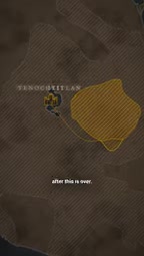
Tlaxcala is a rare case in Mesoamerican history: a city-state confederation that was never conquered by the Aztec Empire. The Aztecs and Tlaxcalans long engaged in what were known as "Flower Wars" (Xochiyaoyotl) — conflicts whose purpose was not annihilation but the ritual capture of enemy warriors for human sacrifice. This peculiar military relationship both preserved Tlaxcala's independence and allowed blood feuds to accumulate across generations. So when Cortés arrived in 1519, the Tlaxcalans initially fought fiercely against the Spanish — and once they confirmed the newcomers' strength, they swiftly pivoted to alliance. This was not panicked political opportunism, but a rational choice made by a long-resentful independent power seizing a long-awaited strategic window.
The True Army of Conquest
As Cortés marshaled his forces for the final assault on Tenochtitlan, indigenous peoples from across Mesoamerica flocked to his banner.
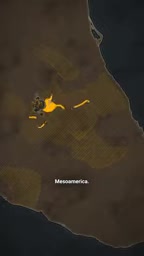
In the army that ultimately marched on Tenochtitlan, the conquistadors may have accounted for as little as half a percent — one in two hundred. The overwhelming majority were other Mesoamerican peoples who viewed this campaign as their final reckoning with the Aztecs. The claim in the title that "nine-tenths were not Spanish" is, if anything, an understatement.
Mesoamerica is a geographical and cultural concept referring broadly to central and southern Mexico through Honduras and El Salvador — a region that, before the arrival of the Spanish, gave rise to the Olmec, Maya, Teotihuacan, Toltec, and numerous other highly developed civilizations. Its peoples spoke vastly different languages and were politically fragmented, yet shared a broadly similar religious-calendrical system and agricultural foundation centered on maize. By the time Cortés besieged Tenochtitlan, his forces included the Totonacs, Cholulans, Acolhuas, and many other groups, each with their own motivations — but united in their resistance to Aztec hegemony. It was precisely this civilizational diversity and political fragmentation within Mesoamerica that created the real historical conditions for "a tiny number of outsiders to topple a million-strong empire."
Why This Perspective Matters
Reinterpreting this chapter of history carries significance that goes well beyond historical fact-checking. It reveals that what we call the "conquest" was closer to a large-scale civil war driven by indigenous political tensions, with the Spanish acting more as catalysts and opportunists than as the sole protagonists.
It also explains how a small foreign force could lever open a vast empire — not through absolute technological or military superiority, but because they happened to become the banner under which the oppressed could rise up. True history is often found beyond the narratives written by the victors — and it still lives on the murals adorning the walls of Tlaxcala today.
Related articles

OpenAI Partners with Shield: How the Astra Agent Revolutionizes IT Troubleshooting
OpenAI and Shield launch the Astra agent, which autonomously logs into computers and legacy systems to fix IT issues in real time, 35-40% faster than traditional models, with humans involved only when judgment is needed.

iPhone Duo Battery Life Tested: One Charge a Day Is Unavoidable, and the Large Screen Is the Culprit
iPhone Duo battery test: heavy use needs at least one charge a day, and about 30% remains after 6.5 hours of screen-on time. How often the large screen is unfolded is key; a MagSafe battery pack helps, and long-term degradation is also worth watching.

Kimi K3.1 Pro Open-Sourced: 2.8 Trillion Parameters Close In on Opus
Moonshot releases the open-source MoE model Kimi K3.1 Pro, with 2.8T total parameters and 104B activated, trailing Opus 5.5 by under 1 point on Terminal Bench 4.0.