The Truth Behind the Bad Reviews: Windows Me Actually Planted the Seeds of the Creator Era
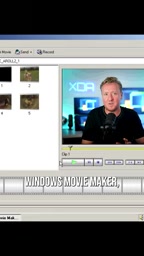
Despite its instability, Windows Me pioneered Movie Maker, WIA, and WMP 7, shaping a generation of multimedia PCs.
Windows Me has long been dismissed as one of Microsoft's biggest failures due to its notorious instability, but that verdict obscures its forward-thinking multimedia features. It debuted Windows Movie Maker, bringing video editing into ordinary homes and nurturing a generation of creators; its built-in WIA component anticipated the coming digital camera boom; and Windows Media Player 7 integrated CD ripping, library management, and device sync — months before iTunes launched. A system's historical worth should be judged not just by its stability, but by the ideas it introduced and how they shaped what followed.
When most people think of Windows Me, the first things that come to mind are probably frequent blue screens and system crashes. It consistently ranks on "worst Windows versions" lists, and its terrible reputation has almost entirely overshadowed any of its merits. But if all you remember are the bugs, you're missing a crucial fact: this short-lived operating system was actually the first to introduce a set of multimedia features with lasting impact — features that paved the way for an entire generation of content creators.
The Unsung Pioneer: Windows Movie Maker
Most people associate Windows Movie Maker with Windows XP, but its true debut was actually on Windows Me. The significance of this video editing tool lies in the fact that it was the first to put the act of "editing video" — something that had previously belonged exclusively to professionals — into the hands of ordinary users.
Ordinary people could use it to capture footage from camcorders, arrange, merge, and trim clips, and then share the finished product. In an era when the barrier to video creation was extremely high, this was a genuine democratization. Countless video creators who would go on to thrive got their very first editing experience through Movie Maker.

You could argue that the boom in short-form video and UGC content we see today has one of its origins buried inside this much-ridiculed operating system. Movie Maker lowered the technical barrier to creation, transforming "making a video" from something that required expensive equipment and professional software into an everyday activity achievable on an ordinary home PC.
Betting Early on the Digital Camera Wave
Another forward-thinking aspect of Windows Me was its accurate anticipation of the coming mass adoption of digital cameras. The built-in Windows Image Acquisition (WIA) component was specifically designed to streamline the photo import process and help users organize their pictures into the "My Pictures" folder.
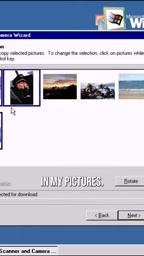
The value of this design was that it made the act of transferring photos from a camera to a computer feel natural and seamless — a normal part of using a PC, rather than a technical chore requiring extra drivers and complex steps. On the eve of an explosion in digital camera sales, this kind of OS-level support was undeniably ahead of its time.
Windows Image Acquisition (WIA) is a standardized hardware interface framework developed by Microsoft for Windows Me and later systems, designed to unify communication protocols for image capture devices such as scanners and digital cameras. Before WIA, each camera or scanner typically required its own manufacturer-specific driver, leading to poor compatibility and cumbersome setup. WIA introduced a unified driver model that allowed the operating system to directly recognize and manage imaging devices, while also giving developers access to image capture functionality through a standard API — no per-device adaptation required. In the early 2000s, as digital camera brands and models were proliferating rapidly, this design significantly improved the plug-and-play experience and laid the OS-level foundation for the habit of instant photo transfer.
WMP 7: A Media Hub Before iTunes
If Movie Maker was Windows Me's answer to video, then Windows Media Player 7 was its play in the audio space. And it was far more than just a small program for playing videos and songs.

WMP 7 arrived just as the MP3 era was getting underway, offering a remarkably complete feature set: CD burning and ripping, media library management, playlists, streaming radio, and portable device sync. What makes this even more notable is that all of these features launched several months before Apple released the first version of iTunes. In other words, Microsoft was briefly ahead of Apple in the race to manage digital music.
Of course, this version also carries plenty of period-specific charm — those media player skins, dripping with Y2K millennial aesthetics, remain a beloved "classic memory" for longtime users.
WMP 7 was released in mid-2000, while Apple's first version of iTunes officially launched in January 2001. Apple then released the first-generation iPod in October of that same year, deeply integrating iTunes with hardware and ultimately building out a complete digital music ecosystem — something Microsoft was never able to replicate. Despite its capable feature set, WMP 7 lacked the complementary hardware and content distribution channels, and ultimately lost the battle for dominance in the digital music market. CD ripping refers to the technology of extracting audio data from a disc and saving it as a digital file on a computer's hard drive. In an era before MP3 players were widespread and when downloading music online wasn't legal, this was the primary way ordinary users built their personal music libraries. By integrating this feature into a system-level media player, WMP 7 dramatically lowered the barrier for everyday users to start building a digital music collection.
Reassessing an Underrated Operating System
The stability issues with Windows Me were real — they are the root of its notoriety. But simply pinning it with the label of "failure" ignores the genuine exploration and contribution it made to the multimedia experience. Video editing, photo management, digital music — these three areas turned out to be the most important use cases for consumer PCs over the following decade, and Windows Me laid the groundwork for all of them in advance.
From a historical perspective, the value of an operating system isn't only measured by its contemporary reputation, but also by the ideas and features it introduced and how they influenced what came after. Movie Maker flourished on XP, photo import became a standard Windows feature, and the concept of a media library was widely adopted by the music software that followed. All of these threads trace back to this underestimated transitional release.
Related articles

A Single Prompt Triggers a Global PHP Security Storm: Is AI a Savior or a Hidden Risk?
A single AI prompt triggered a global PHP security crisis affecting Wikipedia and the Internet Archive. This article reviews the incident, analyzes the OpenAI-Amazon controversy, and explores the security paradox of lowered vulnerability discovery barriers in the AI era and developer response strategies.

When AI Is Taken Away: How Reliance on Shortcuts Undermines Your Problem-Solving Resilience
A study of 1,222 people found that after using AI to answer questions, once AI was removed, people gave up on more problems than a control group that never used AI. The article analyzes the impact of AI reliance on learning resilience and metacognition, and explores design implications for AI learning tools.

Carta and NewView Partner to Let Startup Employees Cash Out Equity Early
Carta and NewView Capital partner to simplify startup tender offers, helping employees sell equity early. Analysis of the mechanism, liquidity pain points, and impact.