Three Brilliant Ways to Make Cranberry Curd Tart, Based on the NYT Classic Recipe
NYT Cooking spins the classic cranberry curd tart into three forms: tart, bars, and brûlée.
NYT Cooking's Bake Time recreates and innovates David Tanis's classic cranberry curd tart. The original is famous for its vivid red color and sweet-tart balance, with a gluten-free crisp shell made from hazelnut meal and rice flour. The show developed two variations: cranberry curd bars made in a 9×13-inch pan, where adding butter to cool the curd eliminates the need to temper eggs and makes them easier to share; and a brûlée version using six egg yolks for a richer custard, baked in a water bath to prevent cracking, then topped with sugar and torched into a crisp shell. All three share the same core flavor but differ in form for different occasions. The host also shares her experience making this tart eight years ago when interviewing at the NYT, adding a personal touch.
In the food content world, NYT Cooking's Bake Time series has long been known for its professionalism and creativity. In a recent episode, the host put a new spin on David Tanis's classic Cranberry Curd Tart—not only recreating the original but also spinning off curd bars and a caramelized crust version, offering more options for the holiday table.
Why the Classic Recipe Endures
What makes this cranberry curd tart an evergreen hit is first and foremost its looks. The vivid, eye-catching red curd took off quickly in the era when Instagram food photography was rising, and the host recalls that it "hit the golden age in every sense." But what keeps people coming back is the flavor: the sweet-tart cranberry curd is perfectly balanced, paired with a crisp tart shell made from roasted hazelnuts for a rich layering of textures.
The host of this episode revealed that when she interviewed at The New York Times eight years ago, she made this very tart right before Thanksgiving—and landed the offer. That personal connection adds a touch of warmth to the whole process.
Making the Base Tart: From Roasted Hazelnuts to Curd
The tart shell is the backbone of the whole dessert. The recipe uses roasted hazelnuts ground into a fine meal, mixed with rice flour and butter—entirely gluten-free. The host emphasizes that the hazelnuts only need to be roasted until they smell distinctly nutty, about 10 minutes, then rubbed while warm to remove the skins. Rice flour is extremely fine, which prevents the hazelnuts from turning into "hazelnut paste" while keeping the shell crisp.
Butter and sugar are simply stirred together with a wooden spoon—no need to beat until pale. After adding the hazelnut meal, mix by hand; if it's too dry, add a little more butter or water, but the host prefers a drier dough, which bakes up crisper. Press the dough into a 10-inch tart pan from the center outward, pinch a fluted edge with your index finger, then freeze for 20–30 minutes to set before baking for about 15 minutes until golden.
For the curd: boil cranberries with sugar, orange zest, and orange juice, crushing them to release pectin and seeds (the seeds help the curd's texture), then blend with an immersion blender and strain for a smooth curd. Next, add butter and stir until melted, then combine with a mixture of two whole eggs and two egg yolks—this is where tempering comes in: first ladle a cup of the hot curd slowly into the egg mixture while stirring to prevent the eggs from curdling. Pour the combined mixture back into the saucepan and cook over low heat for about 10 minutes until thickened, being careful not to boil or it will scorch on the bottom.
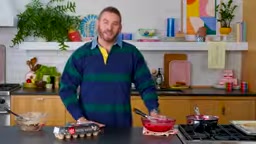
Pour the curd into the baked tart shell, smooth the top, and bake for another 10 minutes to set. The test is a set edge with a slight wobble in the center. Cool, then refrigerate—it slices more neatly.
Curd is a thick sweet sauce made from fruit juice, sugar, eggs, and butter—common varieties include lemon curd and passion fruit curd. It sets because egg proteins denature and form a network when heated, while the acid and pectin in the juice further promote coagulation. Temperature control is key when making curd: heat gently and stir constantly; too high a temperature causes the proteins to contract excessively, leading to curdling or weeping. Curd thickens further as it cools, so when judging doneness, it should be slightly looser than the final desired consistency. Cranberry curd sets especially well thanks to its high pectin content, but straining out seeds and skins ensures a silky texture. Curd can be made ahead and refrigerated for several days—great for tarts, cake layers, or simply spread on toast.
Tempering is a key technique when making custards, curds, and other egg-based sauces; the goal is to gradually introduce hot liquid into raw egg so the egg doesn't instantly coagulate into lumps from the heat. To do it, slowly pour a small amount of hot liquid into the eggs while stirring constantly so the eggs warm gradually, then pour the mixture back into the remaining hot liquid and continue heating. If you skip this step and pour hot curd directly into cold eggs, the localized high heat will quickly denature and curdle the proteins, preventing a smooth texture. Stir continuously and evenly while tempering, and pour slowly, usually in 2–3 additions. Recipes with a lot of sugar or starch are more forgiving, but pure egg mixtures require more care.
Variation 1: Cranberry Curd Bars
For those without a tart pan or who need to bring dessert to a crowd, curd bars are the friendlier choice. Use a 9×13-inch baking pan lined with parchment for easy release. Swap the shell to almond flour (or hazelnut meal); the cornstarch in the powdered sugar helps keep it crisp. Press the dough flat, freeze for 15 minutes, and bake to a deeper golden brown than the tart shell.
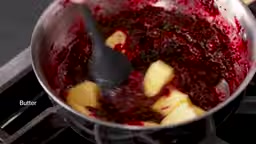
The curd is adjusted slightly: cook the cranberries down to a thicker jam consistency, add butter off the heat and stir—the butter both thins the curd for easier stirring and cools it down, so there's no need to temper the eggs—the host says this is a simplification from her repeated testing. Strain the mixture, pour over the baked base, and bake for 17–20 minutes until the edges are set. Refrigerate, then cut into squares—you can eat them with your hands.
Variation 2: Cranberry Brûlée (Crème Brûlée Style)
The third variation turns the curd into a caramelized-crust dessert: a layer of cranberry curd topped with sugar that's torched into a crisp shell. The curd is similar to the tart version, but uses only orange zest without straining out the fruit, and six egg yolks (no whole eggs) for a richer custard texture.
The key step is the bain-marie (water bath): fill the roasting pan with hot water halfway up the sides of the molds and bake low and slow to prevent cracking. The host explains that the water bath distributes heat more gently and evenly, "preventing cracking." Once baked, cool completely and refrigerate for at least two hours (overnight is best), then sprinkle a quarter cup of sugar and torch until caramelized.

Bain-marie is an indirect heating method commonly used for baking desserts that need gentle, even heat, such as crème caramel, cheesecake, and custard. Place the molds in a roasting pan filled with hot water, usually halfway up the sides of the molds. The water bath buffers the direct high heat of the oven, allowing the molds to heat evenly on all sides, preventing the edges from setting before the center is done—and thus preventing surface cracking or honeycomb holes. The water bath also raises the humidity of the baking environment, reducing moisture evaporation for a finer texture. For egg-rich custards, a water bath is almost essential; baking temperatures are typically lower (150–160°C) with longer times to ensure the proteins set slowly. When using a water bath, make sure there's enough water—if it dries out midway, top up with hot water.
Why It's Worth Trying
All three recipes share the same core logic: the sweet-tart balance of the cranberry curd, the crispness of the gluten-free shell, and the festive aroma of orange zest. But the forms differ—the tart suits formal occasions, the bars are easy to share, and the brûlée version adds a contrast of crisp and creamy. The host says this is exactly the joy of cooking: "Seeing how the same filling can become three different things is really cool."
Whichever you choose, cranberry curd will brighten the holiday table. The recipes can be found in the NYT Cooking app, and are also available free with a subscription to the Bake Time newsletter.
One-line Summary
NYT Cooking spins the classic cranberry curd tart into three forms: tart, bars, and brûlée.
Paragraph Summary
NYT Cooking's Bake Time recreates and innovates David Tanis's classic cranberry curd tart. The original became famous for its vivid red color and sweet-tart balance, with a gluten-free, crisp shell made from hazelnut meal and rice flour. The show developed two variations: cranberry curd bars in a 9×13-inch pan, where adding butter to cool the curd eliminates the need to temper eggs, making them easier to share; and a brûlée version with six egg yolks for a richer custard, baked in a water bath to prevent cracking, then topped with sugar and torched into a crisp shell. All three share the same core flavor but differ in form for different occasions. The host also shares her experience making this tart eight years ago when interviewing at the NYT, adding a personal touch.
Related articles
 Tech Frontiers
Edge AI on Microcontrollers: When Is It Actually Worth Deploying?
Drawing on Reddit discussions and Arm case studies, this article analyzes the real-world use cases for edge AI on microcontrollers: when each device needs independent inference, when a gateway or cloud is more reasonable, and the costs and boundaries of specialized hardware.
 Tech Frontiers
Pushing the Limits of Extreme Sudoku on a 16GB GPU: Insights from Depth and Flow Matching
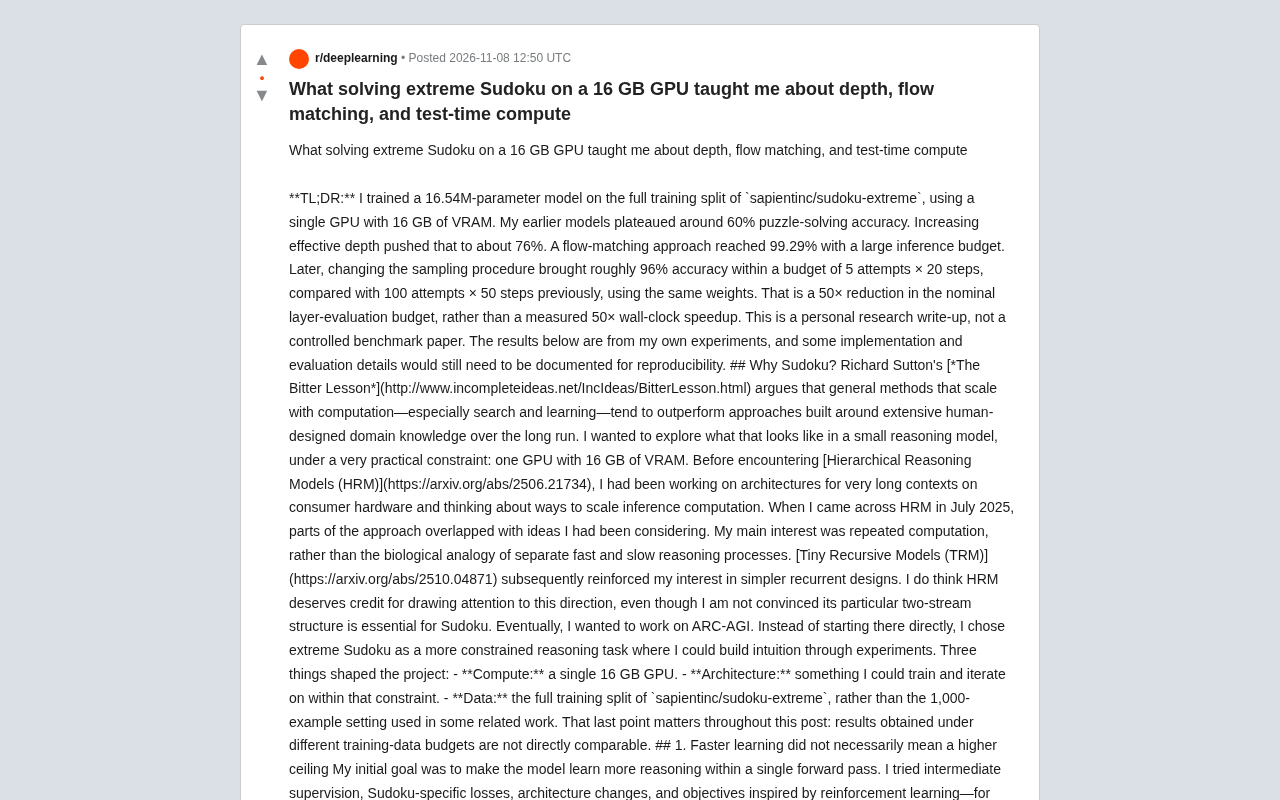
A researcher trained a 16.54M-parameter model on a 16GB GPU to solve extreme Sudoku, finding effective depth breaks the 60% plateau and flow matching with improved sampling pushes accuracy past 99% with ~50× lower layer-evaluation budget.
 Tech Frontiers
AI Agent Approval Workflows: Why Human Confirmations Always Get Mindlessly Clicked
Why do AI agent approval workflows always get mindlessly clicked? A Reddit discussion shows that separating rules from keys, low-frequency high-risk approvals, and GitHub Environments-style gates are the keys to effective approvals.