Three Major Trends Behind This Week's AI Launches: Multi-Model Routing, Price Wars, and Generative UI

Grok routing, Haiku pricing, and ChatGPT's Generative UI all signal AI competition shifting from models to products.
This week's AI launches reveal three structural trends. Musk's Grok will route to the best third-party models including Claude and Midjourney, signaling a bet on the orchestration layer over pure model ownership. Anthropic's Claude Haiku 5.5 undercuts rivals on price while outperforming them on benchmarks, reclaiming the performance-per-dollar frontier for American labs. OpenAI's Intelligent UI replaces plain text with interactive visualizations, marking the first time frontier labs are genuinely investing in product experience. Together, these point to one conclusion: model capabilities are commoditizing, and the competitive battleground is shifting to product, routing, and user control.
Every autumn, tech companies enter a period of dense product releases. While the AI industry lacks traditional seasonality, as summer ends and teams return to working rhythm while planning budgets for the next fiscal year, new products and features have erupted with unusual intensity. Rather than simply listing what launched, it's worth examining the structural trends these products collectively point toward.
This article, based on the latest episode of AI Daily Brief, breaks down three key announcements this week — Musk's declaration that Grok will route to the best third-party models, Anthropic's low-cost high-performance Claude Haiku, and OpenAI's Intelligent UI — and the industry directions each represents.
Open Source and Funding: A Different Kind of Capital Story
Before diving into product trends, two funding stories deserve mention upfront, as they reflect the industry's direction from a different angle.
Open-source research team Noose Research (developers of the Hermes agent) reached a $1.5 billion valuation in a new funding round. Hermes is defined by extreme user control and openness — almost every time a closed-source lab ships a new feature, Hermes quickly releases its own version. Even more striking: the team accounts for roughly 2.5% of global token usage. This round of funding will push them from the hobbyist market into enterprise, with a Hermes for Business offering.
Noose's business model proves open source is viable in AI: Hermes is free and open, users can bring their own models, while also offering a subscription bundled with frontier model access. On this model, the company has already reached $36 million in annualized revenue this year, targeting $100 million by year-end. The CEO wrote in the announcement: "The marginal cost of copying software has cratered. There's no benefit to locking up technology like Hermes. Users don't want to be locked in."
In sharp contrast to this open-source funding story is another kind of "compute financing." According to reports from The Wall Street Journal and the Financial Times, Oracle, Broadcom, and SpaceX are in talks over chip financing totaling tens of billions of dollars. SpaceX is reportedly seeking $40 billion in loans from multiple institutions to purchase NVIDIA chips — but apparently submitted only "a two-page deal memo with pictures of space and arrows indicating the company would build data centers 'somewhere in the universe.'" One investor who passed on the deal said bluntly: "How am I supposed to present this to an investment committee?" SpaceX's credit default swap prices subsequently surged, with markets pricing its default probability at around 15%.

Multi-Model Routing: Is the Moat in the Harness or the Model?
The most striking announcement this week came from Musk. He declared that Grokbot would "use the best backend model for any task, including Claude Opus, Midjourney, Suno, and other leading APIs — whatever is most likely to give you the best result."
This is a major signal. The industry debate about whether the moat lies in the harness (the orchestration/product layer) or in the models themselves has persisted for a full year, and here Musk is making a clear statement: Grok is willing to compete on both fronts simultaneously. He later clarified that most simple requests would still be handled by the fast version of Grok, with the core principle being "the best combination of speed and intelligence for users."
Investor Anisha Sharia described this as SpaceX "having it both ways": enjoying the vertical integration advantages of a model lab, while also — like a Cursor-style router — profiting from the inference layer when calling third-party models. Having a top-tier proprietary model means other labs can't apply pricing pressure, and the house always wins.
This trend isn't unique to Musk. One relatively quiet but important announcement from OpenAI at Dev Day was that enterprises can now purchase open-source model inference through its B2B marketplace. This means a meaningful portion of large enterprise spending commitments can go toward non-OpenAI open-source models. Even the company with the most frontier models is acknowledging: no single model can satisfy everyone in every scenario.
It's worth noting that Grok's approach is fundamentally different from Hermes-style "switch to any model freely" — it only connects to companies with which Musk or Grok has partnership agreements (such as Anthropic training models in SpaceX data centers), and users still cannot access OpenAI's models through this interface. But the direction toward multi-model integration is very clear, and this demand will only grow stronger.
The term "harness" (orchestration/product layer) refers to the routing, orchestration, and user interface layer built on top of raw model APIs. Typical examples are products like Cursor and Perplexity — they don't train models themselves, but dynamically select which model from which provider to call based on task type, cost, and latency requirements. The core value of such products lies in understanding user intent, matching the most suitable backend, and wrapping it all in a consistent product experience. The "models vs. harness" debate is fundamentally asking: as model capabilities converge, does user stickiness come from whose model is smarter, or from whose product is more usable with a more complete data flywheel? Musk's statement implies that even those with proprietary models are beginning to acknowledge: relying solely on model intelligence cannot build a durable moat — you must also invest in the product layer.
Price Competition: American Labs Reclaim the Performance-per-Dollar Frontier
If multi-model routing points toward "product layer competition," Anthropic's release of Claude Haiku 5.5 is a declaration in another direction — that the company intends to compete in the low-cost, high-speed entry-level market as well.
Anthropic calls it "the cheapest, fastest, and most capable small model ever." Looking at benchmarks, Haiku 5.5 is barely comparable to version 4.5, and it beats GPT-6 Luna across the board: it scores more than twice as high on Terminal Bench 4.0 for agentic coding, achieves 72.4% on the OS World computer operation test (vs. Luna's 48.9%), and leads on both GDPVal and AA Briefcase knowledge work evaluations. Artificial Analysis gives Haiku an intelligence index of 43, placing it between KimiK3 and GLM 5.3 Flash.
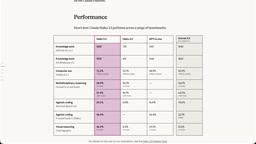
But the real story is cost. The model is priced at just one-quarter of Sonnet 5.5 and half of Haiku 4.5; there's also an 80% token discount for small prompts under 100,000 tokens. According to Artificial Analysis, per-task cost is approximately 12 to 21 cents — on par with GPT-6 Luna and cheaper than some Chinese open-source models.
Investor Haseeb Qureshi captured the trend in one line: "Narrative reversal: if you want the cheapest frontier model, you should now be buying American." Earlier this year, GLM and DeepSeekAd occupied the Pareto frontier of cost and intelligence with no rivals in sight. But following the cost crisis, American labs struck back with aggressive price cuts and efficiency optimizations, and now the entire Pareto frontier is occupied by Anthropic, OpenAI, and Typesafe's Jev.
The deeper question worth asking: when enterprises actually make decisions, how much of their interest in Chinese open-source models stems from cost, and how much comes from sovereignty considerations — the ability to run on their own hardware and ensure data is never used for training? American labs have largely addressed the cost issue, but have yet to respond to sovereignty concerns.
The Pareto Frontier is a core concept in economics and multi-objective optimization, referring to the set of optimal trade-offs achievable under the constraint that you cannot improve all metrics simultaneously. In the context of large models, the "cost-intelligence Pareto frontier" represents the set of models that achieve the highest intelligence at a given price, or the lowest cost at a given intelligence level — a model on the frontier means you cannot improve one dimension without sacrificing another. In early 2024, DeepSeek R1 and the GLM series pulled the entire frontier downward with extremely low inference costs and acceptable intelligence levels, leaving American labs far behind on the price-performance dimension. The statement that "the frontier is now occupied by Anthropic, OpenAI, and Typesafe Jev" means that after a round of aggressive price cuts and model compression optimization, American closed-source models have reclaimed leadership on both cost and capability dimensions, substantially narrowing the price advantage of Chinese open-source models.
Generative UI: Frontier Labs Finally Start Caring About Product Experience
OpenAI brought two releases this week. The more straightforward one is bringing the new GPT-6 model to the 1.2 billion weekly free users — a meaningful upgrade, given that public perception of AI is still largely shaped by the free experience.
But more significant is the feature called "Intelligent UI." Its core premise: text shouldn't be the only way to receive information. ChatGPT will present information through interactive visualizations, charts, illustrations, and other formats depending on the type of query. OpenAI researcher Issa Fulford revealed that the team built a natively stream-renderable component library and compiler, allowing the interface to render in real time as the model generates output, and trained the model to judge "when to use interactive components versus when plain text is more appropriate." She admitted: "The hardest part of generative UI isn't generating the UI — models have long been able to generate good-looking HTML — it's making it feel like it truly belongs in ChatGPT."
Two trends are embedded here: the more distant one is "interfaces generated on demand for specific problems," as Ethan Mollick has said — we'll see interfaces purpose-built for specific queries. The more immediate and widespread one is: frontier labs are genuinely starting to care about product experience for the first time.
In the past, these labs could mask rough, counterintuitive products by simply being "smart enough." But when every player can offer equivalent intelligence, product differentiation will become critical. Multi-model routing, price competition, and generative UI — all three threads ultimately point to the same conclusion: model capabilities are commoditizing, and the center of competition is shifting toward product experience, orchestration capability, and user control.
Generative UI refers to AI models dynamically generating interface components on demand at runtime, rather than presenting pre-designed static pages. The technical challenge lies in the fact that generated components must be capable of real-time streaming rendering (i.e., the interface takes shape progressively as the model outputs tokens), while maintaining visual style and interaction logic consistent with the host product, so as not to feel jarring. The deeper challenge is training the model to develop "judgment" — knowing when to use a line chart instead of describing a trend in words, or when to use clickable tabs instead of a list. Vercel's AI SDK and Anthropic's earlier Artifacts feature are both early explorations in this direction, but both were limited to sandbox environments. OpenAI's native integration into the main ChatGPT product marks generative UI's transition from a developer experimentation tool into a mass consumer product — an important milestone in the technology's maturity.
Conclusion: Trends Matter More Than Individual Products
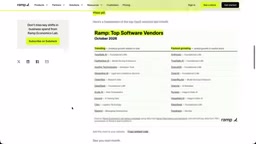
From Noose's open-source funding and Musk's multi-model routing, to Haiku's price war and OpenAI's generative UI, the reason this week's releases deserve to be viewed as a whole is that they collectively sketch out a shift in the AI competitive landscape. Ramp's latest enterprise spending data confirms this as well: Jev climbing rapidly, model routers beginning to appear, and image/video models driving up spending — even at the data level, the trends align tightly with what's happening at the product level.
For individual users and enterprises, these changes are broadly net positive: more model choices, lower usage costs, better interaction experiences. The real question is: when intelligence itself is no longer scarce, who can package it into the best product.
Related articles

Ponytail: Giving AI Coding Agents a Senior Engineer's Mindset
Ponytail is a free GitHub tool that injects a senior engineer's mindset into AI coding agents, making them ask whether code is even necessary first. According to TamilDeck, it can compress 200 lines of AI-generated code to 30, cutting token costs, with support for Cursor rules and Claude Code skill integration—though security review still requires human oversight.

Complete Guide to Connecting Cursor AI to the GitHub MCP Server
A step-by-step guide to connecting Cursor AI to the GitHub MCP server: create a personal access token, configure mcp.json, store the token in the ENV block, and verify with a PR query.

AI Agent Hacks? Don't Get Swept Up in the Hype
AI agent hacking news is everywhere, but Reddit users liken the hype to Y2K panic—lacking real attack cases and possibly driven by IPO and regulatory arbitrage motives.