Three Ways to Deploy Codex: Subscription, API Relay, and Free Alternatives Explained
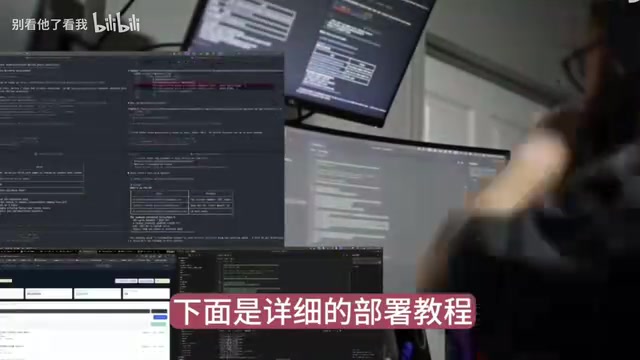
Three deployment options for using OpenAI Codex: official subscription, API relay, and domestic alternatives.
This article addresses the payment and network barriers that users in China face when using OpenAI Codex, offering three deployment solutions: official ChatGPT Plus/Pro subscription ($20–200/month, using top-up services for payment), API relay forwarding (e.g., 0011.ai, supporting WeChat Pay, with access to both Codex and Claude Code), and the domestic alternative Kimi Code CLI (at just one-tenth the price, with direct domestic network access and zero barriers). Each option suits developers with different budgets and needs.
With the release of GPT 5.4 Thinking and GPT 5.4 Pro, OpenAI's Codex programming tool has become a hot topic in the developer community. More and more content creators are recommending Codex, arguing it offers better value than Claude Code. But for users in China, getting Codex up and running has always been a challenge — no international credit card, network restrictions, and price barriers are all roadblocks.
This article covers three viable Codex deployment options, from official subscriptions to API relays to domestic alternatives, catering to users with different budgets and needs.
About OpenAI Codex: More Than Just a Code Completion Tool
OpenAI Codex is an AI programming assistant built on the GPT series of large language models, specifically fine-tuned for code generation tasks. It doesn't just understand natural language instructions and generate corresponding code — it can also autonomously perform file read/write operations, run commands, debug errors, and more within a terminal environment, forming a complete "perceive-plan-execute" loop. This Agent-based working mode distinguishes it from earlier code completion tools (like GitHub Copilot), making it closer to a "digital programmer" capable of independently completing programming tasks.
Specifically, Codex uses an "Agentic Loop" architecture: after receiving user instructions, the model autonomously breaks down tasks, invokes tools (file system, terminal commands, etc.), observes execution results, and iteratively adjusts its strategy based on feedback until the task is complete. "Sandbox isolation" is a critical safety mechanism for such tools — Codex executes commands in a restricted environment by default, preventing model misoperations from affecting the host system. Codex CLI (the command-line interface version) was officially released in 2025, allowing developers to invoke it directly from their local terminal without switching to a browser interface, greatly improving efficiency in engineering scenarios.
Method 1: Subscribe to ChatGPT Plus (The Official Route)
Basic Plan
This is the most straightforward approach. After subscribing to Plus ($20/month) or Pro ($200/month) on the ChatGPT website, you can use Codex directly. For everyday programming needs, the Plus membership is generally sufficient, allowing 30 to 150 local messages every 5 hours; Pro users get 300 to 1,500 messages.
It's worth noting that the competitive landscape between Codex and its rival Claude Code continues to evolve. Claude Code is a competing product from Anthropic that also runs as a terminal CLI, powered by the Claude model series. The core differences are: Codex leverages OpenAI's GPT-5 series, excelling in instruction following and creative generation; Claude Code is known for stronger long-context understanding and code review capabilities, particularly when handling large codebases. Heavy usage scenarios can cost hundreds of dollars per month, which is the fundamental reason why "cost-effectiveness" discussions keep gaining traction in the developer community.
How Users in China Can Solve the Payment Problem
Not having an international credit card is the biggest obstacle for users in China. A common solution is using third-party top-up platforms like Wild AI, which support Alipay payments and can complete ChatGPT Plus upgrades without requiring your account credentials. While these platforms offer convenience, users should still pay attention to the platform's reputation and security when choosing one.
Installation and Usage on Mac
Installing Codex on a Mac is very simple — the entire process takes just a few steps:
- Open the terminal, enter the installation command and wait for it to complete
- Type
codexand press Enter, then choose to log in with your ChatGPT account - A browser window will automatically pop up for authorization — complete the authorization and you're ready to go
Notably, the current installation process no longer requires pre-installing Node.js, making it much more convenient than before.
Demo of Actual Results
Using the Plus version of Codex to build a web-based mini game is incredibly fast. Codex adaptively invokes the skills it needs, and the code is automatically written within minutes. This is precisely the advantage of the Agentic Loop architecture — the model automatically breaks down the macro instruction "make a game" into sub-tasks such as UI design, logic writing, and resource referencing, then executes them one by one. The real-world results are quite impressive — the game's UI design and interface layout are visually appealing, and the gameplay and content are well-polished, surpassing the level of what most programmers could hand-code. If you're not satisfied with the result, you can ask it to revise or even change the game's style entirely.

Method 2: API Relay (A Two-in-One Solution for Codex + Claude Code)
Use Cases
If you want to use not only Codex but also Claude Code simultaneously, the API relay approach is a cost-effective choice. Taking 0011.ai as an example, the platform uses a credits system — after subscribing, both Codex and Claude Code are available directly, at prices significantly lower than the official rates.
For users who just want to try out the performance, the platform also offers pay-as-you-go plans — you're only charged for the Tokens you actually use, so nothing goes to waste.
How API Relays Work
The technical principle behind an API Relay is straightforward: the platform operator holds official API access credentials for OpenAI or Anthropic on overseas servers. Users in China send requests to the relay, which forwards them to the official API and returns the results. Users only need to replace the API Base URL in their local configuration with the relay's address and use the platform-assigned Key to bypass network restrictions and overseas payment barriers. This model is technically compliant (it still calls the official API), but users should be aware of data privacy risks — all request content passes through third-party servers, so caution is warranted when dealing with sensitive code or commercial projects. The credits-based and pay-as-you-go billing models are essentially secondary pricing on top of official Token prices, typically with a 10%–30% markup to cover platform operating costs.
Deployment Steps
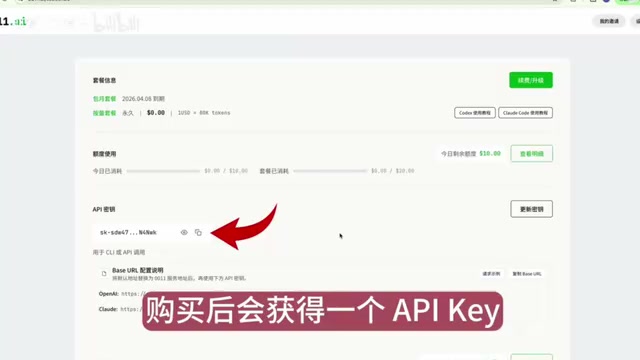
- Choose a suitable plan on 0011.ai and complete the purchase (WeChat Pay supported)
- Receive your API Key after purchase
- Click the Codex usage tutorial provided by the platform and find the section for your operating system
- Open the terminal, install Codex, set environment variables, and configure
- Type
codexto start using it
Real-World Test: Enterprise-Grade B2B System Development
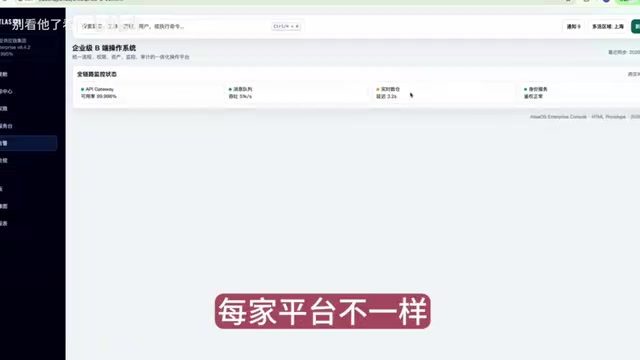
In actual testing, when asked to build an enterprise-grade B2B operating system, Codex demonstrated impressive capabilities — it not only found a previously half-finished project but also rewrote and refined it based on the existing framework. This exemplifies the core value of the Agent architecture in engineering scenarios: the model can automatically identify existing code structures, follow project conventions, and handle dependencies, rather than generating isolated code snippets from scratch. The final product demonstrated high performance, high scalability, and high availability — not just a pile of features, but a system genuinely designed from the perspective of daily enterprise management and collaboration, ready for deployment with only minor modifications.
Important Notes
- The specific URL format for Codex relay varies by platform — it's best to refer directly to the integration documentation provided by your chosen platform
- Some platforms support two devices online simultaneously, so you can split the cost with a friend and save half the money
Method 3: Domestic Model Alternatives (Zero-Barrier Option)
Kimi Code CLI: A Budget-Friendly Alternative to Codex
If you don't want to subscribe to ChatGPT Plus and find API relays too cumbersome, there's an ultra-affordable option — Kimi Code CLI. This is an official programming terminal tool from Moonshot AI, with functionality nearly identical to Codex, but at only one-tenth the price.
Kimi Code CLI is built by Moonshot AI based on their proprietary Kimi large language model. Moonshot AI was one of the first teams in China to achieve breakthroughs in long-context processing, with their model supporting context windows of up to 2 million Tokens — a natural advantage when working with large project codebases. The price advantage of domestic AI programming tools comes from two factors: first, inference costs continue to drop as China's computing infrastructure matures; second, RMB-denominated pricing eliminates exchange rate losses.
Core advantages:
- Full support for domestic networks — no VPN required
- Zero risk of account bans — use it worry-free
- Installation requires just one command; type
kimito start using it - Ideal for developers on a tight budget
However, it should be noted objectively that Kimi Code CLI still has a gap compared to Codex in terms of user experience. The capability gap between domestic models and GPT-5 is mainly reflected in complex multi-step reasoning and cross-language transfer tasks, but for everyday CRUD development and script writing, the gap has narrowed significantly. This is also expected — after all, the price difference is substantial, and the capability gap will take time to close.
Other Domestic Options
Besides Kimi, Tencent's CodeBuddy (based on the Hunyuan model) and Alibaba's Tongyi Lingma have both released CLI versions, forming a "three-way competition." Competition among domestic large models in the programming space is accelerating, which means more choices and lower barriers for users.
Comparison of the Three Codex Deployment Options
| Dimension | Official Subscription | API Relay | Domestic Alternative |
|---|---|---|---|
| Price | $20–200/month | Pay-as-you-go, cheaper | ~1/10 of Codex |
| Network Requirements | VPN required | VPN required | Direct domestic access |
| Payment Methods | International credit card / top-up service | WeChat Pay | Domestic payment |
| Feature Completeness | ★★★★★ | ★★★★★ | ★★★★ |
| User Experience | Best | Close to official | Slightly behind |
| Data Privacy Risk | Low | Medium (via third-party servers) | Low |
| Best For | Heavy users | Multi-tool users | Budget-conscious users |
For most developers: if you have sufficient budget and a stable overseas payment channel, the official subscription is the most hassle-free choice; if you want to try both Codex and Claude Code, the API relay option offers the best value (but be careful not to include sensitive commercial code in your requests when using a relay); and for beginners or those on a tight budget, domestic alternative tools provide a zero-barrier starting point.
The competition among AI programming tools has only just begun — the best choice is the one that fits your needs.
Related articles
 Tutorials
ChatGPT Plus Subscription Guide: Are GPT-5.5, image-2, and Codex Worth the Upgrade?
A detailed look at ChatGPT Plus features — GPT-5.5, image-2, and Codex — with a Plus vs Pro comparison and a complete step-by-step subscription guide for users outside the US.
 Tutorials
Harness AI Engineering in Practice: Using Claude Code to Master Enterprise-Level E-Commerce Development
Deep dive into Harness AI Engineering: master enterprise e-commerce development with Claude Code using the Rules, Skills, Wiki, and Changes framework.
 Tutorials
Cursor + Codex Dual-IDE Collaboration: A Practical Methodology for Open-Source Project Customization
A complete methodology for open-source project customization based on real-world experience, detailing the Cursor+Codex dual-IDE workflow, seven-stage process, MVP validation, and AI source code reading techniques.