TikTok-Driven App Entrepreneurship: The Methodology Behind $800K/Year After 10 Failures

Developer mines TikTok comments for demand, gains 100K users in 3 days, earns $800K/year
After 10 failed apps, Canadian developer Louis shifted from "build first, promote later" to studying TikTok comments for real user needs. He discovered the pain point of makeup trial-and-error, validated demand through content before coding, and launched "Glow Up" — gaining 100K users in 3 days with over $800K in annual revenue. His core methodology follows a "market → content → validation → product" path, scaled through multi-account TikTok matrix operations.
Introduction: How a Developer Who Failed Repeatedly Turned Things Around
Louis, a developer from Canada, finally found a path to success after building roughly 10 failed apps. His makeup app "Glow Up" gained 100,000 users within just 3 days of launch, topped the App Store's Lifestyle category, and generated over $800,000 in revenue within a year.
The most striking part of this story isn't any technical complexity — it's that he completely transformed his approach to product development. Before writing a single line of code, he studied TikTok first.
Louis's Background: From Dropout to Serial Entrepreneur
Louis studied software engineering for two years before dropping out, believing that what the school taught wasn't practical. After leaving, he poured his time into the App Store ecosystem, focusing on mobile app development.
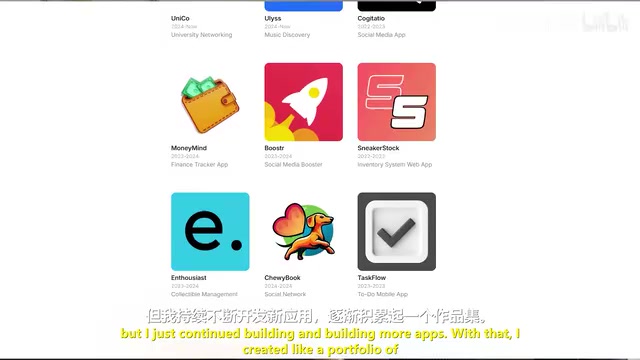
His first app generated zero revenue, but he kept building new products and gradually assembled a portfolio of applications. He then worked at a startup for a while before returning to the indie developer path two years later. A year ago, he started building Glow Up, which now generates a steady monthly income of around $15,000.
The Root Cause of Past Failures
Louis admits that his previous apps were all "built for himself" — he'd get an idea, start developing, and only think about marketing after the product was finished. The result, naturally, was that nobody showed up. This "build first, promote later" cycle kept hitting dead ends, and it's the most common mistake indie developers make.
The Turning Point: Mining Real User Needs from TikTok Comments
In stark contrast to his past approach, Glow Up was born from deep TikTok research. Louis and his co-founder discovered that makeup was a massive niche on TikTok, so they began systematically browsing the comment sections of makeup videos.
Key Insight: By reading the comments, you can viscerally feel what users are craving and what solutions they're seeking. Thousands of people were openly discussing the same problem — how to find the best makeup looks for themselves without spending a fortune on trial and error.
Why TikTok Comments Are an Exceptional Tool for Demand Discovery
TikTok's recommendation algorithm (For You Page, FYP) is based on user behavior signals — watch-through rate, likes, comments, shares — rather than follower count. This means even a brand-new account with zero followers can achieve massive exposure. A byproduct of this mechanism is that comment sections aggregate vast amounts of real, immediate user feedback, forming a natural "demand database." Compared to traditional user research, TikTok comments offer advantages in data volume (a single viral video can have tens of thousands of comments), spontaneity of expression (no survey-induced bias), and emotional intensity (users typically only comment when they feel strong resonance). This is precisely why Louis was able to distill the precise pain point: "users want to find makeup looks that suit them without spending money on trial and error."
Content First, Product Second
Louis adopted a counterintuitive strategy: validate with content first, then build the product. They started creating TikTok content around the concept of "helping you find the best makeup looks and the products you need," and the videos went viral quickly. This confirmed the direction was viable, and only then did they build a minimum viable product (MVP) in an extremely short time — about 3 days.
The MVP (Minimum Viable Product) concept was systematized by Eric Ries in The Lean Startup. Its core idea is to validate the most critical assumptions at minimal cost, avoiding wasted resources on unvalidated directions. Traditional developers often misunderstand MVP as "an incomplete product," when in reality, an MVP is "the simplest form that can validate the core value proposition." The version Louis built in 3 days was an extreme execution of this philosophy — he had already validated demand through TikTok content, so the MVP only needed to prove that "AI makeup-try-on technology works and users are willing to pay." There was no need to polish every feature. This "validate first, build second" sequence shifts entrepreneurial risk from technical risk to market risk — and the market risk had already been largely eliminated before any coding began.
This "market → content → validation → product" pathway completely upends the traditional "build first, find users later" model.
Four-Step TikTok Operations Playbook (Complete Hands-On Guide)
Louis shared his complete methodology for running a TikTok account from scratch:
Step 1: Account Warm-Up (Nurturing Phase)
- Use a US SIM card and US VPN (if you're not in the US)
- Download TikTok on a new iPhone and create an account
- Spend 15–30 minutes daily browsing videos in your target niche — like, comment, engage
- The goal is to make the algorithm see you as a real user, not a bot
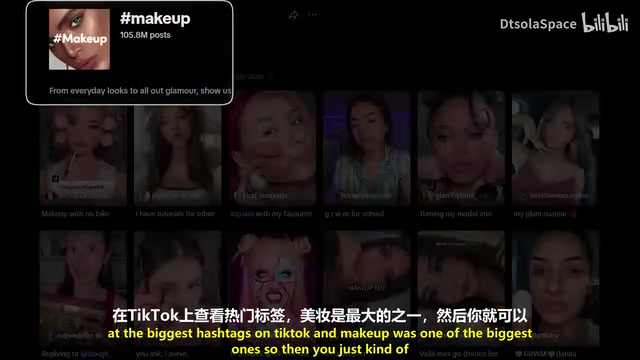
- Gauge market opportunity by observing video counts and view numbers for major hashtags
Step 2: Start Posting Content (Testing Phase)
- Replicate proven trends and layer in your own product concept
- Initially post once a day and monitor engagement metrics
- As soon as you see growth momentum, ramp up to 4–6 posts per day
- Look for content templates that are easy to replicate and don't require showing your face
Step 3: Add Anchor Links (Conversion Phase)
When video views reach several thousand or 100K+, add a "Download Now" anchor link. This button lets users open the App Store page directly without navigating to your profile. Louis emphasizes that the majority of downloads come from anchor links, but you should never add one when views are below 1,000 — it will kill the video's reach.
Step 4: Multi-Account Matrix Operations (Scaling Phase)

- A single phone can run 2–3 accounts
- Need more accounts? Buy more phones
- Louis's team operated about 7 accounts, posting 8–12 videos per day
- The more you post, the more you earn — it's purely a numbers game
The Platform Logic Behind Multi-Account Matrices
TikTok's official policy allows a single user to hold multiple accounts, but there are certain restrictions on obviously coordinated matrix behavior. Louis mentioned using different devices to operate different accounts. The technical rationale behind this is that TikTok identifies account associations through multiple dimensions — device fingerprint (Device ID), network environment, behavioral patterns, and more — so using independent devices helps maintain account separation.
Related articles
 Tutorials
ChatGPT Plus Subscription Guide: Are GPT-5.5, image-2, and Codex Worth the Upgrade?
A detailed look at ChatGPT Plus features — GPT-5.5, image-2, and Codex — with a Plus vs Pro comparison and a complete step-by-step subscription guide for users outside the US.
 Tutorials
Harness AI Engineering in Practice: Using Claude Code to Master Enterprise-Level E-Commerce Development
Deep dive into Harness AI Engineering: master enterprise e-commerce development with Claude Code using the Rules, Skills, Wiki, and Changes framework.
 Tutorials
Cursor + Codex Dual-IDE Collaboration: A Practical Methodology for Open-Source Project Customization
A complete methodology for open-source project customization based on real-world experience, detailing the Cursor+Codex dual-IDE workflow, seven-stage process, MVP validation, and AI source code reading techniques.