Transportation Secretary's Reality Show: Sean Duffy's Ethics Wreck
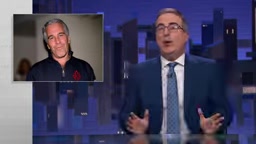
Transportation Secretary Duffy's road trip show is actually a regulator-funded family reality show, raising ethics concerns.
HBO's Last Week Tonight revealed that Transportation Secretary Sean Duffy's "The Great American Road Trip," billed as a 250th anniversary celebration, is an ethically dubious PR stunt. Funded by 17 companies regulated by his department—with Toyota and Boeing reportedly contributing $1 million each—the actual content is a family reality show centered on the Duffys, including a daughter's college choice and family gatherings, not the promised road trip. The show kept visits to a Boeing plant and Waymo facilities, while Waymo faces at least two department safety investigations. Ethics experts say Duffy can't be trusted to protect public safety after accepting sponsors' gifts. Watchdog groups have filed complaints and FOIA requests; the show was quietly uploaded to YouTube and barely watched. Oliver warns the appearance of conflict won't disappear on its own.
HBO's Last Week Tonight turned its spotlight on a story largely ignored by mainstream media: "The Great American Road Trip," a program starring U.S. Transportation Secretary Sean Duffy. Billed as a celebration of America's 250th anniversary, the show turned out to be more like an expensive family reality-show pilot—and its funding sources and sponsor list make the whole affair rather uncomfortable.
From Promo to Ethics Cloud
Months ago, Duffy released a promo: generic folk-rock soundtrack, Trump on screen, a prominent Toyota logo close-up, and car imagery that looked AI-generated—John Oliver's quip being "because who needs to film actual cars."
According to the show's description, the slogan was "To love America is to see America," and it was "not just a road trip, but a civic experience." Duffy's wife, Fox host Rachel Campos-Duffy, even promoted it as a remedy for the nation's problems, delivering a line about "we live in a Pornhub world."
Problems surfaced quickly: the show took seven months to produce across multiple short windows, and Duffy handled taxpayer-funded official duties at the same filming locations, though he insisted taxpayers didn't pay for his family portions. Funding pointed to a nonprofit production company called "Great American Road Trip Inc.," whose website listed 17 sponsors, including Boeing, Toyota, Shell, Royal Caribbean Group, and United Airlines—all companies regulated and overseen by the Department of Transportation.
According to reporting cited by Oliver, Toyota and Boeing each contributed one million dollars. When Duffy was questioned in Congress, his defense was described as "notably weak": confronted with "Toyota sponsored a show starring you, and Toyota recall decisions rest with your department," his response was to ask whether the questioner hated America.
Conflict of Interest and Government Ethics Rules: In the U.S. federal ethics system, executive branch officials accepting gifts or benefits from private entities connected to their regulatory responsibilities is typically subject to strict limits. Under 5 U.S.C. § 7353 and federal ethics regulations, employees may not accept gifts from "prohibited sources"—any entity seeking official action, doing business with the agency, or regulated by the agency. Additionally, the Office of Government Ethics (OGE) requires officials to avoid any financial interest that could impair impartiality, and even "apparent conflicts of interest" must be avoided. The core dispute in Duffy's case is that Boeing, Toyota, Waymo, and others on the sponsor list are directly regulated by the Department of Transportation, and the Secretary himself starred in a program funded by these companies; even if funds flowed through a nonprofit, this may still constitute a substantive ethics violation. Complaints filed by government watchdog groups rest on this legal framework, seeking investigation into whether gift prohibitions and recusal obligations were violated.
From Reality TV to the Cabinet: A Clear Trajectory
To understand why Duffy thought this was a good idea, go back to the late 1990s. He appeared on MTV's The Real World: Boston, admitting in his audition that he was interested in "cute girls," and when asked how many times he'd had sex in the past six months, answering "three times, three different people."
Duffy drew attention on the show for arguing with his Black roommate Camila about affirmative action—complaining that if he were a Black man he could get into a better college, and at one point comparing her to Hitler and accusing her of "reverse racism."
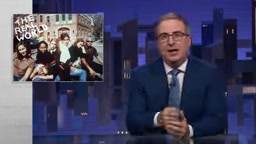
According to the show's narrative, he later met his future wife on the spin-off Road Rules: All Stars, the two flirting on camera, and his confessional line—"maybe get to touch some boobies"—was rated by Oliver as "the worst possible answer to 'how did you and mom meet.'"
Duffy went on to serve four terms in Congress, became a TV commentator, and co-hosted a right-wing podcast with his wife, with episodes like "Is wokeism America's cultural revolution" and "Why Taylor Swift is a sign of societal decline." Last year he joined the Trump administration as Transportation Secretary, bringing culture-war energy to his new post—including, after a fatal crash outside Washington, suggesting diversity hiring affected air traffic controller selection.
MTV's The Real World and Reality TV Culture: Premiering in 1992, The Real World is one of America's longest-running reality shows, its core format placing seven strangers in a carefully selected apartment and filming their lives around the clock. The show pioneered "reality television," emphasizing unscripted conflict and emotional exposure, and spawned the spin-off Road Rules and multiple "All Stars" crossover seasons. Duffy's The Real World: Boston (1997) was the series' sixth season and drew attention for heated arguments about race and affirmative action. The logic of packaging private conversations and controversial views as entertainment connects to Duffy's later behavior as Transportation Secretary, bringing culture-war issues into public policy: both rely on performative confrontation on camera to attract attention rather than solve substantive problems. Understanding this background helps explain why Duffy turned a government-promotional road trip into a reality show centered on family conflict.
The Content: A Carefully Packaged Family Drama
According to Oliver, this Wednesday, without warning, all six episodes were quietly dropped on YouTube. The conclusion after three hours: this is basically not a show about travel or America, but a reality show built around the Duffy family—planning family gatherings, and spending several episodes watching a daughter decide which college to attend.
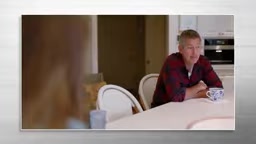
In that college discussion, Duffy's position was: if his daughter got into Harvard, "Mom and I can say no." He explained he worried Harvard would "professionally corrupt a good girl like you." Oliver's take: "First, this was supposed to be a road trip—why are we still in your kitchen? Second, what's more out of touch than 'how do I tell my daughter she can't go to Harvard because we raised her too well'?"
The show also had Duffy return to the Real World Boston house to "rewrite history," claiming he and Camila got along—until clips played on site contradicted him, showing he did insult her.
One more detail from the final cut: visits from country musicians John Rich and Kid Rock in the promo were cut, and the entire cruise ship tour with major sponsor Royal Caribbean vanished; other sponsors still got airtime—the family touring Boeing's South Carolina plant, and visiting Waymo facilities in Arizona, where Duffy called the company "the future of transportation."
The most awkward segment was an apparent sponsored insertion: former Southern Charm cast member Naomi Alindo suddenly appeared at a family lunch, steering the conversation precisely toward the flexibility of credit card points, delivering a monologue for one of the sponsors, the Electronic Payments Coalition, a lobbying group representing credit card companies.
Product Placement and the "Electronic Payments Coalition": The Electronic Payments Coalition mentioned in the article is a lobbying organization representing major banks, credit card networks, and payment processors, with members including Visa, Mastercard, and Bank of America. The coalition has long opposed legislation limiting credit card swipe fees and works to shape public narratives favorable to the payments industry. In the program, former Southern Charm member Naomi Alindo suddenly steers the conversation toward "the flexibility of credit card points," essentially an undisclosed sponsored segment (product placement). The Federal Trade Commission's (FTC) Guides Concerning the Use of Endorsements and Testimonials in Advertising require clear disclosure when a sponsor has a material connection to content. Yet this program, funded by companies regulated by the Department of Transportation, did not disclose sponsorship on screen, deepening ethical concerns: viewers may mistake lobbying messages for objective advice, while sponsors gain implicit policy influence through a cabinet-level platform.
Why This Matters
Oliver made clear he doesn't care whether the Duffys want to be the next reality TV family. What's truly concerning is that this rides on the Department of Transportation platform, appearing "ethically dubious on multiple levels."
The specific risks are real: the Department of Transportation currently has at least two public investigations into Waymo, involving its autonomous vehicles bypassing stopped school buses and striking a child near a school zone. According to a government ethics expert cited by Oliver, "there is ample reason not to trust Duffy to protect public safety on Waymo issues, because he accepted this gift."
A government watchdog group has filed a formal complaint and Freedom of Information request to find out what happened. And after the show aired, the Duffys barely promoted it, and the Department of Transportation released nothing related—Oliver said no wonder almost no one watched it.
His closing judgment: even if everyone involved wants to move on, the public shouldn't, because the appearance of conflict of interest doesn't disappear on its own. The show "doesn't feel like Sean Duffy took this country on a road trip—it feels more like all of us got taken for a ride."
Waymo and Autonomous Vehicle Regulation: Waymo is Alphabet's autonomous taxi company, operating driverless ride-hailing services in multiple U.S. cities. The two Department of Transportation public investigations mentioned—autonomous vehicles bypassing stopped school buses and striking a child near a school zone—touch on the core regulatory authority of the National Highway Traffic Safety Administration (NHTSA). NHTSA has the power to open defect investigations into autonomous systems and can require recalls or suspend operations. As Transportation Secretary, Duffy has ultimate policy influence over NHTSA's investigation direction and enforcement intensity. Ethics experts note that when the Secretary himself accepted filming accommodations sponsored by Waymo (touring facilities and calling it "the future of transportation"), his neutrality in Waymo safety investigations becomes hard for the public to trust. Even without direct financial transfer, this "gift" relationship is enough to trigger recusal obligations, because the fairness of regulatory decisions depends not only on facts but on observable independence.
Related articles

When STEM Data Slips into Dravidian Language Models: Hidden Issues Exposed by the BPB Metric
Training Dravidian multilingual models with standard BPE yields poor tokenization efficiency; switching to an akshara-preserving strategy greatly improves byte coverage. Mixing STEM data lowers training loss but silently degrades BPB, requiring multilingual replay to fix.

Qwen 4 Launch Imminent: How Big Is the Gap Between Local Models and Closed-Source Giants?
Reddit debates how Qwen 4 will reshape the open-source model landscape, as users test GLM 5.3 Flash and other local models for daily coding—and weigh real gaps against closed-source Sonnet 5.5.

MacBook Pro's OLED PWM Problem: When a 'Better' Display Becomes Worse for Your Eyes
MacBook Pro's OLED display is a spec upgrade, but PWM dimming causes eye strain for some users. We examine PWM mechanics, the debate, sensitive users, and engineering trade-offs.