Uber Shareholders Sue Board: Safety Compliance Failures Trigger Massive Litigation

Detroit pension fund sues Uber's board over systemic safety compliance failures leading to thousands of lawsuits.
A Detroit pension fund is leading a shareholder lawsuit against Uber's board of directors, alleging that management excessively cut safety and compliance investments to pursue growth, resulting in thousands of lawsuits including numerous sexual assault cases. The suit raises fundamental questions about fiduciary duty, platform economy safety responsibilities, and the costly trade-off between compliance savings and litigation exposure.
Event Overview
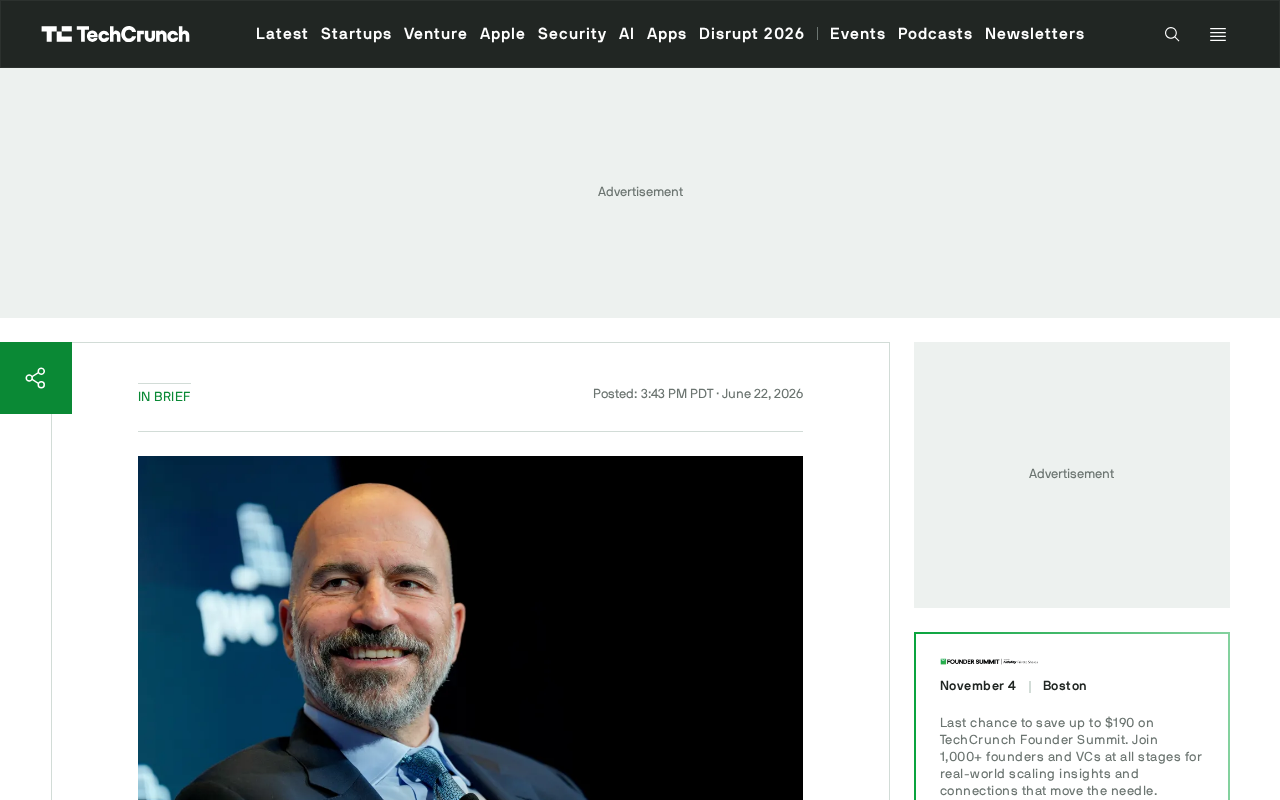
Uber is once again embroiled in legal turmoil over safety issues. A shareholder lawsuit led by a Detroit pension fund accuses Uber's board of directors and management of excessively cutting compliance investments, resulting in thousands of lawsuits against the company, including numerous sexual assault cases.
Core Allegations
Severely Inadequate Compliance Investment
According to the lawsuit, plaintiffs allege that Uber's board and executive team "cut too many compliance corners" in pursuit of business growth and profits. This systematic neglect directly led to a significant increase in safety risks faced by both riders and drivers.
Since its founding in 2009, Uber has been known for its Silicon Valley "move fast and break things" culture. During the Travis Kalanick era, the company was repeatedly exposed for circumventing regulations and ignoring safety reviews. After Kalanick's departure in 2017, new CEO Dara Khosrowshahi promised to improve corporate culture, but the lawsuit suggests that structural problems may never have been fundamentally resolved. Uber's safety reports show that nearly 6,000 sexual assault-related incidents were reported in the U.S. market during 2019-2020 alone — a figure that speaks volumes about the weakness of the compliance system.
The Cumulative Effect of Thousands of Lawsuits
The lawsuit points out that due to long-term compliance failures, Uber currently faces thousands of related lawsuits spanning sexual assault, personal safety, and other areas. These cases have not only caused tremendous harm to victims but also pose serious threats to the company's brand reputation and financial health.
The Deeper Logic of Shareholder Activism
Questioning Fiduciary Duty
At its core, this lawsuit challenges the board's fiduciary duty. As board members of a publicly traded company, they are obligated to ensure the company operates within a legal and compliant framework. When safety incidents become frequent and form a systematic pattern, the board's failure to oversee becomes an actionable legal issue.
Fiduciary duty is a core concept in corporate law, primarily consisting of two pillars: the duty of care and the duty of loyalty. Under Delaware corporate law (Uber is incorporated in Delaware), board members must oversee company operations with reasonable prudence. The landmark Caremark case (1996) established the precedent that boards bear supervisory responsibility for corporate compliance systems — if a board completely fails to establish compliance monitoring mechanisms, or knowingly ignores existing problems without taking action, this may constitute an "oversight failure" carrying personal liability. This legal standard provides important precedential support for the shareholders' claims in this case.
The Significance of a Pension Fund Leading the Charge
Interestingly, this lawsuit was initiated by a Detroit pension fund. When institutional investors file such lawsuits, it typically signals that problems have become severe enough to affect long-term shareholder value. As long-term holders, pension funds are usually motivated not by short-term gains but by driving substantive improvements in corporate governance.
Pension funds are among the most important types of institutional investors in capital markets, managing trillions of dollars in retirement assets. Because their beneficiaries are retirees, pension funds naturally adopt a long-term investment perspective and demonstrate strong ESG (Environmental, Social, and Governance) awareness. In U.S. securities litigation practice, pension funds frequently serve as "lead plaintiffs" because under the 1995 Private Securities Litigation Reform Act (PSLRA), investors with the largest economic interest are typically designated as lead plaintiffs, giving institutional investors a dominant role in class action lawsuits. The City of Detroit pension fund has previously participated in multiple securities lawsuits against technology companies and has extensive experience in shareholder activism.
Industry Implications and Outlook
The Boundaries of Safety Responsibility in the Platform Economy
Uber's predicament reflects a core contradiction facing the entire platform economy: how to assume safety responsibility for users under an asset-light operating model. When platforms classify drivers as "independent contractors" rather than employees, the extent of safety controls and the attribution of responsibility become a gray area.
Uber's classification of drivers as independent contractors rather than employees is one of the most controversial legal issues in the sharing economy. This classification directly affects the scope of the platform's legal liability: if drivers are employees, Uber must bear vicarious liability for drivers' misconduct during work; if they are independent contractors, the platform's liability is significantly reduced. California's AB5 bill passed in 2020 attempted to reclassify gig workers as employees, but Uber and other companies subsequently pushed Proposition 22 through a ballot measure, maintaining the independent contractor designation. While this model reduces operating costs, it also weakens the platform's legal obligation and practical ability to conduct rigorous background checks and ongoing oversight of drivers. However, regardless of legal classification, when a platform earns commission revenue from transactions, public and judicial expectations for its safety obligations do not diminish.
The Trade-off Between Compliance Costs and Litigation Costs
From a financial perspective, this lawsuit sends a clear signal to all tech platforms: compliance costs saved upfront may ultimately return in the form of litigation damages and reputational losses multiplied several times or even tenfold. For Uber, finding the balance between growth and safety will be a key challenge for its long-term sustainable development.
Compliance economics research shows that for every $1 a company invests in preventive compliance costs, it can avoid an average of $5-10 in remediation costs (including litigation expenses, fines, reputation repair, etc.). A 2023 PwC study found that compliance spending at large global enterprises typically accounts for 1-3% of revenue, rising to over 5% in highly regulated industries like finance and healthcare. For a company like Uber with annual revenue exceeding $37 billion (2024 figures), if the potential total damages from thousands of lawsuits reach the billions of dollars, then the compliance investment previously saved will be proven to be an extremely short-sighted decision financially. This also explains why institutional investors would file lawsuits from the perspective of protecting shareholder value — compliance failures themselves constitute harm to shareholder interests.
Conclusion
This shareholder lawsuit is not merely a concentrated eruption of Uber's corporate governance problems — it is a serious challenge to safety standards across the entire ride-sharing industry. As the litigation progresses, its outcome could have far-reaching implications for compliance investment standards at platform companies. If the court ultimately determines that the board was guilty of oversight failure, it will set an important precedent for governance practices at other platform economy companies, driving an industry-wide paradigm shift from "growth first" to "safety and growth in equal measure."
Key Takeaways
Related articles

The Truth Behind Codex 'Build a Website in 5 Minutes': AI Isn't Creating Sites—It's Helping You Copy Them
Exposing the truth behind viral Codex 5-minute website videos: creators aren't building original sites with AI—they're copying shared prompts or scraping others' work. Learn AI coding tools' real limits.

Getting Started with AI Agent Development: A Complete Guide from Concept to Practice
A comprehensive guide to AI Agent architecture and development, covering automated marketing, intelligent customer service, and investment analysis scenarios with single and multi-agent collaboration.

The Truth Behind Codex 'Build a Website in 5 Minutes': AI Isn't Creating Sites — It's Helping You Copy Them
Exposing the truth behind viral Codex 5-minute website videos: creators aren't building original sites with AI — they're copying shared prompts or scraping others' work.