Ubuntu 26.10 Review: GNOME 51 and Rust coreutils Fully Landed

Ubuntu 26.10, a non-LTS release, ships GNOME 51, fully switches to Rust coreutils, and integrates App Center with a local speech-to-text preview.
Ubuntu 26.10 (Stonking Stingray) is a non-LTS release aimed at early adopters, highlighting three changes: the desktop environment upgrades to GNOME 51, the coreutils foundational command-line tools fully migrate to a Rust implementation, and the App Center unifies Snap and Debian package details while adding GPU driver management, along with a local speech-to-text preview feature called Myna. It earned 78 votes and a #8 ranking on Product Hunt, showing some attention but limited discussion. The article argues that non-LTS releases play the role of early validation, and whether Rust coreutils and the App Center integration make it into the next LTS release is the key question for most users.
Ubuntu 26.10 (codename Stonking Stingray) appeared on Product Hunt with 78 votes and a #8 ranking, with tags pointing directly at three key changes: GNOME 51, Rust coreutils, and a refresh of the desktop experience. As a non-LTS release, its target audience is clear—developers and Linux enthusiasts who want to preview a new software stack between long-term support versions.
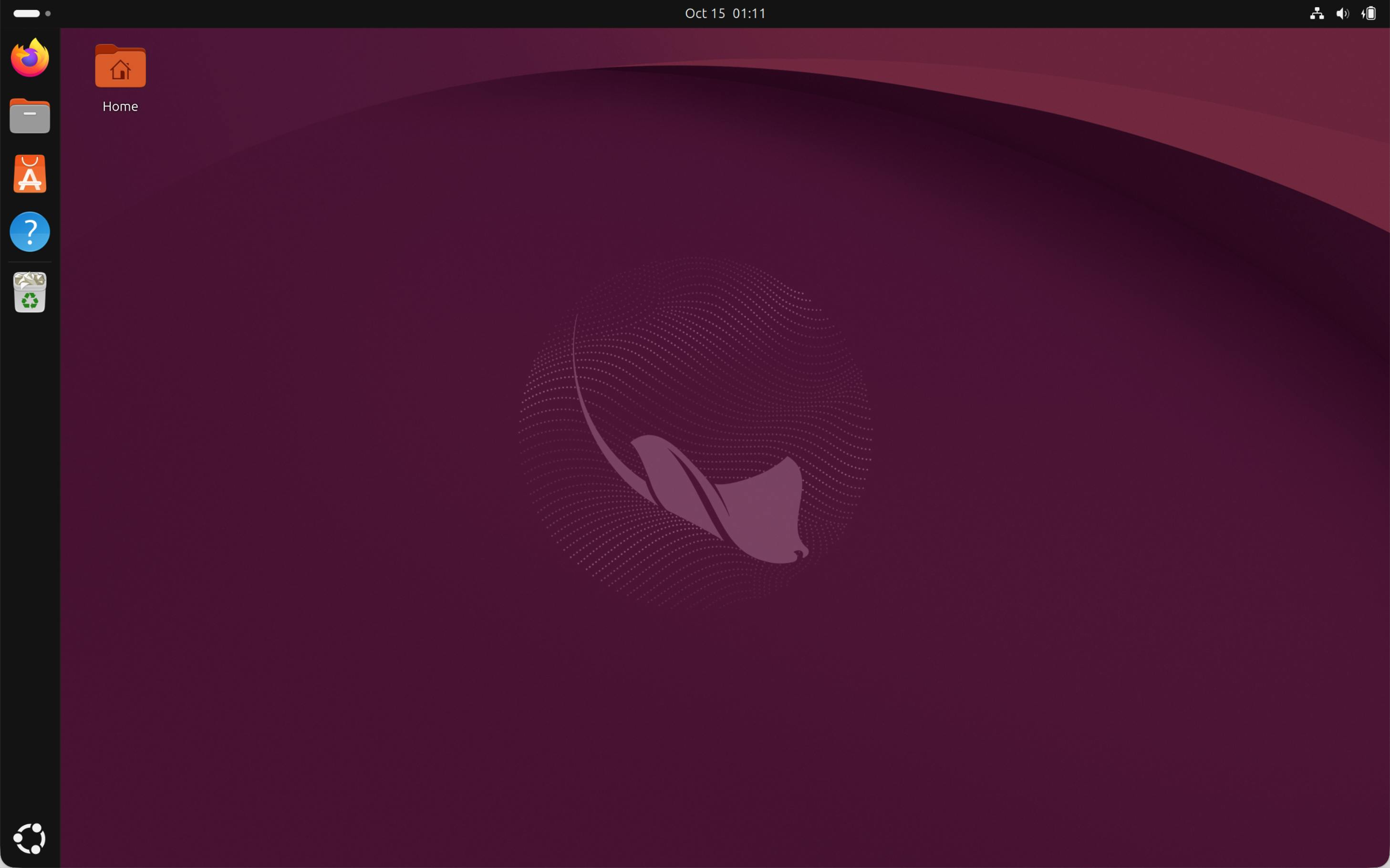
GNOME 51 and a Refreshed Desktop Experience
Ubuntu 26.10 ships with GNOME 51, meaning the desktop environment follows upstream's latest cadence in interaction details, performance, and underlying components. For non-LTS users, that alone is a reason to choose it: no need to wait for the next long-term support release to get GNOME's newest work.
The "refreshed Linux desktop" description is brief, but combined with the major version jump to GNOME 51, it's clear Canonical wants to position this release as a desktop experience refresh rather than minor touch-ups. For users who develop on Ubuntu daily, changes to desktop responsiveness, window management, and system settings will be the most immediate things they notice.
The iteration logic behind GNOME's version numbers: GNOME releases a major version every March and September, with version numbers incrementing in sequence. Ubuntu's April and October release cycles land right after its spring and fall releases, so Ubuntu's .04 and .10 versions each carry one of GNOME's two half-yearly releases. This means that between Ubuntu 26.04 LTS and 26.10, GNOME may have crossed at least two major versions or one version with significant underlying updates, and desktop stability needs to be validated first by non-LTS users.
Support cycles for LTS vs. non-LTS: LTS (Long Term Support) releases come out every two years and provide five years of standard security updates, making them suitable for production environments; non-LTS releases come out every six months with an official support window of typically only nine months, designed to quickly introduce new upstream features and components. This dual-track strategy lets Canonical pilot more aggressive technology swaps (like Rust coreutils) in non-LTS releases first, reducing the risk borne by LTS users.
Rust coreutils: A Complete Overhaul of Fundamental System Tools
The most noteworthy technical move in this release is that coreutils has completed a full switch to the Rust implementation. coreutils is the lowest-level set of command-line tools in a Linux system—ls, cp, mv, cat, the commands you use every day, all belong to it.
Migrating such a foundational set of components from C to Rust is about more than language preference. Rust's memory safety model can eliminate a large class of buffer overflows and dangling pointer issues at compile time, and coreutils is precisely a system component with high privileges, frequent invocation, and a broad attack surface. Canonical choosing to complete this switch in a non-LTS release also leaves ample validation time for the next LTS version.
For ordinary users, the way they use the command line won't change; for distribution maintainers and security teams, it's an improvement in underlying trustworthiness.
The origins and progress of the Rust coreutils project: Rewriting coreutils in Rust isn't something Canonical is driving alone—it comes from an independent open-source effort outside the GNU project (uutils/coreutils). That project reimplements the vast majority of GNU coreutils commands in Rust, aiming for behavioral compatibility with POSIX and GNU extensions while leveraging Rust's ownership and borrow-checking mechanisms to avoid memory safety issues. Ubuntu had previously been gradually replacing some of these tools (such as cp, mv, rm) with Rust implementations by default, and 26.10's "full switch" means most commonly used commands no longer depend on the C versions.
Compatibility challenges of the migration: The C version of coreutils has been polished over decades and contains a great deal of edge-case behavior, error messages, and performance optimization details. Aligning a Rust implementation with all of these behaviors one by one is very difficult, especially in scripts, automated builds, and container images, where any subtle difference in output format or exit codes can cause downstream tools to misbehave. Therefore, Canonical completing the switch in a non-LTS release is essentially using a six-month support cycle to collect compatibility feedback and prepare for a stable landing in the next LTS.
App Center: Unified Snap and Debian Package Information
Ubuntu's software center has long faced a fragmented experience problem: the same application may exist in both Snap and Debian package forms, and users need to compare versions, sources, and sizes across different pages. Ubuntu 26.10's App Center consolidates the details of both into one place and adds GPU driver management.
Bringing driver management into the App Center is a practical improvement. Previously, installing GPU drivers such as NVIDIA's often required relying on the "Additional Drivers" tool or the command line; now it can be done within the app center, lowering the configuration barrier for new users.
The essential difference between Snap and Debian packages: Snap is a containerized packaging format led by Canonical, where each Snap bundles its own runtime dependencies and features sandbox isolation, automatic updates, and cross-distribution operation, but is larger in size and slightly slower to start; Debian packages (.deb) are the traditional system-level package format, sharing libraries with the operating system, with small size and high integration, but complex dependencies that can affect other system components during upgrades. Ubuntu maintains both ecosystems simultaneously, which leads to the same application possibly appearing in two forms in the software center, leaving users to decide which one to install.
What the integration actually means: The App Center displays version numbers, download sizes, update sources, and permission descriptions for both formats in one place, so users no longer need to switch pages or use the apt and snap command-line tools to query them separately. For components like GPU drivers that depend on kernel modules and specific libraries, bringing them into App Center management is not only a unification of the user interface but also means the backend needs to build a reliable layer of encapsulation and rollback mechanisms on top of tools like ubuntu-drivers.
Myna Preview: Local Speech-to-Text
Ubuntu 26.10 also offers an optional Myna preview feature for local speech-to-text. The key word is "local"—speech data doesn't need to be uploaded to the cloud for recognition, which is more appealing to privacy-conscious users and offline scenarios.
Currently it's positioned as an optional preview, indicating it isn't mature enough to be enabled by default. But building voice input capability into the system layer, rather than relying on third-party cloud services, aligns with desktop Linux's long-standing philosophy of autonomy and control.
Who This Release Is For
Ubuntu 26.10 is a non-LTS release with a short support cycle, making it unsuitable for production environments that prioritize stability and don't want frequent upgrades. It's better suited to three types of people: desktop users who want to experience GNOME 51 early, developers who need to validate Rust coreutils compatibility, and operations staff who want to understand system changes before the next LTS arrives.
Judging from the Product Hunt feedback, 78 votes and a #8 ranking show it has some attention in the developer community, but only one comment also reflects that non-LTS releases typically don't spark widespread discussion. What's truly worth watching is whether the two changes—Rust coreutils and App Center integration—will be carried over into subsequent LTS releases. That's the point in time that will affect most Ubuntu users.
Related articles

Gemini 4 Argon Hands-On: AI Builds Board Games, Constructs Temples, and Trains Robots Autonomously
Gemini 4 Argon hands-on roundup: AI autonomously builds a desk racetrack and temple in Blender, writes a ray tracing engine, trains a humanoid robot to sink 7 shots, plus API pricing and developer access.

The Magic Octagonal Coin: Why Only 9% of People Can Predict Its Flip?
Only 9% of people can correctly predict the Magic Octagon coin flip. This article explains its spatial rotation mechanism, common cognitive pitfalls, and a new hypothesis based on Relevance Theory, exploring the limits of human spatial reasoning.

Sam Altman: AI Is Entering the Era of Scientific Discovery — Math Breakthroughs Will Replicate in Biology and Energy
Sam Altman says AI is entering the era of scientific discovery — math breakthroughs will replicate in biology, materials science, and energy to help develop new drugs and energy sources.