Understanding GitHub's Availability Report: Platform Stability and Developer Response Strategies
Analyzing GitHub's availability report and strategies for building resilient development workflows.
GitHub's monthly availability report disclosed five performance degradation incidents, highlighting the challenges of large-scale distributed systems. This analysis explores the implications for CI/CD pipelines, the importance of observability and post-mortem culture, and practical strategies developers can adopt—including retry mechanisms, multi-source backups, and supply chain risk management—to build more resilient workflows.
Overview
GitHub recently published its monthly availability report, disclosing five incidents that caused service performance degradation during the month. As the world's largest code hosting and collaboration platform, GitHub's stability directly impacts tens of millions of developers and enterprises in their daily work, making its regularly published availability reports a subject of close industry attention.
This report continues GitHub's longstanding commitment to transparency. By regularly disclosing service outages and performance degradation incidents, GitHub is not only demonstrating accountability to its users but also setting an industry standard for incident retrospectives across the cloud services and DevOps landscape.
Incident Background and Impact
According to the report, five incidents affecting services occurred during the month. These incidents share a common characteristic: they caused "degraded performance" across various GitHub services rather than complete service unavailability. This distinction is critical—performance degradation typically means users can still access core functionality but may experience request latency, partial operation failures, or slower response times.
In distributed systems operations, "degraded performance" and "complete outage" represent two fundamentally different levels of incident severity. Performance degradation usually indicates bottlenecks in certain system components or pathways—for example, increased database query latency, API response times deteriorating from milliseconds to seconds, or CDN node anomalies in specific regions. Users can still complete most operations during these periods, but the experience is noticeably diminished. A complete outage, on the other hand, means service endpoints cannot respond to requests and users are entirely unable to access the platform. Modern large-scale systems typically use mechanisms like load balancing, Service Mesh, and Circuit Breaker patterns to contain failure impact within localized boundaries, making "full-site outages" increasingly rare and replacing them with more frequent but less impactful degradation events. The fact that GitHub contained all five incidents at the degradation level reflects the strong fault isolation capabilities of its underlying architecture.
For teams relying on GitHub for continuous integration/continuous deployment (CI/CD), even brief performance degradation can cause build queue backlogs, deployment delays, and even disrupt production release cadences. GitHub Actions is GitHub's native CI/CD service, allowing developers to define workflows in their code repositories that automatically execute build, test, and deployment tasks when triggered by events such as code pushes or PR merges. When GitHub experiences performance degradation, the impact chain may include: slower Git operations (push/pull) causing trigger delays, increased queue times for Actions Runners to acquire tasks, and API call timeouts causing workflow step failures. For teams practicing Trunk-Based Development, such delays directly block release cadences; for large organizations using monorepos to manage hundreds of microservices, a single build queue backlog can cascade and affect deployment windows for dozens of services. This is precisely why availability data from major platforms is tracked so closely by the developer community.
Why Monthly Availability Reports Matter
GitHub uses monthly reports to systematically review service health each month. This practice offers value on several levels:
- Transparency: Honestly presenting platform operational status to users, building trust
- Accountability: Conducting root cause analysis for each incident and identifying clear improvement directions
- Industry Leadership: Providing a reference paradigm for incident management for other SaaS and infrastructure service providers
GitHub's monthly availability reports are essentially the public manifestation of a post-mortem culture. Incident post-mortems (also known as Post-Mortems or Incident Reviews) are a core practice in the SRE (Site Reliability Engineering) field, systematically articulated and popularized by Google in its book SRE: How Google Runs Production Systems. A high-quality post-mortem typically includes: an event timeline, quantified impact scope, Root Cause Analysis, remediation measures, and follow-up action items. The key principle is "blameless"—focusing on system and process improvements rather than assigning individual blame. This culture encourages teams to honestly document and share failure details, fostering organizational learning. Beyond GitHub, major cloud providers such as Google, Cloudflare, and AWS also regularly publish similar incident reports, gradually establishing an industry standard.
Platform Engineering Maturity Through the Lens of Availability Reports
For core infrastructure that supports the global open-source ecosystem, five performance degradation incidents within a single month reflects both the inherent challenges of operating large-scale distributed systems and the high demands modern platform engineering places on observability and rapid response.
Observability is one of the three pillars of modern platform engineering, alongside reliability and scalability. It refers to the ability to infer internal system states through external outputs (logs, metrics, traces). Unlike traditional monitoring, which primarily relies on predefined alert thresholds, observability emphasizes the ability to explore unknown failure modes. In ultra-large-scale platforms like GitHub, the observability toolchain typically includes: distributed tracing (such as OpenTelemetry) for pinpointing cross-service latency bottlenecks, time-series databases (such as Prometheus) for storing and querying metrics data, and structured log aggregation systems (such as ELK Stack or Splunk) for event correlation analysis. GitHub's ability to perform root cause analysis for each incident in its monthly reports is backed by robust observability infrastructure—without sufficient telemetry data, root cause identification would be impossible.
Any service at GitHub's scale cannot achieve zero failures. What truly demonstrates engineering capability is whether failure impact can be contained to "degraded performance" rather than "complete outage," and whether root causes can be quickly identified with improvement measures implemented after incidents. GitHub's continued public disclosure of this data is itself an expression of engineering confidence.
Developer Response Strategies
This report also reminds development teams: no third-party service should be treated as a 100% reliable black box. Sound architectural practices include:
- Designing retry and fault-tolerance mechanisms for CI/CD pipelines to prevent a single failure from interrupting the entire process
- Monitoring GitHub's official status page to stay informed about service health
- Maintaining local or off-site backups of critical code repositories to reduce single-point-of-failure risk
Platform Availability from a Software Supply Chain Perspective
It's worth noting that GitHub's availability concerns have transcended the realm of mere "code hosting" and risen to become a significant issue in software supply chain security. The software supply chain encompasses the complete chain from source code authoring, dependency management, and build compilation to final deployment and delivery—any disruption in any link can produce cascading effects. As the world's largest code hosting platform with over 300 million repositories, GitHub is one of the most critical nodes in the software supply chain. The 2021 SolarWinds incident and the 2022 Log4j vulnerability have already given the industry a profound appreciation for the severity of supply chain risks. When GitHub experiences availability issues, the impact extends beyond code hosting itself—software packages distributed through GitHub Packages, documentation sites hosted via GitHub Pages, and dependency updates managed through Dependabot are all affected. Consequently, an increasing number of enterprises are adopting multi-source strategies, such as maintaining mirror repositories on GitLab or Gitea alongside GitHub, or using tools like Artifactory to establish private artifact repositories as buffer layers.
Conclusion
Although GitHub's monthly availability report is brief in content, it reflects a mature platform's ongoing commitment to stability and transparency. For developers and enterprise users alike, understanding the significance of these reports goes beyond simply knowing whether the service "had issues"—it's about gaining insight into the platform's operational capabilities and improvement trajectory, and using that knowledge to optimize their own dependency strategies for critical infrastructure.
As development work becomes increasingly reliant on cloud-based collaboration platforms, availability has evolved from a mere technical metric into a critical factor affecting the entire software supply chain. Continuously following reports like these will help teams build more resilient development workflows.
Key Takeaways
Related articles

Gemini 2.0 Flash Coding Test: AI-Driven 3D Game Development from Start to Finish
Hands-on review of Gemini 2.0 Flash coding with SVG animation, Three.js 3D scene, and FPS game tests. Excellent code quality, spatial modeling, and cost efficiency with Antigravity CLI.

Understanding Context Windows: The Real Reason Your AI Coding Assistant Performs Poorly
Deep dive into how context windows impact AI coding Agents. Learn what context windows are, why bigger isn't better, how to manage Claude Code context, and optimization strategies for MCP servers and rules files.
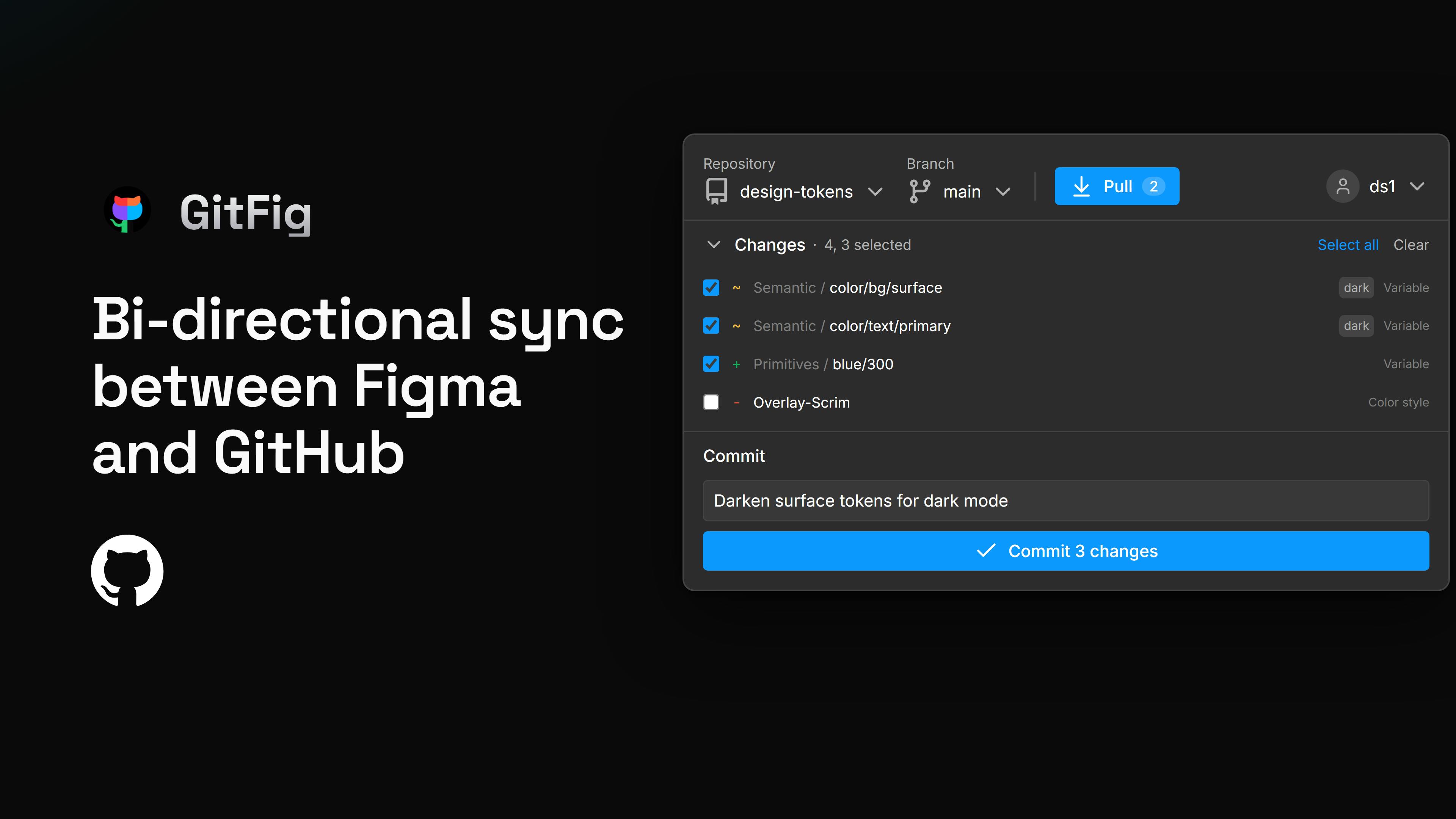
GitFig: Git Version Control and Bidirectional Design Token Sync in Figma
GitFig is a Figma plugin enabling bidirectional design token sync with GitHub. Designers can branch, commit, and create PRs directly in Figma.