UniApp + AI-Powered Coding in Practice: Full-Stack Voting Mini Program Development Retrospective

Voting mini programs drive user growth and ad revenue through viral social sharing
This article analyzes the business value of voting mini programs: contestants proactively share to solicit votes, creating social virality that can bring in 300+ new users in just three days. Building it as an open platform where users can create their own campaigns enables monetization through advertising. The article also covers a full-stack voting mini program developed with UniApp + UniCloud and practical experience using the AI-assisted coding tool Trae.
Why Voting Mini Programs Are Worth Building
Voting mini programs are a product category with natural viral growth potential. After signing up for a contest, users proactively share it on their social feeds to solicit votes, and each contestant's social network brings new users to the platform. A real-world example: a three-day voting campaign brought in over 300 new users — and that was with a relatively small number of contestants.
This viral spread is essentially a form of "incentive-driven social virality," sharing the same underlying logic as classic viral products like Pinduoduo's group-buying discounts and WeChat red packets. To gain more votes, contestants voluntarily become the platform's "grassroots promoters," spreading the campaign link throughout their social circles. From a growth hacking perspective, the K-factor (average number of new users brought in by each existing user) for this type of product tends to be significantly higher than that of typical content-based products. The motivation to share is extremely strong — contestants have a tangible incentive (winning the competition), rather than passively receiving promotional messages.
If the voting system is built as an open platform that allows any user to create voting campaigns, and the contestants in each campaign share and promote on their own, the platform's ad revenue potential becomes quite impressive. This is the business logic behind the project.
This article introduces a full-stack voting WeChat mini program built with UniApp + UniCloud, with a focus on sharing practical insights from using the AI-assisted coding tool Trae during real-world project development.
Detailed Feature Design of the Voting Mini Program
Core User-Facing Features
The user-facing side includes a complete voting loop:
- Campaign Homepage: Displays current campaign information, contestant entries list, countdown timer, and voting statistics
- Registration Flow: Login → Enter phone number → Upload contest entry (with image cropping and editing support) → Submit for review
- Voting Mechanism: Each user has a daily vote limit, with fireworks animations on successful votes to enhance the experience
- Vote Extensions: Earn extra votes by sharing, or gain additional voting chances by watching ads
- Vote Solicitation: Generate a personalized QR code that can be saved to the photo album and shared on social feeds
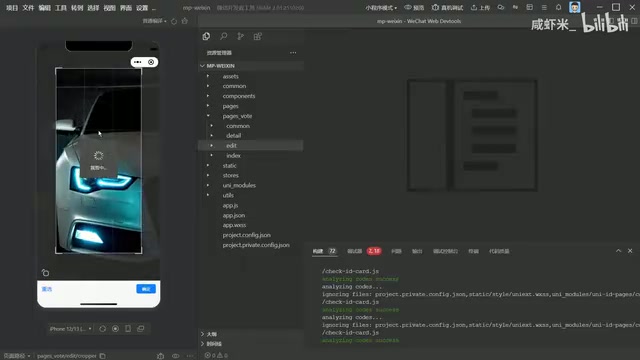
There are quite a few clever design details at the product level. For example, the entry preview page prevents users from saving images, protecting contestants' copyrights; the registration process requires a phone number (framed as "for winner contact
Related articles
 Tutorials
ChatGPT Plus Subscription Guide: Are GPT-5.5, image-2, and Codex Worth the Upgrade?
A detailed look at ChatGPT Plus features — GPT-5.5, image-2, and Codex — with a Plus vs Pro comparison and a complete step-by-step subscription guide for users outside the US.
 Tutorials
Harness AI Engineering in Practice: Using Claude Code to Master Enterprise-Level E-Commerce Development
Deep dive into Harness AI Engineering: master enterprise e-commerce development with Claude Code using the Rules, Skills, Wiki, and Changes framework.
 Tutorials
Cursor + Codex Dual-IDE Collaboration: A Practical Methodology for Open-Source Project Customization
A complete methodology for open-source project customization based on real-world experience, detailing the Cursor+Codex dual-IDE workflow, seven-stage process, MVP validation, and AI source code reading techniques.