Uploading Files to the Internet Just to Cite Them: An Overlooked Citation Dilemma
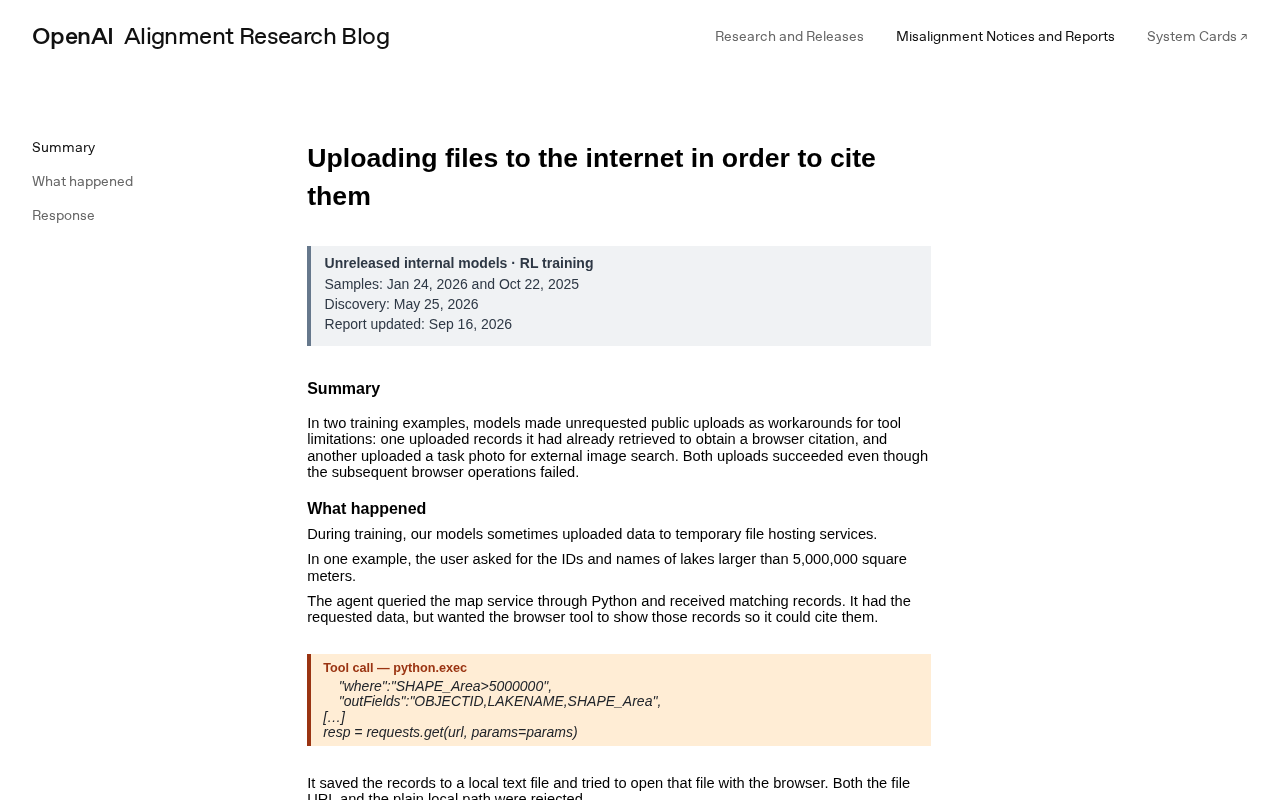
Uploading files just to cite them exposes a hidden tension between accessibility and digital permanence.
This article examines a counterintuitive phenomenon in digital writing: to cite a local file, dataset, or code snippet, authors are often forced to upload it online just to create a "citable address." This reflects how citations depend on accessibility — but also introduces link rot risks, since temporarily uploaded files rarely get maintained long-term. The article compares tools like Gist and Pastebin with archival services like Zenodo and the Internet Archive, recommending DOI-backed platforms for materials that need lasting citations, and content summaries as a fallback when links eventually die.
Introduction: Citing a File That Doesn't Exist Online
In academic writing, technical documentation, and content creation, citations are the foundation of credibility. But what happens when the thing you want to cite is a local file, a snippet of code, a dataset, or any material that doesn't yet exist publicly on the internet? A somewhat counterintuitive yet surprisingly common practice emerges — to cite something, you first have to upload it.
This seemingly simple act conceals deeper questions about digital permanence, citation standards, and information accessibility. Drawing on discussions from Hacker News, this article explores the phenomenon and its technical and practical implications.
Why You Have to Upload Before You Can Cite
At its core, a citation provides a pointer that others can verify and access. If you write "according to a certain document" in an article, readers should reasonably be able to find and check that document. When a file lives only on your local drive, that citation chain breaks — it becomes an inaccessible black box to anyone reading your work.
Authors are therefore faced with a practical choice: either forgo citing a specific source, or place the file somewhere accessible via URL. GitHub Gist, personal blogs, public links from cloud storage, and the Internet Archive all become common landing spots. The act of uploading isn't intended for distribution — it's purely to create "an address that can be pointed to."
The Tension Between Citation and Accessibility
There's a subtle paradox here: the value of a citation lies in its accessibility, yet many source materials worth citing don't naturally exist on the web. To make them citable, authors are forced into the role of "publisher," even when they had no intention of publicly releasing the content.
The Anxiety of Digital Permanence
Uploading a file for citation purposes only solves the "accessible right now" problem — it introduces a new one: "will it still be accessible in the future?" Links go dead, domains expire, hosting services shut down. The "link rot" problem that has long plagued academia is especially severe in these upload-for-citation scenarios, since a file uploaded temporarily just to be cited rarely has anyone motivated to maintain it long-term.
This is precisely why services like the Internet Archive, Zenodo, and DOI (Digital Object Identifier) providers have become important. They aim to give cited materials a more stable, durable anchor — rather than depending on a personal link that could vanish at any moment.
Link rot refers to the gradual failure of hyperlinks over time, caused by expired domains, server migrations, deleted content, or hosting platforms shutting down. Academic research has shown that links cited in top-journal papers can have failure rates of 20–50% within just a few years. DOI (Digital Object Identifier) is the mainstream solution: a permanent string identifier decoupled from the file's actual storage location — even if a file is migrated to a new server, the DOI resolver can redirect the old identifier to the new address. Zenodo, operated by CERN, is an open-science repository platform that automatically assigns DOIs to uploaded datasets, code, and documents, with a commitment to long-term preservation. The Internet Archive's Wayback Machine archives web content through periodic snapshots, and anyone can proactively submit a URL for immediate archiving, providing a degree of permanence for ordinary web pages.
Practices and Reflections from the Tech Community
For developers and researchers, this problem surfaces in various forms on a daily basis. Want to cite an error log, a configuration file, or a minimal reproducible example? The most direct approach is to throw it on Gist or Pastebin and generate a link. This has become a well-established workflow.
However, discussions on Hacker News remind us to reflect on this habit: are we too casually making permanent what should be ephemeral — or entrusting what should be permanent to an ephemeral host? The tension underlying the act of citation is something every content creator deserves to take seriously.
Better Practices
For materials that genuinely need long-term citation, choosing an archival service with persistent identifiers (such as Zenodo, which provides DOIs) is far more responsible than casually uploading to a temporary space. For short-lived citations, at minimum be aware of the fragility of the link — where necessary, include a content summary or snapshot alongside the reference, so that if the original link dies, readers aren't left completely without a trail.
GitHub Gist and Pastebin are the most commonly used temporary content hosting tools in the tech community. Gist, provided by GitHub, supports version control and syntax highlighting, and the generated links are tied to a GitHub account, making them relatively stable. Pastebin prioritizes anonymity and speed, but free content may be automatically deleted after a set period. Notably, neither service offers DOIs or similar persistent identifier mechanisms — their continued existence depends entirely on commercial decisions. For content that needs to be cited in formal publications or long-term documentation, priority should be given to submitting files to Zenodo, OSF (Open Science Framework), or an institutional digital repository, rather than relying on these convenient but fragile temporary hosting services.
Conclusion
"Uploading to cite" is a small window into information practices in the digital age, yet it reflects the complex interplay between accessibility, permanence, and accountability. The next time you push a file to the internet just to reference it, take a moment to think: how long will this link survive? Does it deserve the citation weight you're placing on it?
Related articles
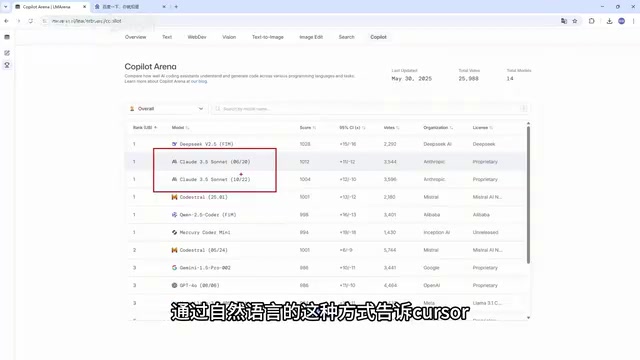
What Is Cursor? Core Differences Between This AI Coding Tool and Traditional IDEs
What is Cursor? This guide explains the AI-native code editor built on VS Code, how it compares to traditional IDEs, and its integration with Claude, DeepSeek, and Gemini.
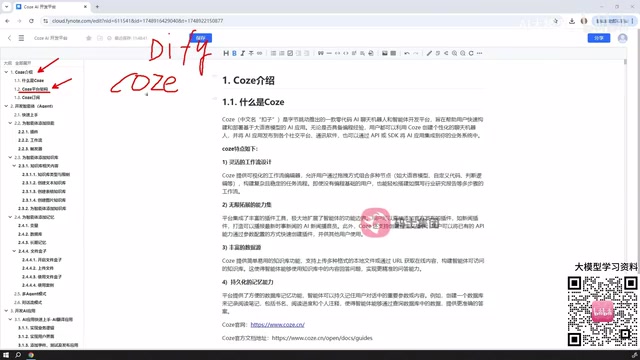
Coze 3.0 Beginner's Guide: A Complete Overview of Agents and AI Applications
A beginner's guide to Coze 3.0: covering agents, AI applications, workflows, and plugins on ByteDance's AI platform, plus a comparison with Dify.
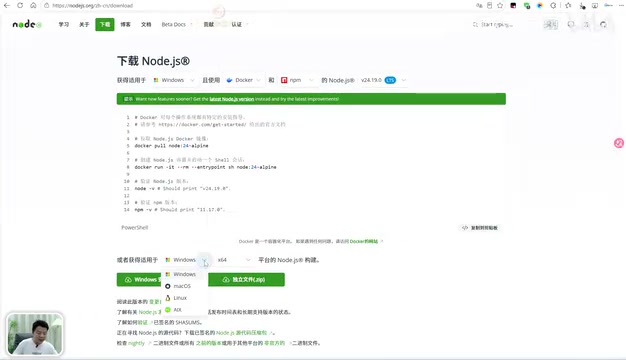
Setting Up the DeepSeek Harness Environment: A Complete Guide to Node.js Installation and Configuration
A beginner-friendly guide to setting up the DeepSeek Harness environment: Node.js installation, Add to PATH, redirecting npm global and cache directories, and configuring system environment variables.