US Department of Justice: North Korean IT Workers Infiltrated Dozens of American Companies

US DOJ reveals North Korean IT workers used forged identities to infiltrate dozens of US companies, serving as intermediaries for funds and data.
The US Department of Justice has disclosed that IT personnel with North Korean backgrounds have been employed at dozens of American companies using forged identities—a scale far exceeding previous isolated cases and indicating a systematic state operation. Exploiting the widespread adoption of remote work and corporate background check vulnerabilities, these infiltrators not only collect salaries but also use internal access to reach code repositories and business data, increasingly serving as intermediaries between compromised companies and Pyongyang's financial network. The DOJ warns that North Korean hackers are increasingly targeting Americans as collaborators, further complicating investigations. Existing identity verification, behavioral analysis, and privilege management systems are ill-equipped to handle such infiltration, and the employment chain itself has become an attack surface requiring defense.
An Infiltration Operation on a Scale Far Larger Than Expected
The US Department of Justice has revealed that IT personnel with North Korean backgrounds have successfully infiltrated dozens of American companies. These individuals are not traditional lone hackers operating remotely from abroad—they used forged identities to gain direct employment at US companies and access sensitive resources from within. Unlike previous isolated cases, the scale of this disclosure indicates that North Korea has turned infiltrating American companies into a systematic, organized state operation.
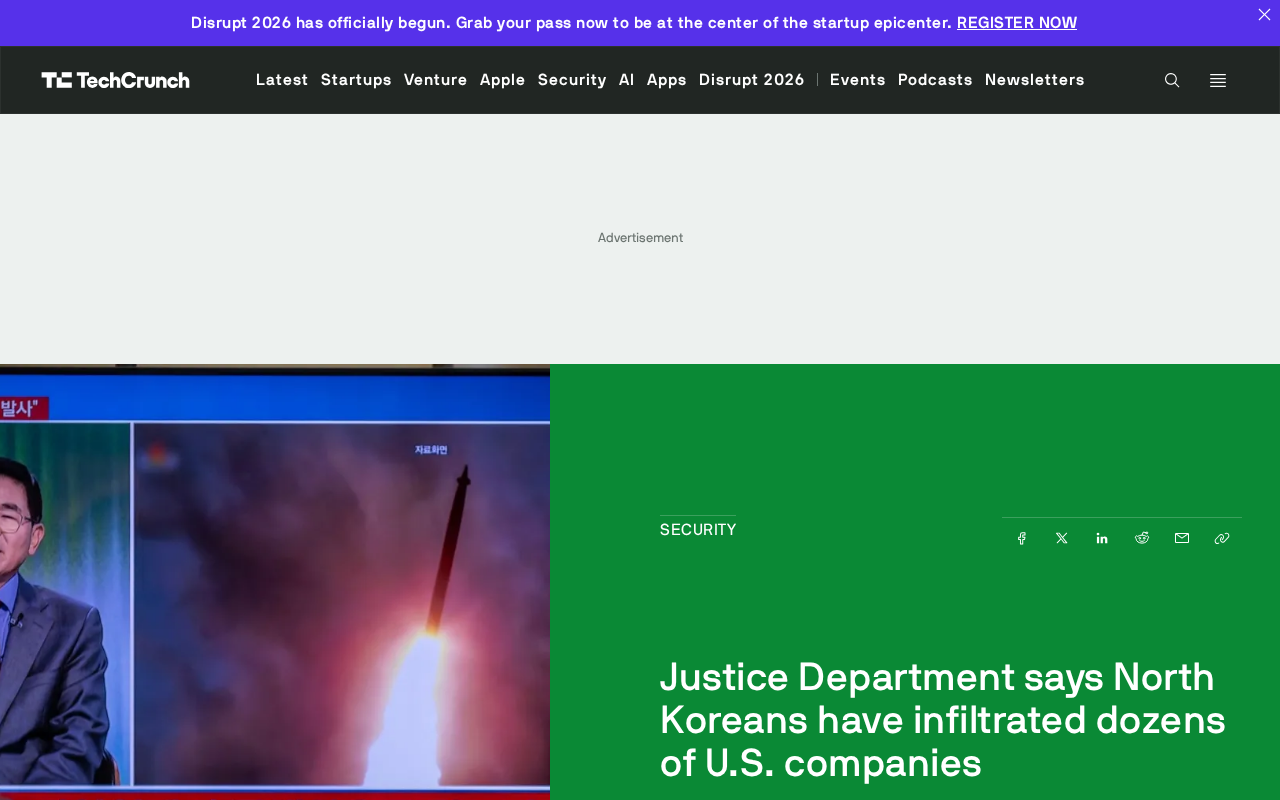
What makes this news so widely concerning is that it reveals an attack path far more covert than anticipated: no need to breach firewalls, no need to exploit zero-day vulnerabilities—just a resume that looks normal and a remote interview.
How the Infiltration Works: From Remote Employee to Overseas Money Trail
According to information disclosed by US authorities, the operational model of these North Korean IT workers is already quite sophisticated. They apply for technical positions at US companies using fake identities, particularly software development and IT operations roles that are remote-friendly. Once hired, they not only collect salaries but also use internal access privileges to reach code repositories, system architectures, and business data.
More critically, US authorities point out that these individuals are not merely "working to earn money." They are increasingly serving as intermediaries—connecting compromised American companies on one end and Pyongyang's financial network on the other. Salary income and potential extortion proceeds are channeled through complex routes, ultimately flowing to sanctioned North Korean entities.
The covert nature of this model lies in the fact that: what companies see during hiring is a compliant remote work application, and background checks often cannot reach the deep verification needed to uncover overseas forged identities. Problems may only surface when money flows or data leaks trigger security alerts.
Known Background on North Korean IT Personnel Infiltration
North Korea dispatching IT personnel overseas to earn foreign currency is not a new phenomenon. Multiple prior security studies have revealed that North Korean IT practitioners often use identity information from China, Russia, or Southeast Asian countries as cover, taking on overseas outsourcing projects through freelance platforms or direct applications. This method is widely viewed as one of the important channels for evading international sanctions and generating revenue for the state. Unlike traditional hacking attacks, these individuals operate under the guise of legitimate employment relationships, possess genuine technical skills, and can maintain their identities long-term through interviews and actual work performance. The scale disclosed by the US Department of Justice this time means the model has evolved from isolated cases into a systematic, organized operation, with targets upgraded from outsourcing gigs to direct entry into corporate interiors.
Common Operational Methods of North Korea's Financial Network
Sanctioned North Korean entities, unable to directly use mainstream international banking systems, typically rely on multi-layered intermediaries, cryptocurrency mixing services, over-the-counter brokers, and cross-border trade front companies to move funds. The US dollar salaries received by infiltrators are often first sent to third-country accounts, then repatriated through cryptocurrency exchanges or underground remittance channels. This chain makes it difficult for traditional financial monitoring to capture both the source and final destination of funds, and increases the difficulty for law enforcement agencies to track them. Understanding this background helps explain why US authorities emphasize that infiltrators are not just workers but key nodes connecting compromised companies to Pyongyang's financial network.
Why American Companies Became Targets
North Korea's choice of American companies as infiltration targets has clear economic logic behind it. The widespread adoption of remote work has significantly lowered the operational barriers to cross-border hiring. Many American tech companies have sustained strong demand for remote technical talent, yet identity verification processes have not been upgraded in tandem.
At the same time, American companies' concentrated holdings of intellectual property mean that a single successful internal infiltration can yield returns far exceeding those of ordinary cyberattacks. Stolen source code, product roadmaps, or customer data can be used both for direct extortion and as technological assets for transfer.
The wording of the US Department of Justice's statement is noteworthy: sanctioned hackers are "increasingly targeting Americans," using them as facilitators between compromised companies and Pyongyang. This means North Korea's infiltration strategy is evolving from "sending people in" to "developing local collaborators," further increasing the difficulty of investigation.
The Structural Mismatch Between Remote Work and Identity Verification
American companies have widely adopted remote or hybrid work models since the pandemic, expanding technical position recruitment from local to global. However, most companies' pre-employment background checks are still based on US domestic identity systems, such as Social Security number verification, local credit records, and academic credential verification. When applicants use forged overseas identities, these tools often cannot effectively verify them. Although video interviews are commonplace, deepfake technology and prepared impersonators can bypass limited visual judgment. This structural mismatch between hiring efficiency and security review is one of the conditions that has allowed North Korean IT workers to remain undercover for extended periods.
Tactical Evolution of North Korean Hacker Groups
Sanctioned North Korean hacker groups such as Lazarus Group and Andariel have long been known for attacking global financial institutions, cryptocurrency exchanges, and interbank settlement systems, with the goal of directly stealing funds. These groups typically launch cyber intrusions from the outside, using vulnerabilities or supply chain attacks to enter target networks. Employment-based infiltration represents a tactical extension: shifting from external breach to internal stay-behind operations, using legitimate identities and privileges to bypass perimeter defenses. This shift means defenders need to focus not only on anomalous traffic at the network layer but also on examining the authenticity of identities and behavioral patterns at the personnel level.
Real Challenges Facing Enterprises
For American companies, this disclosure exposes shortcomings in existing background screening systems. Traditional pre-employment screening mainly relies on identity documents, academic credential verification, and former employer confirmation, but against elaborately forged overseas identities, the effectiveness of these methods is greatly diminished.
The remote work environment further weakens day-to-day observation among colleagues. A "remote employee" who never attends in-person meetings, keeps their camera off for extended periods, and has a slightly unusual communication style is not easily identified in a distributed team. Companies need to invest more resources in identity verification, behavioral analysis, and privilege management—which is especially difficult for small and medium-sized companies.
The legal and compliance dimensions are equally complex. Once an employee is confirmed to be a North Korean infiltrator, the company must not only handle the aftermath of data breaches but may also face regulatory inquiries and reputational damage. How to strike a balance between hiring efficiency and security review has become an urgent issue facing many American companies.
This Is Not an Isolated Incident
US authorities have linked this disclosure to broader sanctions enforcement actions. Sanctioned North Korean hacker groups have long targeted global financial institutions and cryptocurrency exchanges, and infiltrating American companies represents a tactical extension: shifting from external attacks to internal stay-behind operations.
This shift imposes new requirements on cybersecurity defense systems. Companies can no longer rely solely on perimeter protection and endpoint detection—they need to treat the employment chain itself as part of the attack surface. The strength of identity verification, the principle of least privilege for remote access, and monitoring of anomalous fund flows all need to be incorporated into an overall security strategy.
The US Department of Justice's public warning also sends a signal: law enforcement agencies have recognized the scale of this threat and will intensify investigation efforts. But for companies that have already been infiltrated, the process of discovering and removing stay-behind operatives may be far longer than imagined.
Key Takeaways
- North Korean IT workers used fake identities to gain employment at dozens of American companies, with infiltration scale exceeding previous understanding
- Infiltrators not only collect salaries but also serve as intermediaries for funds and data between compromised companies and Pyongyang
- The widespread adoption of remote work and background check vulnerabilities are key conditions enabling such infiltration to succeed
- The US Department of Justice warns that North Korean hackers are increasingly targeting Americans as collaborators
- Companies need to incorporate the employment chain into their security defense scope, strengthening identity verification and privilege management
Related articles

AI Writes Code, Will Programmers Lose Their Jobs? The Truth About Devin's Autonomous Programming
Devin and other autonomous AI coding agents are changing software development: from Copilot-assisted coding to fully automated engineering agents, the programmer's role shifts from writing code to system design and oversight. This article analyzes the impact of AI programming on employment, code security, and junior developer training, as well as the real direction of programmer demand under the efficiency paradox.

Citigroup's 14,000 Engineers Use Devin, Slashing Tech Outsourcing Bill by 30%
Citigroup's 14,000 engineers used AI coding agent Devin to cut its tech vendor bill by 30% and speed releases 30-40%, while JPMorgan says AI gains aren't in earnings yet.

AGENTS.md in Practice: Making Coding Agents Actually Work
AGENTS.md and CLAUDE.md can boost coding agent performance, but research shows misuse raises costs 20%. Here's what to write, what to delete, the 200-line and 32KB limits, monorepo nesting rules, and a security warning.