US Stocks' Weak Rebound: Nvidia Data Center Results and Anthropic IPO in Focus
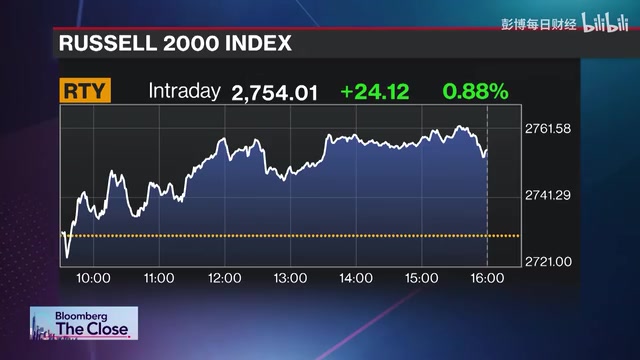
US stocks rebound lacks breadth and weekly decline persists; Nvidia results and AI capitalization in focus
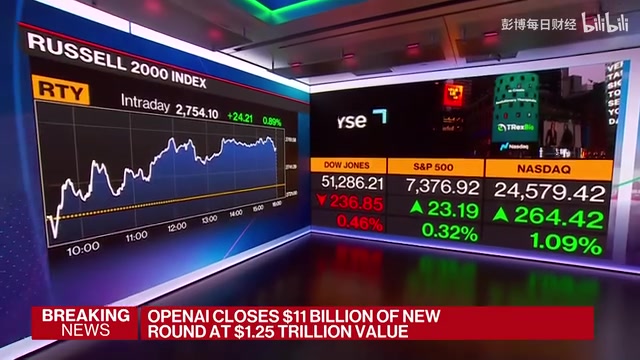
US stocks attempted a rebound after the prior day's sharp selloff, but gains narrowed into the close: the S&P 500 edged higher, the Dow fell, and major indices were broadly lower for the week, with the Nasdaq 100 notably weak. The rebound lacked breadth, with only communication services and information technology posting meaningful gains, indicating tech-driven action. Focus is on Nvidia's data center results as the key variable for the AI trade. In private markets, Anthropic is expected to IPO within weeks and OpenAI's latest round values it at about $1.25 trillion, accelerating AI leaders' capitalization. Stock dispersion was sharp: Airbnb and Moderna led gains, while DraftKings plunged over 21% on weak guidance. Bond yields fell for a sixth straight week, echoing equity weakness.
Market Overview: Rebound Attempt Fails to Reverse Weekly Decline
US stocks attempted to rebound after the previous day's sharp selloff, with major indices opening significantly higher but paring gains into the close to finish only modestly up. The S&P 500 edged higher, while the Nasdaq Composite and Nasdaq 100 posted relatively larger gains; the Dow Jones Industrial Average bucked the trend and closed lower. The small-cap Russell 2000 also advanced, but major indices were broadly down for the week, with the Nasdaq 100 posting a particularly steep weekly decline.
According to Bloomberg's closing report, the day's rebound lacked breadth—decliners outnumbered advancers among S&P 500 constituents, most sectors closed lower, and only communication services and information technology posted meaningful gains. This means the rebound was driven primarily by tech stocks rather than a broad recovery.
Nvidia Data Center Results: The Key Variable Determining the AI Trade's Direction
A core narrative repeatedly mentioned in the report is Nvidia's data center business performance. Market participants widely believe that Nvidia's results in the data center segment—and related information released over the coming weeks to months—will largely determine the next direction of this AI-related trade. This judgment comes against the backdrop of a significant pullback in tech stocks, with investors eager to find evidence of sustained AI demand in Nvidia's results.
From a broader perspective, Nvidia's data center business has become a bellwether for the AI infrastructure investment cycle. Its results affect not only its own stock price but also the entire semiconductor supply chain, cloud providers' capital expenditure expectations, and even the broader valuation logic for tech stocks.
Hyperscaler capital expenditure is the key chain for understanding the spillover effects of Nvidia's data center business. The annual CapEx plans announced by cloud giants such as Microsoft, Amazon, Google, and Meta directly determine the scale of their spending on GPUs and accelerator cards from Nvidia, AMD, and in-house chips. When these companies raise CapEx guidance, the market typically interprets it as a signal of strong AI compute demand, which in turn lifts semiconductor sector valuations; conversely, it raises concerns that the AI investment cycle is peaking. Therefore, Nvidia's quarter-over-quarter data center revenue growth is essentially a real-time reflection of these downstream customers' purchasing intensity and a leading indicator for gauging the health of the entire AI infrastructure supply chain.
Anthropic IPO and OpenAI's Massive Valuation: Private Market Heat Transmits to Public Markets
Another key piece of information in the report comes from the private market. Anthropic's IPO is expected to proceed within weeks, and its main competitor OpenAI's latest funding round also produced major news—according to cross-referenced information from Bloomberg terminals, OpenAI's committed valuation at the close of this round was approximately $1.25 trillion. This valuation level directly transmits private market heat into the public market's field of view, serving as important context for the day's market sentiment.
The two pieces of information appearing side by side sketch a picture of accelerating capitalization among leading AI companies: on one side, Anthropic moves toward the public market; on the other, OpenAI secures an extremely high valuation endorsement in the private market. For secondary market investors, this means the valuation anchor for the AI sector is being redefined.
The valuation transmission mechanism between primary and secondary markets is worth explaining here. Private market (primary market) funding valuations are determined by a small number of institutional investors through equity transactions and lack continuous quotations; public market (secondary market) valuations are formed by daily trading. When OpenAI completes funding at a valuation of approximately $1.25 trillion, that price becomes an important reference anchor for analysts pricing similar AI companies (including the yet-to-list Anthropic and already-listed AI-related names). After Anthropic enters the public market via IPO, its pricing will be directly tested by the secondary market; if the public market assigns a valuation significantly below private rounds, it could in turn suppress valuation expectations across the AI sector, creating so-called "valuation inversion" risk.
Stock Dispersion: Airbnb and Moderna Lead Gains, DraftKings Plunges
Individual stock performance was notably dispersed on the day. Airbnb posted its largest single-day gain since August 7, with CEO Brian Chesky saying the company is back in growth mode, revenue growing at its fastest pace in three years, full-year revenue expected to grow in the high teens, adjusted EBITDA margin guidance raised to about 36%, and a new share repurchase authorization of up to $12 billion announced. Moderna rose about 5.3% after raising full-year guidance and posting its first quarterly profit since 2024, with COVID vaccine sales rebounding year over year; the company is shifting focus toward cancer drug development and expects to submit a US marketing application by year-end, with possible approval in 2027.
On the downside, DraftKings plunged more than 21% after its 2027 profit forecast came in below the analyst average and it cut its fiscal 2026 outlook; the company is increasing investment to build prediction markets. Lyft fell 4.2% after recording an unexpected net loss due to a legal settlement, and Under Armour dropped more than 5% after cutting its full-year gross margin forecast.
Adjusted EBITDA margin is one of the core metrics in Airbnb's guidance mentioned in the article. EBITDA refers to earnings before interest, taxes, depreciation, and amortization, excluding non-operating items such as interest, taxes, depreciation, and amortization; "adjusted" further excludes one-time or non-cash items such as stock-based compensation and restructuring charges. This metric is widely used to measure a company's cash generation from core operations, especially for companies with large capital structure differences or in expansion phases. Airbnb's raising of adjusted EBITDA margin guidance to about 36% means that for every $100 of revenue, about $36 remains after deducting operating cash costs—a relatively high level among consumer internet companies.
Other Notable Developments
Elon Musk said at the Barron investment conference that payments from government agencies will account for less than 10% of SpaceX's revenue this quarter, down from 16.6% in the most recent quarter, and disclosed that SpaceX's fourth-quarter revenue grew substantially quarter over quarter. Both SpaceX and Tesla rebounded on the day.
In addition, the report mentioned that Tesla will gradually discontinue the Cybertruck, which has sold poorly for years. Roku's ownership also sparked discussion—after being acquired by a content provider, whether it can maintain its previous neutral positioning as "the Switzerland of streaming devices" is in doubt.

Bond Market and Weekly Perspective
In the bond market, yields rebounded on the day but fell for a sixth consecutive week across maturities on a weekly basis. The two-year yield rose on the day but edged lower for the week, while the benchmark 10-year yield fell about seven basis points from last Friday. This weekly bond market move echoes the weakness in stocks, reflecting that caution about the growth outlook has not dissipated despite the single-day rebound.
One-line Summary
US stocks rebound lacks breadth, weekly decline persists; Nvidia results and AI capitalization in focus
Paragraph Summary
US stocks attempted to rebound after the previous day's sharp selloff, but gains narrowed into the close: the S&P 500 edged higher, the Dow bucked the trend and fell, and major indices were broadly lower for the week, with the Nasdaq 100 posting a particularly steep weekly decline. The rebound lacked breadth—only communication services and information technology posted meaningful gains—showing the move was driven mainly by tech stocks. Market focus is on Nvidia's data center results, seen as the key variable determining the AI trade's direction. In private markets, Anthropic is expected to IPO within weeks, and OpenAI's latest funding values it at about $1.25 trillion, accelerating capitalization among leading AI companies. Stock dispersion was significant: Airbnb and Moderna led gains, while DraftKings plunged over 21% on guidance below expectations. Bond yields fell for a sixth consecutive week, echoing stock market weakness.
Related articles

Mysterious Synchronized Disturbances Hit Global Power Grids — German Team Finds the Culprit
Mysterious synchronized power drops hit grids worldwide. A German team found the culprit. This article explains the coordinated disturbances, the research breakthrough, and what it means for grid monitoring and operations.
NVIDIA Board Investigates Espionage Ca…
NVIDIA Board Investigates Espionage Case: CEO's Admission of Extramarital Affair Sparks Internal Turmoil
NVIDIA's board has launched an espionage investigation following the CEO's admission of an extramarital affair. This article analyzes the background, corporate governance logic, and potential impact on NVIDIA, noting that current information is limited and should be viewed rationally.
Writing K-Means from Scratch: One Developer's Journey into Machine Learning
A developer shares day 59 of writing K-Means from scratch: finishing all supervised learning algorithms and entering unsupervised learning, covering K-Means++ initialization, vectorized distances, convergence and empty clusters.