Valve Launches Reservation Queue System to Combat Steam Controller Scalpers — How Can Players Secure One?

Valve launches a reservation queue system to combat scalpers after the new Steam Controller sells out instantly.
Valve's new Steam Controller sold out within moments of launch, with scalpers using automated bots to hoard stock, frustrating genuine buyers. Valve responded swiftly by announcing a reservation queue system that uses orderly queuing, purchase limits, and distributed traffic to protect real players. The approach draws on the successful experience of the Steam Deck launch and represents a shift from reactive measures to proactive anti-scalping defense.
New Steam Controller Sells Out Instantly, Scalper Problem Exposed
Valve's new Steam Controller officially went on sale this Monday and sold out almost immediately. A large number of genuine buyers encountered difficulties during checkout and ultimately failed to place their orders. Meanwhile, scalpers seized the opportunity to hoard stock for resale at inflated prices on the secondary market, sparking widespread frustration across the player community.
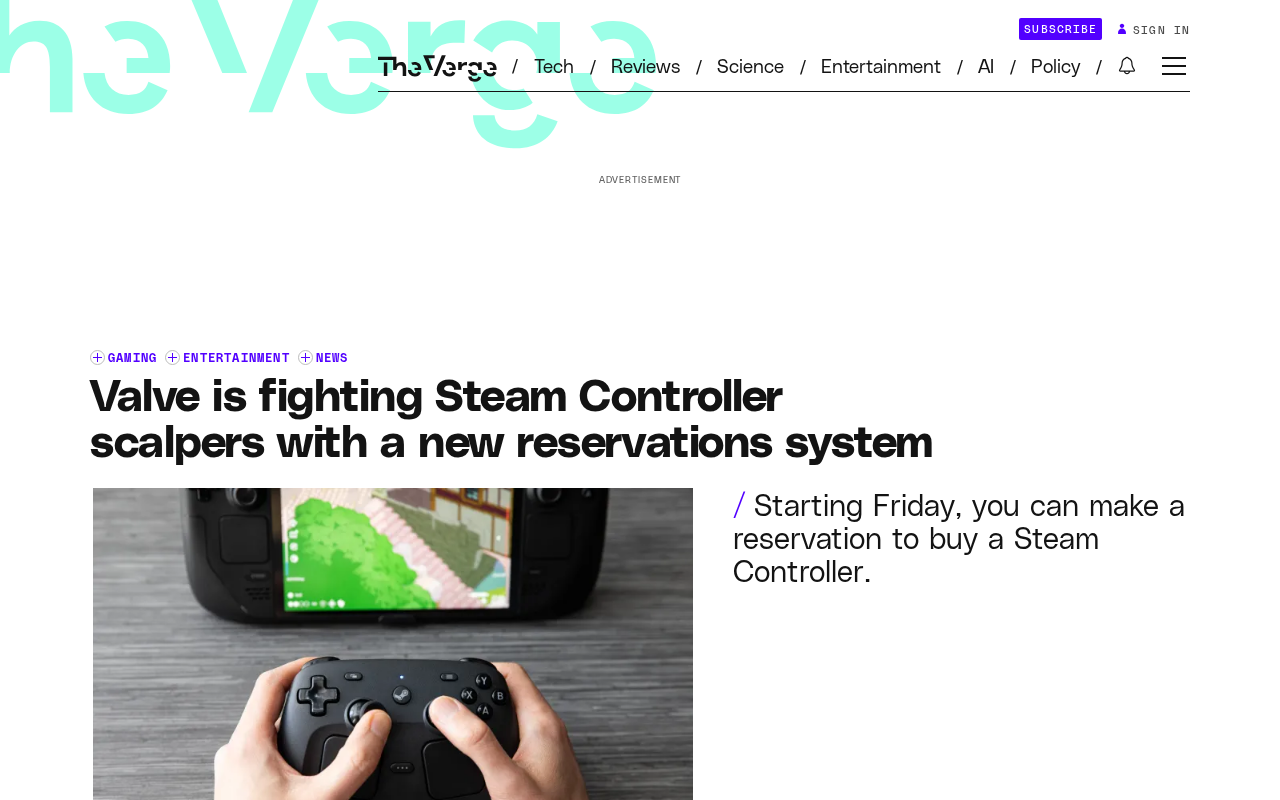
Valve's Official Response: A Reservation Queue System to Fight Scalpers
Faced with rampant scalping, Valve moved quickly. The company announced it will open a "reservations queue" system this Friday at 1 PM ET (2 AM Saturday Beijing time), giving players who missed the initial launch a fair chance to purchase.
The core design principles behind this reservation system include:
- Orderly queue mechanism: Replacing the instant-purchase frenzy with a structured reservation queue to avoid the chaos of a traditional launch
- Limiting bulk scalper purchases: Imposing per-account purchase limits to ensure more real players can get the product
- Reducing server strain: Distributing purchase traffic to significantly reduce checkout failures
Why Is the Scalper Problem So Hard to Solve in the Gaming Hardware Market?
Scalping Is Nothing New
Scalping has long plagued the gaming hardware industry. From the PS5 and Xbox Series X to various limited-edition controllers, virtually every hot hardware product faces the threat of being snatched up by scalpers. These resellers often use automated scripts and bot programs to place massive orders before ordinary consumers can even react.
How Automated Scalping Scripts Work
The automated scripts used by scalpers are essentially "shopping bots." At their technical core, they simulate HTTP requests to bypass normal browser interactions and send add-to-cart and checkout commands directly to e-commerce servers. These scripts typically leverage residential proxy IP pools to evade IP bans and use account farms to mass-register accounts that circumvent per-account purchase limits. Some advanced scripts can even crack CAPTCHAs, with response times measured in milliseconds — far beyond what any human can achieve. This explains why even players who refresh the page the very second a product goes live still can't secure one — they're not competing against other humans.
The Economics Behind Scalping
The fundamental driver of scalping is the asymmetry of supply-and-demand information combined with short-term supply rigidity. Manufacturers tend to stock conservatively to manage inventory risk, while demand for hot products surges explosively at launch. The gap between the two creates an opportunity for price arbitrage. During the PS5 launch, for example, scalper markups reached 50%–100% above the retail price. From a game theory perspective, as long as secondary market profits remain high enough, scalpers are incentivized to keep investing in technical tools. This is also why relying solely on technical countermeasures like CAPTCHAs can never fully solve the problem — it's essentially an endless arms race. Every new defensive measure the defender deploys prompts the attacker to upgrade their tools in response.
Can a Reservation System Truly Eliminate Scalping?
While a reservation queue system isn't a perfect solution, it represents a proactive stance by manufacturers to protect consumer interests. A similar mechanism was used during the Steam Deck launch — buyers were required to have a Steam account with a certain purchase history, which effectively curbed mass scalping.
Technical Details of the Steam Deck Reservation System
When the Steam Deck launched in 2021, its reservation system required buyers to have a purchase history on their Steam account before a specific cutoff date. This threshold directly filtered out the vast majority of freshly registered scalper accounts. Valve also introduced a "Reservation Invite" model — users first joined a reservation queue, and the system sent purchase invitation emails in order of registration time, with each invite valid for 72 hours. This design spread the burst of concurrent traffic across days or even weeks, protecting server stability while making it difficult for scalpers to hoard stock. Holding invitations across many accounts without being able to cash out immediately significantly increased their capital holding costs. In practice, the Steam Deck's reservation system has been widely regarded as a successful approach.
Practical Tips for Players Looking to Snag a Steam Controller
If you're interested in the new Steam Controller, here's how to prepare:
- Make sure your Steam account information is complete and your payment method is linked and working
- Log into the Steam client or web store ahead of the reservation window opening
- Be on time for the reservation — queue systems typically operate on a first-come, first-served basis, and every second counts
- Follow Valve's official social media accounts and Steam Store announcements for the latest updates
Valve's move signals that hardware manufacturers are shifting from reactive damage control to proactive defense against scalpers. While the reservation queue system adds wait time to the purchasing process, it's undoubtedly a fairer distribution method for genuine players.
Key Takeaways
- Valve's new Steam Controller sold out at launch, with many players unable to complete checkout
- Valve will open a reservation queue system on Friday, aimed at combating scalper hoarding
- The reservation mechanism protects real consumers through orderly queuing and purchase limits
- Scalpers use shopping bots, proxy IP pools, and account farms for millisecond-level automated purchasing
- A similar system was successfully deployed during the Steam Deck launch, effectively curbing scalpers through account history requirements and an invite-based system
- Scalping continues to plague the gaming hardware industry, driven by the dual forces of supply-demand imbalance and a technological arms race
Related articles
 Tech Frontiers
A Rare Quiet Day in AI: Recursive Self-Improvement Stirs Beneath the Surface
A rare quiet day in AI sees multiple sources go silent simultaneously. Behind the calm, Recursive Self-Improvement (RSI) research continues. What this means for the industry.
 Tech Frontiers
Reve 2 vs. Ideogram 4: A Deep Dive into Layout Control in AI Image Generation
A deep comparison of Reve 2 and Ideogram 4's layout control capabilities, covering technical approaches, real-world use cases, and industry trends for designers and creators.
 Tech Frontiers
In the Weights: Check Your Influence Score in the AI World
In the Weights is an AI influence search engine that quantifies your presence in the AI world with a score. Explore how it evaluates practitioners and what it means for digital identity.