Vercel AI SDK Vue 2.0.258 Patch Update Explained
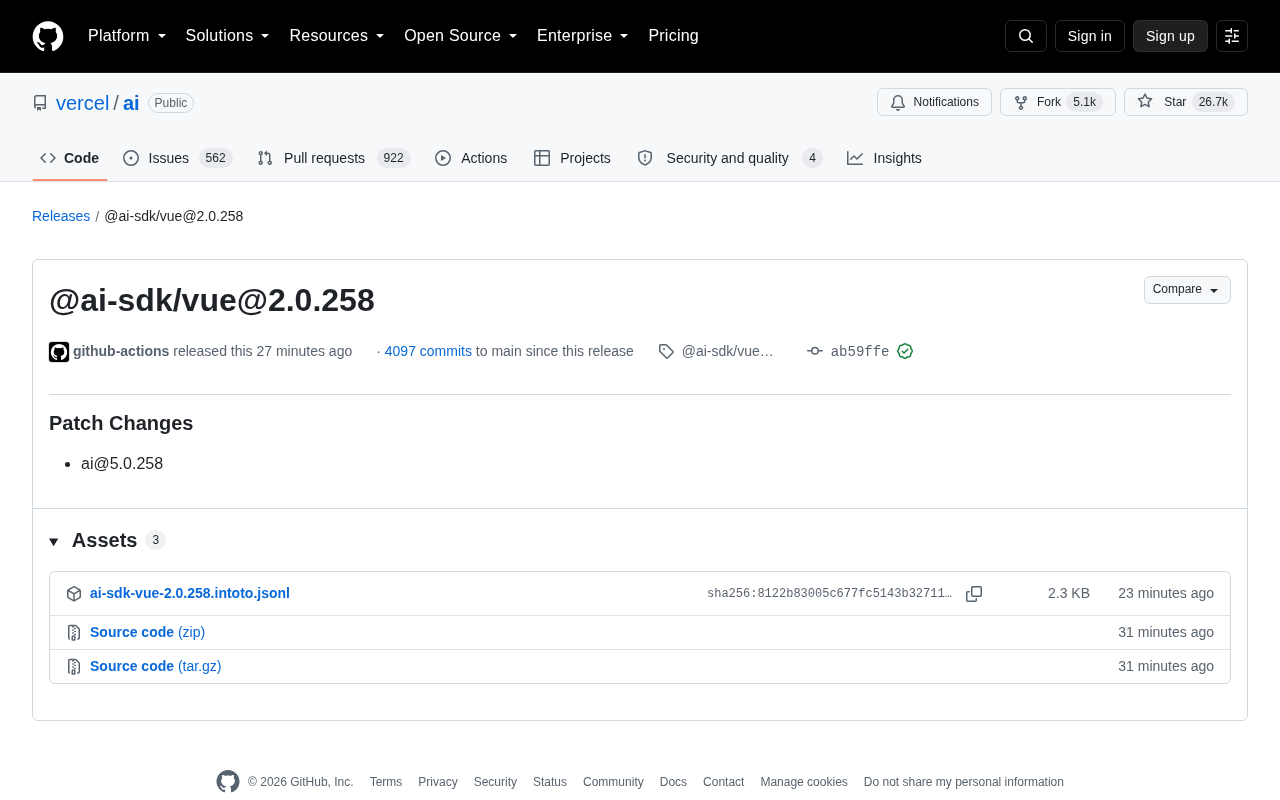
Vercel AI SDK Vue adapter receives a patch update, syncing its core dependency to ai@5.0.258.
`@ai-sdk/vue@2.0.258` is a maintenance patch update whose sole change is syncing the underlying dependency to `ai@5.0.258`. Under SemVer, patch releases guarantee backward compatibility, so existing Vue projects can upgrade without modifying business code. The package provides composables like `useChat` via Vue 3's Composition API, abstracting streaming, state management, and LLM integration into a reactive interface. Developers should upgrade the core `ai` package in tandem and run a full test suite to verify critical paths remain intact.
Vercel's official AI SDK ecosystem has released @ai-sdk/vue@2.0.258. This is a patch-level update that primarily tracks the core package ai@5.0.258. For developers integrating large language model capabilities into Vue applications, these incremental releases may seem minor, but they're worth keeping an eye on.
Release Overview
This release was published automatically via GitHub Actions on September 14th, as part of the continuous iteration of Vercel's ai monorepo. The repository currently has approximately 27,000 stars and 5,100 forks, making it one of the most widely adopted toolkits for integrating AI capabilities in frontend and full-stack development.
The version number 2.0.258 indicates that @ai-sdk/vue has entered the stable 2.x stage while maintaining a high-frequency patch cadence. The core change in this update is a dependency upgrade — aligning the underlying core package to ai@5.0.258.
What a Patch Update Means
Under Semantic Versioning (SemVer), a patch version typically contains only backward-compatible bug fixes, with no breaking changes or new features. This means existing projects upgrading @ai-sdk/vue to 2.0.258 should be able to migrate smoothly without modifying any business logic.
The only change explicitly noted in this changelog is the dependency sync to ai@5.0.258. The Vercel AI SDK uses a monorepo architecture where core logic is centralized in the ai package, while framework adapters like @ai-sdk/vue and @ai-sdk/react are responsible for wrapping those core capabilities into framework-native APIs (such as Vue composables). As a result, whenever the core package is updated, framework adapter packages typically publish a corresponding version to stay in sync.
SemVer and Monorepo Release Pipelines
Semantic Versioning defines a version number as three segments:
MAJOR.MINOR.PATCH. A MAJOR bump signals breaking API changes; MINOR indicates backward-compatible new features; PATCH is limited to backward-compatible bug fixes. In a monorepo, multiple packages share a single repository. When the core package publishes a patch, downstream framework adapters often trigger an automated release pipeline — even if the adapter code itself hasn't changed — to bump their version and declare the updated dependency. This mechanism ensures all packages within the SDK ecosystem maintain a verified, consistent dependency graph, removing the burden of manual version alignment from users.
The Role of @ai-sdk/vue
@ai-sdk/vue gives Vue developers out-of-the-box AI interaction capabilities, covering typical use cases such as building chat interfaces, streaming text responses, and connecting to various LLM providers. It encapsulates the complexity of stream processing and state management into Vue-idiomatic composable functions, letting developers work with AI output just like any other reactive data.
For teams building AI-powered applications with Vue, it's recommended to keep this package regularly updated. Accumulated patch releases often include stability improvements and edge-case fixes — staying current helps you avoid hitting upstream-resolved issues in production.
Understanding Composables
Composables are a core pattern in Vue 3's Composition API — stateful logic encapsulated in reusable functions prefixed with
use, such asuseChatoruseCompletion.@ai-sdk/vueleverages this pattern to hide the complexity of underlying concerns like SSE (Server-Sent Events) stream parsing, request cancellation, and error retries inside these composable functions. Externally, they expose reactive refs likemessages,input, andisLoading, along with action methods likeappendandreload. Developers don't need to worry about low-level streaming protocol details — they can bind AI conversation state directly in their templates, dramatically lowering the barrier to integrating LLMs in Vue projects.
Upgrade Recommendations
The upgrade itself is straightforward — simply run the update command in your package manager to pull the latest version. Since this is a patch update, the risk is low. That said, it's still good practice to run your full test suite after upgrading to confirm that critical paths like streaming responses and error handling continue to work as expected.
One thing to keep in mind: @ai-sdk/vue has a version correspondence with the ai core package. When upgrading, it's best to update all related packages together to avoid type or runtime issues caused by version mismatches. For projects using a lockfile, verify that the core ai package has also been updated to 5.0.258.
Summary
This is a typical maintenance patch release — it doesn't bring significant functional changes, but it reflects the healthy, high-frequency maintenance cadence of the Vercel AI SDK ecosystem. For developers, keeping up with these minor version updates is a sound practice for ensuring long-term stability in AI-powered applications.
Related articles

RTX 5090 Stock Crisis: Why Third-Party Sellers Are Charging $9,500
NVIDIA's RTX 5090 has vanished from U.S. online retail, with third-party sellers asking up to $9,500. Here's how AI compute demand is driving GPU prices to extremes.
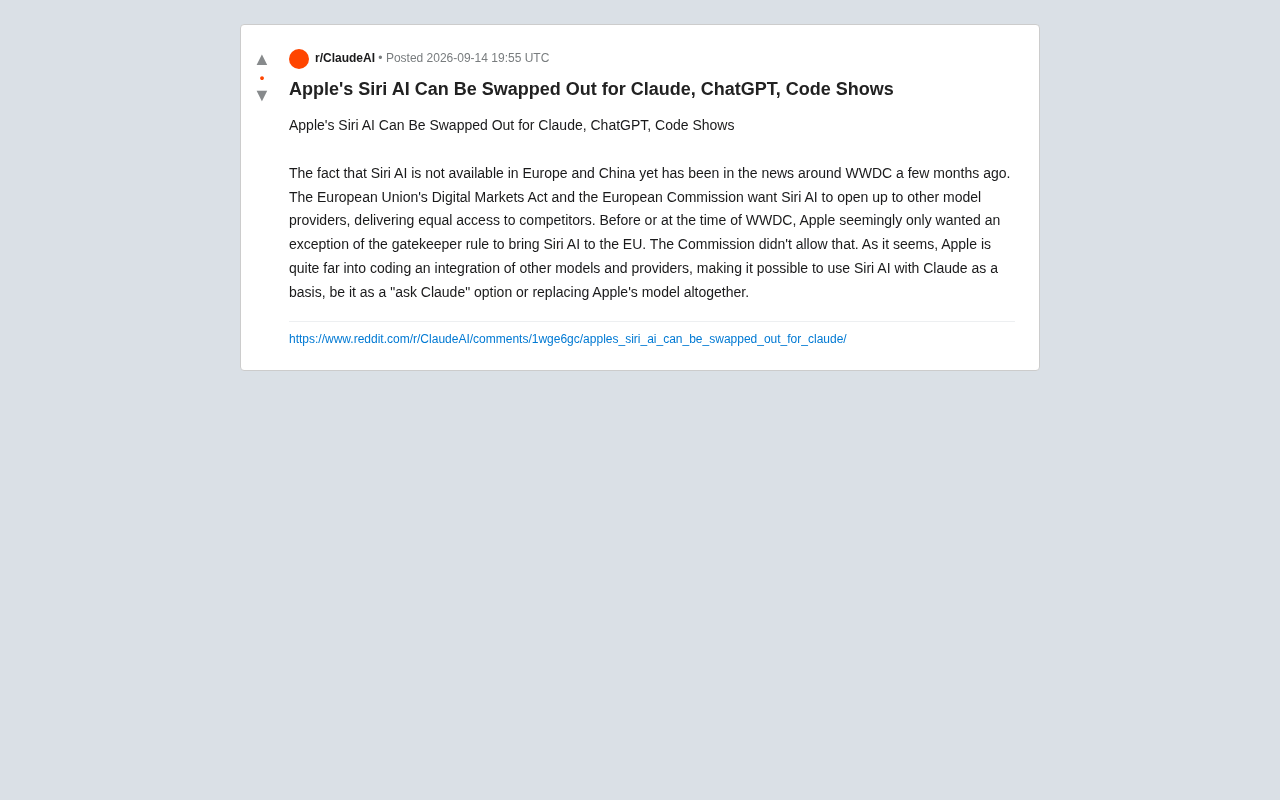
Apple Siri May Support Swapping in Claude and ChatGPT — Code Already Shows Signs
Leaked code shows Apple is developing third-party AI model integration for Siri, potentially allowing users to swap in Claude or ChatGPT under EU DMA pressure.
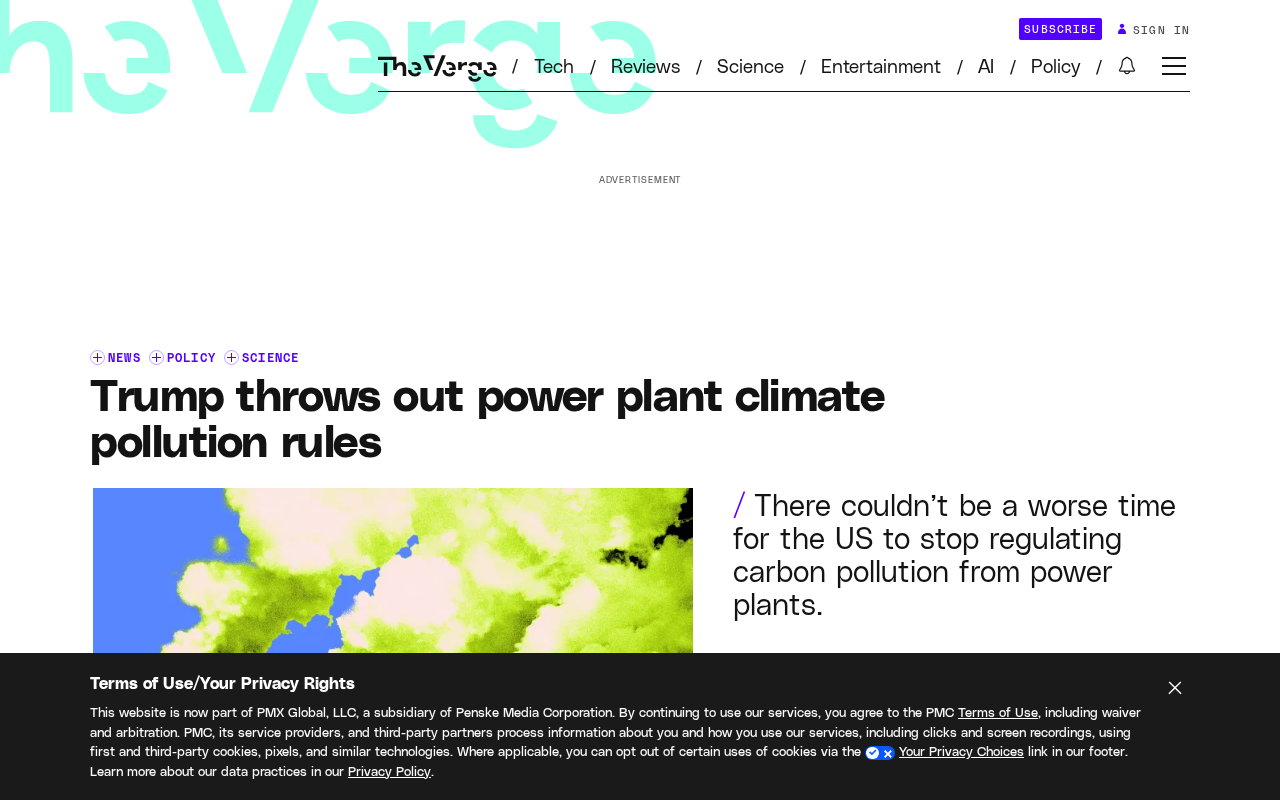
EPA Moves to Scrap Power Plant Greenhouse Gas Emission Standards Amid Surging AI Energy Demand
The EPA plans to eliminate all power plant greenhouse gas emission standards, just as AI, EVs, and manufacturing drive electricity demand higher — making U.S. power potentially far dirtier.