Verisign Faces Class Action Lawsuit: The .com Domain Registration Fee Monopoly Controversy

Verisign faces a class action lawsuit over its exclusive .com registry status, accused of maintaining high prices that harm consumers.
Verisign, as the exclusive registry operator for .com domains, is facing a consumer class action lawsuit alleging that it uses its exclusive status to maintain wholesale prices above competitive market levels. Since competition among registrars only squeezes retail margins and cannot affect Verisign's wholesale pricing, consumers lack alternatives. HN discussions diverge on the legal basis: some argue regulatory constraints (NTIA agreement and ICANN) weaken antitrust claims, while others say regulatory protection itself shows the market is not freely competitive. If the case progresses, it could impact .com domain registration costs and internet infrastructure governance.
Event Overview: A Class Action Lawsuit Targeting Domain Registration Monopoly
According to discussions in the Hacker News community, Verisign is facing a consumer class action lawsuit over its .com domain registration business. The core allegation of the lawsuit is that Verisign exploits its exclusive registry authority over the .com top-level domain to maintain registration prices above competitive market levels, harming consumer interests.
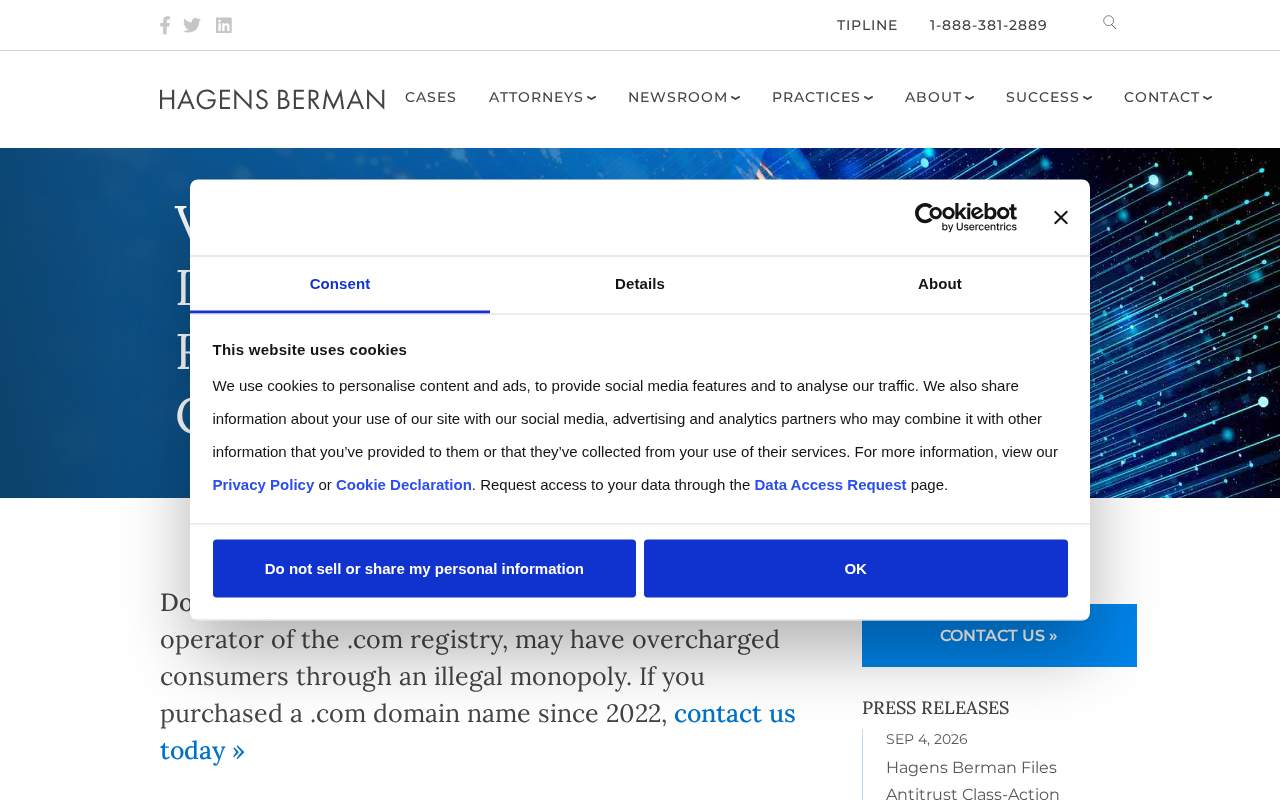
Verisign is not an ordinary domain registrar but the registry operator for top-level domains such as .com and .net. Ordinary users purchase domains through registrars like GoDaddy and Namecheap, and these registrars ultimately must pay wholesale fees to Verisign. This unique market position is precisely the focus of the lawsuit.
The Difference Between a Domain Registry and a Domain Registrar
In the domain name system, a registry is the entity responsible for maintaining the central database of all registration information for a given top-level domain (such as .com or .net). Verisign operates the registries for .com and .net, meaning it is the sole holder of authoritative data for these domains. A domain registrar, by contrast, is a company certified by ICANN that sells domain registration services to the public, such as GoDaddy and Namecheap. Ordinary users purchase domains from registrars, and registrars in turn procure domain registrations from registries (such as Verisign) at wholesale prices. This layered structure means that competition among registrars occurs only at the retail level, while wholesale prices are unilaterally set by the registry (subject to regulatory constraints), creating a unique market landscape.
Why .com Domain Prices Are Difficult to Regulate Through Market Competition
The pricing mechanism for .com domains has its particularities. Under the Cooperative Agreement between Verisign and the National Telecommunications and Information Administration (NTIA) of the U.S. Department of Commerce, Verisign's status as the .com registry is exclusive. This means that no matter how many domain registrars compete in the market, they must all pay the same wholesale price to Verisign.
Commenters in the HN discussion pointed out that this structure means a portion of the price paid by end users is effectively determined by an entity with no direct competitors. Price wars among registrars can only squeeze their own profit margins and cannot touch the wholesale fees charged by Verisign. The plaintiffs' logic roughly unfolds from here: since consumers have no alternative, prices above competitive levels constitute harm to consumers.
The NTIA-Verisign Cooperative Agreement
The Cooperative Agreement signed between the National Telecommunications and Information Administration (NTIA) of the U.S. Department of Commerce and Verisign is a key document governing .com domain pricing. The agreement authorizes Verisign as the exclusive operator of the .com registry while imposing certain restrictions on its pricing behavior. Historically, the agreement capped .com wholesale price increases (e.g., no more than 7% per year), but after a 2018 revision, this price control was removed, allowing Verisign to set prices freely based on market conditions (though still indirectly constrained by ICANN). This change is precisely the background that plaintiffs in the class action may cite: the combination of exclusive authorization and pricing liberalization enables Verisign to maintain prices above competitive levels while consumers lack alternatives.
Legal Angle and Points of Dispute in the Lawsuit
For a class action to succeed, it typically must be proven that the defendant's conduct caused quantifiable harm to a group of consumers. In this case, plaintiffs need to argue that Verisign's pricing behavior violates relevant laws—possibly antitrust law, or consumer protection statutes.
Discussions on HN present different perspectives. Some commenters argue that Verisign's pricing is subject to regulatory constraints from ICANN (Internet Corporation for Assigned Names and Numbers) and NTIA and is not entirely freely set, so the legal basis for the lawsuit may be weak. Others point out that the very existence of regulatory constraints indicates that this is not a free competitive market and that consumers have limited bargaining power.
This divergence reflects a deeper question: when an infrastructure service is simultaneously protected by regulation and exclusive authorization, how should the legal boundaries of its pricing behavior be defined?
Class Certification Requirements and Antitrust Claims
In U.S. federal courts, a class action must satisfy the requirements of Rule 23 of the Federal Rules of Civil Procedure to be certified, including numerosity, predominance of common questions, typicality of the representative parties, and adequacy of representation. In this case, plaintiffs must demonstrate that Verisign's conduct caused common economic harm to all .com domain registrants. As for substantive legal claims, plaintiffs may invoke Section 2 of the Sherman Antitrust Act (monopolization) or state consumer protection laws. The core of an antitrust claim lies in proving that Verisign possesses market power and engaged in exclusionary conduct (such as using exclusive authorization to maintain high prices), while the defendant may argue that its pricing is subject to regulatory constraints and does not constitute anticompetitive behavior. This intersection of regulation and antitrust is the legal focal point of the case.
Potential Impact on the Domain Ecosystem and Ordinary Users
If the lawsuit makes substantial progress, it could have ripple effects on the domain registration ecosystem. The most direct impact is that wholesale prices for .com domains may face adjustment pressure. For enterprise users holding large portfolios of domains and domain investors, this means registration and renewal costs could change.
From a broader perspective, this case touches on a classic tension in internet infrastructure governance: efficiency versus fairness. Verisign's exclusive status technically ensures the stable operation of the .com domain system, but whether this stability comes at the cost of consumers paying a premium is precisely the question the lawsuit seeks to answer.
The case is currently at an early stage, and the Hacker News discussion has only 8 comments, offering limited information. Future developments are worth watching, especially how the court will define the legal nature of Verisign's market position.
One-line Summary
Verisign faces a class action lawsuit over its exclusive .com registry status, accused of maintaining high prices that harm consumers.
Paragraph Summary
Verisign, as the exclusive registry operator for .com domains, is facing a consumer class action lawsuit alleging that it uses its exclusive status to maintain wholesale prices above competitive market levels. Because competition among registrars can only squeeze retail margins and cannot touch Verisign's wholesale pricing, consumers lack alternatives. HN discussions diverge on the legal basis of the lawsuit: some argue that regulatory constraints (NTIA agreement and ICANN) weaken antitrust claims, while others contend that regulatory protection itself demonstrates the market is not freely competitive. If the case progresses, it could affect .com domain registration costs and the landscape of internet infrastructure governance.
Related articles

Why Does the Tesla Roadster Need to Fly? A Deep Dive into Musk's Wild Demo
Tesla's Roadster launch showed wall-climbing, upside-down driving, and flying stunts—but The Vergecast notes the demo car may lack a battery, the Rocket version is invite-only and not street-legal, and the website terms don't guarantee delivery. After nine years of delays, why does this car still need to exist?

AI Is Not a Replacement: Human-AI Collaboration Through the Lens of Factory Root Cause Analysis
Starting from factory root cause analysis, this article explains how AI accelerates evidence chain construction rather than replacing human experts, exploring the pragmatic implementation logic and business value of 'AI supporting people rather than replacing them.'

AI Agent Decision Auditing: Building an Evidence Chain in Regulated Workflows
Starting from a Reddit discussion, this article analyzes three core issues in AI agent decision auditing within regulated workflows: what fields audit records should contain, how to handle feedback latency for erroneous decisions, and how to continuously calibrate LLM judge consistency with human judgment.