Vibe Coding in Practice: A Guide to Orchestrating Codex, Claude Code, and Cursor

Vibe Coding is an intent-driven AI programming paradigm built on a cloud cognition–local execution loop and orchestration-layer constraints.
Based on a Bilibili creator's video, this article analyzes the technical essence and practical methods of Vibe Coding. It is not about abandoning code understanding but shifting focus from line-by-line writing to intent expression and result validation; its core is intent-driven rather than blind trial and error. The architecture consists of a cloud cognition layer (large models understanding requirements and generating code), a local execution layer (running validation and feeding back errors), and an orchestration layer (task decomposition, specification injection, automated validation), forming a 'three-in-one system architecture.' Tools like Codex, Claude Code, and Cursor are practitioners of this architecture, and loop efficiency determines practical value. The orchestration layer is key to moving Vibe Coding from toy to engineering, and developers should master tool combinations and workflow building.
Vibe Coding has recently sparked heated discussion in the developer community. Some dismiss it as a gimmick, while others see it as a shift in the development paradigm. Based on an in-depth analysis video from a Bilibili creator, this article breaks down its technical essence and practical methods.
What Is Vibe Coding?
Vibe Coding does not mean developers completely abandon understanding of code; rather, it shifts the focus from "writing line by line" to "expressing intent and validating results." Developers describe goals in natural language, have large models generate code, and then verify and iterate through a local execution layer. This model lowers the barrier to entry for programming, but it does not eliminate the need for engineering discipline—on the contrary, it requires developers to have stronger architectural judgment and debugging skills.
The creator explicitly states in the video that the core of Vibe Coding is "intent-driven," not "feeling-driven." The difference is that the former has clear goals and acceptance criteria, while the latter is blind trial and error.
The technical foundation of large-model code generation: The large models that Vibe Coding relies on (such as GPT-4, Claude 3.5, etc.) acquire programming ability through pretraining on massive code corpora. Their core mechanism is predicting the next token based on context, so the quality of generated code depends heavily on the clarity of the prompt and the completeness of the context window. The model does not truly "understand" code semantics; instead, it has learned statistical associations between code patterns and natural language descriptions. This explains why task decomposition and specification injection are crucial—they essentially narrow the model's prediction space and reduce the probability of generation deviating from the goal.
How the Cloud Cognition Layer and Local Execution Layer Work Together
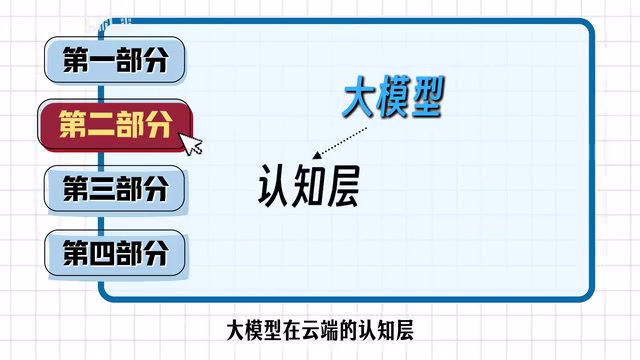
Large models in the cloud handle "cognition"—understanding requirements, generating code, and explaining logic; the local environment handles "execution"—running code, catching errors, and feeding back results. The key to this layered architecture is the closed loop: code generated in the cloud must be quickly verified locally, and error information is then sent back to the cloud for correction.
Tools such as Codex, Claude Code, and Cursor are practitioners of this architecture. Each has different emphases in cloud reasoning capability and local integration depth, but they all emphasize the efficiency of the "generate—execute—feedback" loop. The creator points out that the speed and quality of this loop directly determine the practical value of Vibe Coding.
Positioning differences among Codex, Claude Code, and Cursor: Codex is a code generation model fine-tuned by OpenAI based on GPT-3, initially integrated into GitHub Copilot and skilled at line-level completion; Claude Code is an agentic programming tool launched by Anthropic, emphasizing multi-file editing and terminal command execution; Cursor is an AI-native IDE rebuilt on VS Code, deeply integrating codebase indexing and conversational editing. The common trend among the three is moving from "completion" to "agency," that is, from passive response to proactive planning and execution, though local integration depth and cloud reasoning costs involve different trade-offs.
The Orchestration Layer: Solving the Pain Point of AI Writing Code Blindly
Common problems with AI-generated code include: logical omissions, dependency conflicts, and inconsistent style. The solution proposed by the creator is the "orchestration layer"—constraining AI output through workflows and engineering standards. Specifically, this includes:
- Task decomposition: Breaking large requirements into verifiable small tasks to reduce the complexity of each generation.
- Specification injection: Embedding code style, architectural constraints, and testing requirements in prompts.
- Automated validation: Using static analysis and unit tests to intercept obvious errors.
This layer is the key to Vibe Coding moving from "toy" to "engineering." Without the constraints of an orchestration layer, AI-generated code is often difficult to maintain.
The role of static analysis and unit tests in AI code validation: Static analysis tools (such as ESLint and SonarQube) can detect syntax errors, type mismatches, and potential defects without running code; unit tests verify through assertions whether function behavior meets expectations. In the Vibe Coding workflow, the two form a double line of defense for automated validation: static analysis intercepts structural problems, and unit tests catch logical errors. Embedding these two types of checks into the orchestration layer enables AI-generated code to complete a first round of filtering before entering human review, significantly reducing debugging costs.
The Three-in-One System Architecture and Future Trends
The creator integrates the above elements into a "three-in-one system architecture for intent-driven programming": the cloud cognition layer, the local execution layer, and the orchestration layer working in concert. The evolution of this architecture points toward greater automation and stronger constraint capability—tools will understand intent more intelligently while enforcing engineering standards more strictly.
For developers, Vibe Coding does not replace programming ability; rather, it shifts the center of ability from "writing code" to "designing systems and validating results." Mastering the combined use of tools such as Codex, Claude Code, and Cursor, and building your own orchestration workflow, is the most practically valuable skill path today.
This article is based on content from a Bilibili creator's video; opinions and data come from the original material.
Related articles

Nvidia CEO Removal Saga: Trump Intervenes Over the Weekend, Jensen Huang Reinstated Monday
Vergecast podcast reveals Nvidia CEO drama: earnings call said he wouldn't return and a new CEO was being sought; Trump intervened over the weekend, with J.D. Vance brokering a security guarantee to the board; Jensen Huang reinstated at 9 a.m. Monday.
Semantic Caching Explained: Reusing the Same Answer for Similar Questions
Semantic caching uses embeddings to judge whether queries are similar in meaning and reuses cached results for similar prompts. This article explains how it works, the difficulty of threshold tuning (such as the risk of misjudging negations), and its applicable boundaries.

How Did Trump Personally Turn Nvidia into the "Twelfth Board Member"?
A YouTube political commentary offers a sharp view: behind Nvidia's market cap milestone, Trump's deep involvement earns him the title of "twelfth board member." The article breaks down the commentator's logic on stock market achievements, the break from small-government tradition, and power display.