Vibe Coding in Practice: From Idea to Real Product — No Coding Required

Vibe Coding lets anyone build real products using AI and natural language — no coding required.
Vibe Coding, a term coined by Andrej Karpathy in 2025, is a new development paradigm where you guide AI with natural language to design, build, and ship products — no coding needed. This article walks through a four-step workflow using tools like Gemini for PRDs, Figma Make for UI design, and Claude Code for development, making product creation accessible to entrepreneurs, professionals, and creators alike.
What Is Vibe Coding: A New Way to Think About Products
If you still believe "building an app means learning to code for six months first," Vibe Coding is worth a second look. It's not a new programming language — it's an entirely new product mindset and development paradigm. The idea is to drive AI with natural language and clear logic, letting AI handle the design, development, and testing on your behalf.
The term "Vibe Coding" was coined by OpenAI co-founder Andrej Karpathy in early 2025. He described a new way of programming on social media: fully immersing yourself in the "vibe," handing all the technical implementation details over to AI, and letting the developer focus purely on expressing intent and direction. The concept quickly resonated across the tech community and startup world, because it precisely captures the new human-AI collaboration paradigm that emerged as large language models matured — humans handle the what, AI handles the how.
A vivid analogy captures this well: building an app used to be like mounting an Antarctic expedition — you had to learn to build a ship, navigate, and survive before you could even begin. Code was a barrier that kept most people out. Now, code is simply something AI takes care of. All you need is creativity and imagination.
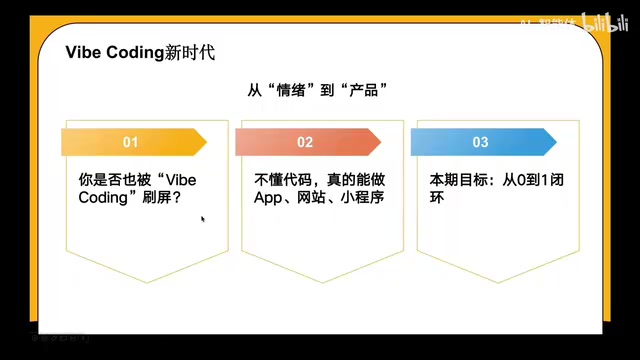
At the heart of this shift is the complete removal of "can you write code?" as a prerequisite. A compelling real-world example: a designer abroad used Vibe Coding to build a minimalist AI app called "Screenshot to Code" in a single afternoon. It now generates thousands of dollars in monthly revenue. The path from idea to product to monetization is being dramatically compressed.
Mindset Reset: Traditional Development vs. AI-Driven Development
To appreciate Vibe Coding's value, it helps to understand how it fundamentally differs from traditional development.
The High Wall of Traditional Development
Building an application used to require mastering a wide range of programming languages — frontend and backend each had their own tech stacks, often in different languages. The entire process involved long development and iteration cycles. For non-technical people, this was an almost insurmountable barrier.
The New Logic of AI-Driven Development
The logic is completely different now: you communicate with AI in natural language, AI understands your intent, and then completes the full cycle of design, development, and testing. The process is efficient and intuitive — you don't need to write a single line of code.
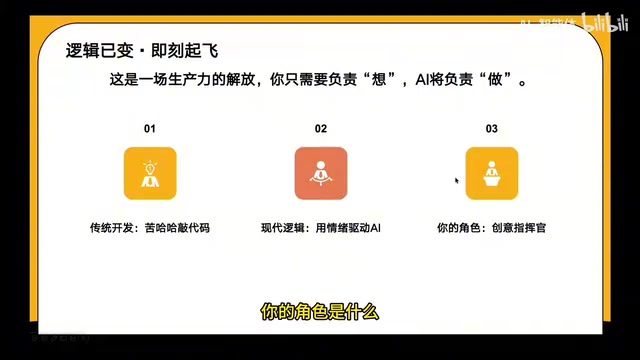
In this paradigm, your role changes fundamentally — you're no longer a programmer hunched over a keyboard, but the creative source and project lead for the entire product. Your core job is to come up with a good idea and guide AI to execute it with clear logic. In the age of AI, the most valuable asset is no longer coding ability — it's ideas and logical thinking.
Who Should Do Vibe Coding: Four Types of Power Users
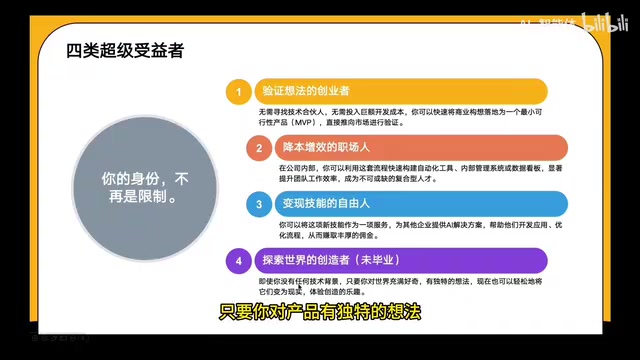
The honest answer is: everyone. As long as you have ideas and logical thinking, you can drive AI to build products. That said, four types of people stand to benefit most:
- Entrepreneurs validating ideas: Ideas that once required a technical co-founder and significant development costs can now be validated with near-zero upfront investment, allowing rapid, low-cost experimentation.
- Professionals looking to boost productivity: Quickly build internal automation systems and data dashboards within your company, improve team efficiency, and become an indispensable multi-skilled contributor.
- Service providers monetizing their skills: Offer this as a service — help businesses build AI-powered solutions, develop applications, and optimize workflows in exchange for project fees.
- Pure creators: Even without any technical background, if you have a unique product idea, you can now bring it to life.
Here's a practical litmus test: If you can send a WeChat message, and if you've ever complained about a product's pain points, you already have the foundation for Vibe Coding. Complaining means you can identify problems and suggest improvements — and that's exactly where product thinking begins.
The Complete Vibe Coding Workflow: Four Steps from Idea to Launch
How do you actually turn a mental idea into a shippable product? Here's a clear toolchain and four-step process.
Step 1: Use Gemini to Turn Your Idea into a PRD
Start by structuring your vague idea. Using Google's Gemini, talk to it like you would a product manager — describe the core features and who the target users are. Gemini plays the role of a senior PM, deeply breaking down your requirements and analyzing the product's core value.
It's worth understanding the context: a PRD (Product Requirements Document) is a core engineering document that the software industry has relied on for decades. Traditionally, it's written by a dedicated product manager over days or even weeks, covering user stories, feature specs, acceptance criteria, priority matrices, and more — essentially the "bible" for the engineering team. Writing a PRD well has always been a high barrier in itself. Large language models like Gemini can generate a structured PRD through conversational interaction, which essentially automates the core workflow of a product manager — a revolutionary productivity boost for indie developers and non-technical founders.
Once you confirm the direction, Gemini generates a complete PRD that includes a feature list, priorities, and a project roadmap, giving the entire project crystal-clear structure.

Step 2: Use Figma Make to Generate UI Designs
With your product document in hand, the next step is interface design. Feed your PRD and design preferences as instructions to Figma Make, which understands natural language commands and directly generates corresponding UI components and layouts. Figma Make is an AI-native design feature from Figma that lets users generate editable UI components and page layouts through natural language — essentially packaging a designer's visual judgment into a large model. Even with zero design background, you can produce polished, high-fidelity prototypes with a consistent visual style.
Step 3: Use AI Coding Tools to Turn Designs into Code
With the design ready, use Figma MCP to read the design file, then pair it with AI coding tools like Claude Code or Codex to automatically generate code. MCP (Model Context Protocol) is an open standard proposed by Anthropic in 2024, designed to let AI models securely and standardly call external tools and access external data sources. Figma MCP means AI coding tools can directly "read" every component, color variable, and layout constraint in a design file — enabling precise design-to-code translation, rather than the rough screenshot-recognition approach of the past.
Claude Code is a terminal-level AI coding tool from Anthropic, emphasizing deep codebase understanding and multi-file collaborative editing; Codex is OpenAI's model series optimized specifically for code generation. Both are representative of "Agentic Coding" tools — they can autonomously plan task steps, call tools, and read and write files, genuinely acting as engineering assistants rather than simple code autocomplete. Throughout the process, you remain the "commander," confirming and fine-tuning at key checkpoints without writing any code yourself.
Step 4: Testing and Launch
Development and testing are also led by AI. You focus on steering the direction and reviewing the results, completing the full zero-to-one product launch loop.
A Clear-Eyed View: The Reality Behind the Opportunity
Vibe Coding genuinely lowers the barrier to product creation — that part is undeniable. But "building a product that earns thousands of dollars a month in an afternoon" is an outlier, not the norm, and shouldn't be treated as a typical outcome.
The reality is: AI can take a huge amount of repetitive coding and design work off your plate, but a product's success still depends on the quality of the idea itself, the depth of insight into user pain points, and the ability to operate and iterate afterward. Tools lower the barrier to execution — they don't lower the barrier to thinking. The people who can truly harness AI as a "super employee" are those who think clearly and know precisely what they want.
Closing Thoughts: Don't Wait Until You're Ready
The trend Vibe Coding represents is clear: product creation is shifting from being technology-intensive to being idea-intensive. When writing code becomes something AI handles, human value returns to creativity, logic, and product judgment.
Going from zero to one might only take the time it takes to run through one small, real project. Rather than waiting until everything is perfectly prepared, just start moving — pick a concrete project and run through the entire workflow. That may be the best way to truly understand what Vibe Coding is all about.
Key Takeaways
Related articles

WebMCP in Practice: How MakeMyTrip Is Reshaping the Travel Booking Experience
India's largest OTA platform MakeMyTrip uses WebMCP to standardize AI Agent interactions with web apps, replacing fragile DOM scraping with natural language-driven test automation and simplified complex booking scenarios.

Deep Dive into the EYG Programming Language: A New Portable Programming Paradigm Designed for Humans
Deep analysis of the EYG programming language's core design, including algebraic effects, program state persistence, and cross-platform portability, exploring how it addresses modern software fragmentation.

WebMCP in Practice: How MakeMyTrip Is Reshaping the Travel Booking Experience
India's largest OTA platform MakeMyTrip uses WebMCP to standardize AI Agent interaction with web apps, solving DOM scraping fragility, enabling natural language test automation, and simplifying complex international flight bookings.