Vibe Coding Practical Guide: SDD (Specification-Driven Development) Reshaping Full-Stack Programming Workflows

SDD (Specification-Driven Development) is the core methodology for AI programming in the Vibe Coding era
In 2025, Vibe Coding is comprehensively replacing hand-written code. This article presents SDD (Specification-Driven Development) as the core methodology for AI programming, emphasizing structured specifications over arbitrary commands to drive AI code generation across nine stages from requirements analysis to deployment. It highlights advanced prompt engineering as key to mastering AI programming tools, arguing that methodology — not specific tools — is the developer's lasting competitive asset.
Introduction: The Era of Hand-Written Code Is Coming to an End
In 2025, Vibe Coding (AI-assisted programming) is transforming the software development industry at an unprecedented pace. From Anthropic's CEO announcing that the company barely writes code by hand anymore, to an increasing number of development teams fully embracing AI programming tools, an irreversible trend has taken shape — the traditional model of hand-writing code is being comprehensively replaced by AI-assisted programming.
Anthropic is an AI safety company founded in 2021 by former OpenAI Research VP Dario Amodei and his sister Daniela Amodei. Its flagship product, the Claude series of large language models, has consistently led in code generation capabilities. When a company standing at the very forefront of AI technology publicly announces it barely writes code by hand anymore, the signal is unmistakable.
A technical lead with a data architecture background and nearly four years of focus on AI large model application development shared his assessment: starting from the second half of 2025, he mandated that his entire R&D team stop writing code by hand and fully transition to Vibe Coding. He even asserted that traditional programmers still stuck in the hand-coding phase could face obsolescence within six months.
Is this judgment too radical? What exactly is the methodology behind AI programming? This article provides an in-depth analysis of the core philosophy and implementation path of Vibe Coding for full-stack development, drawn from practical experience.
Why AI Programming Is an Irreversible Trend
Industry Consensus Is Forming Rapidly
Anthropic, the parent company of Claude Code, has publicly stated that its internal workflows barely rely on hand-written code anymore. Claude Code is Anthropic's command-line AI programming tool that allows developers to interact with the Claude model directly in the terminal to write, debug, and refactor code. Its counterpart, Cursor, is an AI-enhanced IDE built on VS Code that integrates multiple large models to provide code completion, conversational programming, and codebase understanding. These two tools represent the two main forms of current AI programming tools: command-line native tools and IDE-integrated tools. Anthropic's stance is not an isolated case — it reflects a paradigm shift the entire industry is undergoing. When AI programming tools are capable enough to support industrial-grade project delivery, the efficiency disadvantage of hand-writing code becomes unacceptable.
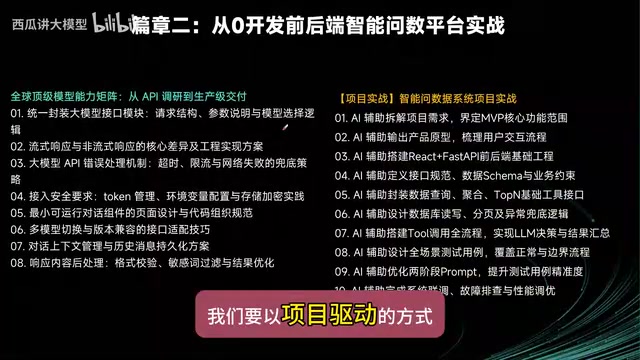
Looking at actual data, in just the second half of 2025 alone, the aforementioned team consumed tens of billions of Tokens on AI programming and delivered over seventy projects of various sizes. To understand this: a Token is the basic unit of text processing for large language models — one Chinese character typically corresponds to 1-2 Tokens, and one English word corresponds to approximately 1-1.5 Tokens. Consuming tens of billions of Tokens implies massive model invocation volumes and corresponding inference costs — estimated at current mainstream model API pricing, this represents an investment on the order of hundreds of thousands to even millions of dollars, confirming the team's deep commitment to AI programming at scale. These were not simple demos but industrial-grade products delivered to enterprise clients. This means Vibe Coding has crossed the "toy stage" and entered the realm of genuine productivity tools.
A Reproducible Methodology Is the Core Competitive Advantage
Many people question AI programming on this basis: Is it reproducible? If every programming session is as unpredictable as a lottery, it cannot serve as a reliable production tool.
After repeated validation across over seventy projects, the team's AI programming methodology has been proven to be reproducible. This is critically important — it means Vibe Coding no longer depends on individual "prompt talent" but can be standardized through systematic methodology for training and adoption.
SDD (Specification-Driven Development): The Core Methodology of Vibe Coding
What Is SDD?
SDD (Specification-Driven Development) is a widely recognized and effective development philosophy in the AI programming field. Its core principle is: drive programming based on specifications, rather than issuing arbitrary commands to AI.
SDD did not appear out of nowhere — it shares deep roots with several existing software engineering methodologies. Traditional TDD (Test-Driven Development) emphasizes writing tests before code, BDD (Behavior-Driven Development) emphasizes describing system behavior in natural language, and DDD (Domain-Driven Design) emphasizes driving architectural design with business domain models. SDD can be understood as the natural evolution of these methodologies in the AI programming era — it elevates "specification documents" to become the core input driving AI code generation. In essence, it transmits human design intent to AI through structured specifications, enabling AI to generate high-quality code within clear constraints and context, rather than relying on vague natural language conversations.
It sounds simple, but SDD as a guiding philosophy — how to actually implement it — is where the real difficulty lies. In practice, SDD permeates the entire process from requirements analysis, business modeling, and architecture design to code generation.

Nine Key Steps in SDD End-to-End Implementation
A complete SDD workflow includes the following steps:
- Market Research & Requirements Analysis: Define project objectives and business boundaries
- Business Modeling: Build clear business models
- Architecture Design & Technology Selection: Determine system architecture and tech stack
- PRD Document Generation: Produce standardized Product Requirements Documents
- Frontend UI Design: Generate interface designs based on specifications
- Backend Code Generation: AI-driven server-side development
- Frontend Code Generation: AI-driven client-side development
- Frontend-Backend Integration: System integration and API alignment
- Code Management, Deployment, Testing & Operations: Complete DevOps workflow
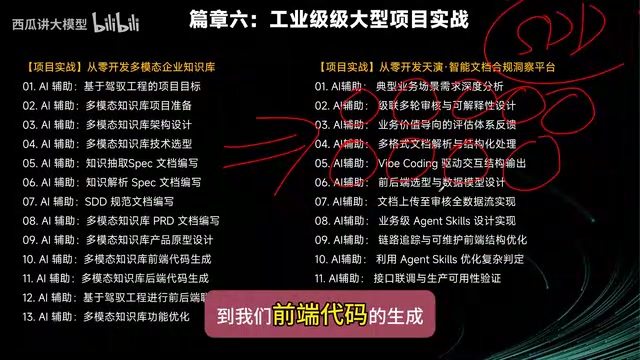
The value of this workflow lies in elevating AI programming from "conversational, fragmented development" to "engineered, systematic development," giving Vibe Coding the genuine capability to deliver enterprise-grade projects.
Mastering the Craft: Understanding the Underlying Logic of AI Programming Tools
Why Prompt Engineering Mastery Determines the Ceiling of AI Programming
Advanced Prompt Engineering plays a dual role in AI programming. To understand it, we first need to know its predecessor — Prompt Engineering. Prompt Engineering originally referred to the technique of carefully designing input prompts to guide large language models toward desired outputs, initially focusing on single-turn dialogue optimization using techniques like Few-shot (few-shot examples) and Chain-of-Thought reasoning. Advanced Prompt Engineering is the evolved form of Prompt Engineering for complex engineering scenarios — it involves not only optimizing individual prompts but also multi-turn dialogue context management, system prompt architecture design, external knowledge base injection strategies (such as RAG — Retrieval-Augmented Generation), and multi-Agent orchestration.
First, deeply understanding tool principles. Whether it's Cursor or Claude Code, these AI programming tools have underlying mechanisms. Only by understanding advanced prompt engineering can you truly grasp why these tools sometimes perform brilliantly and sometimes make frequent errors. Understanding the "why" behind the "what" is the critical leap from "being able to use" to "using well."
Second, building complex agents. If the goal is to build enterprise-grade complex agent systems, advanced prompt engineering is not optional — it's required. It determines whether you can effectively direct AI to complete complex, multi-step development tasks.
Using Prompt Engineering to Handle Unfamiliar Tech Stacks
In real-world full-stack development, a common challenge is: when a project requires newer, less popular technologies, large models and AI programming tools have limited mastery of them. This is because large models have training data cutoff dates — for frameworks, libraries, and APIs that emerged or became popular after the training data cutoff, the model may lack sufficient knowledge. In these cases, how should the SDD approach be adjusted? How can prompt engineering help AI better understand and use these new technologies?
This is precisely the dividing line between AI programming "beginners" and "practitioners." Beginners may spend more time debugging AI errors than they would writing code by hand; practitioners, through proper specification design and prompt strategies — such as injecting official documentation of new technologies as context, writing detailed API usage specifications, and providing correct code examples as references — can guide AI to efficiently complete development tasks even with unfamiliar tech stacks.
From Tools to Methodology: The Right Learning Path for AI Programming
Tools Iterate, but Methodology Is a Long-Term Asset
The current globally top-ranked AI programming tool is Claude Code, with Cursor also being a mainstream choice. But tools constantly iterate and update — today's number one could be surpassed tomorrow. What's truly worth investing in learning is not the operational tricks of any specific tool, but the methodology of AI programming itself.
Once you master the SDD philosophy and the core principles of advanced prompt engineering, you can quickly pick up and efficiently use any new AI programming tool that emerges in the future.
Two Typical Vibe Coding Practical Scenarios
In actual work, AI programming primarily faces two types of scenarios:
-
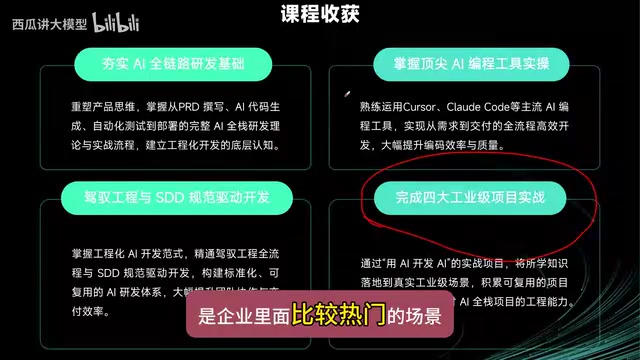
Building from scratch (greenfield projects): Starting from requirements analysis, walking through the complete SDD workflow, and ultimately delivering a complete product. Typical examples include Chat BI (intelligent data querying) and multimodal knowledge bases. Chat BI is an emerging application that combines natural language processing with Business Intelligence — traditional BI tools (such as Tableau, Power BI) require users to master SQL queries or drag-and-drop operations to analyze data, while Chat BI allows users to ask questions directly in natural language, with the system automatically converting questions into SQL queries or data analysis operations and returning results in visual chart format. Multimodal knowledge bases refer to intelligent knowledge management systems capable of simultaneously processing text, images, tables, PDFs, and other document formats, typically built on RAG (Retrieval-Augmented Generation) architecture, combining vector databases and multimodal large models to achieve cross-format knowledge retrieval and Q&A.
-
Secondary development on existing projects: Working with an existing open-source or internal enterprise project and extending its functionality. This scenario is widely recognized as the high-difficulty scenario in AI programming, with the core challenge being the large model's context window limitation — even the most advanced current models (such as Claude 3.5's 200K context window) cannot load all the code of a large enterprise project at once. This requires code indexing, semantic search, AST (Abstract Syntax Tree) parsing, and other techniques to help AI understand the overall architecture of a codebase. Cursor partially addresses this through its Codebase Indexing feature, and Claude Code through automatic project structure scanning, but for large projects with hundreds of thousands of lines of code, helping AI accurately understand inter-module dependencies, data flows, and business logic still requires developers to provide supplementary guidance through specification documents and architecture descriptions.
These two scenarios have different methodology requirements for AI programming, but the core philosophy of SDD remains consistent across both.
Who Should Pay Attention to Vibe Coding
Three Groups Who Need to Act Immediately
Traditional programmers: If you're still caught up in framework version differences and syntax details, still entirely dependent on hand-writing code, then learning AI programming is already urgent. This is not alarmist — when your peers use AI to complete in one day what takes you a week, the competitiveness gap widens rapidly.
AI programming beginners: You can install Cursor or Claude Code and do simple conversational programming, but you're helpless when facing complex features, and your debugging time after errors exceeds what hand-coding would take — this indicates a lack of systematic SDD methodology guidance.
Product managers and internet industry professionals: Non-technical personnel who need to rapidly produce product prototypes and validate business ideas — Vibe Coding offers unprecedented empowerment. With AI programming tools and SDD methodology, product managers can quickly build interactive product prototypes without relying on development teams, dramatically shortening the cycle from idea to validation.
Conclusion: Embrace the AI Programming Revolution, Master the SDD Methodology
The software development industry is undergoing a fundamental paradigm shift. AI programming is not about replacing programmers — it's about redefining how programmers work. For future developers, the core competitive advantage is no longer coding speed, but the comprehensive ability to understand business, design architecture, and master AI.
SDD (Specification-Driven Development) and advanced prompt engineering are precisely the core weapons for developers in this new era of Vibe Coding. The sooner you master this methodology, the better positioned you'll be in the coming transformation.
Related articles
 Tutorials
ChatGPT Plus Subscription Guide: Are GPT-5.5, image-2, and Codex Worth the Upgrade?
A detailed look at ChatGPT Plus features — GPT-5.5, image-2, and Codex — with a Plus vs Pro comparison and a complete step-by-step subscription guide for users outside the US.
 Tutorials
Harness AI Engineering in Practice: Using Claude Code to Master Enterprise-Level E-Commerce Development
Deep dive into Harness AI Engineering: master enterprise e-commerce development with Claude Code using the Rules, Skills, Wiki, and Changes framework.
 Tutorials
Cursor + Codex Dual-IDE Collaboration: A Practical Methodology for Open-Source Project Customization
A complete methodology for open-source project customization based on real-world experience, detailing the Cursor+Codex dual-IDE workflow, seven-stage process, MVP validation, and AI source code reading techniques.