Vibe Coding Systematic Tutorial: Master AI-Assisted Programming from Zero

A three-month Vibe Coding tutorial split into fundamentals, advanced, and hands-on sections, emphasizing logic before code.
The article introduces a Vibe Coding systematic tutorial by a Bilibili creator, split into fundamentals (AI programming thinking and prompts), advanced (prompt tuning and Codex/Claude Code/Cursor collaboration), and hands-on (personal sites, automation, mini-programs, scraping). It praises the "logic before code" approach and materials, but flags marketing claims and context-dependent prompts.
AI programming tools keep emerging — Codex, ClaudeCode, Cursor each have their strengths — but for beginners, the biggest obstacle is often not the tools themselves, but the lack of a clear path from zero to a finished project. This Vibe Coding systematic tutorial, produced by a Bilibili creator over three months, attempts to fill that gap.
Why aren't most Vibe Coding tutorials good enough?
According to the creator's survey of a large number of tutorials on Bilibili and YouTube, over 85% of Vibe Coding content suffers from patchwork and padding — they only demonstrate the "write code" steps without breaking down the underlying core logic, so learners can't adapt when they encounter new scenarios. The starting point of this tutorial is clear: "ditch the flashy stuff, present things in the most original and intuitive way," so that zero-foundation users can absorb quickly and apply what they learn flexibly.

This judgment deserves attention. The barrier to AI programming is indeed dropping, but there's still a huge gap between "knowing how to use tools" and "understanding the operating logic of AI-assisted programming." The tutorial puts "understanding the logic" before "writing the code," which is the right direction.
Course structure: a three-stage progression of fundamentals, advanced skills, and hands-on projects
The entire course is divided into three progressive stages, covering the complete chain from building awareness to shipping commercial projects.
Fundamentals: Building AI programming thinking
The core task of the fundamentals section is to help zero-foundation users complete a mindset shift — understanding the essence of Vibe Coding, building a programming thinking framework, completing AI programming tool setup, and mastering the universal prompt-writing method. The tutorial particularly emphasizes "say goodbye to traditional boring code memorization and get started with programming using an AI mindset," a positioning that aligns with the current mainstream trend of AI-assisted programming: prompt quality directly determines the quality of the generated code.
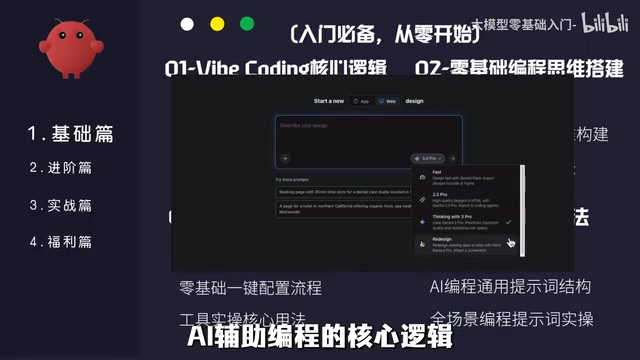
The term "Vibe Coding" was coined by former Tesla AI director Andrej Karpathy in early 2025. It refers to a way of programming where developers describe their intent in natural language and AI generates and iterates the code, with the human role shifting from writing line by line to describing requirements and reviewing results. It differs from traditional low-code or no-code platforms: the latter rely on preset components and visual drag-and-drop, while the former directly produces runnable real code, so basic programming thinking is still needed to judge whether the output is reasonable. Understanding this distinction helps beginners see why the tutorial places "building a thinking framework" before "writing code" — AI can fill in syntax, but it cannot judge for a person whether a feature is correct or whether a structure is maintainable.
Advanced: High-level techniques and multi-tool collaboration
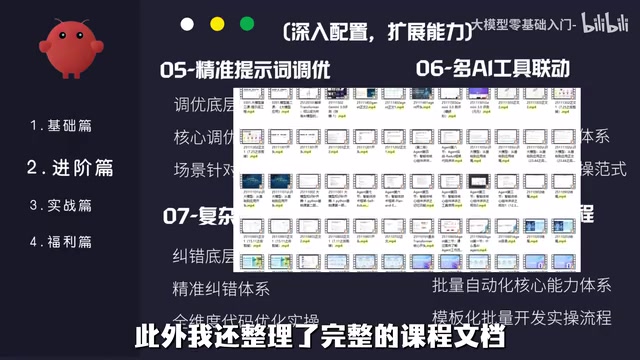
The advanced section focuses on a leap in hands-on capability: precise prompt tuning, multi-AI-tool collaboration (coordinated use of Codex, ClaudeCode, and Cursor), error correction and optimization of complex code, and batch automated programming. The goal is pragmatic — use AI to quickly write "high-quality, deployable" code rather than stopping at toy examples.
The accompanying course documents, learning roadmap, and tool list are also a plus, reducing the probability of learners dropping out midway.
The Codex, Claude Code, and Cursor mentioned in the article are not positioned the same way — only by understanding the differences can you talk about "collaboration." Cursor is an AI editor rebuilt on top of VS Code, focused on chatting directly within the IDE, autocompletion, and multi-file edits; Claude Code is a command-line coding agent launched by Anthropic, skilled at reading projects, executing commands, and making larger-scope changes in the terminal; Codex refers to OpenAI's code generation model and its related toolchain. Collaboration among the three typically looks like this: use the conversational editor for everyday small changes, use the command-line agent for cross-file refactoring or scripting tasks, and use the code model to generate snippets or explain errors. So-called "multi-tool collaboration" is essentially about choosing the right interaction form for the task granularity, rather than keeping all tools open at once.
Hands-on: Driven by commercial-grade projects
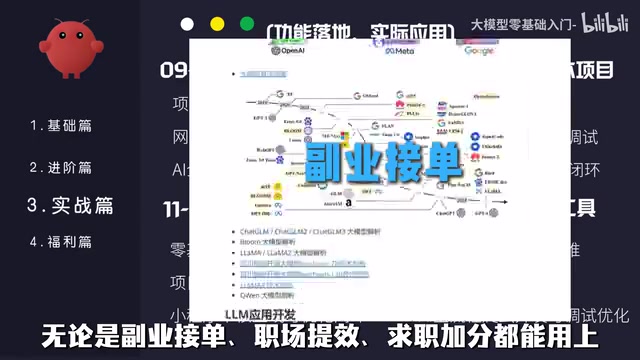
The hands-on section lists several deployable project directions: independently developing a personal website, office automation scripts, mini-program development, web scraping data collection, AI tool integration, web feature development, and more. These projects cover three typical need scenarios — side-hustle gig work, workplace efficiency, and job-application edge — and the topics are close to real-world applications.
The web scraping data collection project listed in the article involves compliance boundaries that beginners easily overlook. Scraping publicly available web data is generally not illegal in itself, but you need to comply with the target website's robots protocol and terms of service, avoid high-frequency requests that burden servers, and must not scrape personal privacy, paid content, or copyrighted data for commercial distribution. In China, you also need to pay attention to the constraints of the Data Security Law and the Personal Information Protection Law on data collection and use. Using AI to quickly generate scraping code significantly lowers the technical barrier, but it also means developers are more likely to launch scripts without assessing compliance risks — this awareness should be established early in hands-on learning.
An objective view: the tutorial's positioning and limitations
One note: this course's promotional language uses strong marketing phrases like "get a job as soon as you finish" and "the most complete on the internet," and the actual effect still needs to be verified by learners themselves. The course's supporting materials (study plan, tool installation packages, over a thousand universal prompts, e-books, courseware source code) look fairly complete, but the practical reuse value of resources like "thousands of universal prompts" depends on whether they're used together with logic explanations — prompt templates divorced from context are often hard to transfer.
In addition, the tutorial is presented in video form, and this article is based only on its introductory content, so the specific teaching quality and project depth cannot be evaluated here. For zero-foundation users, it's recommended to first preview the fundamentals section and decide whether to commit to a full learning cycle after confirming that the teaching style matches your own pace.
Who it's for
If you're a beginner who has never touched programming and wants to quickly get started on projects with AI tools, or a developer who already has some foundation but wants to systematically master multi-tool collaboration and prompt tuning, the structural design of this tutorial offers reference value. The key is this: make "understanding the logic" rather than "copying code" your main learning thread, and you'll truly be able to keep up with the continuous changes of the AI programming era.
One-line Summary
A Vibe Coding systematic tutorial produced over three months by a Bilibili creator, split into fundamentals, advanced, and hands-on sections, emphasizing understanding logic before writing code.
Paragraph Summary
The article introduces a Vibe Coding systematic tutorial produced by a Bilibili creator over three months. The author points out that over 85% of related tutorials today only demonstrate operations without breaking down the logic, making it hard for learners to adapt. The tutorial is split into three parts: the fundamentals section builds AI programming thinking and prompt-writing skills, the advanced section focuses on prompt tuning and multi-tool collaboration across Codex, Claude Code, and Cursor, and the hands-on section covers projects like personal websites, automation scripts, mini-programs, and web scraping for side-hustle, efficiency, and job-hunting scenarios. The article affirms its "understand logic before writing code" positioning and supporting materials, while reminding readers that phrases like "get a job as soon as you finish" and "the most complete on the internet" are marketing-oriented, that prompt templates divorced from context are hard to transfer, and that it's advisable to preview the fundamentals section before committing.
Related articles

iPhone Duo Hands-On: Is the $2,000 Small-Screen Foldable Worth It?
YouTube's Allison shares her iPhone Duo hands-on: dual-screen multitasking doubles efficiency, great video viewing, nice matte finish—but thick body, small outer screen, and a $2,000 luxury price.

Sentry's Ad Cracks Up Developers: Can On-call Actually Be Fun?
Sentry's ad short film taps into developers' on-call anxiety, using humorous dialogue to showcase its observability platform—errors, logs, traces, metrics, replays, and releases in one place.

LLM App Getting Worse With Every Change? Build an Effective Evaluation System in Three Steps
How do you know if your LLM app is getting better or worse? A Reddit-based guide to test sets, automated regression evaluation, LLM-as-judge scoring, and structured agent tracing.