vLLM Hybrid HiSparse: Sparse MLA Breaks the Memory Bottleneck for Long-Context Inference

vLLM's Hybrid HiSparse uses Sparse MLA and tiered memory to boost 1M-context concurrency 3–4× on the same hardware.
When large models process million-token contexts, KV Cache memory consumption becomes a concurrency bottleneck, and the traditional fix is to preempt requests when GPU memory runs out. vLLM's Hybrid HiSparse solves this by combining Sparse MLA — which limits decoding to top-K relevant tokens so remaining KV data can be safely offloaded — with tiered memory scheduling that automatically migrates cold pages to CPU DRAM while maintaining a hot buffer for on-demand retrieval. On GLM 5.3 with an 8× H200 node at 1M context, effective concurrent requests jumped from 5–6 (traditional KV offloading) to 19–25. The solution is compatible with prefix caching, CUDA Graph capture, and other existing vLLM features, and is scheduled for release in vLLM v0.30.
The Memory Wall in Long-Context Inference
In large model inference, KV Cache (key-value cache) is the decisive factor for concurrency capacity. As context lengths scale to the million-token range, the GPU memory consumed by KV Cache grows dramatically, becoming a hard constraint on the number of concurrent requests a system can handle. The traditional approach — preempting requests when HBM runs out — causes throughput to plummet and user experience to suffer.
The Hybrid HiSparse solution recently introduced by the vLLM community directly targets this pain point with a system-level optimization. Built on top of Sparse Multi-head Latent Attention (Sparse MLA), it allows requests to continue decoding even after their KV Cache can no longer fully reside in HBM, rather than being forcibly interrupted.
The Core Idea Behind Sparse MLA
The design premise of Sparse MLA is straightforward: during decoding, attention only needs to focus on the top-K most relevant tokens. This means the KV data for all remaining tokens doesn't need to permanently occupy precious GPU memory.
This observation opens the door to tiered storage. Since the model only needs a small subset of "hot" data at each step, the system can push "cold" data down to cheaper, higher-capacity host memory (CPU DRAM) and fetch it back to the GPU only when needed. This is fundamentally different from traditional full KV offloading — HiSparse combines sparse indexing to retain only what is actually queried.
How the Tiered Memory Mechanism Works
The scheduling logic of Hybrid HiSparse can be summarized in three steps:
- When memory is available: KV Cache resides normally on the GPU and follows the standard decoding path.
- When memory is tight: Requests proactively evict the coldest pages to host memory, while keeping a small hot buffer for data explicitly requested by the indexer.
- Continuous decoding: Requests are no longer preempted due to insufficient memory; they continue forward with tiered caching in place.
This "on-demand residency" strategy transforms GPU memory from a hard constraint of "must fit everything" into a soft, elastically scheduled resource.
MLA (Multi-head Latent Attention) is an attention mechanism variant proposed by DeepSeek. Its core innovation is compressing Keys and Values into low-rank latent vectors for caching, reducing KV Cache size to just 5%–13% of standard multi-head attention. This makes MLA naturally well-suited for long-context scenarios. On top of this, "Sparse" further restricts attention computation to the top-K most relevant tokens. Experiments show that even with only a small fraction of tokens participating in computation, output quality is barely affected — because attention weight distributions are inherently highly concentrated. This property provides the theoretical basis for system-level tiered memory scheduling: since the model's computation itself depends on only a handful of "hot" tokens, offloading the KV data of the remaining tokens to slower storage tiers does not affect correctness — it only introduces limited data transfer latency.
The "page" concept here follows vLLM's PagedAttention design — KV Cache is divided into fixed-size memory blocks, each of which can be independently allocated, migrated, and reclaimed like an OS memory page. PagedAttention's paged management is the foundation enabling Hybrid HiSparse's tiered scheduling: precisely because KV data exists as discrete blocks rather than contiguous tensors, the system can migrate individual "cold blocks" from GPU HBM to CPU DRAM without disrupting the overall inference pipeline, and reload them at page granularity when needed. This fine-grained memory management is what makes elastic scheduling engineeringly feasible.
Benchmark Results: 3–4× Concurrency Improvement
According to the team's published results, the solution was validated on the GLM 5.3 model, a single 8× H200 node, with full 1M context.
Under identical host memory conditions with a concurrency setting of 32:
- Traditional KV offloading could only sustain 5–6 active requests;
- Hybrid HiSparse maintained 19–25 active requests simultaneously.
This represents roughly a 3–4× improvement in effective concurrency with zero additional hardware cost. For production environments handling ultra-long documents or large-scale context retrieval, this translates directly into a significant reduction in serving cost.
Key Engineering Design Decisions
Hybrid HiSparse's smooth integration into vLLM is enabled by several pragmatic engineering choices:
Reusing the Existing Memory Pool
Hot pages are essentially ordinary KV blocks drawn from the same memory pool, managed uniformly by the Hybrid Memory Allocator. This avoids introducing separate memory management logic, reducing system complexity and maintenance overhead.
Fused Kernel and CUDA Graph Compatibility
The solution uses a single fused kernel to process resident, hot, and missing data rows in one pass, and this kernel is CUDA-graph capturable. This is particularly important — CUDA Graph compatibility means the optimization does not break vLLM's existing graph execution acceleration path, keeping performance overhead under control.
CUDA Graph is an execution optimization technology provided by NVIDIA. It pre-records a series of GPU kernel calls and their dependencies as a computation graph, then replays it directly at runtime, eliminating per-inference CPU scheduling overhead and kernel launch latency. In large model inference, CUDA Graph can significantly reduce latency for small-batch scenarios. However, operations involving dynamic memory access patterns (e.g., conditional branches, variable-length data retrieval) typically cannot be captured by CUDA Graph, since graph capture requires the computation flow to remain structurally fixed across executions. Hybrid HiSparse's fused kernel merges the handling logic for all three data types (resident, hot, missing) into a single kernel call, and ensures its access pattern is deterministic during graph capture — thus circumventing this limitation and allowing the optimization to coexist seamlessly with vLLM's existing graph execution acceleration path.
Ecosystem Compatibility
Notably, Hybrid HiSparse maintains compatibility with several existing vLLM features, including prefix caching, OffloadingConnector, P/D disaggregation imports, and MTP (multi-token prediction). This "don't break existing capabilities" design philosophy greatly lowers the barrier to adoption and migration for users.
Open-Source Collaboration and Roadmap
The project was built jointly by Red Hat AI and Prime Intellect in collaboration with the vLLM community, reflecting the collaborative model of open-source LLM inference infrastructure.
Hybrid HiSparse is planned for official release in vLLM v0.30. The team has provided a pinned commit version, enabling flags, and an estimation calculator tool in the original post, so developers can test and evaluate the benefits ahead of the official release.
Industry Implications
Hybrid HiSparse represents a clear technological trend: the bottleneck in long-context inference is shifting from "model capability" to "system scheduling." Now that models themselves support million-token contexts, efficiently serving large numbers of concurrent requests on limited hardware has become the key determinant of real-world usability.
By combining sparse attention with tiered memory, vLLM demonstrates a path to scaling concurrency through smarter scheduling rather than more GPU memory. For teams running LLM inference services, optimizations like this offer extremely high marginal returns — the same H200 node serving more users means lower per-inference costs. As v0.30 lands, this capability is poised to become standard equipment for long-context deployments.
Related articles
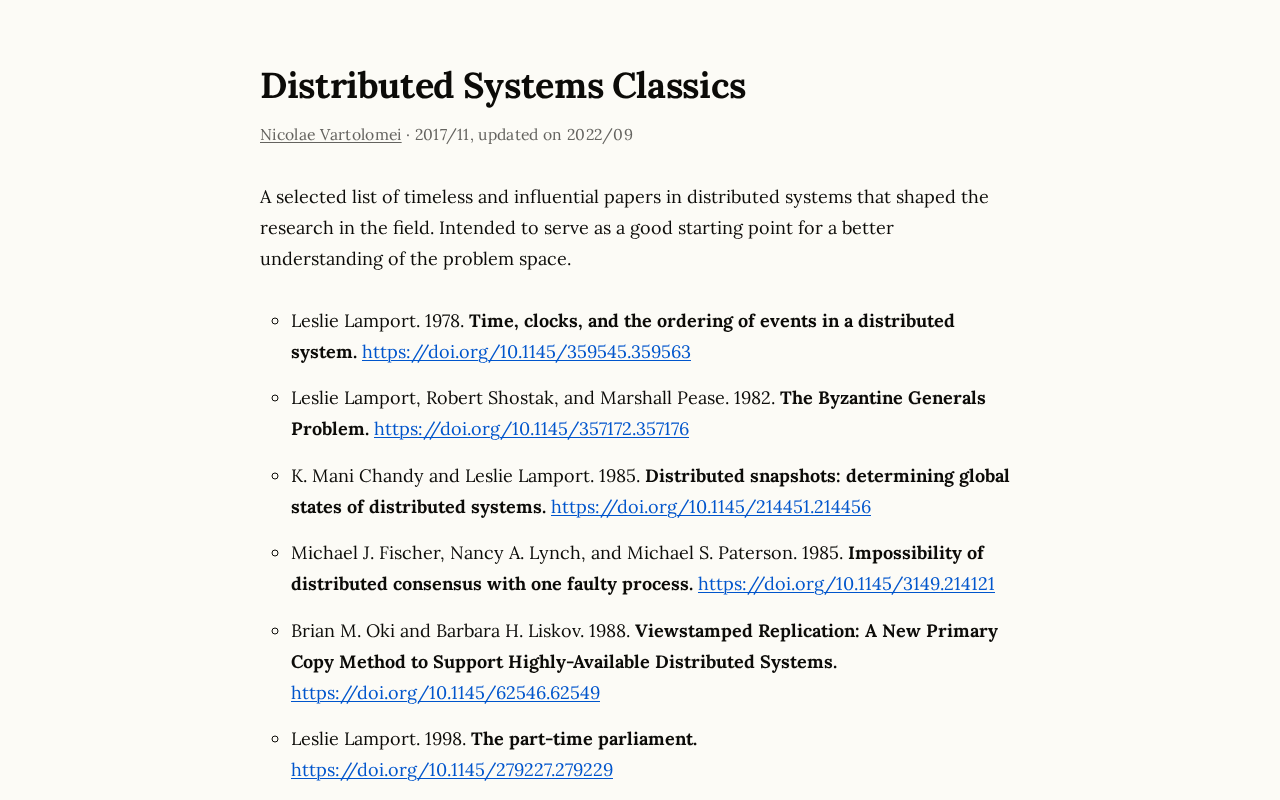
A Reading Guide to Distributed Systems Classic Papers: From Beginner to Expert
A viral Hacker News list of distributed systems classic papers covering consensus algorithms, logical clocks, and the CAP theorem — a structured learning path for engineers.

Valve Is Still Weighing When and How to Launch Steam Deck 2
Valve has completed its 2026 hardware lineup with Steam Controller, Steam Machine, and Steam Frame, but Steam Deck 2 still has no set timeline. Valve says it's still weighing "how and when" to launch.

Regulatory Capture Accusations: The Controversy Over Anthropic's Capital and Policy Loop
A Hacker News post questions whether Anthropic is caught in a regulatory capture financial loop. We unpack the concept and why it's being aimed at top AI firms.