Vox's Science Podcast 'Unexplainable' Lands on Netflix: Visualizing the Great Unknowns of Science

Vox's 'Unexplainable' podcast becomes a Netflix series, visualizing science's greatest unknowns.
Vox's science podcast 'Unexplainable' has evolved from an audio program into a visual Netflix series, launching July 13 with weekly Monday episodes. The show explores unsolved mysteries at the boundaries of science—from gravity and the cosmos to animal perception—embracing 'we don't know' as a mature form of scientific literacy.
When a Science Podcast Goes Visual
Vox's science podcast Unexplainable has undergone a significant media transformation—upgrading from a pure audio program into a visual Netflix series, officially launching on July 13. Centered on the theme of "everything we don't yet understand," the show has spent years exploring science's unsolved mysteries through sound. Now, audiences can finally "see" what they could previously only "hear."
As a media form, science podcasts emerged in the mid-2000s, and with the proliferation of smartphones and the rise of streaming audio platforms (like Spotify and Apple Podcasts), they experienced explosive growth in the 2010s. Vox Media, founded in 2011, is known for its data-driven explanatory journalism. Its Unexplainable podcast, launched in 2021, quickly built a loyal listener base. The migration from podcasts to video content is a major media convergence trend in recent years—Spotify's acquisition of several video podcasts and YouTube's aggressive push for video-format podcasts both confirm this direction. The leap from pure audio to Netflix long-form video is particularly striking for Unexplainable, representing a proactive breakthrough of science content from niche circles into the mainstream entertainment arena.
This transformation itself carries symbolic significance. Science communication has long relied on text and language, but when abstract scientific conjectures are given visual form, both the way audiences understand and their emotional experience change fundamentally. The Netflix version of Unexplainable is, in essence, an experiment in fusing science content with streaming entertainment formats.

Embracing the Scientific Attitude of "I Don't Know"
Unlike most science programs that pursue "providing answers," the core philosophy of Unexplainable is to face the boundaries of science head-on. The production team states clearly: "Science doesn't always have to be about answers. Some questions we haven't answered because we're still exploring; and some questions have no answers because there isn't necessarily one single answer to begin with."
This attitude is especially precious in today's science communication landscape. Explanatory journalism has long faced a structural dilemma in science communication: the narrative logic of media tends toward delivering clear conclusions, while the essence of scientific research is a process full of uncertainty and continuous revision. This tension leads to the widespread problem of "overstating certainty" in science news—packaging preliminary findings as "scientifically confirmed," which misleads the public. Unexplainable deliberately reverses this paradigm: it treats "we don't know" itself as the narrative subject, rather than as the narrative's endpoint. On a philosophy-of-science level, this approach echoes Karl Popper's tradition of falsificationism—scientific progress is achieved precisely by continually discovering one's own limitations, and admitting ignorance is the highest expression of scientific honesty.
In an age of information overload where everyone chases definitive conclusions, daring to admit "we don't know" is actually a more mature form of scientific literacy. Through in-depth interviews with frontline scientists, the show focuses on the gaps and puzzles in their research fields, rather than simply showcasing already-verified knowledge.

Those Fascinating Unsolved Mysteries
The topics covered by the show span the macrocosmic universe and microscopic life, for example:
-
The boundaries of gravity: Either Newton's law of gravity is wrong, or we know nothing about what's happening at the outer edges of galaxies. The origin of this dilemma was the galactic rotation curve anomaly discovered by astronomer Vera Rubin in the 1970s—stars at the outer edges of galaxies orbit at speeds far exceeding what Newtonian mechanics predicts. Mainstream physics answers with the "dark matter" hypothesis, positing a mysterious substance that doesn't interact with light but has gravitational effects, accounting for about 27% of the universe's total mass-energy; another camp proposes the Modified Newtonian Dynamics (MOND) theory, arguing that the law of gravity itself needs revision in extremely low-acceleration environments. Half a century later, dark matter particles have never been directly detected, and this fundamental debate remains unresolved.
-
The nature of the universe: Does our entire universe exist inside a black hole?
-
The perceptual world of animals: What kind of experience is birds' magnetoreception exactly? This ability allows migratory birds to navigate precisely using Earth's magnetic field. Currently, there are two mainstream hypotheses in the scientific community: one is based on the quantum entanglement effect of cryptochrome proteins in the retina, at the frontier of quantum biology; the other is based on a mechanical sensing mechanism involving magnetite crystals in the beak or inner ear. What it subjectively feels like for birds to perceive this "sixth sense" remains unknown to anyone. Researchers have even tried to find more clues through "fossilized droppings."
-
Music and cognition: Why do we notice the melody before we can make out the lyrics?
What these questions have in common is that they all sit at the frontier of human knowledge—serious enough, yet full of imaginative space.
The Profound Significance of Visualization for Science Content
Going from an audio podcast to a Netflix video show is not merely a format upgrade, but a comprehensive expansion of the possibilities for content expression. Topics covered in the show, such as the titan giraffe, are hard for audiences to picture intuitively through sound description alone; through visual presentation, abstract scientific concepts become concrete, and complex conjectures can be conveyed in a more understandable way.
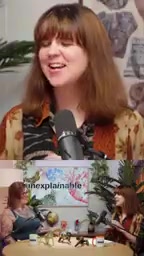
The show uses bold analogies like "exploration is better than sex—you get all the thrill with none of the burden" to describe the joy of scientific exploration. This narrative style is exactly what Vox has always excelled at: using a relaxed, humorous, even slightly provocative approach to lower the barrier to science content and attract a broader audience.
A New Paradigm for Science Communication in the Streaming Era
Unexplainable's arrival on Netflix reflects how high-quality science content is actively seeking more mainstream distribution channels. In the late 2010s, Netflix began investing heavily in non-fiction content, gradually building a brand identity for high-quality documentaries, from Our Planet to Chef's Table. There's clear data logic behind this strategy: non-fiction content is relatively inexpensive to produce, yet delivers high user stickiness and strong word-of-mouth, and can form a differentiation barrier in the fiercely competitive streaming market. For Vox Media, partnering with Netflix is an extension of its "branded content studio" strategy—Vox had previously collaborated with Netflix on the Explained series. The commercialization path of science content is evolving from ad-dependent models (podcast mid-roll ads) toward licensing/co-production models, and Unexplainable's transformation perfectly embodies this structural industry shift.
For Netflix, whose core is entertainment content, introducing this kind of science program that emphasizes "open-ended questions" both enriches its content matrix and responds to users' growing demand for high-quality non-fiction content.
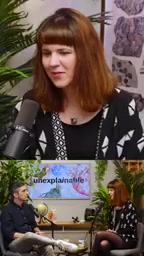
The show updates every Monday on Netflix. The spirit it champions—"acknowledging the unknown and enjoying the exploration"—may be worth spreading even more than any specific answer. In an era where artificial intelligence tries to provide answers for everything, a program dedicated to telling us "what we don't yet know" reminds us precisely: true science begins with awe and curiosity toward the unknown.
Conclusion
Unexplainable's transformation from podcast to Netflix is an industry signal worth watching—it proves that science content need not depend on definitive conclusions and can equally find its place on mainstream streaming platforms. When science communication no longer avoids "I don't know," audiences gain not just knowledge, but a way of thinking about the world. Starting July 13, these mysteries that humanity has yet to solve will be presented visually to a global audience for the first time.
Key Takeaways
Related articles

A Single Prompt Triggers a Global PHP Security Storm: Is AI a Savior or a Hidden Risk?
A single AI prompt triggered a global PHP security crisis affecting Wikipedia and the Internet Archive. This article reviews the incident, analyzes the OpenAI-Amazon controversy, and explores the security paradox of lowered vulnerability discovery barriers in the AI era and developer response strategies.

When AI Is Taken Away: How Reliance on Shortcuts Undermines Your Problem-Solving Resilience
A study of 1,222 people found that after using AI to answer questions, once AI was removed, people gave up on more problems than a control group that never used AI. The article analyzes the impact of AI reliance on learning resilience and metacognition, and explores design implications for AI learning tools.

Carta and NewView Partner to Let Startup Employees Cash Out Equity Early
Carta and NewView Capital partner to simplify startup tender offers, helping employees sell equity early. Analysis of the mechanism, liquidity pain points, and impact.