Waymo Launches Robotaxi Service in Las Vegas, Expanding to 15 Commercial Markets

Waymo expands Robotaxi service to Las Vegas, marking its 15th commercial market and accelerating L4 autonomous driving at scale.
Waymo has officially launched its Robotaxi service in Las Vegas, bringing its commercial market footprint to 15 cities. Las Vegas poses unique challenges for autonomous driving systems due to heavy tourist traffic, frequent short trips, and late-night entertainment district surges — making the launch a strong signal of Waymo's technical confidence. Building on standardized processes for HD mapping, local road learning, and regulatory approvals, Waymo's expansion pace is clearly accelerating. Scale is central to the autonomous driving business model: more cities mean lower per-vehicle costs, richer data, and greater public awareness, creating a positive feedback loop. Las Vegas also opens the door to first-time rides from non-local users, helping push autonomous mobility from niche novelty toward a mainstream daily option.
Waymo Makes Its Move: Las Vegas Becomes the 15th Commercial Market
Waymo has officially launched its Robotaxi (autonomous taxi) service in Las Vegas, making the city famous for tourism and entertainment the 15th market in the company's autonomous driving commercial footprint. For Waymo, which has long bet on the real-world deployment of L4-level autonomous driving technology, this isn't just another city added to the map — it's an important step in validating its capabilities in high-traffic, complex urban environments.
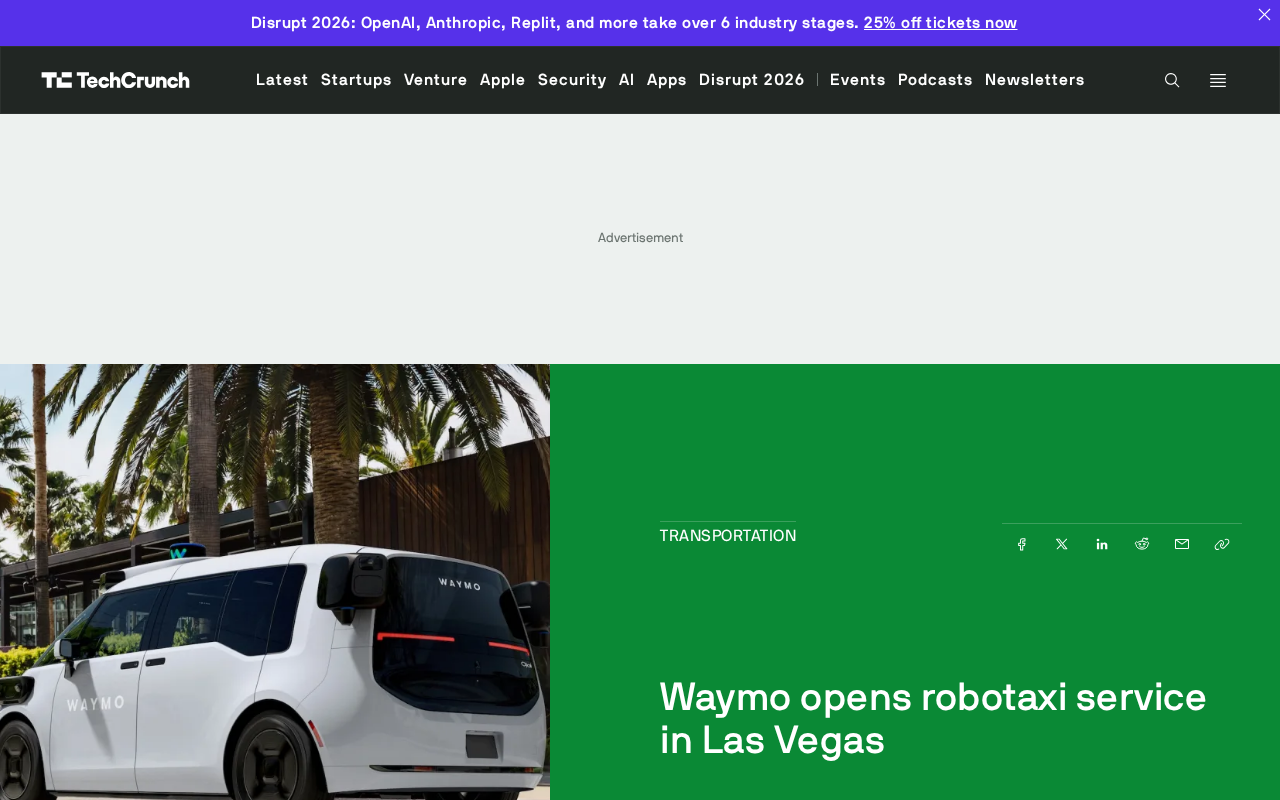
Las Vegas presents a uniquely demanding transportation environment: heavy tourist traffic, frequent short-trip demand, and late-night surges around entertainment districts. These factors place higher demands on an autonomous driving system's perception, decision-making, and dispatch capabilities. Waymo's decision to launch here reflects a degree of confidence in its current level of technical maturity.
From Testing to Scale: What 15 Markets Really Means
From its early closed trials in Phoenix, to coverage of major cities like San Francisco and Los Angeles, and now into Las Vegas, Waymo's expansion pace is clearly accelerating. Growing from single-digit to double-digit market count marks a significant transition — Robotaxi is gradually moving from technology demonstration toward sustainable commercial operations.
Each new city requires Waymo to complete a complex set of tasks from scratch: high-definition mapping, localized road condition learning, regulatory approvals, and fleet deployment. The ability to scale service to 15 markets in a relatively short period reflects an increasingly standardized and repeatable operational process — and that's precisely the critical threshold separating concept from widespread adoption.
The Value of Scale Effects
The business model for autonomous driving is heavily dependent on scale. The larger the fleet and the more cities covered, the more favorable the feedback loop becomes for per-vehicle costs, data accumulation, and user awareness. Adding a tourist destination like Las Vegas also gives Waymo exposure to large numbers of first-time riders from outside the local market, helping to build brand recognition and accelerate public education around the technology.
The Competitive Landscape and Outlook for Robotaxi
Waymo's continued expansion is also setting a benchmark for the broader Robotaxi industry. As a pioneer born out of Google's self-driving car project, it holds advantages in both technical depth and real-world mileage. Every new market launch becomes a barometer for measuring the pace of commercialization across the entire industry.
For consumers, broader city coverage means autonomous ride-hailing is gradually evolving from a novelty available in a handful of cities into a viable everyday transportation option. The Las Vegas launch may be just one more milestone in this trend — but it makes one thing clear: the wheels of autonomous driving commercialization continue to roll steadily forward.
(Note: Due to limited source material, this article is primarily based on analysis of the core fact that Waymo has launched service in Las Vegas, making it the company's 15th commercial market.)
Related articles

Tencent WorkBuddy Hands-On: How AI Agents Crush Traditional Chat Assistants
WorkBuddy vs Doubao tested: how AI Agents directly operate computers to convert PPT to PDF, archive files and more. Analysis of WorkBuddy's low barrier, domestic ecosystem, pricing and plugin marketplace, plus AI Agent selection advice.

Azure Cross-Tenant Attack Chain: Root Cause Analysis of Five Paths
Binary Security analyzes five full cross-tenant compromise paths in Azure, trending 271 points on HN. This article interprets their shared root cause perspective and offers defense recommendations for cloud tenant isolation and reflections on responsibility boundaries.

Recreating a Real Bubble Tea Station in Isaac Sim: Script-Driven Unitree G1 Brews Tea
Developers recreated a real self-service tea station in NVIDIA Isaac Sim, using scripts to drive a Unitree G1 through a five-step tea-brewing process, exploring whether physics simulation can be a source of synthetic robot demonstration data and discussing contact stability and imitation learning.