Waymo's Rapid Fleet Expansion: Data Reveals a New Autonomous Driving Landscape

Waymo's Texas fleet surged 49% in a month, marking a new era of multi-city autonomous driving scale-up.
Waymo's fleet in Texas expanded by 49% in a single month, the latest signal of its accelerating commercialization. Texas's permissive regulations, structured road networks, and mild climate make it a prime model market for scaled operations. Meanwhile, simultaneous expansion hotspots across multiple regions indicate Waymo is shifting from a city-by-city approach to a broad, multi-front deployment strategy. This model, once refined, could compress the time to scale in new markets and pressure competitors. Rapid growth also raises challenges around remote monitoring, dispatching, and charging infrastructure — all of which will determine whether Waymo can convert its expansion momentum into sustainable profitability.
Waymo Accelerates Expansion, Texas Emerges as New Growth Hub
Waymo is expanding its operational footprint at a visibly accelerating pace. According to the latest fleet data, Waymo's fleet size in Texas grew by 49% over the past month — a growth rate that is exceptionally rare in the autonomous driving industry, and a clear signal that Waymo is moving from cautious pilot programs toward large-scale commercial deployment.
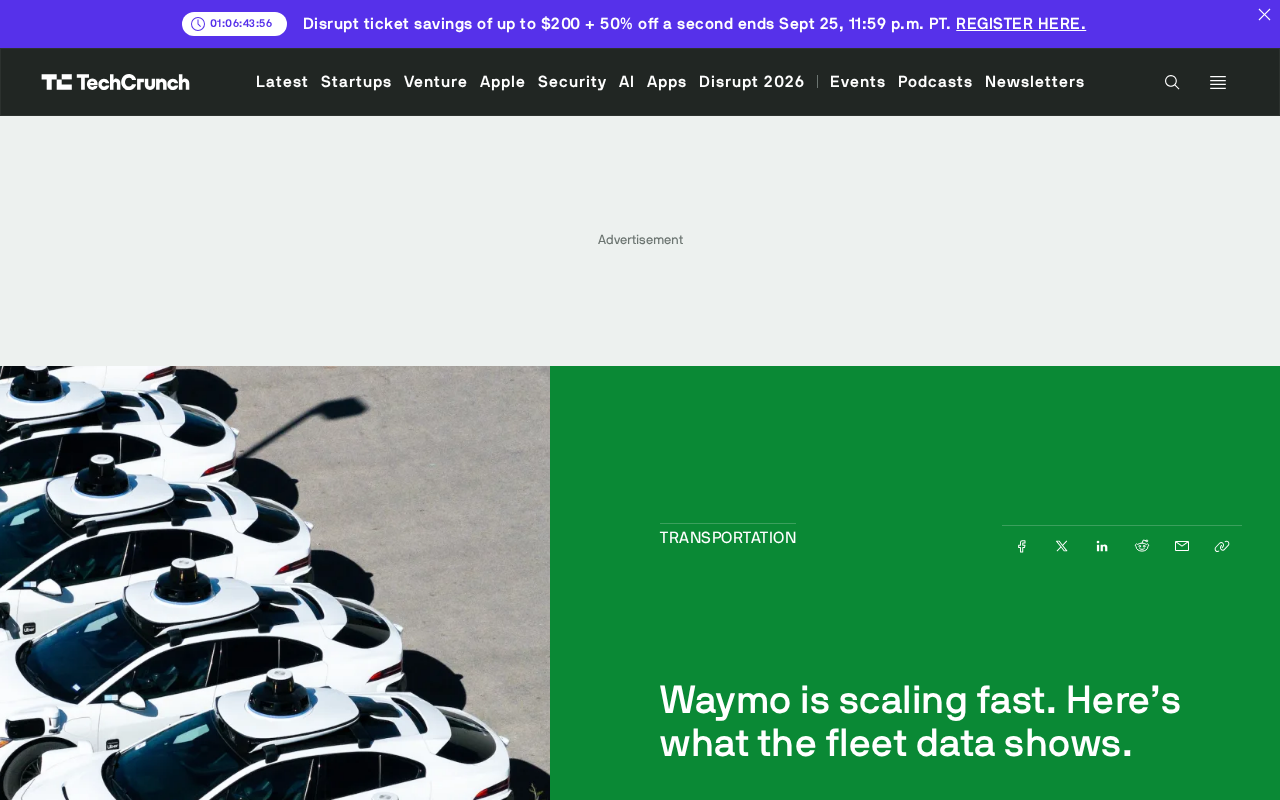
Texas is not an isolated case. The data shows notable expansion hotspots across multiple regions. This multi-market approach reflects a strategy of replicating a proven operational model — once validated in a single market — across cities with similar conditions.
Why Texas?
Texas has long held appeal for autonomous vehicle companies. A relatively permissive regulatory environment, wide-open urban road networks, and mild weather all make it easier to operate driverless vehicles. Compared to regions with stricter regulations and more complex road conditions, Texas allows Waymo to scale its fleet with significantly less operational friction.
A 49% single-month growth rate signals that Waymo is no longer content with small-scale demonstrations — it is deliberately positioning Texas as a model market for scaled operations. Higher fleet density directly impacts ride request response times, per-vehicle cost amortization, and user experience, all of which are critical variables in determining whether Robotaxi services can become profitable.
Waymo's primary operating city in Texas is Austin. Austin is one of Waymo's earlier markets, where testing began as far back as 2021 and paid public ride-hailing services officially launched in 2024. Compared to Phoenix — Waymo's most mature market — Austin features more varied road conditions, including non-grid street layouts and highway scenarios, making it an important testing ground for validating system generalization. Texas law does not require autonomous vehicles to have a human safety driver onboard, a policy advantage that allows Waymo to deploy fully driverless vehicles directly, significantly reducing per-mile labor costs and bringing the Robotaxi model closer to profitability.
Strategic Signals Behind the Fleet Data
For Waymo, fleet expansion is not merely a numbers game — it is an outward expression of the company's technical maturity and operational confidence. Deploying more driverless vehicles on public roads requires that the system has already accumulated sufficient safe mileage and operational experience in existing areas.
The simultaneous emergence of multiple expansion hotspots suggests that Waymo's deployment logic is shifting from "city-by-city breakthroughs" to "advancing on multiple fronts." Once this approach is proven out, it will dramatically shorten the time from entering a new market to achieving meaningful scale — and will put competitive pressure on others in the same space.
Challenges and Milestones of Scaling Up
Rapid expansion comes with its own set of challenges. The larger the fleet, the higher the demands on remote monitoring, vehicle dispatching, charging infrastructure, and maintenance. Striking the right balance between expansion speed and safety redundancy will determine whether Waymo can turn "moving fast" into "moving sustainably."
From an industry perspective, Waymo's fleet data offers a useful window into the commercialization of autonomous driving. When expansion jumps from single-digit growth to nearly 50% month-over-month, it signals that the technology is crossing from the "can it work" validation stage into the real-world test of "can it scale profitably." The key questions going forward: can these newly added vehicles maintain a consistent safety record, and where will Waymo choose its next expansion hotspot?
Waymo's current sixth-generation autonomous driving platform — Waymo Driver Gen 6 — is deployed on the Jaguar I-PACE electric vehicle, featuring a multi-modal sensor suite that fuses LiDAR, cameras, and radar. The EV platform offers inherent advantages for remote monitoring and fleet dispatch: battery status and vehicle health data can be streamed to the cloud in real time, enabling centralized operations management. However, as the fleet approaches the hundreds-of-vehicles scale, the density of charging station coverage, vehicle rotation schedules, and emergency tow response capabilities all become bottlenecks constraining actual fleet capacity. The industry typically uses Fleet Utilization Rate as the core metric for Robotaxi operational efficiency, with utilization targets in high-density urban areas generally set between 60% and 75%.
Related articles

Trump's Request to Rename the Atlantic Rejected by Google; 1Password Lets AI Agents Log In Securely
The Vergecast roundup: Trump's request to rename the Atlantic the 'Trump Ocean' was politely declined by Google's CEO; 1Password's new feature lets AI agents log into accounts without touching passwords; OPPO launches the world's first 200-megapixel phone, the Find X10 Pro Max. All three point to the boundaries of tech authorization and trust.

The Truth About American College Party Culture: The Risks Schools Won't Admit
Behind American college party culture, the administration's "don't ask, don't tell" attitude is amplifying freshman risks. This article analyzes how the pandemic strengthened Greek dominance, freshmen's difficulty accessing safety information, and the chain reactions caused by a culture of denial.

OpenAI Reportedly Raising $30B at $1.25T Valuation Ahead of IPO
OpenAI is planning a $30B funding round at a possible $1.25T valuation, paving the way for an IPO. If completed, it would set a private company valuation record. This article analyzes the funding size, pre-IPO logic, and industry signals.