WeChat Mini Program Cloud Development in Practice: A Complete Guide for Frontend Developers to Build Full-Stack Apps Solo

Build full-stack WeChat Mini Programs solo using JavaScript and cloud development — no backend language required.
WeChat Mini Program Cloud Development lets frontend developers build and launch complete full-stack apps using only JavaScript, with no server setup or backend language required. This guide covers cloud databases, cloud functions, and cloud storage, and walks through a real-world Zhihu-like Mini Program project from scratch to deployment.
Why Should Frontend Developers Care About Cloud Development?
In traditional full-stack development, a complete project typically requires frontend and backend collaboration: the frontend handles UI interactions, while the backend requires mastery of Java, Python, or Node.js (frameworks like Express or Koa) to manage databases, APIs, and server deployment. This technical barrier has kept many frontend engineers — who are only familiar with JavaScript — on the sidelines.
WeChat Mini Program Cloud Development is changing that dynamic. With just a frontend JS foundation, you can independently build and launch a fully functional full-stack project without learning any backend language — a genuinely meaningful step toward lowering the barrier to entry and expanding your personal technical capabilities.
What Pain Points Does Cloud Development Actually Solve?
Cloud development packages three core backend capabilities — databases, cloud functions, and cloud storage — as cloud services that frontend developers can call directly via API, with no need to set up servers, handle operations, or configure database connections. Developers can focus entirely on business logic rather than underlying infrastructure.
From an architectural standpoint, cloud development is essentially a BaaS (Backend as a Service) pattern. In traditional development, you'd need to purchase servers, configure Nginx or Apache, install databases, and maintain SSL certificates and firewall rules — all of this DevOps work consumes enormous energy. The core idea of BaaS is to abstract these common infrastructure concerns and expose them as APIs, so developers only need to focus on application-layer logic. WeChat Cloud Development takes this further by deeply integrating with the Mini Program ecosystem: identity verification is natively tied to WeChat accounts, eliminating the tedious user registration and login module that traditional projects require.
Mini Program Development: Market Demand Remains Strong
Searching for "Mini Program development" on platforms like BOSS Zhipin reveals consistently solid job demand. The logic is straightforward: WeChat is a national-scale app, and accessing a product or service through a Mini Program is far more convenient than downloading a standalone app.

From a business perspective, Mini Programs offer three core advantages:
- Low development cost: A single frontend developer with JS skills can handle the full build
- Short development cycles: Eliminates the communication overhead of separate frontend/backend teams
- Simple launch process: No lengthy app store review process to navigate
For frontend engineers, Mini Program skills have gradually shifted from a "nice to have" to a baseline expectation. And with cloud development, frontend developers gain the ability to independently deliver complete products end to end.
What Core Skills Will This Course Help You Master?
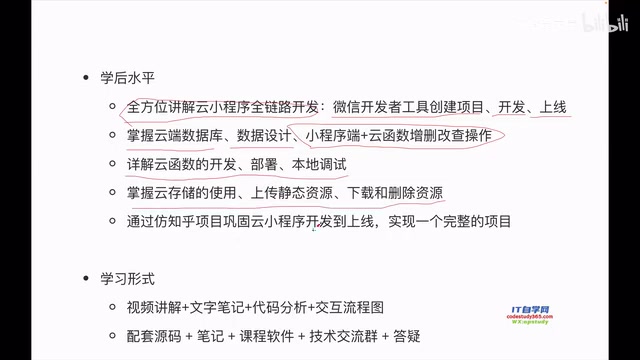
Built around the hands-on project of "building a Zhihu-like full-stack Mini Program from scratch," this course covers the complete cloud development workflow, focusing on the following capabilities.
Full-Cycle Native Development
The course uses the WeChat DevTools for native development, covering the entire lifecycle from project creation through development to launch. For developers interested in cross-platform frameworks, a UniApp (HBuilder) path is also provided. UniApp is based on Vue.js syntax and uses a compiler to transpile a single codebase into native code for multiple target platforms via conditional compilation — allowing developers to write platform-specific logic within a unified codebase. It supports over a dozen Mini Program platforms including WeChat, Alipay, Baidu, and Douyin, and can be extended further to Android/iOS app development. For small-to-medium projects with limited team resources that need multi-platform coverage, UniApp significantly reduces cross-platform maintenance costs — though it still falls short of each platform's native development in terms of smoothness for complex, performance-sensitive interactions.
Cloud Database Design and CRUD Operations
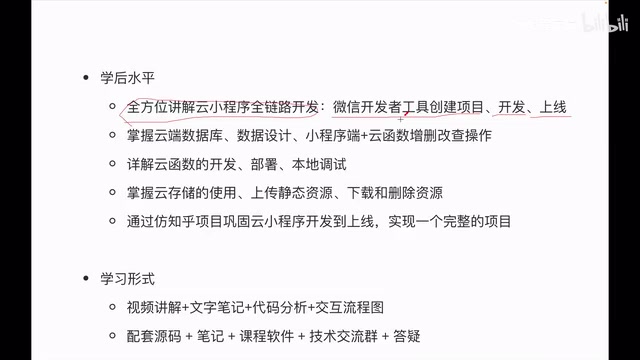
Students will learn how to design data structures in the cloud database and implement complete CRUD (Create, Read, Update, Delete) operations using the "Mini Program client + cloud functions" approach. This is the core of full-stack capability — and typically the area most unfamiliar to frontend developers.
Worth noting: the database built into WeChat Cloud Development is a document-oriented database (based on MongoDB's design philosophy), which is fundamentally different from relational databases like MySQL or PostgreSQL. Document databases store data in JSON format with no need to predefine a strict schema, making them well-suited for fast-iteration early-stage projects. However, this flexibility also carries risks: loose data structures can make long-term maintenance difficult, and performance optimization (such as index design) shouldn't be overlooked. For beginners, this requires a mental shift away from the "table-row-column" model toward a "collection-document-field" way of thinking about data organization. The course gradually deconstructs this shift through hands-on practice to reduce the cognitive load.
Cloud Functions and Cloud Storage in Practice
The course walks through writing, deploying, and locally debugging cloud functions, as well as practical cloud storage usage — including uploading, downloading, and deleting resources. Together, these three components roughly correspond to traditional backend server logic and file storage services.
Understanding how cloud functions work under the hood helps you write better code. Cloud functions use a FaaS (Function as a Service) model — the core component of Serverless architecture. Each cloud function is an independent piece of Node.js code that runs on demand, billed by actual invocations, consuming no resources when idle. This is fundamentally different from the traditional server model, where a server runs 24/7 in a listening state and incurs costs even when handling zero requests. One important caveat is cold start latency — the initialization time on a function's first invocation, typically ranging from a few hundred milliseconds to a few seconds. For interactions where response time matters, thoughtfully planning how to split and reuse cloud functions becomes especially important.
Tying It All Together with a Complete Project
The final "Zhihu-like" real-world project ties together all previous concepts into a complete loop, walking through the full journey from local development to official launch.
Who Is Mini Program Cloud Development For?
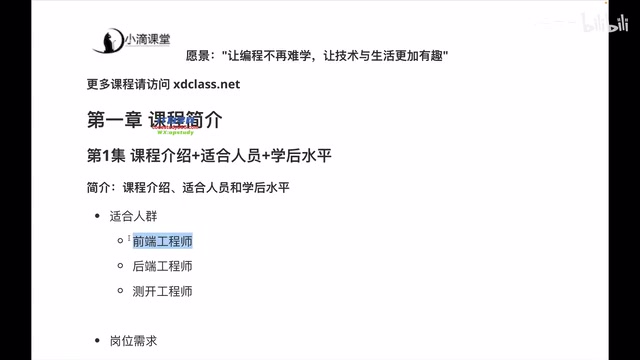
Based on the course's positioning, it's primarily aimed at three audiences:
- Frontend engineers: Want to independently build full-stack projects but don't have the time or intention to deeply learn backend technologies like Java, Python, or Node
- Backend engineers: Already have a JS foundation and want to expand toward full-stack frontend development
- Test/QA engineers: Looking to broaden their technical scope and boost personal competitiveness
The course combines video instruction, written notes, code walkthroughs, and interactive flow diagrams, along with free source code, study notes, and a technical discussion group.
Closing Thoughts: Cloud Development Is a Gateway to Full Stack, Not the Ceiling
WeChat Mini Program Cloud Development genuinely opens a door to full-stack development for frontend engineers — it wraps backend complexity into ready-to-use cloud services, making "one person launching a complete product solo" a real possibility.
But one thing deserves clear-eyed recognition: cloud development lowers the infrastructure barrier, not the engineering capability barrier. Whether your database structure is sound, whether your cloud function logic is robust, how to identify and resolve performance bottlenecks — these still test your underlying programming fundamentals. Cloud function cold starts, index design for document databases, access control for cloud storage — these advanced topics all require continued exploration once you've mastered the basics. For those aiming to grow into senior frontend engineers, cloud development is an excellent starting point. But real competitive edge has always come from understanding and commanding the system as a whole.
Related articles

Alibaba Launches Happy Shrimp: AI-Powered One-Click Complete Song Generation
Alibaba launches Happy Shrimp, an AI music generation tool that creates complete songs with lyrics, melody, arrangement, and vocals from natural language descriptions. In-depth analysis of its core features, differentiation from competitors like Suno, and industry impact.
GPT Sol Ultra vs Grok 4.6: Real-World Task Completion Benchmark in Reasoning Mode
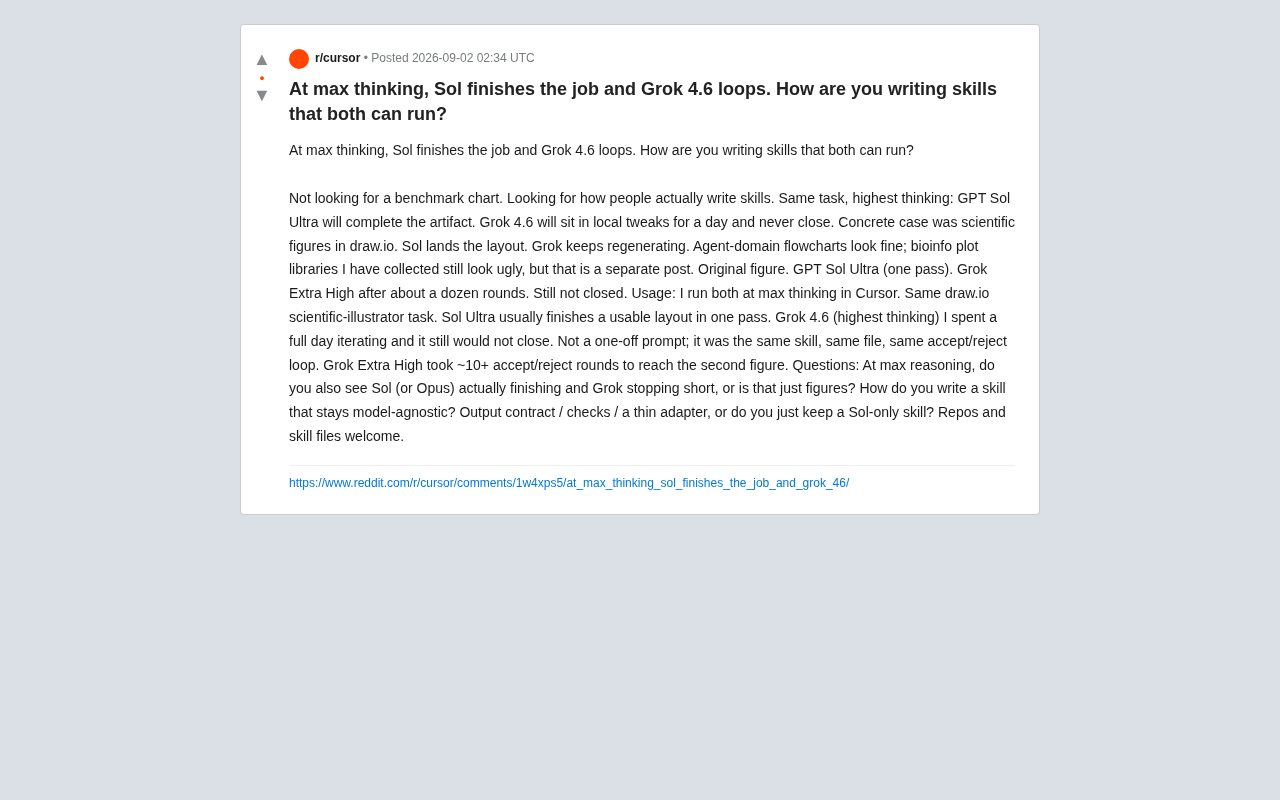
Developer benchmark reveals GPT Sol Ultra completes draw.io scientific diagrams in one iteration while Grok 4.6 fails to converge despite maximum reasoning mode, exposing that reasoning depth ≠ task delivery capability.
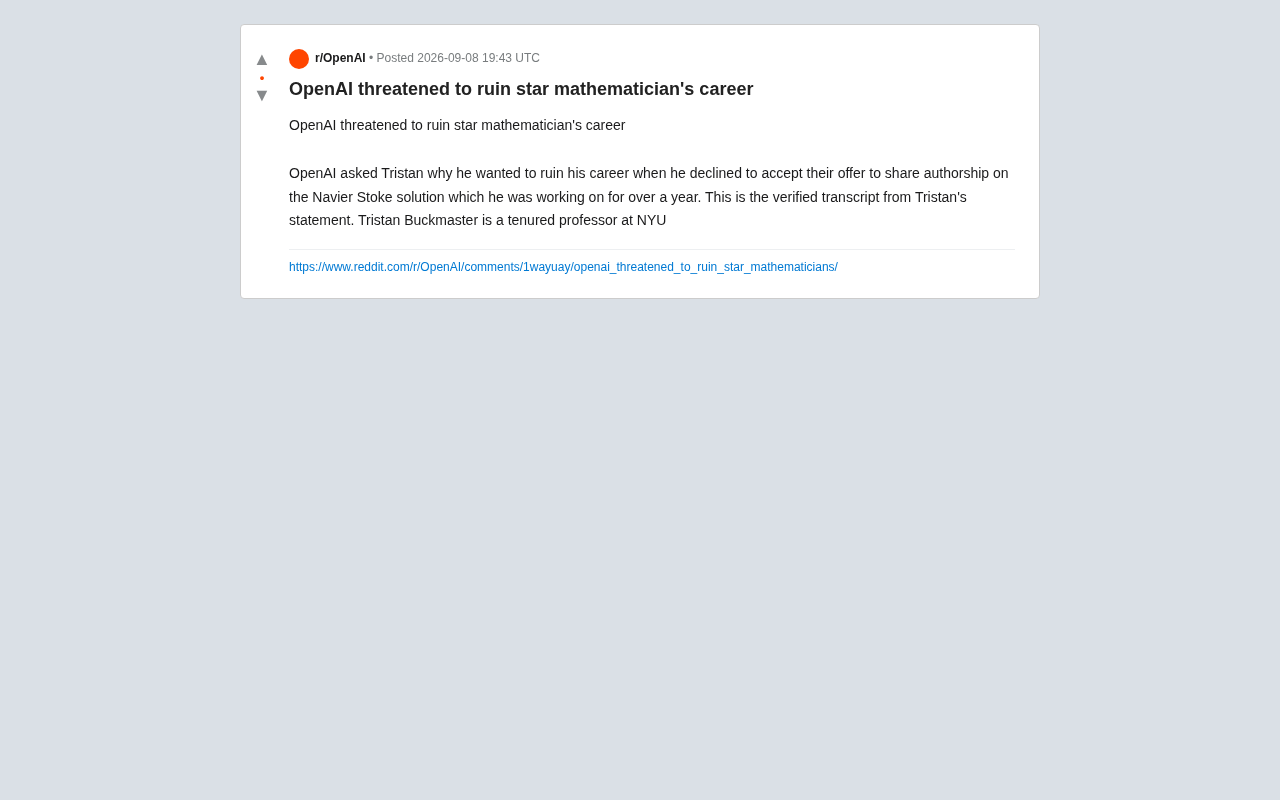
OpenAI Authorship Dispute: The Battle Over Academic Boundaries in the AI Era
OpenAI disputes authorship with mathematician Tristan Buckmaster over Navier-Stokes research, raising ethical questions about AI involvement in science.