What Is a Dimension? The Simple Logic of One, Two, and Three Dimensions
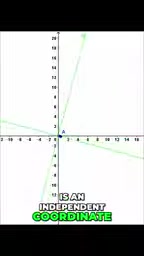
A dimension is the number of independent coordinates needed to determine position, with consistent logic from one to three dimensions.
Starting from the core idea that "a dimension is an independent coordinate," the article explains that a dimension is not simply a direction of movement but the number of independent numbers required to locate a point. Through the stepwise examples of a one-dimensional line, a two-dimensional plane, and a three-dimensional room, it shows how the number of coordinates increases with dimension. The article emphasizes the key role of "independence": a new direction constitutes a genuinely new degree of freedom only if it cannot be composed from existing directions. Finally, it points out that the pattern of dimensions can be grasped without complex mathematics and highlights the concept's extended value in higher-dimensional spaces and feature dimensions in data science.
We often hear the word "dimension," but what does it actually mean? In everyday language, a dimension is described as "a direction you can move in," which is useful but not profound enough. The real key to understanding dimensions is to see them as independent coordinates—an independent number required to determine the location of something. From this perspective, the worlds of one, two, and three dimensions become remarkably clear.
A Dimension Is an Independent Coordinate, Not a Mere Direction
Thinking of dimensions as independent coordinates helps us strip away intuition and grasp the mathematical essence. In ordinary space, the easiest way to understand them is to treat dimensions as independent directions. "Independent" means that movement in one direction cannot be replicated by combining other directions. For example, in three-dimensional space, moving up cannot simply be replaced by moving left or forward—it provides a genuinely new degree of freedom.
This independence is the core of the concept of dimension. Without it, coordinates would lose their meaning. Precisely because of it, we can pinpoint any point in space with a set of numbers, without worrying about redundancy or omission.
Mathematically, this "independence" can be precisely characterized by linear independence: among a set of direction vectors, none can be expressed as a linear combination of the others. The dimension is defined as the number of basis vectors—a basis being the smallest set of independent vectors that spans the entire space. Thus, saying that three-dimensional space requires three coordinates is equivalent to saying that any basis of it contains exactly three linearly independent vectors. This framework applies not only to the familiar Euclidean space but also to abstract objects such as function spaces and Hilbert spaces, making "dimension" a foundational language that runs through geometry, algebra, and analysis.
From a Line to a Room: The Ladder of Coordinate Counts
The intuitive manifestation of dimension is the number of numbers needed to locate a point.
The One-Dimensional World: A Straight Line
Imagine a world where you can only move along a straight line. To locate a point on the line, you need just one number—for example, the distance from the origin. This is one dimension. It is like an infinitely extending line: simple yet complete.
The Two-Dimensional World: A Flat Map
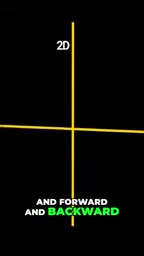
Expanding to two dimensions, the world is like a flat map. At this point, one number is not enough; you need two: left-right and forward-backward. These two directions are independent of each other and cannot substitute for one another. Any point on the plane can be specified by a pair of numbers.
The Three-Dimensional World: The Space We Live In
In three dimensions, we add the up-down direction. Three independent numbers—left-right, forward-backward, up-down—together determine the position of an object in a room. This is the physical space we are familiar with.
The choice of coordinates is not unique: on a line you can choose a different origin, and on a plane you can rotate the axes. But no matter how you choose, the number of independent numbers required remains unchanged—this invariant is the dimension. The essence of a coordinate system is to establish a one-to-one correspondence between points and tuples of numbers, thereby transforming geometric problems into algebraic operations. The Cartesian coordinate system is the most common type, requiring the axes to be mutually perpendicular and independent, which once again echoes the core idea of "independent directions."
The Significance of Independence: Genuinely New Freedom
The word "independent" is crucial because it guarantees that each dimension brings a completely new degree of freedom. If a newly added direction could be composed from existing directions, it would not constitute a new dimension. Moving up cannot be synthesized from moving left-right or forward-backward, so it genuinely expands our range of activity.

This freedom is reflected not only in geometry but also permeates many areas of physics and mathematics. Understanding the independence of dimensions is the cornerstone for understanding concepts such as higher-dimensional spaces and feature dimensions in data science.
In data science and machine learning, "dimension" often refers to the dimensionality of the feature space: each sample is described by a set of features, and the number of features is the data dimension. High-dimensional data brings the "curse of dimensionality"—as dimensions increase, samples become sparse in space, distance metrics gradually fail, and models tend to overfit. Dimensionality reduction techniques such as principal component analysis (PCA) work by finding a small number of linearly independent directions with the greatest variance in the data and approximating the original data with low-dimensional coordinates. In essence, this exploits "independence" to compress redundancy and retain genuinely new degrees of freedom.
See the Pattern Clearly Without Complex Mathematics
The beauty of dimension lies in the fact that you don't need complex mathematical operations to grasp its pattern: one coordinate locates a point on a line, two coordinates locate a point on a plane, and three coordinates locate a point in a room. This simple rule reveals the core of the concept of dimension—using the fewest independent numbers to precisely describe position.
The next time you hear "dimension," recall this concise picture: it is an independent coordinate, a necessity for locating, and a measure of degrees of freedom. From one to three dimensions, and even higher dimensions, the logic remains the same.
Related articles

Build a Reasoning Model from Scratch: An 11-Hour Open-Source Course Breakdown
Sebastian Raschka releases a free 8-episode, ~11-hour video course teaching you to build a reasoning model from scratch with Python and PyTorch—from a small Qwen3 model through Verifier, Inference Time Scaling, GRPO, and distillation, with open-source code on GitHub.

An 11-Hour Reasoning Model Course in Practice: How Small Models Learn to Think
Starting from Sebastian Raschka's 11-hour reasoning model course and HN buzz, this analyzes small-model training, legal text version control, Anthropic data policy, and product reliability reviews.

Lightpanda: A Headless Browser Built for AI and Automation
Lightpanda is a headless browser built from scratch in Zig for AI and automation, with 37,852 GitHub stars. This analysis covers its technical approach, design choices, and use cases.