What Is a Repair Cafe? The Community Repair Movement Fighting E-Waste
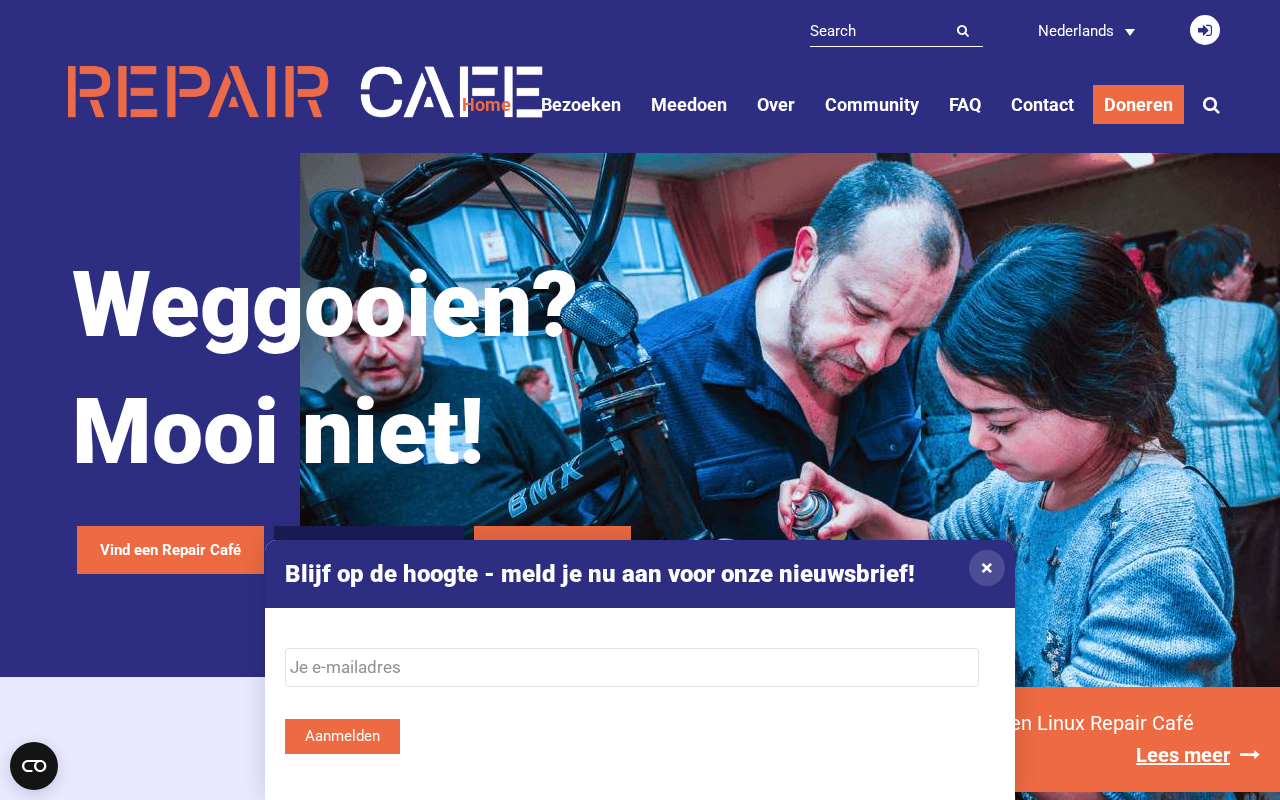
Repair Cafes are community spaces where volunteers help people fix broken items to fight e-waste.
Repair Cafes are a global grassroots movement originating in the Netherlands, where volunteer-run community events help people repair broken electronics, clothing, and household items for free. Closely tied to the Right to Repair movement and circular economy principles, they combat planned obsolescence, reduce e-waste, and preserve repair skills. With over 2,500 locations worldwide, the movement represents a practical, community-driven approach to sustainable consumption.
When "Throw It Away" Becomes a Habit, Repair Culture Is Making a Comeback
In today's consumer-driven world, we've grown accustomed to a simple, blunt logic: if something breaks, buy a new one. A pair of earbuds that won't charge, a desk lamp with a broken wire, a jacket with a stuck zipper — they end up in the trash rather than being repaired. But a community movement called "Repair Cafe" is working to break this cycle.
Repair Cafe is a volunteer organization network that originated in Europe and has since spread across the globe. Its philosophy is simple yet powerful: provide people with a free space and tools, where skilled volunteers help them repair broken items together instead of throwing them away. This topic has drawn widespread attention in the tech community because it touches on a core issue that engineers have long cared about — repairability and sustainable consumption.
This attention is no coincidence. Modern consumer product manufacturing widely employs a design strategy known as "Planned Obsolescence" — manufacturers intentionally design products to degrade or become outdated after a certain period, driving consumers to make repeat purchases. The concept dates back to the 1920s and the "Phoebus Cartel," when major light bulb manufacturers colluded to artificially limit bulb lifespan from 2,500 hours to 1,000 hours. Today, planned obsolescence takes more subtle forms: non-replaceable batteries, glued-on screens, software updates that degrade performance, and discontinued spare parts for older models. This business strategy fundamentally conflicts with circular economy principles and is the deeper reason behind the rise of the right-to-repair movement and Repair Cafes.
What Is a Repair Cafe?
The first Repair Cafe was founded by Dutch journalist Martine Postma in Amsterdam in 2009. Its operating model is refreshingly straightforward: events are held regularly at community centers, libraries, or public spaces, equipped with basic repair tools like soldering irons, sewing machines, and screwdriver kits, staffed by volunteers with experience in electronics, mechanical, and textile repair.
Residents bring their broken items and work alongside volunteers to fix them. The emphasis isn't on "we'll fix it for you" but rather "we'll fix it together with you" — participants learn basic repair skills and understand the internal workings of their belongings in the process. This knowledge transfer itself is a direct challenge to throwaway consumer culture.
More Than Just Fixing Things — It's a Way of Life
The value of Repair Cafes goes far beyond saving a few bucks on replacements. There are three layers of significance behind the movement:
- Reducing e-waste: The world generates over 50 million tons of electronic waste (e-waste) annually, much of which could have its lifespan extended through simple repairs. According to the UN's Global E-waste Monitor, approximately 62 million tons of e-waste were generated worldwide in 2022, but less than 20% was properly recycled. Electronic devices contain toxic heavy metals like lead, mercury, and cadmium, as well as persistent organic pollutants like brominated flame retardants — improper disposal can severely contaminate soil and groundwater. At the same time, electronic devices contain high-value materials such as gold, silver, platinum, and rare earth elements — one ton of discarded mobile phone circuit boards contains far more gold than one ton of gold ore. Extending product life through repair not only reduces harmful emissions but also eases the pressure on scarce resource extraction.
- Preserving repair skills: In an era of ever-increasing professional specialization, ordinary people are losing both the ability and confidence to fix things with their own hands. Repair Cafes restore that sense of agency.
- Community connection and belonging: They create a public space that spans generations and backgrounds, where neighbors build genuine connections through the shared experience of solving problems together.
The Deep Connection Between Repair Cafes and the Circular Economy
The Repair Cafe philosophy is rooted in Circular Economy thinking. The circular economy is an alternative to the traditional "linear economy" model (extract–manufacture–use–dispose), systematically promoted by the Ellen MacArthur Foundation in the UK. Its core principles include: eliminating waste and pollution by design, keeping products and materials at their highest use value for as long as possible, and regenerating natural systems. Within this framework, repair is considered the highest-priority strategy for value retention — above refurbishment, remanufacturing, and recycling — because it consumes the least energy and resources while preserving the maximum remaining value of the product. The EU's Circular Economy Action Plan has made repairability one of the core requirements for sustainable product design. Repair Cafes are the best example of translating this macroeconomic concept into community-level action.
Repair Cafes and the Right-to-Repair Movement: A Deep Resonance
The rise of Repair Cafes is closely aligned with the "Right to Repair" movement, which has gained significant momentum in tech circles in recent years. This movement advocates that consumers should have the right to repair their own purchased devices — either by themselves or through third parties — and that manufacturers should not create artificial repair barriers through proprietary parts, software locks, or glue-sealed enclosures.
Companies like Apple and John Deere have faced sustained criticism for restricting user repairs. In recent years, the EU has passed regulations requiring electronics manufacturers to provide spare parts and ensure product repairability, while multiple U.S. states have enacted legislation protecting consumers' right to repair. Repair Cafes represent the grassroots, bottom-up practice of this issue, complementing the top-down push at the legislative level — two sides of the same coin.
Specifically, the core demands of the right-to-repair movement include: manufacturers must provide repair manuals, diagnostic tools, and original parts to consumers and independent repair shops; the use of software locks or part serialization to prevent third-party repair must be prohibited; and warranty terms must not restrict users' right to self-repair. On the legislative front, the EU's Ecodesign Regulation, implemented in 2021, requires manufacturers of appliances like washing machines and refrigerators to provide spare parts for at least 10 years after a product goes on sale. France has mandated since 2021 that electronic products display a "Repairability Index" (Indice de réparabilité), rating repair difficulty on a 1–10 scale so consumers can see at a glance how easy a product is to fix before purchasing. In the U.S., New York State passed the first electronics right-to-repair bill in 2022, with Colorado, Minnesota, and other states following suit — right-to-repair legislation is becoming an irreversible trend.
Why the Tech Community Cares So Much About Repairability
For the tech community, repairability has never been a trivial matter. Engineers and geeks have a natural aversion to "black box" design — they want to understand how devices work and be able to disassemble, diagnose, and repair them when things go wrong. When more and more products are designed as non-repairable "sealed boxes," it's not just an environmental issue — it's a violation of user autonomy.
In this space, iFixit has become an iconic organization in the tech community. iFixit is a social enterprise headquartered in San Luis Obispo, California, founded by Kyle Wiens and Luke Soules in 2003. It operates the world's largest free repair guide database, covering thousands of products from iPhones to John Deere tractors. iFixit's Repairability Score is based on a 0–10 scale, evaluating dimensions including: whether common tools are sufficient for disassembly, fastener types (screws are preferred over glue), component modularity, availability of repair manuals, and whether parts can be independently replaced. This score has become an important reference for consumers choosing products and for policymakers setting standards. iFixit embodies the philosophy that "if you can't fix it, you don't truly own it" — a belief deeply aligned with the spirit of Repair Cafes.
Looking at the Future of Sustainable Consumption Through Repair Cafes
The Repair Cafe model offers a replicable, low-cost community solution template. As of now, more than 2,500 Repair Cafes operate across dozens of countries, forming a loose but vibrant international network (repaircafe.org).
The success of this model reminds us that sustainable development doesn't always require grand technological breakthroughs. Sometimes all it takes is a screwdriver, a volunteer willing to share their experience, and the thought: "Let's try fixing it first." When we bring "repair" back into our daily options, the center of gravity in consumer culture can gradually shift from "constant buying" to "cherishing and maintaining." The essence of this shift is a migration from linear economic thinking to circular economic thinking — no longer viewing products as a one-way trip from the production line to the landfill, but as resources whose value can be continuously extended through maintenance, repair, and refurbishment.
How to Get Involved in the Repair Cafe Movement
If this idea resonates with you, here's how to get started:
- Find or create one: Check whether your city already has a Repair Cafe, or follow the guide on repaircafe.org to start one yourself. The website provides a complete starter kit, including venue selection tips, volunteer recruitment templates, and insurance and legal guidelines.
- Make conscious purchasing choices: When buying products, prioritize brands with high repairability scores. iFixit's Repairability Score and France's Repairability Index are both useful references. Choose products that use standard screws instead of proprietary fasteners, devices with replaceable batteries, and brands that provide repair manuals.
- Support right-to-repair legislation: Follow and support policy initiatives promoting the "Right to Repair" in your region. In China, while there is no dedicated right-to-repair legislation yet, relevant provisions already exist within the Consumer Rights Protection Law and the Product Quality Law — sustained public attention will drive more targeted policies.
- Change your mindset: Next time something breaks, ask yourself: "Is this really beyond repair?" Search for the product model plus "repair" in a search engine — you might find the fix is far simpler than you imagined.
In an age that encourages disposal, choosing to repair is itself a gentle yet resolute act of resistance.
Related articles

A Single Prompt Triggers a Global PHP Security Storm: Is AI a Savior or a Hidden Risk?
A single AI prompt triggered a global PHP security crisis affecting Wikipedia and the Internet Archive. This article reviews the incident, analyzes the OpenAI-Amazon controversy, and explores the security paradox of lowered vulnerability discovery barriers in the AI era and developer response strategies.

When AI Is Taken Away: How Reliance on Shortcuts Undermines Your Problem-Solving Resilience
A study of 1,222 people found that after using AI to answer questions, once AI was removed, people gave up on more problems than a control group that never used AI. The article analyzes the impact of AI reliance on learning resilience and metacognition, and explores design implications for AI learning tools.

Carta and NewView Partner to Let Startup Employees Cash Out Equity Early
Carta and NewView Capital partner to simplify startup tender offers, helping employees sell equity early. Analysis of the mechanism, liquidity pain points, and impact.