What Would Perelman Think of AI Solving Math? Sharp Insights from the Lex Fridman Conversation

AI may render the Fields Medal meaningless; centaur mathematics becomes the new trend.
The conversation explored AI's impact on the value of awards in mathematics. The guest cited Perelman's stance in declining the Fields Medal and the Clay Prize, arguing that his view of "a correct proof is the honor" aligns with the AI era. If AI can solve major problems, awards will lose value as scarcity declines, and the Fields Medal may disappear. However, the guest views AI positively as an accelerator, advocates "centaur mathematics" human-machine collaboration, and shares how AI has improved his learning efficiency. The mathematical community needs to redefine what to celebrate.
The future of the Fields Medal, the highest honor in mathematics, is becoming uncertain due to the intervention of AI. In the Lex Fridman podcast, the guest raised a pointed question: if AI can solve major mathematical problems, do awards like the Fields Medal still hold meaning? This topic naturally leads to Grigori Perelman, the mathematician famous for declining the Fields Medal and the Clay Prize—how would he view AI solving mathematical problems?
Perelman's Stance: A Correct Proof Is the Entire Honor
During the conversation, the guest recalled Perelman's famous quote: "If the proof is correct, then that is all the recognition I need." Perelman famously declined the Fields Medal and the Clay Mathematics Institute's million-dollar prize, becoming the only person to have turned down the Clay Prize. When asked how Perelman might comment on OpenAI's progress in mathematics, the guest admitted, "It's hard for me to predict what Perelman would do or say. I didn't know he would decline the Fields Medal, nor did I know he would decline the Clay Prize."

Regarding the refusal of awards, the guest's assessment was quite candid: "Mathematicians are eccentric; each person makes their own choice." But he also emphasized that the beauty of the mathematical community lies in its diversity of viewpoints: "We let all kinds of people join in."
Grigori Perelman is a Russian mathematician known for proving the Poincaré conjecture (one of the Millennium Prize Problems). He posted three preprints on arXiv in 2002-2003, providing a complete proof of the Poincaré conjecture, but subsequently declined the 2006 Fields Medal and the 2010 Clay Mathematics Institute million-dollar Millennium Prize. Perelman's reasoning was: if the proof is correct, then the honor itself is unimportant. He remains distant from the mathematical mainstream, emphasizing the purity of mathematics, and his stance has sparked widespread discussion in the mathematical community.
The End of the Fields Medal? Reassessing the Value of Awards in the AI Era
The most impactful viewpoint in the conversation is that Perelman's worldview coincides with the new worldview the mathematical community is entering. "I don't know if there will be Fields Medals awarded in the future," the guest said. "So we are entering Perelman's world."
According to the guest, when the Fields Medal was awarded in Philadelphia last summer, people were already discussing whether it would be the last time. Although AI progress at the time had not yet reached its most powerful level, doubts already existed.

The guest hopes the Fields Medal will not disappear but believes the meaning of awards needs to be rethought from a sociological perspective. "The winners are already tenured professors at top institutions, and they will continue to do mathematics for the rest of their lives," he asked. "So what does the award actually accomplish?" His answer: the award celebrates mathematical activity itself and declares what is important. But the problem is that if solving major problems is no longer a rare event, then the value of awards based on "solving major problems" will decline significantly.
The Fields Medal is awarded every four years by the International Mathematical Union (IMU) to outstanding mathematicians under the age of 40, and is known as the "Nobel Prize of mathematics." First awarded in 1936, it aims to recognize excellence in mathematics and inspire young researchers. The Fields Medal's selection is based on candidates' breakthrough contributions in mathematics, and its authority is built on the scarcity of mathematical problems and the difficulty of solving them. If AI makes the solution of major problems commonplace, the scarcity and incentive effect of the award may be weakened.
Centaur Mathematics: AI Is Not a Replacement but an Accelerator
Despite doubts about the future of awards, the guest holds a positive attitude toward AI's role in mathematics. "I don't believe in solved axioms," he stated clearly. "I believe centaur mathematics will be a very good way to do mathematics." He described his experience of ongoing dialogue with AI systems: "I am learning mathematics much faster than before."

He pointed out a real pain point: mathematical papers are often written in a way that leaves readers stuck at the beginning. He gave an example: give a graduate student a paper, ask a week later how far they've read, and the student replies, "I haven't even gotten past the first page," or even "I haven't gotten past the first paragraph," because the first sentence is "Perturbation theory for nonlocal systems," and the student has no idea what that means. His advice: skip the first few paragraphs, go straight to Lemma 3, start working from there, and then trace back to understand the whole.
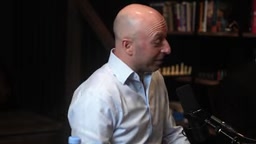
"Centaur mathematics" borrows the concept of the "centaur" from chess, i.e., a combination of human and computer collaboration. In chess, human players working with AI engines often defeat pure AI or pure human players. In mathematics, centaur mathematics refers to mathematicians using AI tools (such as theorem provers, literature retrieval systems, conversational AI) to assist with conjecture generation, proof verification, and literature understanding, rather than relying entirely on AI to solve problems autonomously. This model emphasizes human-machine complementarity and improves research efficiency.
Editorial View: The Value Coordinate System of Mathematics Is Shifting
This conversation reveals a deeper transformation: the value coordinate system of the mathematical community is shifting. Perelman declined awards because he believed the correctness of the proof itself was the reward; the intervention of AI, meanwhile, may turn "solving major problems" from a rare achievement into a common output. The two seem unrelated, yet they point in the same direction—the mathematical community needs to redefine what is worth celebrating.
The term centaur mathematics is worth pondering. It does not view AI as a replacement for mathematicians but as an enhancement tool. The guest's personal experience shows that AI can significantly lower the threshold for understanding mathematical literature, allowing learners to access core content more quickly. This may be AI's most practical contribution to mathematics: not replacing Fields Medal winners, but giving more people the opportunity to become better mathematical workers.
When asked how Perelman would respond, the guest's honesty—"It's hard for me to predict"—precisely illustrates Perelman's uniqueness. But one thing is certain: if a correct proof is all the honor needed, then an AI-generated correct proof, in Perelman's worldview, may likewise need no trophy for coronation.
One-line Summary
AI may render the Fields Medal meaningless; centaur mathematics is the new trend.
Paragraph Summary
The conversation explored AI's impact on the value of awards in mathematics. The guest cited Perelman's stance in declining the Fields Medal and the Clay Prize, arguing that his view of "a correct proof is the honor" aligns with the AI era. If AI can solve major problems, awards will lose value as scarcity declines, and the Fields Medal may disappear. However, the guest views AI positively as an accelerator, advocates "centaur mathematics" human-machine collaboration, and shares how AI has improved his learning efficiency. The mathematical community needs to redefine what to celebrate.
Related articles

On-Device LLM + ESP32: Build a DIY Calorie Reminder
A Bilibili creator open-sourced a calorie intake reminder: a phone app uses the open-source miniCPM model to locally recognize food photos and estimate calories, while an ESP32 mini screen syncs data and shows intake status with green/yellow/red rings — magnetically attachable to the fridge door for constant reminders.

Running 125B MoE on a 12GB GPU? Inside Strata's Three-Tier Cooperative Engine
Open-source C++ engine Strata runs 125B MoE models locally on 12-16GB consumer GPUs at 40-95 tokens/s. Here's how its VRAM/memory/SSD three-tier pipeline works.

Running Audio and Vision Locally with a 2B Model: LFM3 Hands-On Revealed
A blogger tests Liquid AI's LFM3 Audio 2B and Omni 2B on a MacBook Air: 2B parameters run speech and vision offline, tool calling exceeds expectations, but noise transcription and hallucination issues are evident.