When AI Coding Tools Get Worse: A Reddit Complaint Exposes an Industry-Wide Dilemma
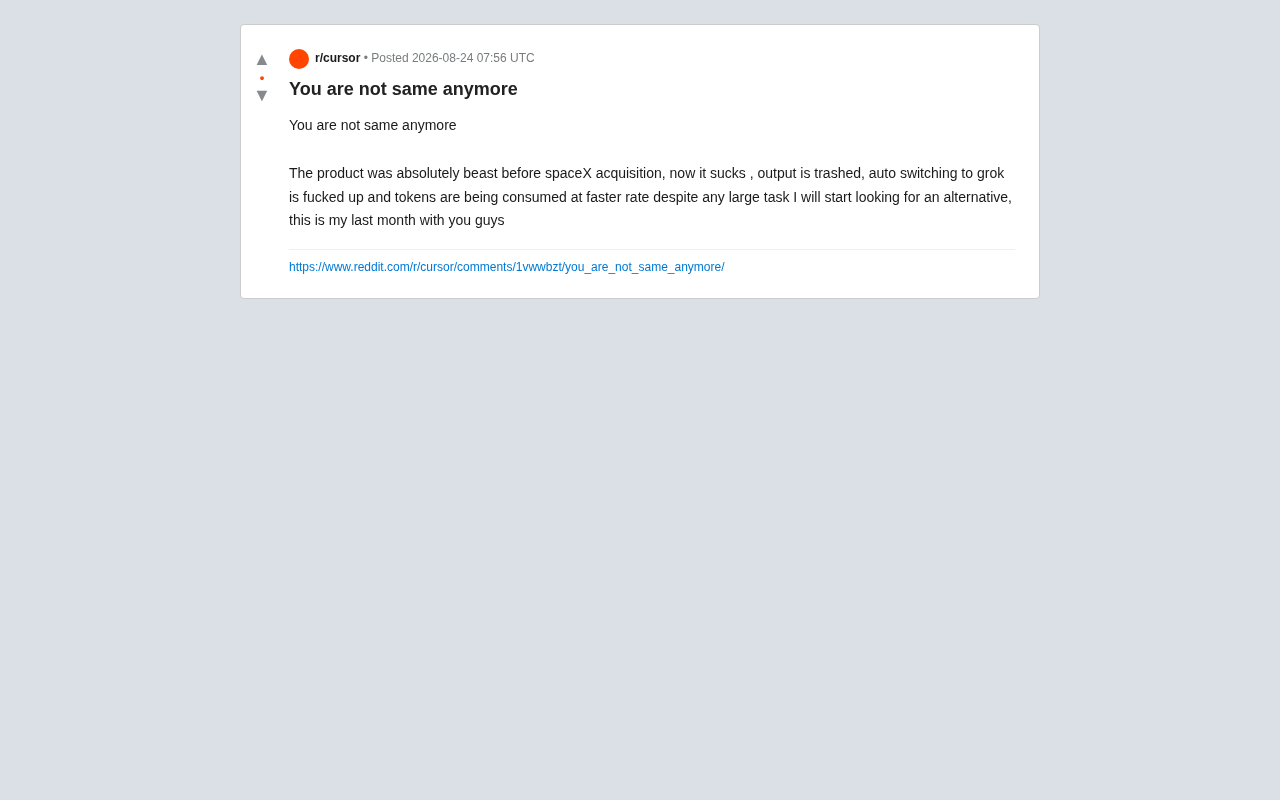
A Reddit complaint about a declining AI coding tool exposes the industry's commercialization vs. experience dilemma.
A long-time user's Reddit post lamenting the decline of an AI coding tool after its acquisition highlights an industry-wide problem: the tension between commercial expansion and user experience. From opaque model routing and silent downgrades to unexplained token consumption spikes, the post exposes how cost-cutting measures erode trust. As open-source alternatives lower switching costs, AI tool vendors face a critical challenge in balancing profitability with the transparency and quality users demand.
A Reddit Complaint That Sparked Reflection
Recently, a long-time user of an AI coding tool posted a strongly worded thread on Reddit with a blunt title: "You are not same anymore." The post quickly resonated with the community and sparked widespread discussion, becoming a microcosm of the ongoing debate around AI coding tool user experience.
The poster's core frustrations can be boiled down to a few key points: the product was a "beast" before it was acquired, but now it "sucks." He specifically cited declining output quality, a chaotic mechanism for auto-switching to the Grok model, and noticeably faster token consumption even without running large tasks. He ended with an ultimatum: "I will start looking for an alternative. This is my last month with you."
While the post is emotional, it reflects a widespread and thought-provoking phenomenon in the AI tool industry — the tension between commercial expansion and user experience.
From "Beast" to "Bust": What Are Users Actually Experiencing?
A Noticeable Drop in Output Quality
The most direct complaint was that "output is trashed." For AI coding and content generation tools, output quality is the core value proposition. When a user's sentiment shifts from "amazed" to "disappointed," it usually means something has changed in the underlying model, routing strategy, or prompt engineering.
What you might not realize is that many AI tools, in their early days, spare no expense to provide the most powerful models and optimal configurations in order to capture market share. But as the user base grows and cost pressures mount, vendors often resort to model downgrades, request throttling, and routing optimizations to control spending. These changes look like optimizations on a financial statement, but they can be disastrous for user experience.
Auto-Switching Models Triggers a Trust Crisis
The post's complaint that "auto switching to grok is fucked up" deserves special attention. Auto model switching refers to the practice where a tool automatically routes requests between different large language models based on task type, server load, or cost considerations.
This requires a deeper explanation of Model Routing, a critical technical concept. Model routing is one of the core components in modern AI platform architecture. Its basic principle involves placing an intelligent dispatch layer between user requests and multiple backend LLMs, dynamically deciding which model should handle a given request based on multidimensional factors such as task complexity, context length, current server load, and cost budgets. For example, simple code completions might be routed to smaller, faster models, while complex architectural design questions are sent to larger flagship models. In theory, this mechanism can achieve a Pareto optimum between cost and quality. In practice, however, setting the right thresholds for routing strategies, accurately assessing model capabilities, and correctly interpreting user intent are all extremely challenging. When the routing logic goes wrong, users end up with the frustrating experience of asking a complex question and receiving a superficial answer.
Some background on the Grok model mentioned in the post is also warranted. Grok is a series of large language models developed by xAI (the AI company founded by Elon Musk), known for its relatively aggressive training strategies and distinctive style. The Grok series has gone through multiple iterations, including Grok-1, Grok-1.5, and Grok-2, progressively improving its capabilities in reasoning, coding, and multimodal tasks. Within the AI tool ecosystem, Grok has been integrated by some platforms as an optional backend model, with API pricing typically lower than top-tier models like Claude and GPT-4. However, for specialized tasks like code generation, a perceptible quality gap still exists between Grok and these flagship models — which is the core reason users are upset about being "auto-switched to Grok."
The design intent behind model routing is sound — use cheaper models for simple tasks and powerful models for complex ones, balancing cost and performance. But the problem is that when the routing logic is opaque and the switching feels arbitrary, users feel like they've lost control. The high-quality output they expected may have been silently downgraded to a weaker model, while they're still paying full price.
Abnormally Fast Token Consumption
The third complaint is about accelerating token consumption. The user explicitly stated that even without running large tasks, tokens were being consumed rapidly. This strikes at a user's most sensitive nerve — cost.
To understand this issue, you first need to understand the underlying mechanics of token-based billing. A token is the basic unit that large language models use to process text — roughly speaking, it's a word or part of a word. In English, one token corresponds to approximately 4 characters or 0.75 words; in Chinese, a single character is typically encoded as 1-2 tokens. AI tool billing is usually based on the total number of input and output tokens, with output tokens typically priced higher than input tokens. Notably, "hidden token consumption" that users can't see is a major point of contention: system prompts, conversation history automatically carried in the context window, and the tool's internal Chain-of-Thought reasoning steps all consume tokens, but these costs are often invisible to users. When a platform adjusts the length of its system prompts or enables more complex reasoning chains, users perceive the phenomenon of "I didn't do anything, but my quota shrank."
Whether under a subscription model or pay-per-use billing, transparency and predictability of token consumption form the foundation of user trust. When users feel like they're "spending money for no apparent reason," churn is almost inevitable.
The Growing Pains of Commercialization
A Shift in Product Philosophy After Acquisition
The post repeatedly points to an acquisition as the turning point when the experience deteriorated. While the specific details and the accuracy of the user's account remain to be verified, the narrative itself is highly representative: when an independent, focused product is acquired by a large company or backed by capital, its product philosophy often undergoes a subtle but profound transformation.
Before an acquisition, a team might focus on making the product exceptional, using the best possible experience to retain core users. After an acquisition, KPI-driven goals, cost controls, and scaling objectives may replace "exceptional experience" as the top priority. For early, loyal users, this shift is felt acutely.
The End of the Free Ride
Much of the success of AI tools has been built on a "cash-burning subsidy" period. During this phase, users experience premium service that is subsidized by capital — service that far exceeds its actual cost.
The "cash-burning subsidy" model in the AI tool industry follows the classic growth playbook of the internet industry, but with a far more extreme cost structure. Take large language models as an example: the per-inference cost of a GPT-4-level model is far higher than the marginal cost of traditional internet services. Industry estimates suggest that the actual cost to a vendor of providing a single high-quality AI coding assistance session can be several times what the user pays. The sustainability of this business model hinges heavily on several assumptions: that model inference costs will continue to drop with hardware improvements, that a larger user base will enable better pricing leverage, and that free users can eventually be converted into high-value paying customers. When these assumptions fail to materialize on schedule — or when venture capital tightens and acquirers demand profitability — a "downgrade" in user experience becomes almost unavoidable.
But the subsidy period always ends. When vendors need to turn a profit, tightening quotas, downgrading models, and accelerating billing are near-universal practices across the industry. The "experience gap" users feel is essentially the process of reverting from subsidized pricing to real pricing. This is also why more and more users are exploring alternatives like local deployment and open-source models.
It's worth noting that the rapid rise of open-source large language models is profoundly reshaping this competitive landscape. Open-source models like Meta's LLaMA series, Mistral AI's Mixtral, and DeepSeek's DeepSeek-V3/R1 have been steadily approaching — and in some scenarios even surpassing — closed-source commercial models in tasks like coding and reasoning. Combined with the maturation of quantization techniques (such as GGUF format and AWQ quantization), users can now run practically useful coding assistance models locally on consumer-grade GPUs or even Apple M-series laptops. Tools like Ollama and LM Studio have further lowered the technical barriers to local deployment. This trend means that when commercial AI tools pursue profitability by downgrading models or raising prices, technically capable users have the ability to "build their own alternatives" — continuously eroding vendors' pricing power and user lock-in.
Lessons This Negative Review Offers the AI Tool Industry
Transparency Is the Foundation of User Trust
Regardless of commercial considerations, the worst thing a vendor can do when adjusting its product strategy is to "silently downgrade." If changes to model routing, token billing, or performance limits are not transparent to users, even reasonable changes can severely damage trust.
The truly mature approach is to clearly inform users which model they're currently using, how tokens are billed, and how the routing logic works — and to give users a degree of choice. Only when users are informed can vendors manage expectations and prevent emotionally-driven churn.
The Word-of-Mouth Value of Core Users Cannot Be Ignored
The person who posted this thread is precisely the type of core user who has been there since the "beast" era. These users have the deepest understanding of the product, the sharpest perception of changes, and serve as critical nodes in community word-of-mouth.
Losing an ordinary user may be inconsequential, but losing a cohort of angry core users can create a negative word-of-mouth effect that far exceeds their direct payment value.
The Competition for Alternatives Is Reaching a Fever Pitch
The user's casual remark — "I will start looking for an alternative" — reveals a harsh reality of the current AI tool market: alternatives are within arm's reach, and user switching costs are declining.
The switching costs between AI coding tools are being structurally reduced across multiple dimensions. First, at the interface level, most AI coding tools are built on similar interaction paradigms — chat-based dialogue, inline code completion, codebase indexing — giving users an extremely short learning curve. Second, at the data level, users' core assets — their codebases — are stored in version control systems like Git and are not locked into any single AI tool. Third, at the ecosystem level, multiple competing plugins in the extension marketplaces of mainstream IDEs like VS Code can be swapped with a single click. This low-switching-cost market structure means that competition among AI tools is essentially a "continuous experience race," where user loyalty depends heavily on satisfaction with each individual interaction rather than sunk costs. Any significant drop in experience quality can trigger immediate user churn.
With open-source model capabilities improving rapidly and a growing field of competitors, no single tool can rely on "exclusive advantages" to lock users in. Whoever finds the best balance among value-for-money, transparency, and experience will be the one to truly retain users.
Conclusion
This Reddit complaint may be short, but it serves as a mirror reflecting the universal dilemma the entire AI tool industry faces during commercialization. The gap between "amazement" and "disappointment" is usually not a regression in technical capability, but a misalignment between business logic and user expectations.
For vendors, the key to long-term competitiveness lies in how to maintain user trust while pursuing profitability, and how to find a balance between cost control and experience quality. For users, it's a reminder that when choosing AI tools, beyond looking at the current experience, perhaps we should pay more attention to whether a vendor's business model is sustainable and whether its product strategy is transparent.
After all, in an era brimming with alternatives, users "voting with their feet" is the most powerful feedback of all.
Related articles
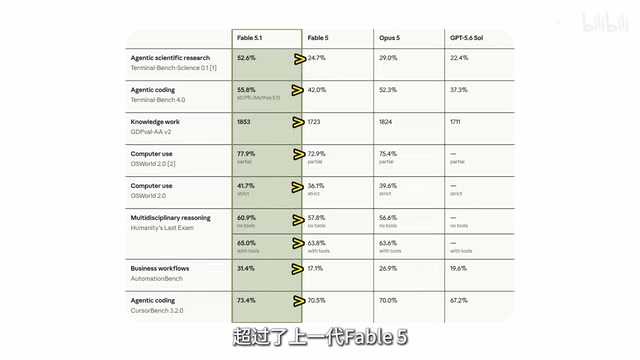
Fable 5.1 and Mythos 5.1 Launch Together: Topping Eight Benchmarks with 45% Cost Reduction
Fable 5.1 and Mythos 5.1 launch together, topping all eight benchmarks. Protein design success rate hits 3-5x industry average. Cached read prices cut 75%, reducing Agent task costs by up to 45%.
Sunday Club: A Weekly Hand-Picked List to Combat Information Overload Through Human Curation
Sunday Club is a minimalist product discovery tool that delivers a hand-curated list every Monday — no algorithms, no streaks. A deep dive into its human curation model and design philosophy.
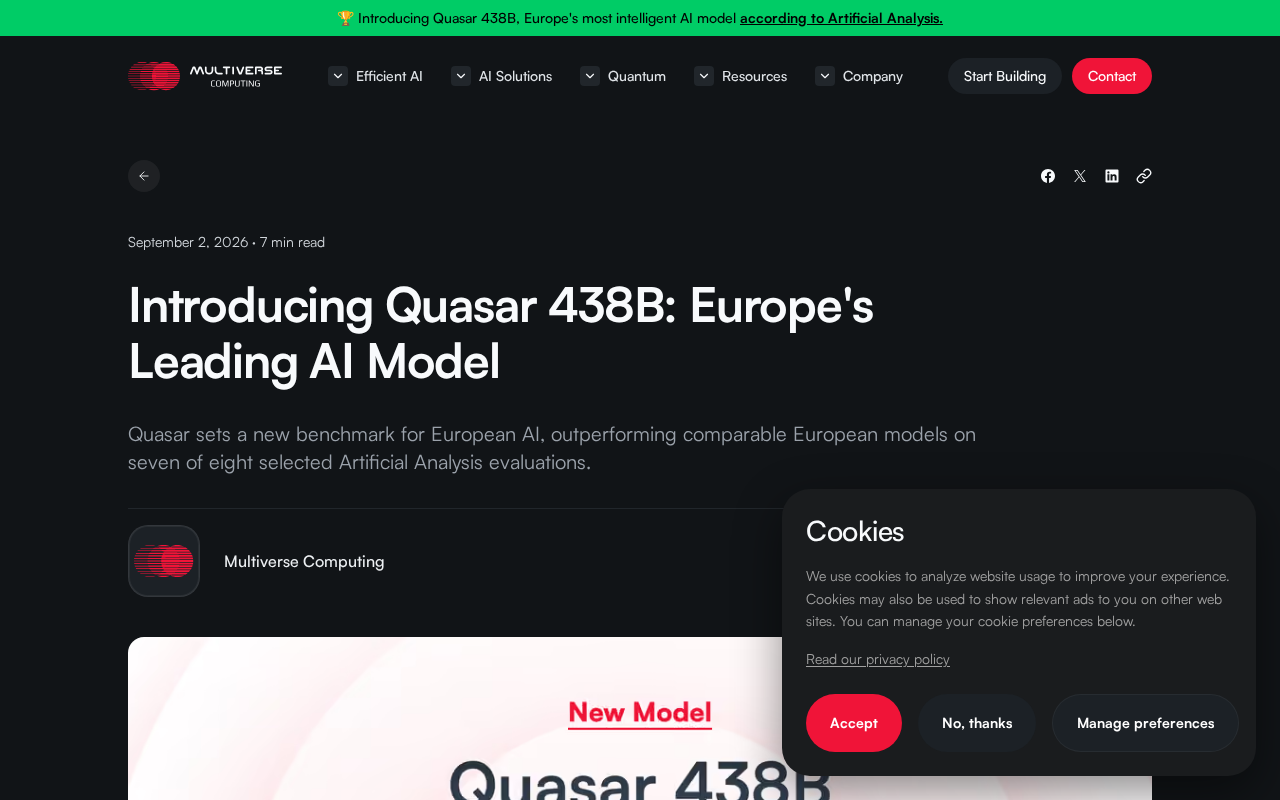
Quasar 438B: Europe's New AI Sovereignty Flagship — A Deep Dive into the 438-Billion-Parameter Model
Quasar 438B is a 438-billion-parameter European large model branded as Europe's leading AI. This article analyzes its global positioning, AI sovereignty implications, and real-world prospects.