When Outside Xbox Meets Blood on the Clocktower: A Legion Match in Minecraft

Minecraft Blood on the Clocktower Legion game: three good players vs. all-evil roster, with an endgame ghost-vote counterkill.
This article records a Minecraft Blood on the Clocktower Legion match featuring Outside Xbox's Ellen and Mike. The Legion mechanic makes most players evil and all register as Minions; the Storyteller decides kills, and the evil side must fake infighting and win good votes. With three good players almost all in information roles, the Drunk and Poisoner make every clue ambiguous, causing constant infighting: Duncan volunteers to die, Ravs suspects he is drunk, and Boof's failed Slayer ability is questioned. In the endgame, Ellen gets four votes but only from evil players, so the execution is invalid and Boof is executed instead. The final reveal shows three good players against an all-Legion roster, one step from victory.
《Blood on the Clocktower》has become a benchmark for social deduction games and has continued to grow in popularity among content creators in recent years. This time, its stage was moved into Minecraft, and Outside Xbox's Ellen and Mike, as special guests, faced a match that could only be described as "information hell": a Legion game.
Legion Mechanics: Making Every Player the Demon
Unlike the classic structure of "a minority of evil players against a majority of good players" in regular games, Legion is a very special demon character in 《Blood on the Clocktower》. Its core rule is: most players belong to the evil team, and every one of them "is" the demon.
According to host Lewis's explanation at the start, this game had three good players, while everyone else was a Legion member. Legion members also register as Minions, which means they show up as "evil" to detection abilities. More importantly, Legion has no night-kill choice—the kills are decided by the Storyteller, and members need to pose as a "normal evil team," distrusting each other and making contradictory claims so that the good players misjudge the situation.
Lewis's strategic advice was very direct: "Don't act like a coordinated team. Fight each other, distrust each other, and make contradictory statements." He also reminded them that if only Legion members vote, the execution will fail—so the evil side must win over at least one good player to vote with them.
《Blood on the Clocktower》's basic rules are built on a team ratio of "a majority of Townsfolk (good) and a minority of Minions and Demons (evil)," with the good side gradually identifying the demon through daytime discussion and execution, and nighttime character abilities. Legion (Legion) is an experimental demon from the "Travelers and Special Characters" expansion, and its design purpose is precisely to reverse this premise: all Legion members share the evil team and Minion registration, and any member can be treated as "the demon" to satisfy the kill condition. Since there is no unified night-kill phase, the Storyteller decides deaths on behalf of the evil side, which allows the evil side to devote all their energy to daytime disguise and internal conflict performances, and also completely invalidates the good side's conventional deduction template (finding the one demon).
Information Roles Everywhere: A Guessing Game of "Who's Drunk"
The good team composition in this game was quite interesting—almost everyone was an "information" role, but the reliability of that information was discounted at every layer.
Ellen's Steward is a typical first-night information role, learning that Ravs is good. She repeatedly emphasized the limits of this information during the game—"I only know this one thing, and after that it's useless." Ravs was the Village Idiot, able to check one player's alignment each night, but there could be multiple Village Idiots in play, one of whom is the Drunk and receives false information. Ravs checked Mike on the first night and got "evil," then checked Ellen and got "good," but he always suspected he was the one who was drunk.
Kirsty claimed to be the Tea Lady, whose rule is that if two living neighbors are both good, they cannot die. But Duncan died the next day, making her suspect she was the Drunk or poisoned. Boof claimed to be the Slayer and publicly tried to kill Ravs but failed—this could mean she was drunk, poisoned, or that Ravs was not the demon.
Mike, as a beginner, got the Clockmaker and learned that the distance between the demon and their nearest Minion was "one step." This information later became one of the core clues in the deduction, but was also used by the evil side to steer the direction.
According to analyses by multiple 《Blood on the Clocktower》 commentators on Bilibili and YouTube, this kind of setup—"many information roles + Drunk + Poisoner"—is essentially information noise deliberately created by the designers, so that every clue has at least two possible explanations.
Internal Strife on the Good Team: Starting with Duncan's Death
On the first day, Duncan (the Nightwatchman) considered himself useless because his ability had not taken effect, and volunteered to be executed. He claimed to have checked Ravs on the first night but received no feedback, suggesting he might be the Drunk or poisoned. In a regular game, this might have been a reasonable "sacrifice a pawn to save the king" move, but in a Legion game it gave the evil side enormous room to maneuver.

The good side's chain of reasoning was roughly: Duncan's death meant that the Tea Lady Kirsty was either poisoned or the Drunk; the Clockmaker information pointed to an "adjacent" structure; Ravs's Village Idiot checks pointed to both Mike and Boof. But the problem was that every clue failed to close. As Ravs said during discussion: "I only have two evil names: Boof and Mike, and nothing else."
Ellen's Steward claim was also publicly questioned by Boof: "Steward is a very easy role to fake. You just say, 'I was told someone is good,' and that person happens to be your evil teammate." Ellen's response was self-deprecating: "Maybe I'm just bad at this game."
Endgame Reversal: Ghost Votes and the Legion's Counterkill
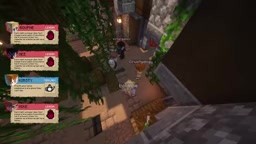
By the endgame, only Ellen, Ravs, and Boof remained. Boof (actually a Legion member) nominated Ellen, and Ellen countered by nominating Boof. The vote result was that Ellen received four votes (including ghost votes), reaching the execution threshold, but the host then revealed: only the evil team voted for Ellen, so the nomination was invalid, and the second-highest vote, Boof, was executed instead.
The final reveal: Ellen, Ravs, and Kirsty were the only three good players, and everyone else was a Legion member. The good team was one step away from victory—if Ellen had been executed, the good players could have won.
"You almost won," the host summarized. "Just barely."
"Ghost votes" refer to dead players still retaining one vote, which they can cast in later nominations. In standard games, ghost votes are an important resource for the good team to reach the execution threshold; but in Legion games, because the evil side has the numerical advantage, the proportion of evil members among dead players is also high, making ghost votes easier for the evil side to coordinate in a concentrated way. The key in this game was that Legion members threw all their ghost votes onto Ellen, creating the illusion of a "high-vote pass," while the host, under the rule that "if only the evil team votes, the execution is invalid," declared the nomination void—thus the evil side both consumed the good team's execution opportunity and redirected the target to the second-highest vote, completing the counterkill.
What This Match Shows
From a game design perspective, Legion is 《Blood on the Clocktower》's maximal use of "information asymmetry." It overturns the default assumption of "a good majority" and turns social deduction from "find the minority of bad people" into "find the minority of good people among a majority of bad people." For content creators, this kind of match naturally has dramatic tension—the beginner's confusion, the veteran's misjudgment, and the contrast at the final reveal are all excellent viewing experiences.
According to consensus from multiple independent commentary sources, the core appeal of a Legion game is whether the good side can realize that "the player count itself may be a lie." In this game, Kirsty once shouted, "I hate the Legion world, I choose to ignore it," which precisely illustrates how hard it is to break through this psychological defense. Ellen, as a player encountering 《Blood on the Clocktower》 for the first time, was pushed onto the execution block with almost no understanding of the rules and then miraculously survived, adding the most dramatic touch to this Minecraft match.
Background Notes
The "Drunk" and "Poisoner" are the two core mechanics in 《Blood on the Clocktower》 that create information noise. The Drunk believes they are some Townsfolk role, but their ability is actually ineffective; the Storyteller gives them plausible but false information. The Poisoner, meanwhile, chooses one player each night, making their ability ineffective that night and potentially giving them false results. The combined effect is that any piece of information may be "true information," "the Drunk's false information," or "false information after being poisoned," and players must cross-verify multiple clues to increase confidence. In a setup like this game, where information roles are crowded together, the density of false information is deliberately amplified—this is the rules basis for the host's statement that "every clue has at least two possible explanations."
One-line Summary
A Minecraft 《Blood on the Clocktower》 Legion game: three good players against an all-evil roster, with a ghost-vote counterkill in the endgame.
Paragraph Summary
This article records a Minecraft 《Blood on the Clocktower》 Legion match featuring Outside Xbox's Ellen and Mike. The Legion mechanic makes most players part of the evil team and all register as Minions; the Storyteller decides kills instead of the demon, and the evil side must fake internal conflict and win over good players' votes. In this game, the three good players were almost all information roles, but the presence of the Drunk and Poisoner meant every clue had at least two explanations, so the good side was constantly consumed by infighting: Duncan volunteered to die, Ravs always suspected he was drunk, and Boof's failed Slayer ability was questioned. In the endgame, Ellen was nominated and received four votes, but because only the evil side voted, it was invalid, and Boof was executed instead. The final reveal showed three good players against an all-Legion roster, with the good side just one step away from victory.
Related articles

OpenAI Partners with Shield: How the Astra Agent Revolutionizes IT Troubleshooting
OpenAI and Shield launch the Astra agent, which autonomously logs into computers and legacy systems to fix IT issues in real time, 35-40% faster than traditional models, with humans involved only when judgment is needed.

iPhone Duo Battery Life Tested: One Charge a Day Is Unavoidable, and the Large Screen Is the Culprit
iPhone Duo battery test: heavy use needs at least one charge a day, and about 30% remains after 6.5 hours of screen-on time. How often the large screen is unfolded is key; a MagSafe battery pack helps, and long-term degradation is also worth watching.

Kimi K3.1 Pro Open-Sourced: 2.8 Trillion Parameters Close In on Opus
Moonshot releases the open-source MoE model Kimi K3.1 Pro, with 2.8T total parameters and 104B activated, trailing Opus 5.5 by under 1 point on Terminal Bench 4.0.