White House National Cyber Director Departure Raises Questions About Cybersecurity Policy Direction

The White House national cyber director is departing, raising concerns about U.S. cyber policy continuity.
According to a brief Hacker News post, the White House national cyber director is departing, but specific reasons and succession plans have not been disclosed. The position, established in recent years, coordinates federal cybersecurity strategy and serves as the president's chief advisor. The departure may affect policy momentum, team stability, and external signals. The article notes that amid rising ransomware, critical infrastructure, supply chain, and AI threats, cybersecurity will not cool down due to personnel changes, and the new director will face urgent challenges in strategy implementation, public-private collaboration, and state-sponsored hackers. Given limited information, continued attention to White House announcements and industry reactions is advised.
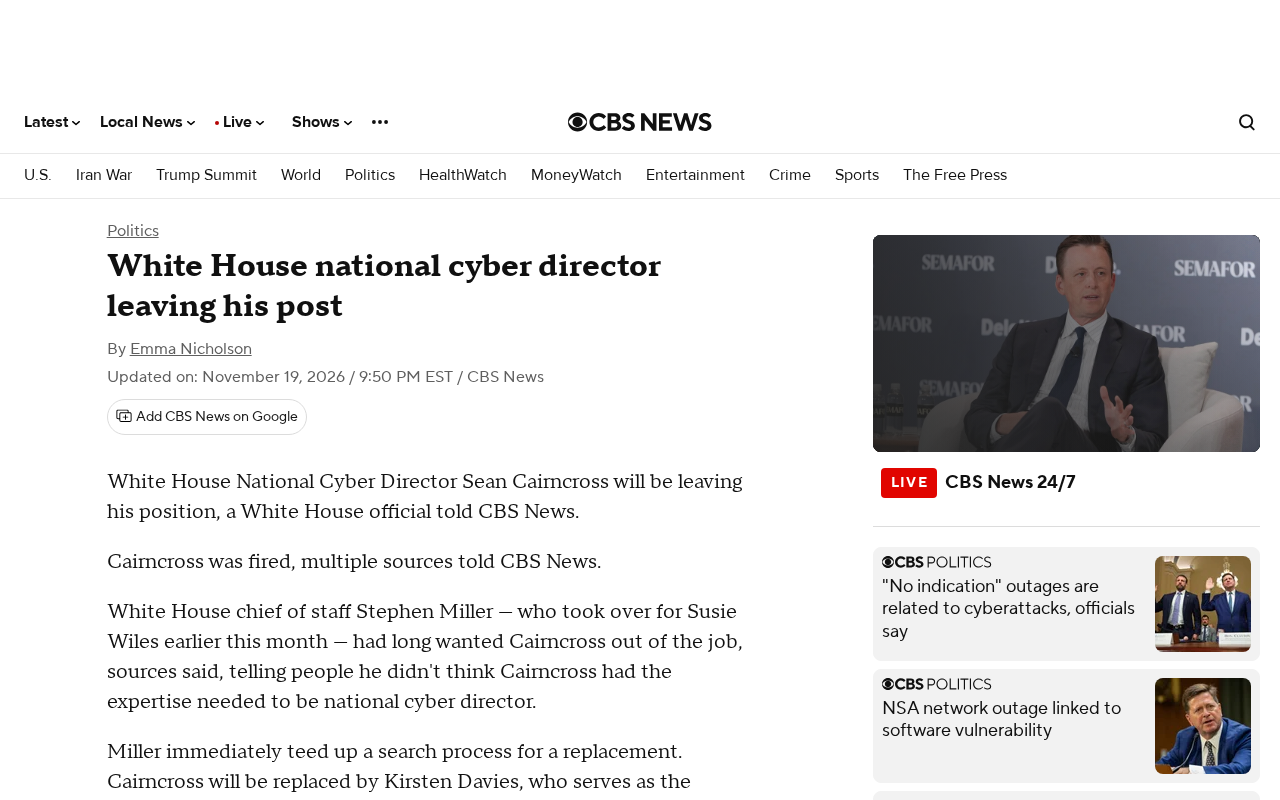
According to a brief post on Hacker News, the White House national cyber director is departing. The post received 4 points on Hacker News with no comments. Although the information is limited, this personnel change comes at a time when cybersecurity is increasingly a core national security issue and warrants interpretation from multiple angles.
Position Background and Responsibilities
The position of White House national cyber director was established in recent years to coordinate cybersecurity strategy across federal agencies and serve as the president's chief advisor on cybersecurity matters. The role sits within the White House National Security Council and is responsible for formulating national-level cyber defense policy, promoting public-private cooperation, and responding to major cyber incidents.
The importance of this position lies in its need to coordinate resources across agencies and maintain communication with Congress, the private sector, and allies. As a result, the director's departure often signals that policy continuity and priorities may face adjustment.
National Cyber Director (NCD) is a position within the Executive Office of the President of the United States, created under the National Defense Authorization Act for Fiscal Year 2021 and housed within the White House National Security Council. The first director took office in 2021. The role's core functions include: coordinating cybersecurity policy and budgets across federal agencies, developing and overseeing implementation of the national cyber strategy, advancing public-private cooperation, and representing the United States in international cyberspace governance. Unlike the traditional federal Chief Information Officer (CIO) or the Cybersecurity and Infrastructure Security Agency (CISA) under the Department of Homeland Security, the NCD focuses more on cross-agency policy coordination and strategic planning rather than specific technical operations or incident response. The creation of this position reflects the U.S. policy orientation of elevating cybersecurity to the national strategic level.
Possible Impacts of the Departure
The departure news itself did not disclose specific reasons. But drawing on similar past personnel changes, several potential impacts can be inferred:
- Pace of policy advancement: A vacancy in a key position could delay ongoing cybersecurity initiatives, especially during legislative and budget cycles.
- Agency morale and talent drain: Leadership changes may affect team stability, particularly in an environment of intense competition for cybersecurity talent.
- External signals: Allies and adversaries alike may view the personnel change as a signal of U.S. cyber policy priorities.
However, given the lack of official statements and details on successor arrangements, it is currently difficult to judge the actual extent of the impact. The White House typically arranges an acting director during transitions to ensure day-to-day operations.
Cybersecurity Issues Continue to Heat Up
Regardless of who succeeds, the intensity of cybersecurity issues will not fade. In recent years, ransomware attacks, critical infrastructure protection, supply chain security, and new threats posed by artificial intelligence have all forced governments to increase investment. In the United States, multiple executive orders and legislative proposals involve cyber defense.
The role of the national cyber director is therefore even more critical, requiring a balance between security and privacy, innovation and regulation. The new director will face a series of urgent challenges, including how to implement existing cyber strategies, how to collaborate with technology companies, and how to respond to threats from state-sponsored hackers.
Ransomware attacks refer to malicious cyber activity in which attackers encrypt victims' data or systems and demand payment of a ransom to restore access. In recent years, such attacks have evolved from targeting individual users to systemic threats against critical infrastructure, healthcare systems, and large enterprises. Supply chain security concerns the risk that software and hardware may be implanted with malicious code or contain vulnerabilities during development, distribution, and deployment, with the SolarWinds incident as a typical example. Critical infrastructure protection involves lifeline systems such as energy, water, transportation, and finance, where cybersecurity vulnerabilities can cause large-scale effects in the physical world. The introduction of artificial intelligence has brought new risks such as deepfakes, automated attacks, and model security. Together, these issues form the core challenges of current national cyber strategy.
Limited Information, But Worth Continued Attention
A quick note: the current material comes only from a brief post on Hacker News, with no further details. For those following technology policy and cybersecurity, this personnel change is a signal worth tracking. Going forward, it is worth watching White House official announcements, congressional hearings, and industry reactions to gain a more complete picture.
Related articles

Jensen Huang Returns to Nvidia: The Power Game Behind an "Aggro Reset"
Nvidia's board reappointed Jensen Huang as CEO less than two weeks after his scandal-driven resignation. This analysis explores the board's decision-making, Trump's political intervention, media power failure, and market reaction behind the dramatic return.

Why Voice AI Can't Understand Kenyans' Everyday Conversations
Swahili speech recognition hits 3.24% error on read text, but everyday Kenyan speech mixes English, Sheng slang, and accents—leaving mainstream voice AI struggling.

Data Centers Build Their Own Natural Gas Plants: AI Compute's Breakout Around a Decade-Long Grid Wait
Grid interconnection approvals can take a decade, so xAI and others are building off-grid natural gas plants to power AI clusters. This article analyzes the drivers, costs, and impact of behind-the-meter generation on AI infrastructure.