Why AI Is Not a "Normal Technology"
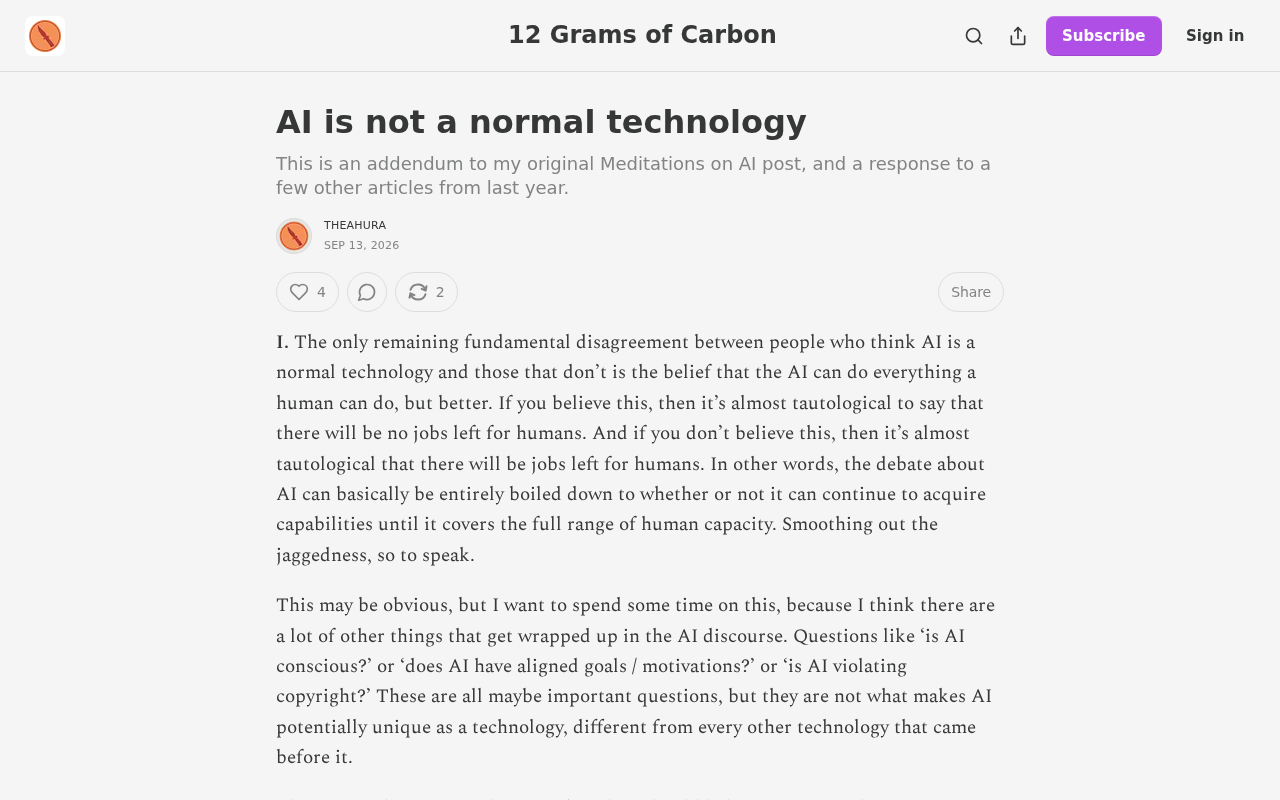
Is AI a 'normal technology'? The question reveals deep divides over risk, governance, and how to read technological change.
Two opposing camps debate whether AI is a 'normal technology.' One cites historical diffusion patterns and argues existing governance frameworks are adequate; the other highlights AI's recursive self-improvement, cross-domain generality, and potentially irreversible risks, calling for precautionary intervention. The core disagreements span three dimensions: whether capability gains equal real-world change, whether risks are gradual or systemic, and whether adaptive regulation or the precautionary principle should apply. The article ultimately advocates rejecting the binary — assessing AI's similarities and differences dimension by dimension, addressing near-term harms while preserving capacity to respond to longer-term risks.
A Proposition That Sparked Debate
The Hacker News community recently erupted in discussion around a provocative claim: "AI is not a normal technology." This deceptively simple proposition cuts to one of the most fundamental divides in today's tech world — how exactly should we position artificial intelligence within the broader arc of human technological history?
On the surface, AI looks like any other tech wave — much like electricity, the internet, or mobile communications before it. But those who argue AI is not normal contend that mapping it onto any previous technological revolution risks underestimating its uniqueness and potential impact. The real value of this debate isn't in arriving at a definitive answer — it's in forcing us to reexamine our default assumptions about the nature of technology itself.
The "Normal Technology" Camp vs. the "Not Normal" Camp
This debate features two sharply opposed positions, and understanding their differences helps clarify what's really at stake.
The Case for AI as a "Normal Technology"
Some researchers prefer to treat AI as a "normal" general-purpose technology. Here, "normal" carries no pejorative connotation — it simply means AI follows the same diffusion patterns as other major technologies throughout history: from invention to adoption to societal impact, with long lag times and considerable institutional friction in between.
The core argument here is that a technology's social impact is constrained by real-world adoption speed, not by capability growth in the lab. Even if model capabilities are advancing rapidly, truly embedding AI into critical sectors like healthcare, law, and manufacturing will take years, if not decades. Proponents of this view therefore advocate governing AI with the same frameworks we apply to other technologies, to avoid policy overreactions driven by exaggerated fear.
The Case for AI as "Not Normal"
The opposing camp emphasizes several distinctive properties of AI: it is a technology capable of self-improvement, it possesses a degree of autonomous decision-making, and it may reshape society at speeds and scales that far exceed anything we've seen before. When a technology begins participating in the production of knowledge itself — even contributing to the design of next-generation technologies — historical analogies start to break down.
This camp's worry is that treating a potentially disruptive variable with the relaxed mindset reserved for "ordinary" technologies could leave humanity flat-footed when risks materialize.
The Real Disagreements Beneath the Surface
Strip away the surface debate, and three deeper questions emerge.
First, there is the decoupling of capability and impact. Does progress on AI benchmarks actually translate into real-world transformation? Skeptics point out that no matter how capable a model is, it still has to pass through deployment, regulation, and trust-building — social change is far slower than a technical demo.
Second, there is the nature of risk. The risks of ordinary technologies are typically gradual, manageable, and reversible. What AI proponents fear is a kind of systemic risk that could be irreversible and difficult to predict. These two conceptions of risk call for entirely different policy toolkits.
Third, there is the choice of governance paradigm. If AI is a normal technology, existing regulatory frameworks, market mechanisms, and industry self-regulation are largely sufficient. If it is not normal, we may need unprecedented international coordination and precautionary intervention.
Why This Discussion Matters
Whichever side you're on, the practical stakes of this debate are clear: it directly shapes how we allocate attention and resources.
Treating AI as a normal technology has the advantage of avoiding capture by apocalyptic narratives, keeping the focus on visible, concrete problems — job displacement, algorithmic bias, data privacy, misinformation. The downside is a potentially sluggish response when genuine systemic risks emerge.
Treating AI as not normal allows for early preparation and cautious progress, but risks stifling innovation through over-regulation, or misallocating resources toward long-term risks that remain uncertain.
The sheer volume of debate on Hacker News is itself a signal: even among technologists, there is no consensus on how to position AI. That alone tells us the question is far from settled, and multiple perspectives retain legitimate standing.
A More Pragmatic Middle Ground
Perhaps the most constructive stance is to reject the binary of "normal vs. not normal" altogether. AI may well follow ordinary technology diffusion patterns in some dimensions — constrained by adoption speed, institutional inertia, and real-world friction. But in other dimensions, it possesses autonomy and self-reinforcing potential that ordinary technologies simply do not.
For policymakers, this means both addressing concrete near-term harms on the ground and preserving the capacity to respond to low-probability, high-impact long-term risks. For developers and companies, it means actively taking responsibility for deployment — not just racing toward capability breakthroughs.
What truly matters is not slapping a label on AI — "normal" or "not normal" — but understanding in which ways it resembles technologies we already know, and in which ways it is fundamentally different. That understanding is the foundation for making clearer, more grounded judgments.
Note: This article is based on threads from the Hacker News community. Given the limited information in the original post, the analysis of both positions represents an extended exploration of the underlying topic.
Related articles
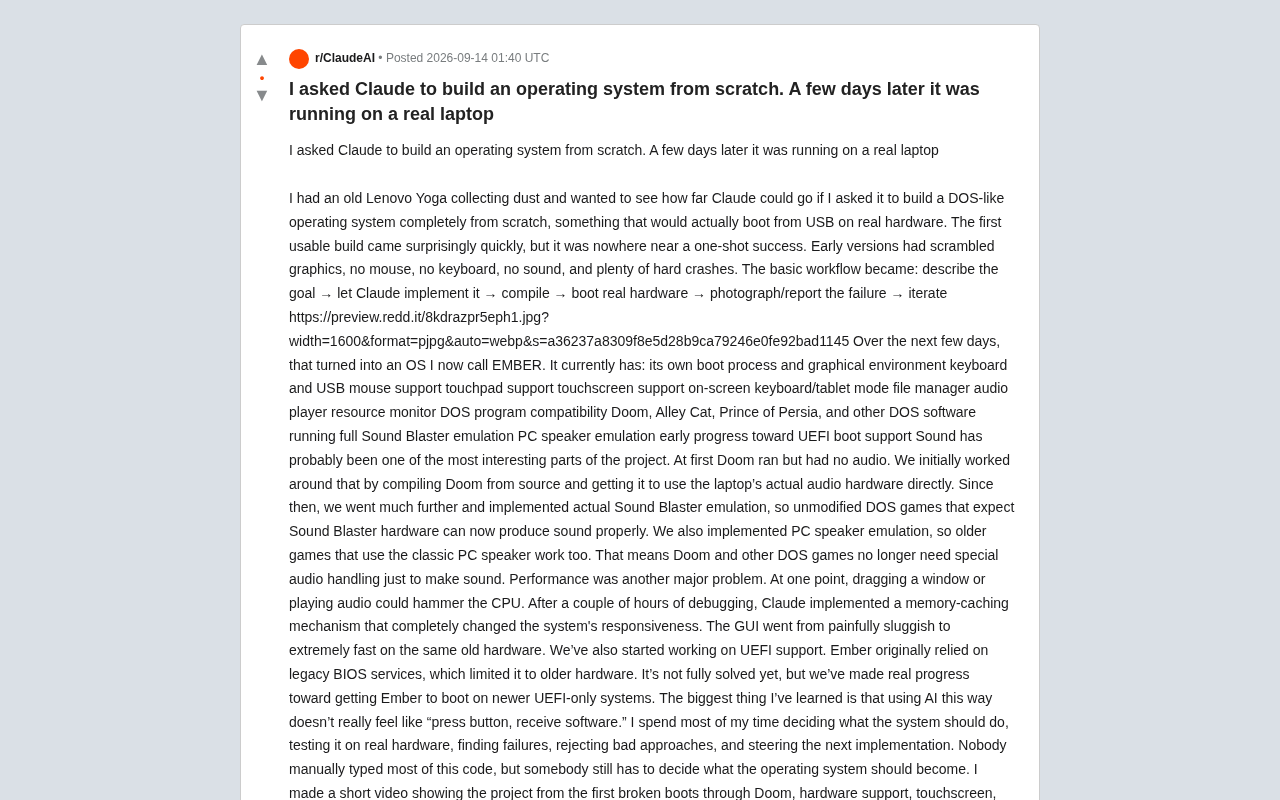
Building an Operating System from Scratch with Claude: How EMBER Ran on a Real Laptop
A developer built EMBER, a DOS-like OS, from scratch using Claude in just days. It runs Doom, emulates Sound Blaster audio, supports touchscreens, and boots on real hardware.
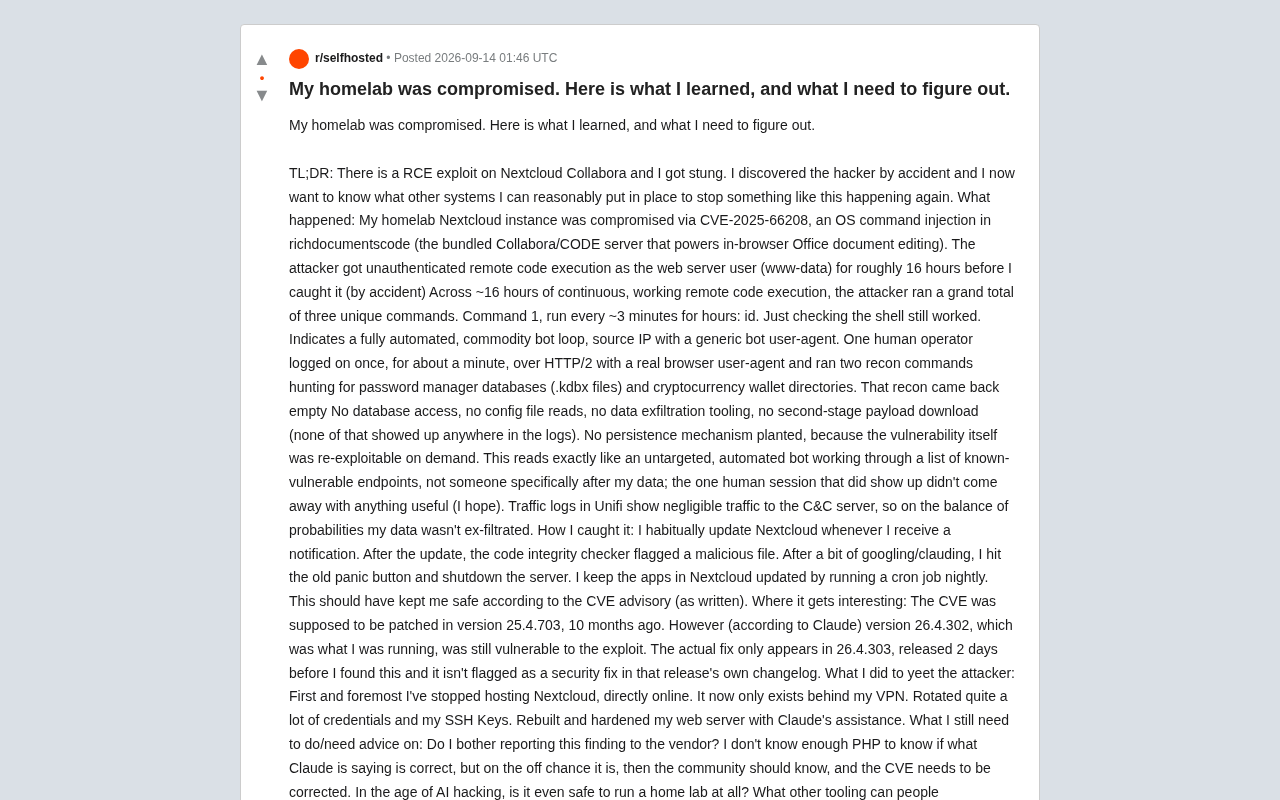
Homelab Compromised: A Nextcloud RCE Incident and Lessons for Home Server Security
A homelab user's Nextcloud instance was breached via CVE-2025-66208. The attacker lurked 16 hours while the official patch advisory was misleading. Key lessons for home server security.
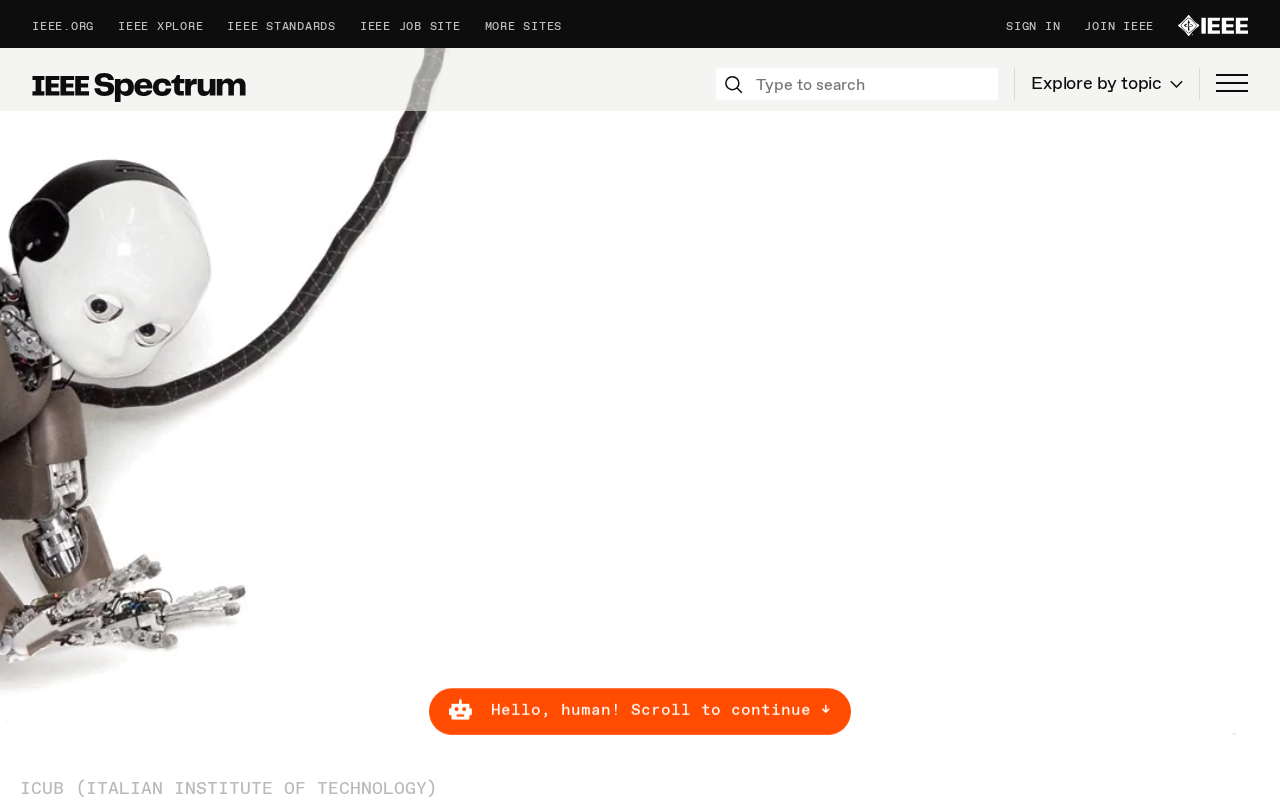
How Far Away Are Home AI Robots? Technical Bottlenecks and Timeline Predictions
When will home AI robots reach ordinary households? We analyze core technical bottlenecks, timeline predictions, and the realistic path from single-function devices to general-purpose assistants.