Why Does Taiwan Dominate the Global Semiconductor Industry? A Deep Dive from Lex Fridman's Conversation with Jensen Huang

Lex Fridman visits Taiwan and talks with Jensen Huang about how engineer culture powers global AI compute.
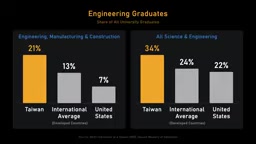
Lex Fridman travels to Taiwan for Computex and speaks with NVIDIA CEO Jensen Huang, trying to explain why this island produces more than 90% of the world's most advanced semiconductors. He argues Taiwan's advantage comes not only from capital and technology, but is deeply rooted in cultural values and an education system that highly respects engineering, creating an industrial ecosystem that is hard to replicate. The article notes that this concentration creates major geopolitical tension, with Lex advocating that all sides "compete but remain friends" and emphasizing person-to-person understanding through dialogue and everyday exchanges. He also praises Huang for staying humble and willing to listen despite long-term success. The core conclusion: when engineers are placed at the center of culture for decades, the accumulated momentum can define an era's technological infrastructure.
How One Island Powers Global AI Compute
Lex Fridman set foot on Taiwanese soil for the first time, with one of his goals being to speak face-to-face with NVIDIA founder and CEO Jensen Huang. He used a weighty phrase to describe the company Huang leads — "the most valuable company in the world, and one of the most influential companies in the history of human civilization." On this trip he also attended Computex, the massive tech expo held in Taipei, which in his words was "an ocean of engineers, at the heart of an engineer's land."
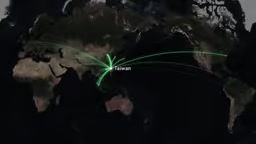
Taiwan's geography is not particularly advantageous — two-thirds of it is mountainous. Yet this island produces more than 90% of the world's most advanced semiconductors. From every computer and every smartphone to every GPU and every AI data center, almost nothing can exist without this place. Lex Fridman said plainly that this level of industrial concentration is "almost impossible to replicate anywhere else in the world."
Advanced process nodes are a core concept in the semiconductor industry, generally referring to chip manufacturing processes at 7 nanometers and below. The more advanced the node, the more transistors can be integrated per unit area, and the greater the chip's compute power and energy efficiency. The high-end GPUs needed for AI training — such as NVIDIA's H100 and B200 — all rely on TSMC's 5nm, 3nm, and even more advanced nodes. ASML's extreme ultraviolet lithography (EUV) machines from the Netherlands are indispensable for mass-producing these nodes, with each unit costing over $100 million. This step is hard to replicate not only because of the extremely high capital threshold (an advanced fab costs about $20 billion), but also because yield ramp-up depends on decades of accumulated process experience and engineer density.
Culture, Education, and the Worship of Engineers
Taiwan's rise in semiconductors was no accident. Lex Fridman offered an analogy: just as when we look at Göbekli Tepe or the Egyptian pyramids, we still cannot fully understand how the ancients built them — Taiwan's dominance in semiconductors carries a similar sense of awe-inspiring "unbelievability."

His answer points to two dimensions: culture and the education system. In Taiwan's education system, engineering is given extremely high social status and respect. This kind of "worship" of engineers did not form overnight, but is the result of long-term cultural accumulation. When generation after generation of the best talent flows into engineering, the depth of the industrial ecosystem is built along with it.
TSMC's "pure-play foundry" model is the key to its dominance. When Morris Chang founded TSMC in 1987, semiconductor companies generally used the IDM (integrated device manufacturing) model, designing and manufacturing chips themselves. TSMC only manufactures and does not design chips, so it does not compete with customers, earning the trust of giants like Apple, NVIDIA, and AMD. This model allowed the world's top chip design companies to concentrate their capital on architectural innovation while handing manufacturing to TSMC, ultimately creating a "winner-takes-all" scale effect. This is also the structural reason why a single island can hold about 60% of the global foundry market and more than 90% of the most advanced process nodes.
Geopolitical Tensions Behind Technological Advantage
The high concentration of the semiconductor industry means enormous technological and geopolitical significance. In the conversation, Lex Fridman made clear that these effects will radiate "for years, decades, even centuries into the future."
He expressed a nuanced position: he hopes all sides will "compete but remain friends." In his view, the key to achieving this lies in mutual understanding — understanding each other's culture and history, and respecting one another on that basis. Economies, technology, and supply chains are already deeply intertwined, and beyond these abstract connections, what is more fundamental is people-to-people exchange: conversation, intermarriage, drinking beer together, eating together. This is exactly what he was trying to do on this trip.
The Silicon Shield is a core concept for understanding Taiwan's geopolitical situation. It means that because the world's most advanced semiconductor capacity is highly concentrated in Taiwan, any military blockade or conflict in the region would cut off critical supplies for global AI, automotive, consumer electronics, and other industries, causing catastrophic shocks to the global economy. This interdependence constitutes a de facto deterrent. However, whether the "Silicon Shield" can truly prevent conflict remains disputed among strategists. In recent years, chip acts pushed by the United States, Japan, and the European Union (such as the CHIPS Act) are essentially attempts to reduce this single-point dependency and reshape supply chain resilience.
Engineer Culture and Human Connection
Lex Fridman specifically mentioned that at Computex, he felt the convergence of outstanding engineers from around the world. To be among them, for him, was "a tremendous honor."

His assessment of Jensen Huang is also worth pondering: after all these years, Huang remains humble, still truly able to listen, and still acknowledges everyone around him — including Lex himself. This quality is especially rare in the highly competitive tech industry. Beyond the conversation, the two also tasted Taiwanese food together, and Lex thought there was no better way to experience Taiwan.
The Lesson of an Island of Engineers
The value of this conversation is not in how much industry-policy analysis it provides, but in the observational framework it offers: semiconductor hegemony is not merely a product of capital and technology; it is deeply rooted in how a society views engineering, how it cultivates talent, and how it translates cultural values into industrial capability. Taiwan's case shows that when a place puts engineers at the center of its culture and keeps doing so for decades, the accumulated momentum is enough to define an era's technological infrastructure. And how to find a balance between competition and coexistence is the next challenge this system leaves to the world.
Göbekli Tepe is a Neolithic site in southeastern Turkey, built around 9600 BCE, roughly seven thousand years earlier than the Egyptian pyramids. Its discovery overturned traditional assumptions in archaeology: previously it was widely believed that complex religious architecture appeared after agricultural societies, but Göbekli Tepe shows that hunter-gatherers were already capable of organizing large-scale collaborative projects. Lex Fridman used it as an analogy for Taiwan's semiconductor industry, meaning that a group with seemingly limited resources nonetheless created complex achievements that contemporaries could not explain. This analogy emphasizes organizational capability and cultural drive, rather than mere technological or capital advantage.
Related articles

OpenAI Partners with Shield: How the Astra Agent Revolutionizes IT Troubleshooting
OpenAI and Shield launch the Astra agent, which autonomously logs into computers and legacy systems to fix IT issues in real time, 35-40% faster than traditional models, with humans involved only when judgment is needed.

iPhone Duo Battery Life Tested: One Charge a Day Is Unavoidable, and the Large Screen Is the Culprit
iPhone Duo battery test: heavy use needs at least one charge a day, and about 30% remains after 6.5 hours of screen-on time. How often the large screen is unfolded is key; a MagSafe battery pack helps, and long-term degradation is also worth watching.

Kimi K3.1 Pro Open-Sourced: 2.8 Trillion Parameters Close In on Opus
Moonshot releases the open-source MoE model Kimi K3.1 Pro, with 2.8T total parameters and 104B activated, trailing Opus 5.5 by under 1 point on Terminal Bench 4.0.