Why Humanizing AI Output Is a Backwards Approach
Disguising AI text as human writing solves the wrong problem — focus on quality and transparency instead.
Humanizing LLM output is a misguided effort that confuses content origin with content quality. AI detection tools are unreliable, and disguising AI involvement raises serious integrity concerns. The smarter approach is to use AI as a thinking partner, focus on genuine content quality, and transparently disclose AI usage rather than wasting effort on making machine text pass as human-written.
Introduction: The Debate Over Making AI Text "Less Robotic"
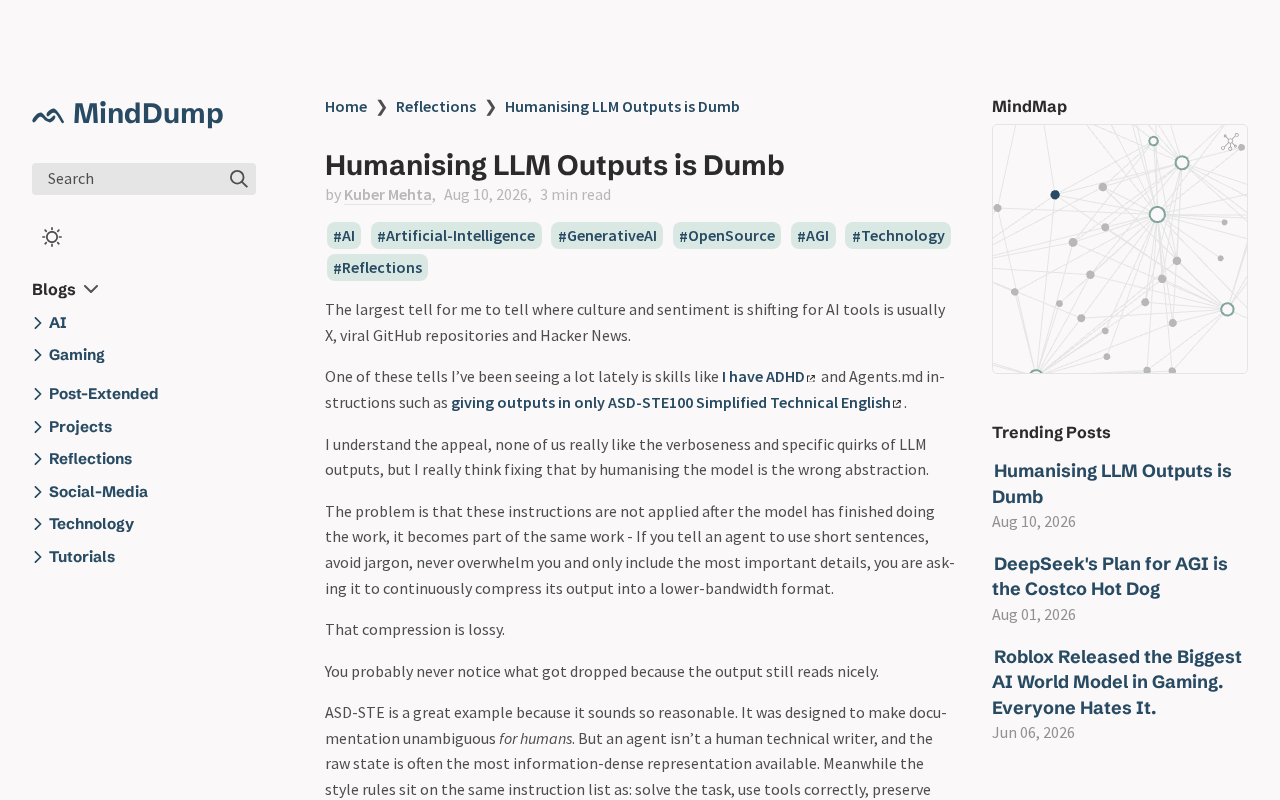
Recently, an article titled Humanising LLM Outputs Is Dumb sparked widespread discussion in the tech community on Hacker News. The core argument targets a popular yet controversial trend: many people are pouring significant effort into making text generated by large language models (LLMs) like ChatGPT and Claude "look more like it was written by a human."
The author argues that this effort to "de-AI" text is, in many scenarios, not just misguided but essentially self-deceptive. This article builds on that argument to explore the logical traps and real needs behind "humanizing LLM output."
What Does "Humanizing LLM Output" Mean?
"Humanizing" refers to using various methods — including prompt engineering, post-processing tools, and even dedicated "AI content rewriters" — to eliminate the telltale "machine-like" characteristics in LLM-generated text.
Prompt engineering involves carefully crafting the instructions fed to an LLM to guide it toward generating output with the desired style and content. Common techniques include role assignment (e.g., "Write in the voice of a seasoned journalist"), few-shot examples, chain-of-thought prompting, and more. Post-processing tools, on the other hand, algorithmically rework the model's output after generation — swapping out high-frequency words, varying sentence structures, inserting colloquial expressions, and so on. Tools like Undetectable AI and Humanize AI have already emerged on the market, forming an entire commercial ecosystem around "anti-AI detection."
What Are the Telltale Signs of AI-Generated Text?
LLM-generated text tends to exhibit recognizable patterns:
- Overuse of filler phrases like "at the end of the day," "let's dive deeper," and "here's an interesting detail"
- Overly neat and symmetrical structure, with highly uniform paragraph lengths
- Frequent use of em dashes and lists of three
- A tone that's polite but lacks genuine personal stance
- Avoidance of controversy, covering all angles to the point of sounding hollow
These "machine-like" traits have deep technical roots. Large language models, built on the Transformer architecture, generate text by predicting the next most probable token. This autoregressive generation mechanism naturally favors high-probability words and common collocations, resulting in output with relatively low entropy in its vocabulary distribution. Even with randomization strategies like temperature scaling or Top-p sampling to increase diversity, models still tend to produce text that conforms to dominant patterns in the training data. That's why different users in different contexts using the same model often get strikingly similar-sounding output.
This has given rise to a massive "anti-detection" industry: some develop tools specifically designed to evade AI content detectors, others research how to make text "pass the Turing test," and still others manually tweak every sentence to erase traces of machine generation.
It's worth noting that the "Turing test" referenced here has drifted from its original meaning. Proposed by British mathematician Alan Turing in his 1950 paper Computing Machinery and Intelligence, the test's core design is this: if a machine can fool a human judge in a text-based conversation into being unable to reliably distinguish it from a real person, the machine can be considered to exhibit intelligence. In the LLM era, this concept has been loosely generalized — people use "passing the Turing test" to describe AI-generated text that is stylistically indistinguishable from human writing. But the Turing test measures the ability to imitate, not the ability to understand — a distinction closely tied to the ongoing philosophical debate about whether LLMs truly "understand" language.
Why Humanizing AI Output Is a Misguided Effort
The original article's critique deserves serious consideration. Disguising LLM output as human writing, in most cases, solves the wrong problem.
Confusing "Quality" with "Origin"
The value of a piece of text should depend on whether its content is accurate, insightful, and useful — not on whether it was produced by a human or a machine. When we focus our energy on "making it look human-written," we're chasing a superficial disguise rather than substantive improvement.
If a piece of content is inherently low quality, "humanizing" it doesn't change that — it just makes it harder to detect. This is essentially manufacturing "more polished garbage."
Before generative AI became widespread, the primary bottleneck in content creation was production cost — writing an in-depth article required hours or even days of research and drafting. LLMs have compressed that cost to near zero, directly causing an explosive surge in content supply on the internet. According to NewsGuard, over 700 "content farm" websites mass-producing AI-generated content were identified in 2023. In this environment of information overload, content scarcity has shifted from "quantity" to "quality signals" — originality, professional depth, real-world experience, and trustworthy sources. This also explains why Google updated its search quality evaluation criteria in 2023, adding an "Experience" dimension that emphasizes the content creator's firsthand experience.
AI Detection Tools Are Unreliable to Begin With
Current AI content detection tools have wildly inconsistent accuracy rates and persistently high false-positive rates. Investing resources in "how to bypass detectors" is essentially playing a game against an unreliable referee. This arms-race style of confrontation contributes nothing to the actual value of the content.
From a technical standpoint, mainstream AI content detection tools (such as GPTZero, Originality.ai, and Turnitin's AI detection module) primarily rely on two approaches: one is statistical feature analysis, measuring a text's perplexity and burstiness — AI text tends to have low perplexity and weak burstiness, meaning predictable word choices and minimal variation in sentence structure; the other is training dedicated classifier models to distinguish between human and AI text. However, OpenAI itself launched and subsequently withdrew its own AI text classifier because its accuracy was only around 26%, with an unacceptably high false-positive rate. Non-English text, short passages, and edited hybrid text are even bigger blind spots for detection. This means that adjusting your writing strategy around an inherently unreliable detection system is like building a house on sand.
The Integrity Problem Is Being Deliberately Sidestepped
In academic, journalistic, and professional writing contexts, if the rules require human authorship, then using AI to generate content and "humanizing" it afterward is circumventing integrity standards — not improving the work itself. This isn't just a technical issue; it's an ethical one.
AI writing tools have delivered an unprecedented shock to academic integrity systems. In early 2023, numerous universities and academic journals (including Science and Nature) rolled out AI usage policies. The stance has gradually shifted from outright bans to conditional permission — most institutions now require authors to explicitly disclose the scope and manner of AI tool usage. The Committee on Publication Ethics (COPE) has made clear that AI cannot be listed as a paper's author because it cannot bear responsibility for the research content. In this context, using "humanizing" tools to conceal AI involvement is essentially equivalent to academic misconduct, with consequences that could extend far beyond mere text quality concerns.
The Right Way to Use AI-Assisted Writing
Criticizing "humanization" doesn't mean denying the value of AI-assisted writing. The key lies in shifting the purpose.
Focus on Content Quality, Not Disguise
Rather than obsessing over "does this look like AI wrote it," focus on: Is the content accurate? Are the arguments compelling? Is the information useful to the reader?
An article that honestly labels itself as AI-assisted but delivers solid content is far more valuable than a hollow piece of text painstakingly disguised as a human original.
Use AI as a Thinking Tool, Not a Stand-In
The most effective approach is to treat LLMs as brainstorming partners, first-draft generators, and idea challengers — then have humans do the real editing, judgment, and refinement.
Human value lies in injecting real experience, unique perspectives, and critical thinking — precisely the things AI struggles to replicate. Current LLMs are fundamentally probabilistic models trained on massive text corpora. They excel at synthesizing existing knowledge and mimicking various writing styles, but they cannot provide genuine firsthand experience or form judgments rooted in personal values. The optimal model for human-AI collaboration isn't about making AI imitate humans — it's about letting humans and AI each play to their strengths.
Transparent Disclosure Beats Deliberate Concealment
In an increasing number of contexts, clearly disclosing the extent of AI involvement is becoming a more mature and sustainable practice. Transparency not only mitigates integrity risks but also allows readers to reasonably assess the credibility of the content.
In fact, the EU's AI Act has already introduced legal requirements for labeling AI-generated content, mandating clear disclosure of whether content was produced by an AI system. This trend indicates that transparent labeling is not just an ethical choice — it's likely to become a legal obligation in the future.
A Deeper Reflection: What Are We Really Anxious About?
The excessive anxiety over "AI-sounding" text reflects, to some degree, an identity crisis — people worry that their creative work is being replaced by machines, or that using AI will be seen as "cheating" or "cutting corners."
But as the original article suggests, this anxiety often leads to misguided behavior. What truly deserves our investment isn't figuring out how to make machine text sound more human, but how to make humanity's unique strengths — judgment, creativity, authentic emotion and experience — stand out even more in the age of AI.
This anxiety also gives rise to a fascinating paradox: on one hand, we're training AI to become more human-like; on the other, we're teaching humans to write less like AI. When both sides are converging toward each other, the boundary between "human writing" and "machine writing" is inherently blurring. Perhaps what we need to rethink isn't how to maintain that boundary, but what constitutes truly valuable expression once the boundary dissolves.
When a piece of writing's sole objective is to "fool a detector," it has already lost the most essential purpose of writing: conveying valuable information and ideas.
Conclusion
Humanising LLM Outputs Is Dumb is a short piece, but it touches on a core paradox in AI content production. In an era where anyone can generate massive volumes of text, what's scarce is no longer the words themselves, but the authenticity, insight, and integrity behind them.
Rather than spending energy putting "makeup" on AI output, the wiser approach is to genuinely improve content quality, use tools transparently, and leverage the irreplaceable value of human thinking. That may be the smarter stance in the face of the AI writing wave.
Related articles
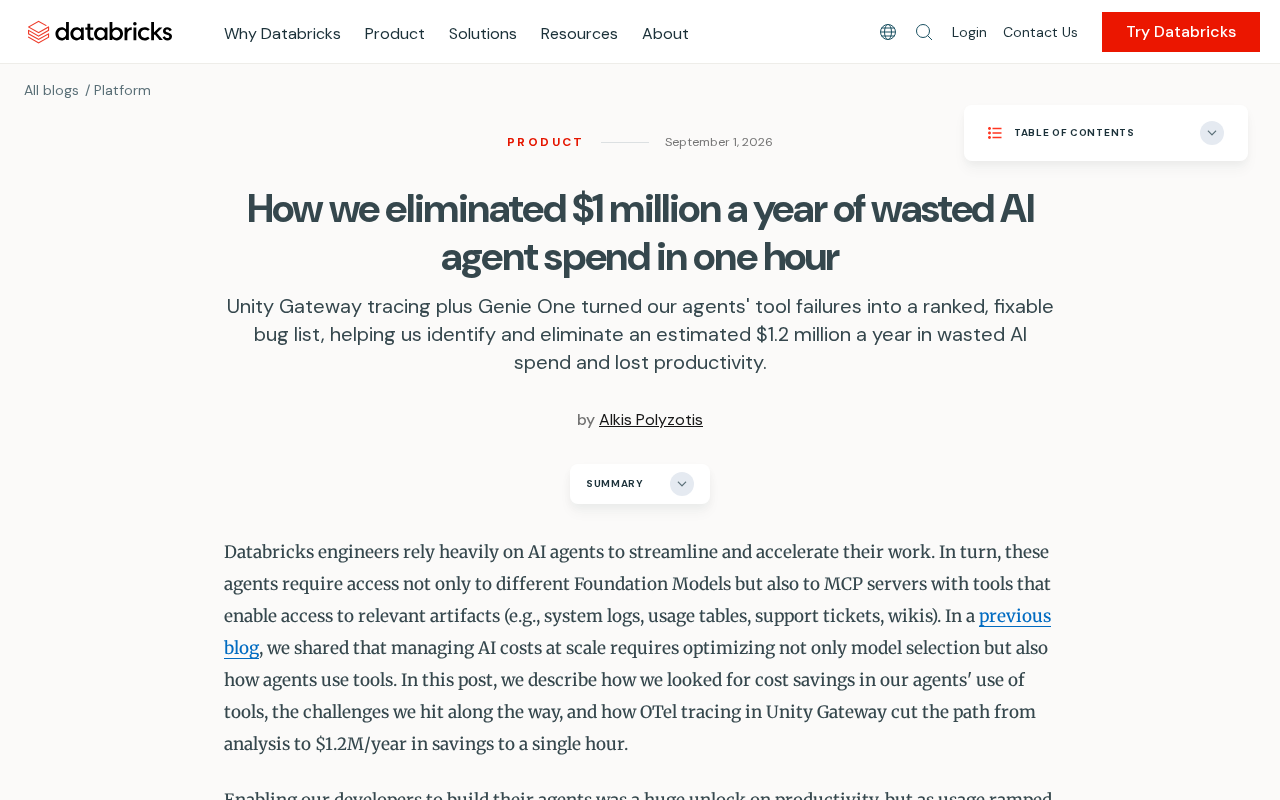
AI Agent Cost Optimization in Practice: Engineering Wisdom That Saved $1 Million in One Hour
Databricks eliminated $1M/year in wasted AI Agent spend in just one hour. Learn the root causes of Agent cost overruns and key strategies like model tiering, context pruning, and caching.
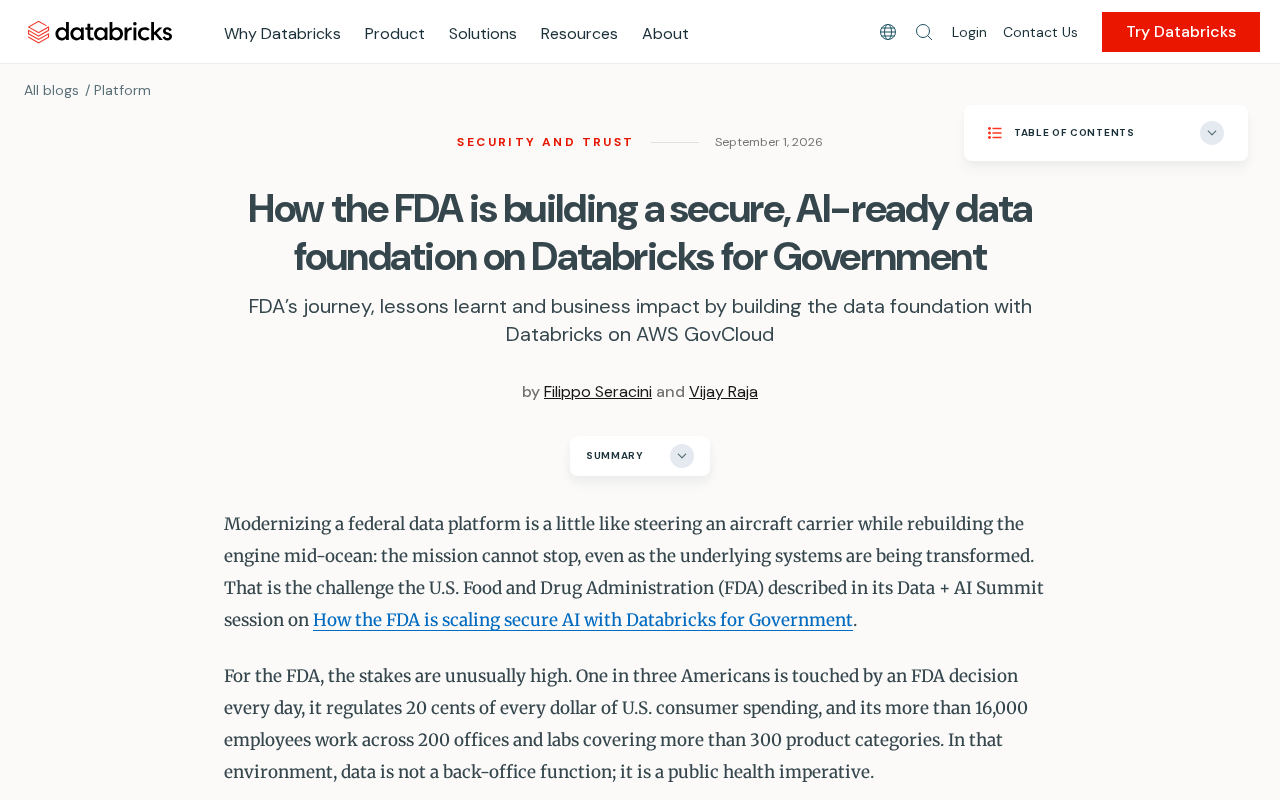
How the FDA Is Building an AI-Ready Data Foundation on Databricks
Explore how the FDA leverages Databricks for Government to build a unified Lakehouse architecture and AI-ready data foundation while meeting federal security and compliance standards.

The Power of Security Collaboration: Why Vulnerability Discovery Cannot Do Without Human Intelligence
Explore how security collaboration outperforms tool dependency, the value of vulnerability stories, cross-team knowledge sharing practices, and building stronger defenses by investing in people and collaboration.